

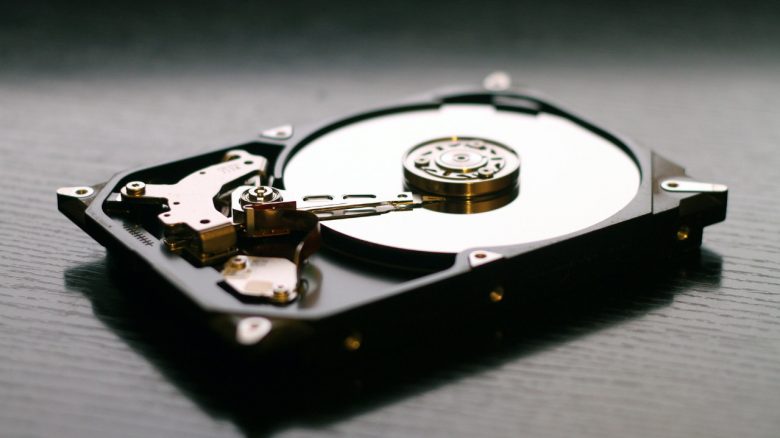
Hard drives are found in every computer today and are neither large nor heavy. In many computers, there are even several mass storage devices. However, the first commercial hard drive was not only incredibly expensive, but also incredibly heavy.
Today, computers and gaming PCs are only as big as moving boxes and fit under the desk. One of many components is the hard drive, where users store their data or install their operating system. Today, hard drives are hardly much larger than two stacked Blu-Ray cases. And for many users it’s worth installing an SSD in their PC.
But a few years ago, that was very different. The first commercial hard drive installed in a computer was not only much larger but also weighed more than a ton.
A 5 Megabyte hard drive weighs a ton
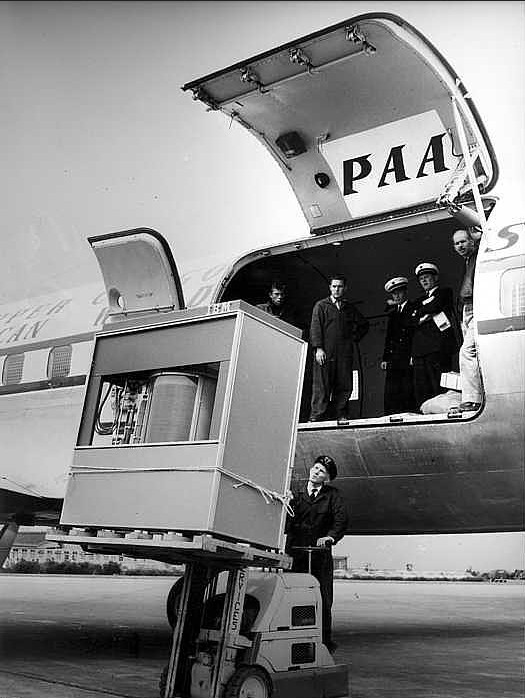
What kind of device is this? The hard drive is the IBM 350. The hard drive consisted of 50 aluminum plates coated on both sides with a magnetic layer. The individual plates could spin at a speed of 1,200 revolutions per minute (“Revolutions per minute”, or RPM).
Otherwise, the dimensions are hardly comparable to a modern conventional hard drive. The aluminum plates made the hard drive a true monster:
- The casing of an IBM 350 was 1.72 meters high, 1.52 meters long, and 74 centimeters wide
- In total, the hard drive had a weight of 971 kilograms. In the IBM 305 RAMAC, you could even install two of them.
With a size of about two refrigerators and a weight of over a ton, the hard drive at that time also had other tasks besides securing computer games. The IBM 350 was part of the IBM 305 RAMAC and was used at the 1960 Winter Olympics. The computer was used by IBM as the first electronic data processing system for the games and could also read punch cards.
How much did such a hard drive cost? Unlike today, you couldn’t just go into a store and buy a new hard drive back then. It was common to rent computers and hard drives.
You could rent the IBM 305 RAMAC directly from the manufacturer. And it was not exactly cheap. The monthly cost was $3,200 just for the computer, plus $650 for the hard drive.
IBM feared that the hard drive would replace the punch card
How did it all begin? The punch card stands at the beginning of the development of data processing. The holes punched into the card could then be read by the computer. At first, computers could only receive their data using these punch cards.
However, the problem with punch cards is primarily one: the high space requirement. The punch cards have to be stored somewhere when not in use. The storage was then significantly simplified through magnetic tapes as a storage medium.
Because significantly larger amounts of data could fit on magnetic tapes. A tape could hold a few megabytes. For comparison: punch cards could store only about 80 bytes. One byte is equal to one millionth of a megabyte.
This may not sound like much, but it was an enormous advancement for the time. The IBM 350 presented here can hold about 64,000 punch cards, which would otherwise have filled a whole room (or even 2 rooms). Plus, you didn’t have to always get the right punch card from the cabinet, as the hard drive made everything much faster.
A storage size of 5 MB was a revolution at the time, but is ridiculous today. Even nearly a million times more is still not enough for some users:
1 TB hard drive for gaming 2022 – Too little or more than enough?

Your opinion is important to us!
Do you like the article? Then let us know!