

The genre of MMORPGs has fascinated and thrilled millions of players for decades. In a multi-part report, MeinMMO editor Karsten Scholz examines the roots, the development, and the future of online role-playing games. Part 3 revolves around the reasons for the unique success of World of Warcraft.
In the second part of our report on the genre of MMORPGs, we explained why games like EverQuest, Dark Age of Camelot, or Ultima Online, despite some popularity, failed to catapult online role-playing games from a niche to the mainstream.
This was only achieved by World of Warcraft, which was released in North America in November 2004 and in Europe in February 2005. Below, we will explore the various reasons for the rocket-like success of WoW and the impact of this success on pop culture and Blizzard.
Part 1: The pioneers of online role-playing games
Part 2: The first 3D MMORPGs
Part 3: The exceptional success of WoW and its reasons
Part 4: High phase of MMORPGs and the failure of WoW killers
Part 5: The great drought and the flight to other genres
Part 6: The status quo of the MMORPG genre and the future
The perfect timing
Although only a few years lie between MMORPGs like Dark Age of Camelot and World of Warcraft, the internet changed noticeably in that short time. Time tariffs and ISDN gave way to internet flat rates and DSL connections in more and more households by the mid-2000s.
Not a few players likely upgraded or got their first internet connection primarily to be able to play online cheaply and quickly. World of Warcraft thus came out at exactly the right time and benefited greatly from the onset of widespread broadband availability.
The Blizzard officials also proved to have good timing for another reason. With WoW, the developers set themselves the task of lowering the high entry barriers of the competition at the time, improving existing features strategically, and offering the most comfortable, rewarding, and beginner-friendly MMORPG on the market.
Thanks to WoW Classic, Hardcore, and the Classic seasons, there are now more than just one WoW version.
The first love in another time
The comparatively low entry threshold and the frequent success experiences were well received. For many players, World of Warcraft was the first MMORPG that could excite. It hardly mattered that WoW launched without a PvP system and with only a few endgame contents, but with plenty of bugs and technical issues.
Many players approached WoW back then without expectations, as they had never played an MMORPG before. Moreover, the internet in 2005 was still not full of guides and articles dissecting every inch of Azeroth.
A large part of the community therefore leveled their characters comfortably over months (!) and generously overlooked the initial flaws, only to eventually be surprised to find that there were challenges for high-level heroes.
This special first time was something many players naturally wanted to share with their friends, colleagues, and relatives, and as more and more people discovered the internet during this time, an increasing number of interested parties tried WoW, who in turn became part of the word-of-mouth promotion. As a result, WoW felt omnipresent at work, in schools, and in families.
The big shadow of WoW
All subsequent MMORPGs did not possess this special starting situation or only to a significantly lesser extent. On one hand, because the internet continued to develop rapidly and more and more websites went live, wanting to provide guides and tips for the next big online role-playing game.
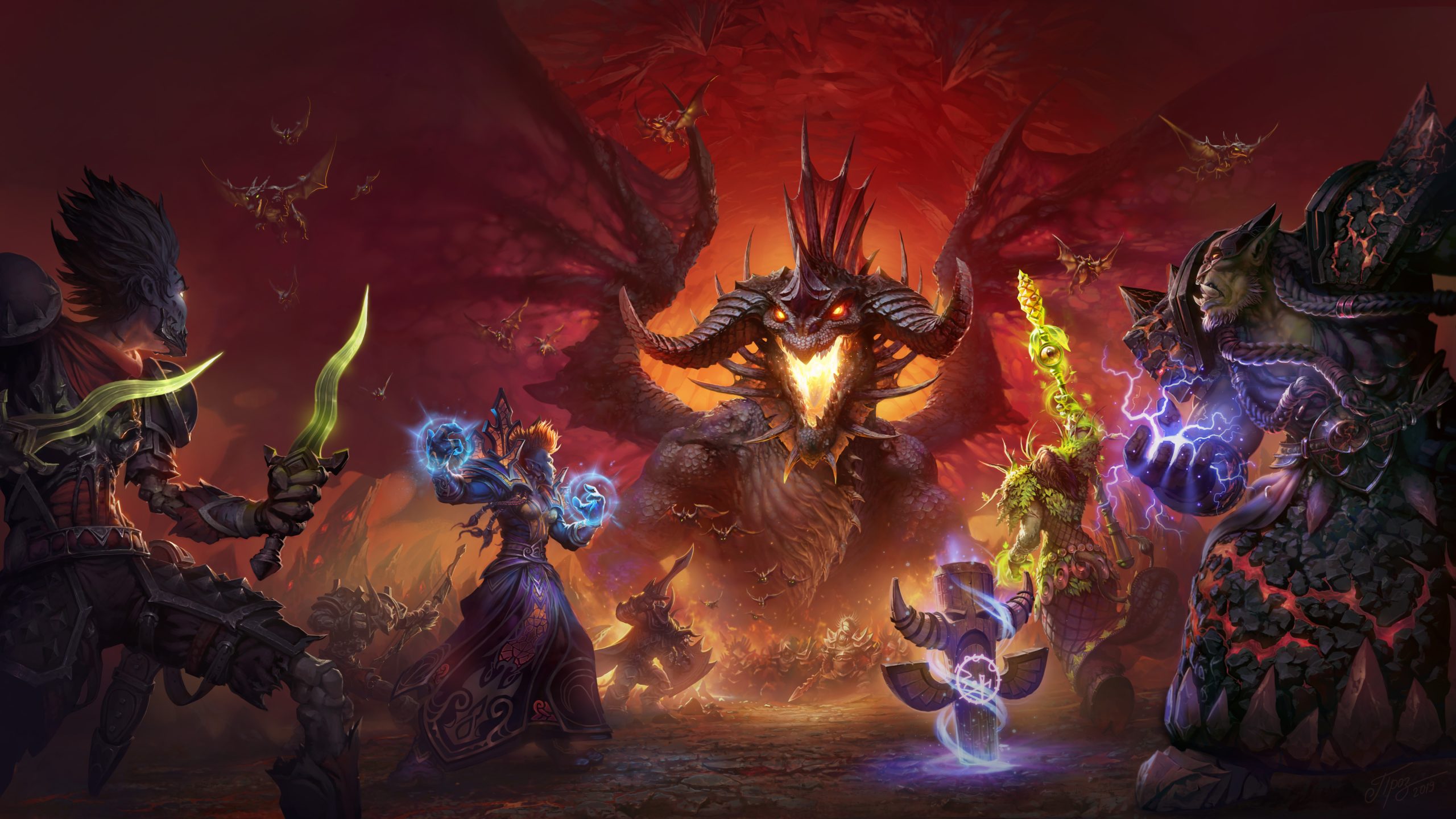
On the other hand, all new releases from 2005 onwards stood in the great shadow of World of Warcraft, which continued to grow due to regular patches, hotfixes, and expansions. After only a few months, Blizzard offered with WoW a polished and extensive package that no MMORPG could even come close to at launch.
WoW also had another ace up its sleeve. Any player who had spent some time wandering around Azeroth, leveling, equipping, and getting attached to characters, and becoming part of a community, develops a sense of home.
Separating this connection sustainably, enticing long-term WoW fans to the servers of another MMORPG, and getting them to build a new home there is difficult. Especially when lured by less content and more technical issues.
Warcraft and the comic graphics
The enormous success of World of Warcraft is built on several pillars. Blizzard itself played an important role, combined with the popularity of the Warcraft brand. The Californians had an excellent reputation among many players due to milestones such as Diablo and Starcraft in 2004 and 2005.
The real-time strategy game Warcraft 3 (2002), together with the expansion The Frozen Throne from 2003, is also considered one of the great classics and one of the best games of all time. The chances were good that WoW could also become a great game.
Many fans were therefore eager to finally explore the exciting fantasy world of Azeroth in World of Warcraft from a third-person perspective – with all the known races, classes, spells, heroes, and villains.
One of Warcraft’s most important villains – the Lich King:
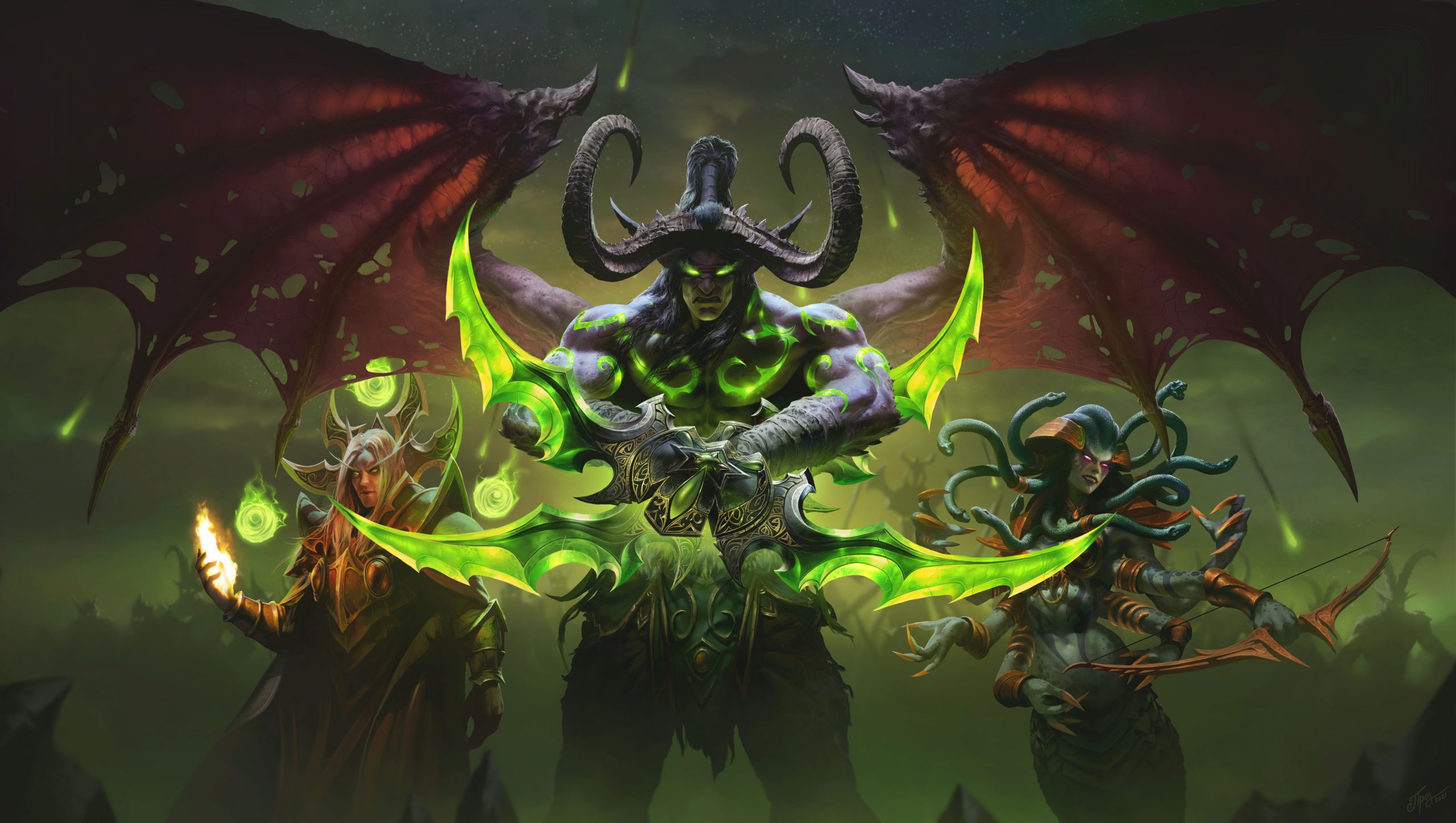
That WoW felt fantastic after Warcraft was also due to its colorful, timeless comic look. Although it seemed quite outdated in 2005 (and has been criticized since then), it also created a cohesive world that ran smoothly on older computers – which also positively affected the widespread proliferation of WoW.
Due to the constant updates of the graphic engine, World of Warcraft today looks even more detailed and modern than many other MMORPGs that are younger.
The cash cow of Blizzard
While not all improvements and new content that have landed on the servers over the years were well received by the WoW community, the Blizzard developers often demonstrated the right instinct to attract consistently more than ten million subscribers to Azeroth between the fourth quarter of 2007 and the first quarter of 2012.
Blizzard reached a financial peak in 2010, with more than twelve million players worldwide transferring around eleven to thirteen euros to California every month. Even today, nearly 20 years after launch, WoW remains one of Blizzard’s most important sources of income.


According to a presentation by the developers at GDC 2024, WoW is expected to have reached more than seven million subscribers at the start of the Discovery Season in November 2023. Many other publishers can only dream of such numbers. Moreover, we know that currently more developers than ever are working on the various versions of World of Warcraft.
This enormous financial success, however, had not only positive impacts on Blizzard. On one hand, after WoW, the developers’ focus shifted significantly towards the area of so-called service games, also because old-school projects like the Starcraft 2 trilogy, despite good sales figures, only brought in a fraction of the money that WoW did.
On the other hand, the company grew from 500 to about 4,600 employees within a few years, which is said to have noticeably changed the corporate culture at Blizzard. More about this can be found here:

A part of pop culture
WoW is not only one of the most successful games of all time, the MMORPG is also a phenomenon that has had a lasting impact on global pop culture. There is a movie, novels, tabletop role-playing games, comics, machinima fan films, and mangas.
One must not forget the short commercials in which Chuck Norris, William Shatner, and other stars promote Azeroth. Here is a sample spot with Mr. T:
In series like South Park, How I Met Your Mother, Leverage, Family Guy, and The Big Bang Theory, there are humorous references to World of Warcraft. Many allusions can also be found to Leeroy Jenkins, one of the first internet memes from the gaming sector.
WoW also found a place in essays from the army and research. For example, when the corrupted blood from Zul’Gurub wiped out the population of entire servers in September 2005, epidemiologists used this outbreak as a model for future real-world epidemics. A model that gained relevance again during the COVID-19 pandemic.

Financially incredibly successful and an integral part of pop culture: It is no wonder that many other publishers and developers would love to replicate the success of World of Warcraft with their own MMORPG. There have been many attempts since 2005. Many online role-playing games not only copied the gameplay blueprint set by WoW but also the payment model.
Why all these games failed and what the peak phase of the MMORPG genre had to offer otherwise will be covered in the next part of our report. In the meantime, you can occupy your time with the following special: The 15 currently best MMOs and MMORPGs 2024

Your opinion is important to us!
Do you like the article? Then let us know!