


In The Division 2, there are many attributes built into armor and weapons to make us stronger. Here you will find an overview of the attributes, what they do, and which ones promise the strongest bonus.

With the large expansion “Warlords of New York“, Division 2 changed its gear game and all attributes received a complete overhaul. Since the change, some of these bonuses have a new function and the damage equation has also been slightly altered.
To give you an overview, here are the functions of the attributes, the strongest values, and the new equation with which damage is calculated.
What are attributes? In The Division 2, attributes are the values that improve your builds. Attributes are separate from talents. While an attribute usually gives you a direct value bonus, talents have specific conditions under which you can benefit from their bonuses. Attributes come from:
- 3 attributes on each normal high-end armor piece
- Installed mods (mask, vest, backpack)
- 3 attributes on each high-end weapon
- Brand set bonuses
- Gear set parts usually bring 2 attributes and set bonuses
We will look at all armor and weapon attributes from Division 2 and highlight the strongest. At the end, there is the Division damage equation that shows how the damage of the loot shooter is composed.
All Attributes Explained – Additive and Multiplicative Bonuses
What types of bonuses are there? Broadly speaking, the bonuses in The Division 2 fall into two categories – multiplicative and additive. The difference is small but can have a significant impact.
Additive bonuses are summed up and added to the base damage. The respective values are taken as “Plus” and the total of the bonuses is then multiplied by the base damage.
Multiplicative bonuses enhance the outgoing damage and provide a strong boost at the end of the calculation. Instead of being summed up earlier in the equation, this bonus is placed at the end of the equation and multiplies with the damage. Thus, it represents its own damage category.
How do additive bonuses work? Let’s take an example with a base damage of 100,000. We increase this damage value by 3 items with 15% weapon damage each. This attribute, as well as the individual weapon damage of each weapon, is additive. So, we add the percentages and apply them to the base damage:
- Base damage x (1 + Ad values) = Damage
- 100,000 × (1 + 0.15 + 0.15 + 0.15)
- 100,000 × 1.45
- 145,000
With the “1” in the equation, we convert the percentage values into a number that we can use for the calculations.
How do multiplicative bonuses work? If we had to decide whether to exchange the third item for a multiplicative bonus, the equation would look like this:
- (Base damage × (1 + Ad values)) × (1 + Mu values)
- (100,000 × (1 + 0.15 + 0.15)) × (1 + 0.15)
- 100,000 × 1.3 × 1.15
- 149,500
So, instead of being part of the first bonus on weapon damage, the multiplicative bonuses are added at the end. The damage that has already been calculated is taken and receives the extra bonus on top. This makes these “times” bonuses always preferable to the “plus” bonuses.
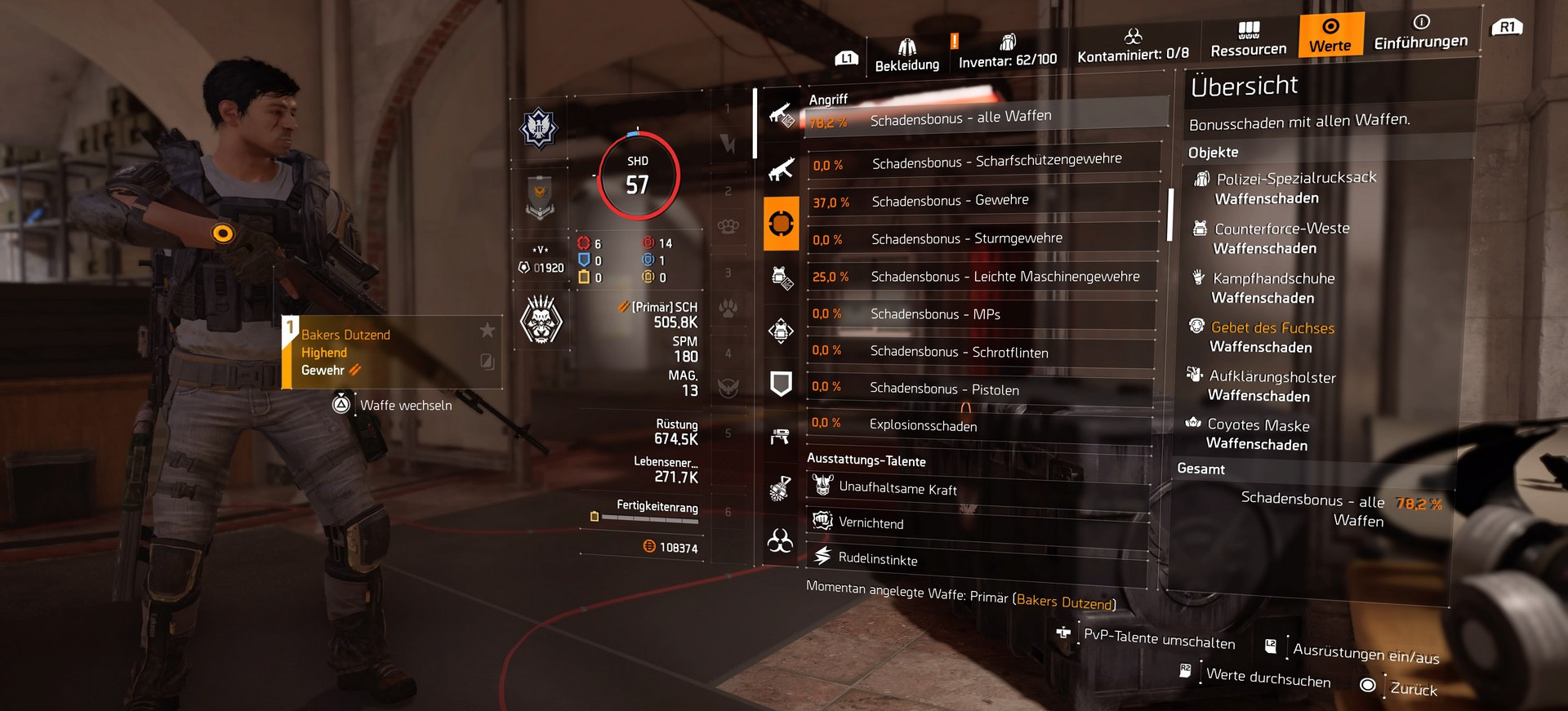
How do I identify the type of bonuses? The attributes in-game do not provide a direct indication of which one gives a “times” bonus. However, you can often see it in the talents. If it says in the game that the damage is “increased”, it is usually an additive bonus. If the damage is “enhanced”, it is a multiplicative bonus.
Currently, not all talents display their correct bonus. A mention of the “increase in the total weapon damage” indicates a separate damage category and is similar to a multiplicative bonus. Multiple “increases in weapon damage” are summed additively. The Division damage equation is at the bottom and provides a good overview of the relationships between the weapon damage types.
Which are considered the strongest attributes? All attributes that provide you with a multiplicative bonus are generally stronger. If you have the chance to incorporate a “times” bonus into your build, you should take it. 3 named armors are particularly suitable for this.
Multiplicative Damage Attributes – The Strongest Values for More Damage
- Damage to uncovered targets (LMG)
- Armor damage (shotgun)
- Health damage (assault rifle)
These 3 attributes “enhance” damage and are therefore slightly outside the usual damage calculation. The weapon class in parentheses indicates the category where these attributes are certainly a core attribute. In all other weapons, these values can be present as normal attributes.
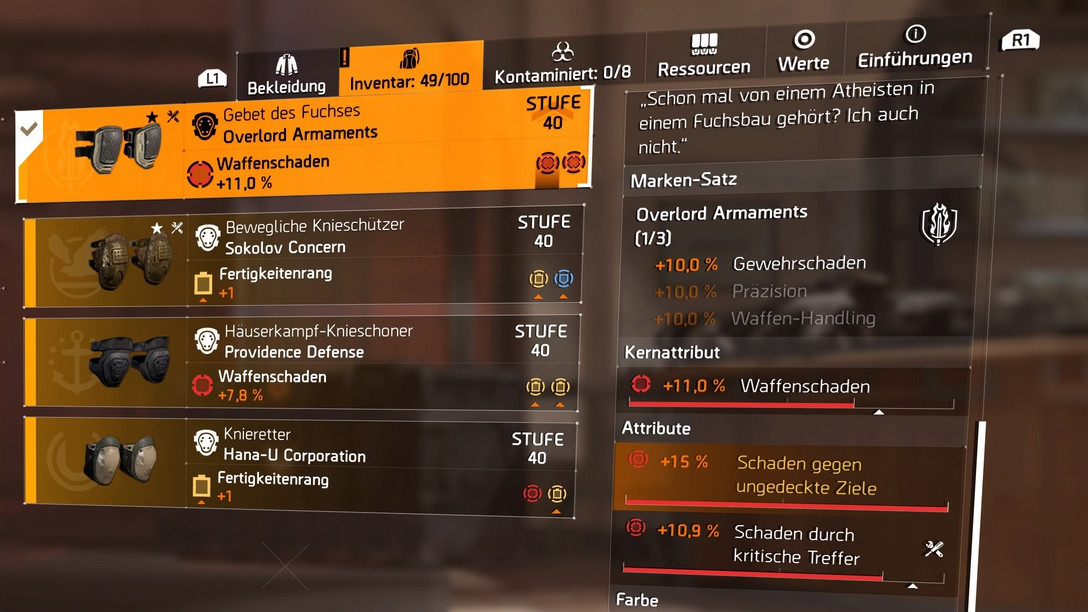
How does damage to uncovered targets work? You receive a bonus against all targets that are not in a cover position. This includes, for example, the large tanks that want to get on your nerves with a minigun or sledgehammer. But also all enemies that are not directly in cover.
How does armor damage work? Damage to opposing armor values or parts is enhanced. Whenever your damage does not go directly to health, some form of armor is in play, which you have to destroy first. Here, armor damage applies and gives a strong boost to damage against enemy protection.
How does health damage work? The opposite of armor damage. Whenever you attack an opponent’s health points, health damage applies. This includes, for example, weak points of machines or enemies that are often unprotected – including the weak points of the raid boss “Razorback”.
Core Attributes
- Skill rank
- Armor
- Weapon damage
- Individual weapon damage
How does skill rank work? With this rank, we enhance our skills and literally take them to a new level. This is an additive bonus and each attribute increases the rank by +1, up to a maximum of rank 6. When selecting skills, you can see the values of the skills for each rank in detail.
How does armor work? This value is additive and directly adds to the armor value.
How does weapon damage work? Also, the third core attribute of the armors is additive. For example, if you have 6 parts with a red core attribute and each provides a 10% bonus, your base damage increases by 60%. The values are simply added up and then combined with the base damage.
How does individual weapon damage work? Similar to normal weapon damage, the damage of individual weapons is calculated as an additive bonus into the equation. It is simply added to the weapon damage values.
Damage Attributes (Red)
- Weapon handling
- Critical hit chance
- Critical hit damage
- Headshot damage
How does critical hit chance work? This attribute gives your hits a chance of being a critical hit, which is stronger than normal hits. The minimum here is 0% – without an attribute with crit chance, you will not land any critical hits.
How does critical hit damage work? With these attributes, you increase the extra damage of your critical hits. The minimum is 25%. A critical hit therefore deals at least 25% more damage than a normal hit. The crit bonus is applied to your “enhanced” base damage at the end.
How does weapon handling work? This red value improves your handling of the weapons. Four values are slightly increased at the same time:
- Precision
- Stability
- Reload speed
- Weapon switch speed
How does headshot damage work? Each headshot also inflicts more damage on enemies. The minimum here is 60%. Each headshot hit takes the finished weapon damage (without critical values) and increases it by your headshot hit bonus.
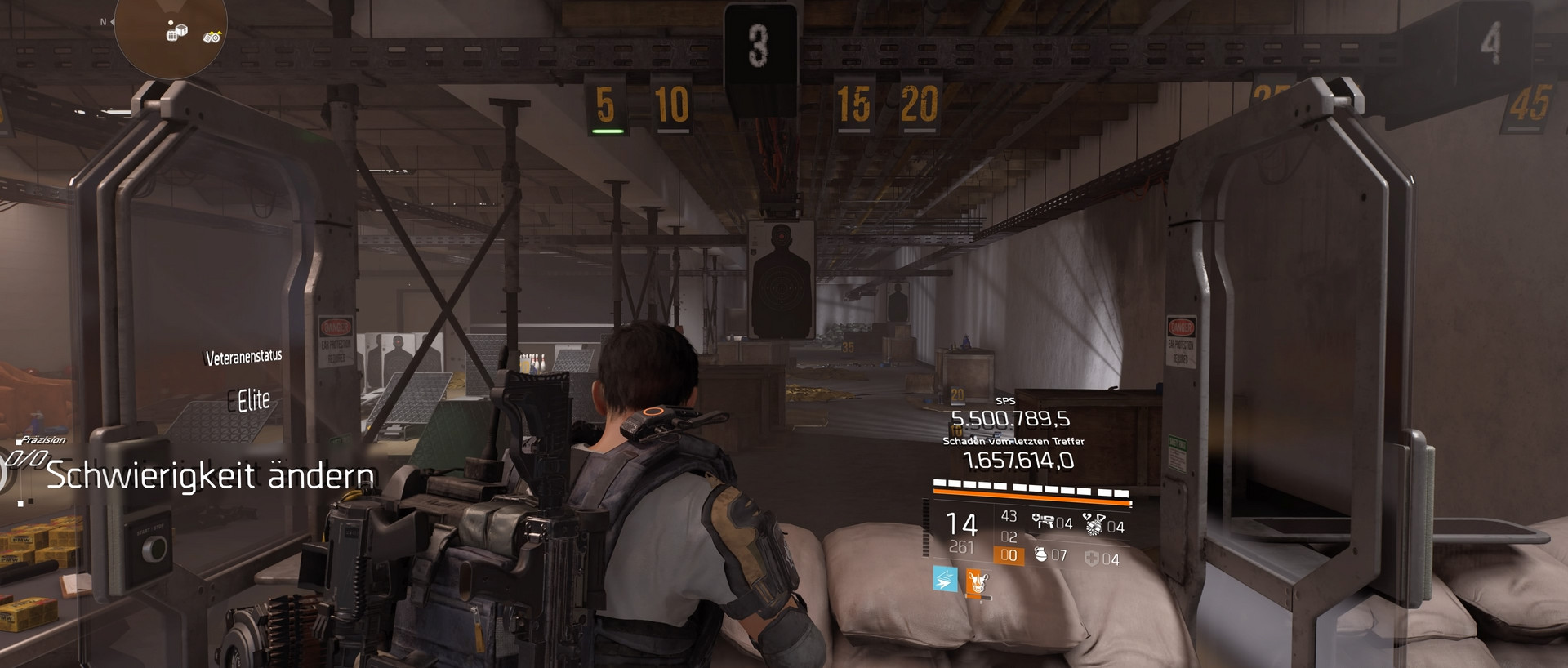
Critical hits and headshot damage form their own damage category and are therefore separate from the “normal” weapon damage, which consists of weapon damage and individual weapon damage. When you build a strong damage build, keep these relationships in mind.
Skill Attributes (Yellow)
- Skill damage
- Skill speed
- Repair skills
- Status effects
How does skill damage work? The skill counterpart to weapon damage. You get an additive bonus on the basic damage values of your skills, and each percentage of skill damage is summed and then increases the damage of the skills together.
How does skill speed work? The Division 2 focuses on speed rather than cooldown reduction. You can think of it like the speed of a vehicle. The cooldown is a distance of 100 meters, and the speed is 10 meters per second. So, the target is reached in 10 seconds. If the speed increases by 50%, to 15 m/s, the distance is covered in 6.7 seconds – equivalent to a reduction of the “cooldown” by 33%.
The higher the speed goes, the less benefit a speed increase provides. If initially 50% could reduce the time by 3.3 seconds, the next 50% only gives you 1.7 seconds since you would take 5 seconds to cover 100 meters at double speed (20 m/s).
Every increase in skill speed is summed and then subtracted from the cooldowns of the skills.
How do repair skills work? Another multiplicative attribute that strengthens the healing you can do with your skills. Each individual value that you have on your parts stands as a separate component in the equation. So, if you have 3 parts with 15% each, you don’t get a 1.45 bonus (1 + 0.15 + 0.15 + 0.15), but rather a roughly 1.52 bonus (1.15 × 1.15 × 1.15). This value is especially important for good healer builds.
How do status effects work? Similar to weapon handling, this attribute affects two values – the damage and duration of your status effects. The bonus is multiplicative, and the values are always multiplied together as with repair skills.
What’s interesting about this attribute is that you can also strengthen skills that trigger status effects. For instance, you can boost the flamethrower turret not only with skill damage but also with status effects having an impact on the strength of this skill.
Defensive Attributes (Blue)
- Armor regeneration
- Threat protection
- Health
- Explosive resistance
How does armor regeneration work? This attribute gives you a permanent armor regeneration per second. Without additional skills or talents, you do not regenerate armor in Division 2. This value is additive and is normally summed up. The total gives you your armor regeneration per second.
How does threat protection work? This attribute protects you from enemy status effects. Whether “blind”, “on fire”, or “bleeding wound”, all effects cause you less damage and the duration is also reduced. With mods, you can further increase resistance to individual effects. Threat protection is additive, and the summed value applies to all status effects.
How does health work? As with the core attribute armor, which gives you more armor points, you receive a simple bonus on your health here. The attribute is applied to your health.
How does explosive resistance work? This value reduces damage from explosives and is also summed. The final percentages are then subtracted from the incoming explosive damage.
Calculating Damage – The Division Equation
To establish a calculation of how the individual damage values appear in a large equation, I found the YouTube video of the German The Division Math Fan Rammbob and a detailed post on reddit that relate the damage types to each other. HS stands for headshot in this description.
- Base damage
- × (1 + weapon damage + individual weapon damage)
- × (1 + ((crit damage × crit chance) + (HS damage × HS rate)))
- × (1 + sum of the value “total weapon damage”)
- × (1 + “damage to uncovered targets”)
- × (1 + “armor damage”)
- × (1 + “health damage”)
- The final value is damage per shot and combined with the rate of fire (shots per minute) provides a theoretical value for damage per minute, without reloading.
To calculate the average crit and HS value, divide the percentage values by 100 and plug the numbers into the equation. For instance, 180% crit damage and 60% crit chance yield an average crit damage multiplier of 1.08, corresponding to 108% crit damage.
Using this equation, you can roughly calculate your damage output per shot, and it includes your average rate for critical hits. To determine your headshot rate, you can view the statistics at the end of your missions. Here, you will see your headshot proportion of hits displayed and get a sense over time of how often you land headshots.
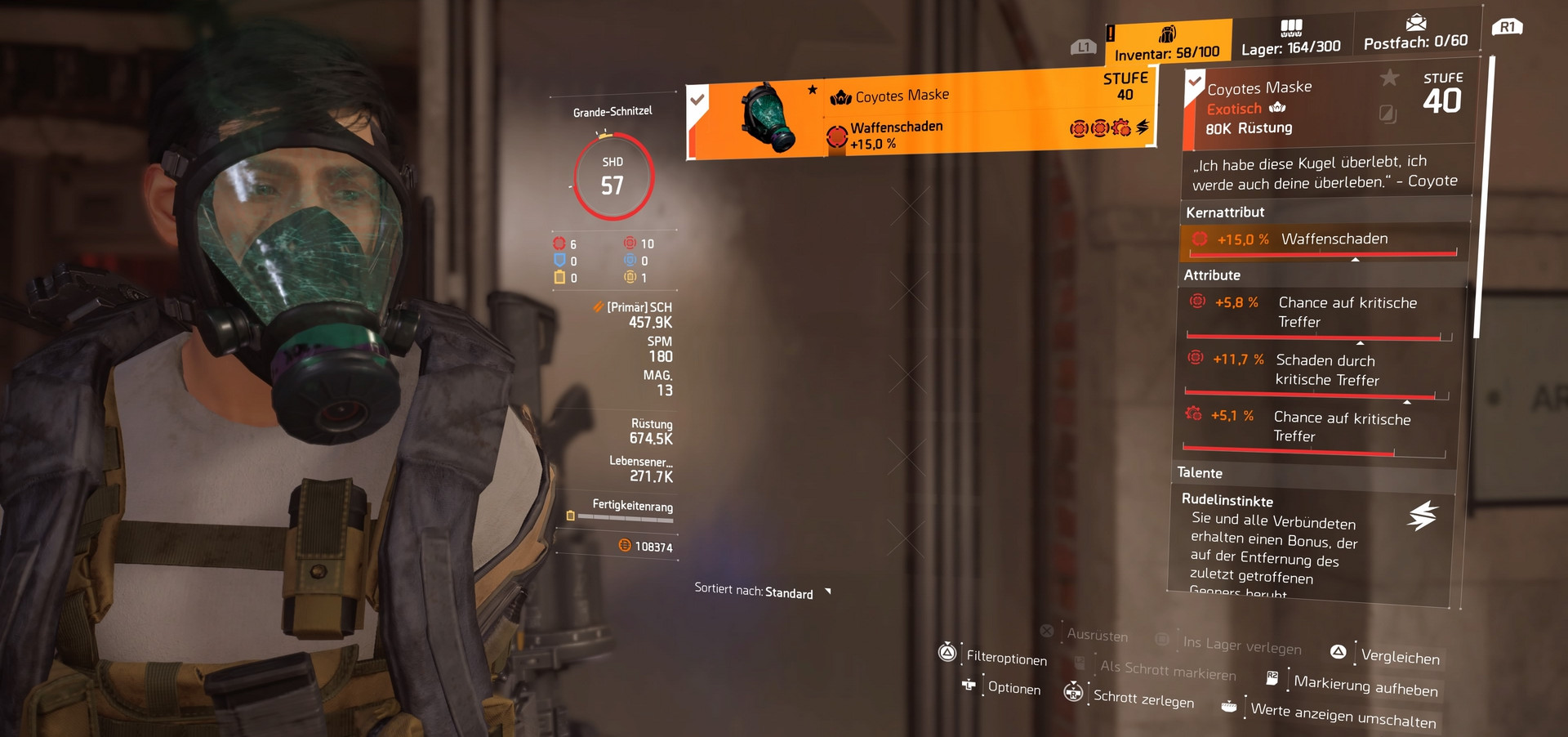
If you also have specific talents that increase a value, that value is added to the respective category. For example, if you receive +25% damage from critical hits through the buff “Pack Instincts” of the Warlord Exotics “Coyote’s Mask”, these talent enhancements do not form a separate category but are treated as normal attributes, as if you had that value on an armor or weapon.
However, if you have a talent that “enhances” damage, then that value receives its own category. It depends on the exact wording of the talent text.

Your opinion is important to us!
Do you like the article? Then let us know!