

At a major video game fair in Shanghai, ChinaJoy, one of the minds behind Blizzard’s free collectible card game Hearthstone revealed some insights. Hamilton Chu shared the design ideas behind Blizzard’s successful game.
Hearthstone as the Result of Pure Game Design


In an interview with the business magazine venturebeat, Hamilton Chu, one of the minds behind Hearthstone, discussed the details and considerations that went into the game’s design and why it became so successful. Hamilton Chu was for a long time one of only two people working on Hearthstone. The rest of their team was pulled off the project in the middle to work on larger releases from Blizzard. However, Chu and his colleague Eric Dodds saw this as an opportunity. This allowed them to make quick changes to the game. There was no politics, no fluff. Just game design in its purest form.
The Secret Design Tricks of Blizzard: First Just Pen and Paper, Then a Flash Game
The secret design tricks of Blizzard have nothing to do with voodoo; they all revolve around relatively simple and obvious concepts. They first played with cards and ideas for months, completely away from bits and bytes. They knew it would not be a problem to implement it technically, so “Team 5” focused solely on the pure design of the game for six to nine months.
Additionally, they made an effort to clearly articulate and convey the “core ideas” of the game so that no one worked on a feature that would later be dropped. Creating simple prototypes with Adobe Flash also provided important insights and simplified the work.
Hearthstone as a Mix of Depth and Simplicity: Which Ideas Blizzard Had to Let Go

They repeatedly questioned the fundamentals of the game and discarded elements that would have restricted the pace and fun of the game. An early version of Hearthstone initially planned a resource management system, which later proved to be too cumbersome. According to Chu, there was also a kind of “surprise attack” option in the game, but it turned out to be too powerful and was ultimately removed.
The principle of simplicity also means not reinventing the wheel. What use is it to confront players with new terms for “life” and “attack” when they could simply use the established names? However, they also utilized the digital possibilities of the medium. After all, they allowed for moves that would not have worked in a traditional card game.
However, they also ensured that the game was not oversimplified. It was important to maintain a depth that could make Hearthstone, like World of Warcraft, a game for eternity. Players needed to be faced with numerous important decisions.
Not One Big Win or Loss, but Several Small Ones
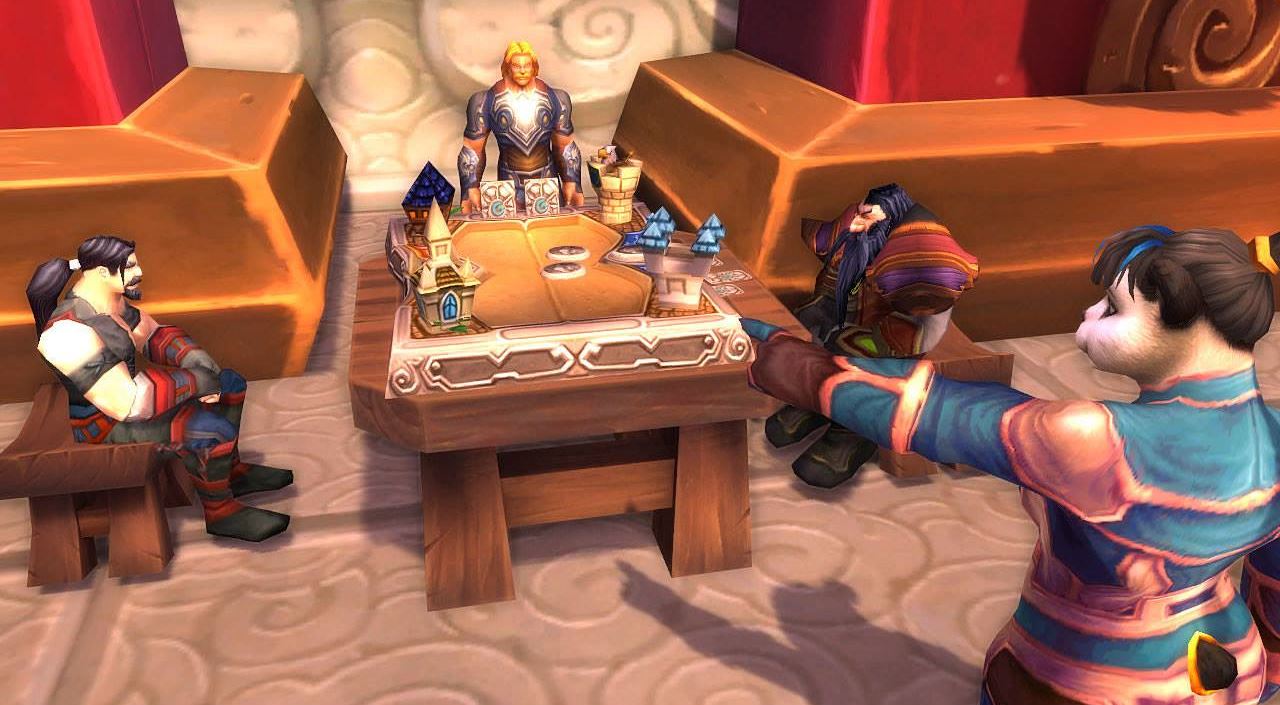
In a card game, there is always a winner and a loser at the end, which would quickly become boring or frustrating. Thus, they aimed in the design to transform the match into a series of small victories and small defeats. This kept the match attractive, it went back and forth, and players would keep coming back.
Furthermore, they leveraged players’ emotional connection to World of Warcraft and designed the game in such a way that Hearthstone would continuously provide new material for stories. Chu drew on his own raiding experiences in WoW. They had started out catastrophically but later provided great material for stories.
Clearly, Chu’s plans paid off. According to venturebeat, the game has been downloaded more than 10 million times. Although Blizzard has not yet disclosed profit figures, representatives from Blizzard recently mentioned that Hearthstone has exceeded all expectations.

Your opinion is important to us!
Do you like the article? Then let us know!