

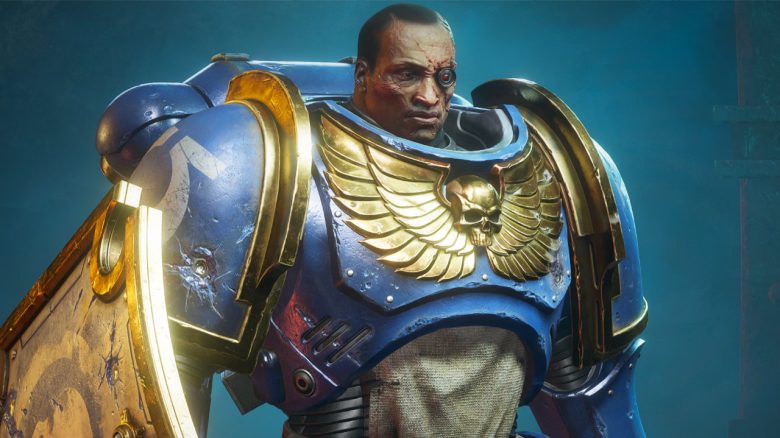
In recent weeks, there have been a growing number of major flops in huge gaming productions. Companies like Sony and Ubisoft are taking on big projects costing hundreds of millions of dollars, but they are failing. Games like Concord, Suicide Squad, or Star Wars Outlaws are falling short of expectations. Studios like Ubisoft are struggling. However, one game has recently been successful, Warhammer 40k: Space Marine 2.
This is what the Creative Head of Space Marine 2 says: In an interview with IGN, Chief Creative Officer Tim Willis discusses the current crisis in AAA gaming.
Willis states that the problem is not, as some believe, that AAA games take so long to develop that they release in genres that are no longer trendy, like the brutally flopped hero shooter Concord.
He says: Some AAA games completely overdo it with features and scope. The new AAA games are much too large in design.
With Space Marine 2, the focus was on the core of the game, while keeping an eye on the game’s scope. Therefore, they were even praised for making Space Marine 2 feel like an action game from the Xbox 360 era.
Even HandOfBlood had fun with the shooter:
Space Marine 2 exemplifies full focus on the gameplay loop
This is crucial for him: Willis says that one must focus on the “core gameplay loop”—the sequence of actions that players perform repeatedly in a game:
It is not necessarily the genre that has evolved, because great games will always sell well. One of the things we at Saber try to do […] is the conviction that what you do every second and what happens when you press those buttons, and this central gameplay loop is so crucial. So, we focus on the interaction between individual moments of the game and on the feeling that one has during those moments.
And then we stick to our core principles: Be the ultimate space marine, melee combat, ranged combat, swarms, that’s all. Many teams overload their games during development. They look at another game that has just come out and say: ‘Oh, we need to do that, we need to add this, we need to do this.’ In doing so, they lose sight of what is essential: namely, what truly makes the game enjoyable.
We are not making in Space Marine 2 […] revolutionary new gameplay mechanics that no one has ever seen. There are gameplay mechanics that people are familiar with, but we do them really, really well. And we execute them very, very effectively.
Sales expectations are unrealistically high for overloaded games
This is the advantage of the system: By having a coherent narrative, Space Marine 2 was able to keep the budget manageable, explains Willis. Thus, one does not have to achieve overly ambitious sales figures to make a profit.
Willis says: Many games currently being developed in North America, especially in California, need to sell 5 million copies to not be considered a flop.
In what business is it acceptable to say: “You’ve failed if you haven’t sold 5 million copies?”
Space Marine 2 had about half the budget of Doom Eternal. For Space Marine 2 to be a success, it simply did not need to sell as many games as other titles, explains Willis.



This is the essence: The philosophy can be summarized as “Do little, but do what you do perfectly.” This is how some of the best eateries in the world operate, with only one dish that is perfected to a high degree.
Apparently, the “main dish” in gaming is the gameplay loop—the actual gameplay that repeats endlessly.
In early September, we discussed one of the major flops that inspired the statement from the Creative Head of Space Marine 2 on MeinMMO in an analysis: Why did Concord fail so terribly on Steam and PS5 and cost Sony $250 million for a woke catastrophe?

Your opinion is important to us!
Do you like the article? Then let us know!