

Steve Jobs was convinced that Apple could compete in the game console market. To realize this, he entered into a partnership that Sony did not like at all.
Apple’s product launches were a special event every time thanks to Steve Jobs. He knew how to excite the people around him. At an appearance in January 1999, it was no different.
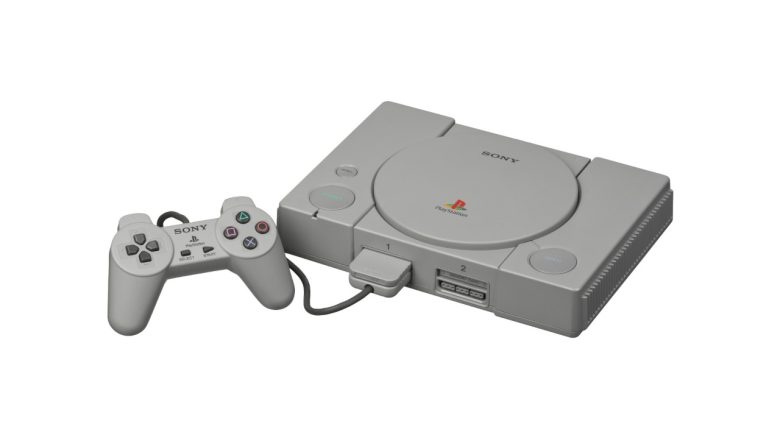
He spoke about the Sony PlayStation and called it the best game console in the world. But what no one expected were his ambitions to want to deliver an even better console with Apple itself.
His ambition paved the way for many Apple products. This was also felt by former employees when Steve Jobs was not satisfied with them. For example, the marketing director of the first Apple Macintosh was fired by him 5 times.
For $49, you can turn your Mac into a Sony PlayStation
How should Apple systems become a game console? At the Macworld Expo in 1999, the former Apple CEO took the stage to announce something great. During his appearance, Jobs said he wanted to deliver nothing less than the best game console in the world. By the way, Apple does not deviate from this approach today and says: The iPhone 15 Pro should be ‘the best game console,’ but does not want to compete with the PS5 and Xbox.
However, there was no new development of the popular Apple Mac series for his project at that time. The first iPhone was also many years away from production. Instead, Steve Jobs introduced a special software that was supposed to shake up the console market in collaboration with developer Aaron Giles from Connectix.
With full conviction, he stated: For $49, you can turn your Mac into a Sony PlayStation.
Together with Phil Schiller from Apple’s management team, the “Virtual Game Station” emulator was presented.
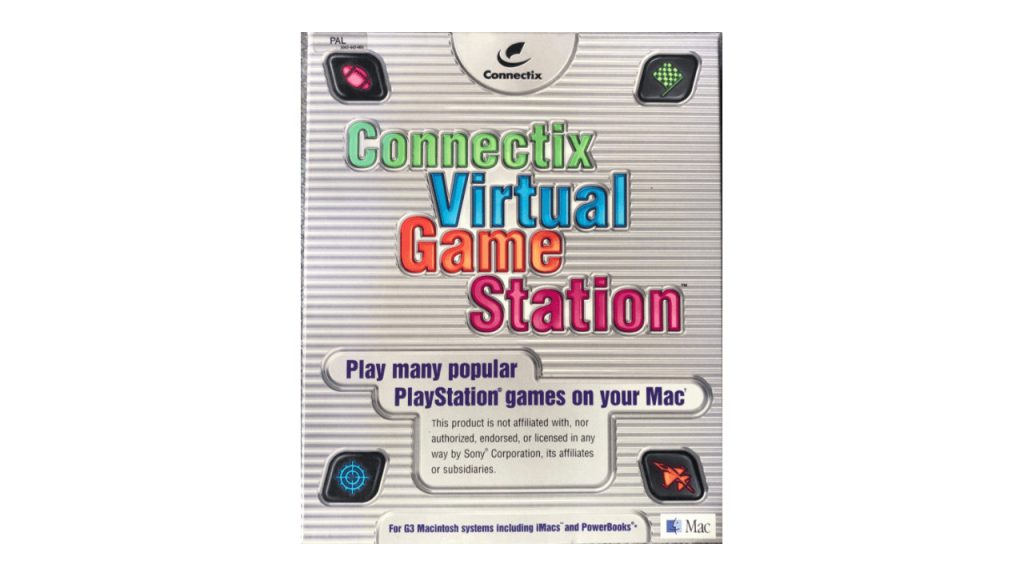
What could the program do? The “Virtual Game Station” emulator was installed on an iMac-G3 system and thus emulated the hardware of the Sony PlayStation. This made it possible to play console titles on the Apple device.
The iMac-G3 already had a compatible CD drive for the PlayStation game discs. Only a suitable controller with a USB connection needed to be purchased additionally. During his presentation, Jobs talked about hundreds of games that were compatible with the emulator.
Although the presentation was only a preview, several hundred copies could already be sold at the Macworld Expo. The product seemed at first glance to be a complete success.



Sony reacts and sends its lawyers
How did Sony react to the “Virtual Game Station” emulator? The Japanese console manufacturer was far from pleased with Steve Jobs’ plan. Sony had already been informed about the upcoming release before the public appearance.
They aimed for a licensing agreement and wanted to obtain Sony’s approval for further development. The PlayStation developer felt that his strong market position was threatened at this moment. This resulted in a cease and desist letter.
Sony wanted to prevent the use of its own code for the development of the emulator. However, Aaron Giles managed to rewrite the program code in the emulator. Thus, the “Virtual Game Station” emulator could be presented as planned at the Macworld Expo 1999.
Was the legal dispute over? No, Sony then really got started and filed another lawsuit. Developer Connectix emerged victorious from the case. But a temporary injunction prevented the further sale of the software in the meantime.
In the end, both parties reached an agreement. The program code was transferred to Sony. This abruptly ended Steve Jobs’ ambitions. At the same time, public interest in the first PlayStation decreased, as did the demand for emulators. With the new console generation in the form of the PlayStation 2 on the horizon, the chapter was ultimately closed definitively.
This was not the first attempt by Apple to make a mark in the console market:
Did you know that Apple released a console a few years earlier?

Your opinion is important to us!
Do you like the article? Then let us know!