

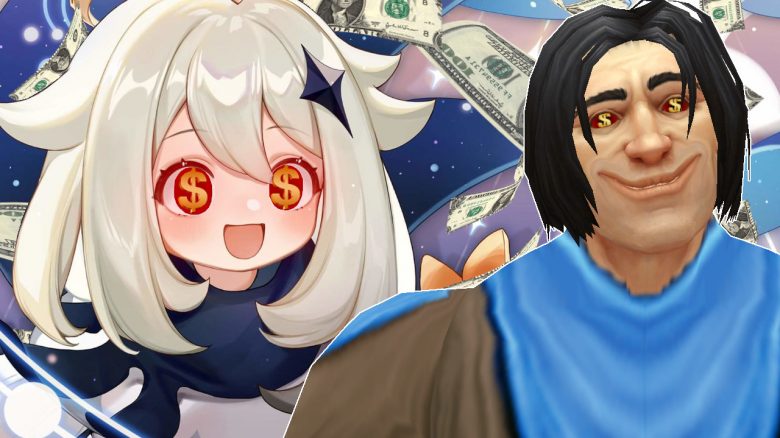
Criticism from the nagging demon Cortyn regarding microtransactions in MMOs – at least those that border on self-enslavement. Especially in recent months, there have been several such instances in games like Diablo Immortal or Genshin Impact.
Those who know me and read some of my articles know that microtransactions and I are not best friends. I can live with them in games like Hearthstone or Dead by Daylight, and when it comes to cosmetic items, I tend to be a bit more lenient. However, there is a type of microtransaction that I find simply disgusting. It concerns subscriptions that promise daily login rewards.
The insidious nature of these offers: They border on self-enslavement.
One pays for the fear of missing out
I want to be honest, I could never quite put into words what exactly bothers me so much about this type of “subscription”. But then I listened to Josh Strife Hayes during his YouTube analysis of “Diablo Immortal” – and he aptly described what has bothered me about the model for a long time.
The relevant quote is (translated):
“[Paying the money] doesn’t give you all the stuff. It gives you the chance to get all the stuff if you log in every day. (…) You pay for the privilege of having your login days count. (…) You are paying to be part of a ‘FOMO’ process.”
With ‘Fear of Missing Out’ (FOMO), the concept revolves around driving potential customers to take action or make a purchase by first instilling fear that they might miss out on something irreversible.
In sales, FOMO occurs when something is “only available for a limited time.” For example, if a skin in Fortnite is only available in the shop for a couple of days, and nobody knows if it will return, this will push some people to buy it.
With these “subscriptions” where you receive a reward every day you log in, for which you had to pay in advance, it becomes particularly absurd.
Genshin Impact sets the precedent, Diablo Immortal darkens it further
Famous examples include the “Boon of Plenty” mentioned in Diablo Immortal or in Genshin Impact the “Blessing of the Welkin Moon”.
In both cases, you receive some premium currency every day upon logging in – but only if you log in every single day. If you miss a day, the reward is gone.

In other words: If you buy such a “daily login subscription,” you are committing yourself, in a way, to log in every day. After all, you can only fully take advantage of what you’ve purchased if you log in every single day.
Of course, one could say: “Oh, if I don’t feel like it, I just won’t log in” – and of course, this will work for some players. However, the intention behind such a daily login subscription is clear: It tries to compel the player to log in as much as possible each day and then spend even more money in the shop while doing so.
What I find particularly disgusting about these subscription variants is, in my opinion, that there isn’t even a free incentive from the game, but something you have to pay for in advance. As a player, you are paying to feel the pressure to log in every day without fail.
Of course, there are also differences between these subscriptions. Diablo Immortal is considered particularly cruel because it doesn’t provide the same reward every day – but better rewards if you log in for 20, 25, or even all 30 days of this subscription.
If you miss one day, you’re out of luck and must purchase another month to receive the better reward.
I often hear the argument, “But you pay for a subscription with streaming services like Netflix or Disney+ or for games like WoW, and you don’t use it every day. You should feel bad about that too.”
But that’s definitely not a fair comparison. Because whether it’s a WoW subscription or a streaming service – if I “miss” a day here, I miss nothing. If I don’t watch “Sandman” on Netflix for a day, the episode isn’t just deleted, and I can still watch everything I want the next time.
For me, these daily login subscriptions are among the most disgusting things games have produced so far. Game companies have succeeded in getting players to pay for something that forces them to log in daily or at least psychologically conditions them to do so.
Or how do you perceive such daily login subscriptions?

Your opinion is important to us!
Do you like the article? Then let us know!