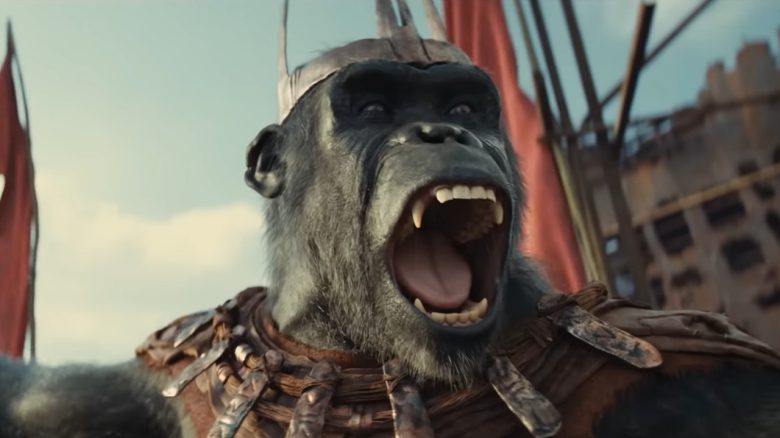
The sci-fi classic Planet of the Apes (1968) was revived in 2011 with a reboot trilogy. Now, the saga continues with Planet of the Apes 4: New Kingdom.
What kind of movie is this? With “Planet of the Apes: New Kingdom” (original title: “Kingdom of the Planets of the Apes”), one of the best sci-fi film series is getting a new installment in 2024. On November 2, 2023, the first trailer for the new film was released, which features the well-known mix of action and thought-provoking tones.
The film by director Wes Ball is set to hit theaters in the States on May 24, 2024.
Here you can already get a picture of it:
Are we moving towards the original?
What is the film about? The reboot trilogy concluded in 2017 with “Planet of the Apes: Survival,” and part 4 is expected to take place many years after its end. This could bring the story of New Kingdom closer in time to the events of the first “Planet of the Apes” from 1968.
The trilogy was actually an unofficial prequel. You can get an overview of the individual entries in the saga at Filmstarts.
At the time of the New Kingdom story, apes have already developed into the dominant species, while humans appear to be visibly wild. According to the official summary, the young ape Noa, played by Owen Teague, embarks on a journey through which he will question everything he believes he knows.
Noa will apparently be joined by the human girl Mae, played by Freya Allan. Fans of the Netflix fantasy series may recognize the British actress from her role as Cirilla “Ciri” from Cintra.
Those who love the classics might find some elements familiar when watching the trailer: The orangutan Raku, whom Noa converses with, bears a striking resemblance to the notorious Dr. Zaius. Additionally, a scene where a group of fur-clad humans flees from a herd of mounted apes evokes memories of the original.


The original from 1968 is considered one of the absolute classics of the science fiction genre. It was an adaptation of the eponymous novel by Pierre Boulle. However, one of the most iconic moments in film history did not originate from the original author’s writing: