

Festival for graphics card fans, as July brought the AMD Radeon RX 5700 (XT) and the two SUPER models of GeForce RTX 2060 and 2070. At the end of July, the 2080 Super model is coming. Is it worth buying the RX 5700 or are there reasons to wait? We take a closer look at the new cards for you.
Until now, Nvidia has dominated in the high-end area for desktop PCs, while AMD has been strong in the mid-range entry sector. But with the new Radeon RX 5700 and XT graphics cards, AMD is now also targeting the lower high-end sector, where Nvidia has been in control until now. This area is particularly lucrative due to high demand. Nvidia is aware of this and reacted with the new Super models to AMD.
What does this mean for you gamers and for whom might a new purchase be worthwhile?
- How well does the Radeon RX 5700 XT perform compared to the GeForce RTX 2070 or 2080 and other graphics cards: What do reviews and benchmarks say?
- How big is the leap from RX 5700 XT to RX Vega 64?
- Is it worth waiting for the custom designs of the RX 5700 or should I switch to Nvidia?
- Full-HD, WQHD and Ultra-HD – what can I play?
- How is it with Linux aside from Windows?
RX 5700 XT vs RTX 2060, 2070 and Super
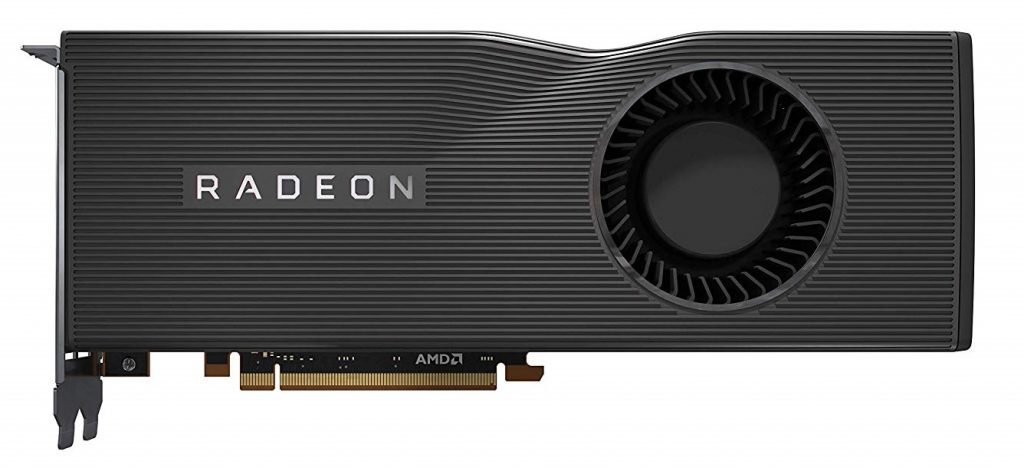
The new graphics card from AMD is the Radeon RX 5700 XT. Since July 7, the reference design of the new RX 5700 XT has been available. It belongs to AMD’s new Navi generation and is primarily designed to excel in WQHD resolutions. The RX 5700 is manufactured as a 7nm chip and has 8GB of video memory. Some games now require this amount if you want to play with high settings.
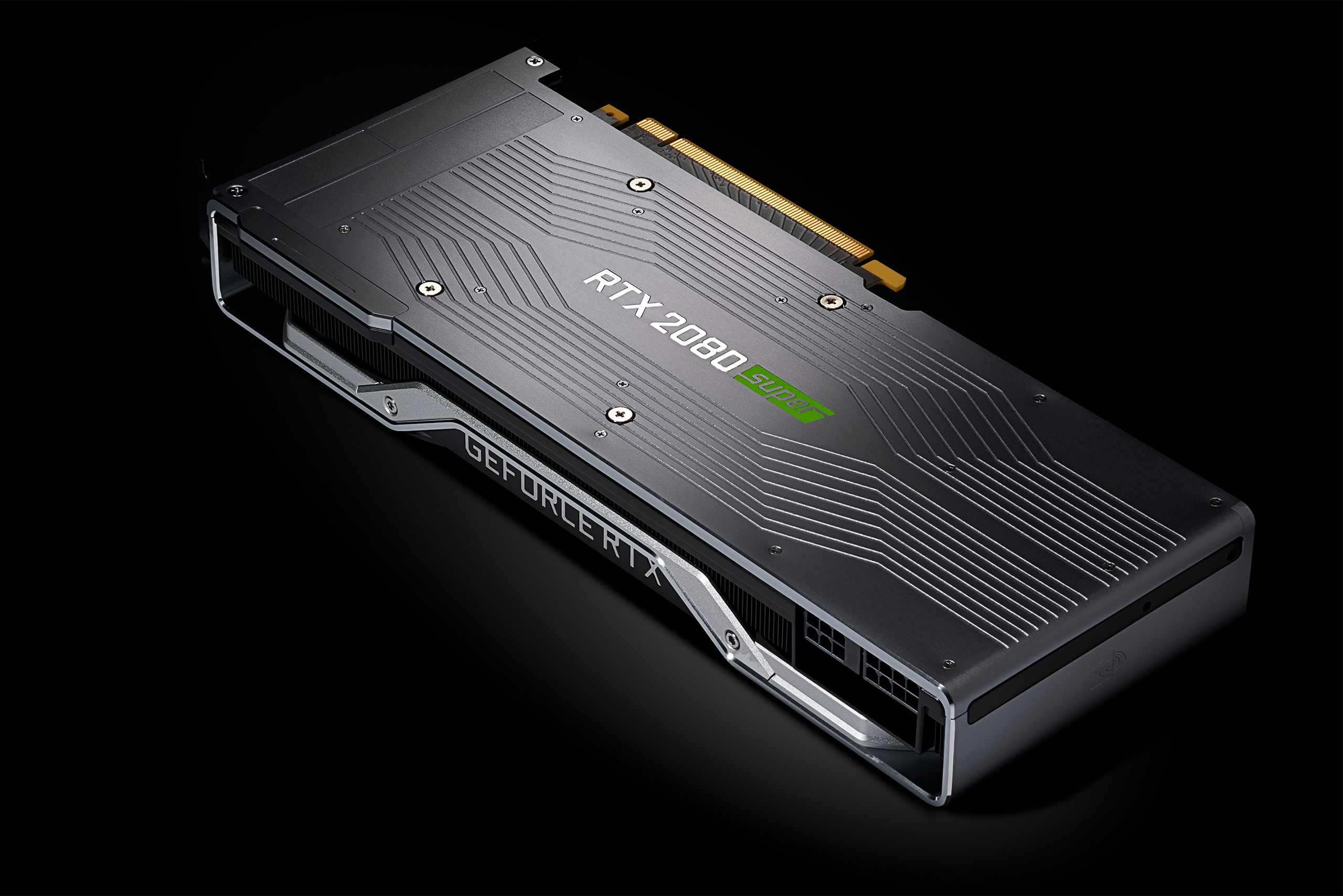
Then there are Nvidia’s Super models. The GeForce RTX 2060 Super and the GeForce RTX 2070 Super have been available since July 7, both as Founder Edition and now also as custom models. Nvidia continues to rely on the proven Turing architecture, which has replaced the old architecture. Likewise, the Super models, like the competition, also have 8GB of video memory. According to Nvidia’s official statement, the RTX 2080 Super will also be available on July 23 and is intended to position itself ahead of the RTX 2080.
How does the Radeon RX 5700 perform in tests?
In the following, we have summarized some test results as examples.
Chip. The testers from Chip describe the new card from AMD as “a strong bargain card with noise issues,” as it becomes very loud under load. For Chip, while the card is not a price-performance miracle, “in terms of performance, AMD can counter Nvidia well with the Radeon RX 5700 XT.” Additionally, the graphics card offers great performance for a reasonable price, even though the RTX 2070 Super outperforms it.
Gamestar. The testers from Gamestar see the 5700 series as a strong development in the right direction, with the new prices allowing it to compete better with the competition. Here, the lack of ray tracing and the poor fan are criticized, which tarnishes the overall picture and thus cannot receive a clear recommendation.
PCGamesHardware. The testers from PCGamesHardware primarily note a significant improvement in power consumption and energy efficiency compared to previous models. “Although AMD with the Navi-10 chip never reaches new performance spheres, the efficiency displayed is impressive. When comparing Polaris, Vega, and Navi on a per-unit basis, the old AMD chips truly look old.”
Computerbase. For Computerbase, AMD has created a surprisingly competitive GPU with the new RX 5700. “The current Navi 10 does not yet have all the features of Turing, but unlike the old GCN, RDNA shows much potential in the gaming sector.” They also criticize the volume.
The Radeon 5700 XT in gaming benchmarks
How does the 5700 perform on average? Computerbase has tested 15 games. A colorful mix of current titles with DX11 and 12, including games like Battlefield V, Anthem, Anno 1800, or Far Cry New Dawn. Here are the benchmark results:
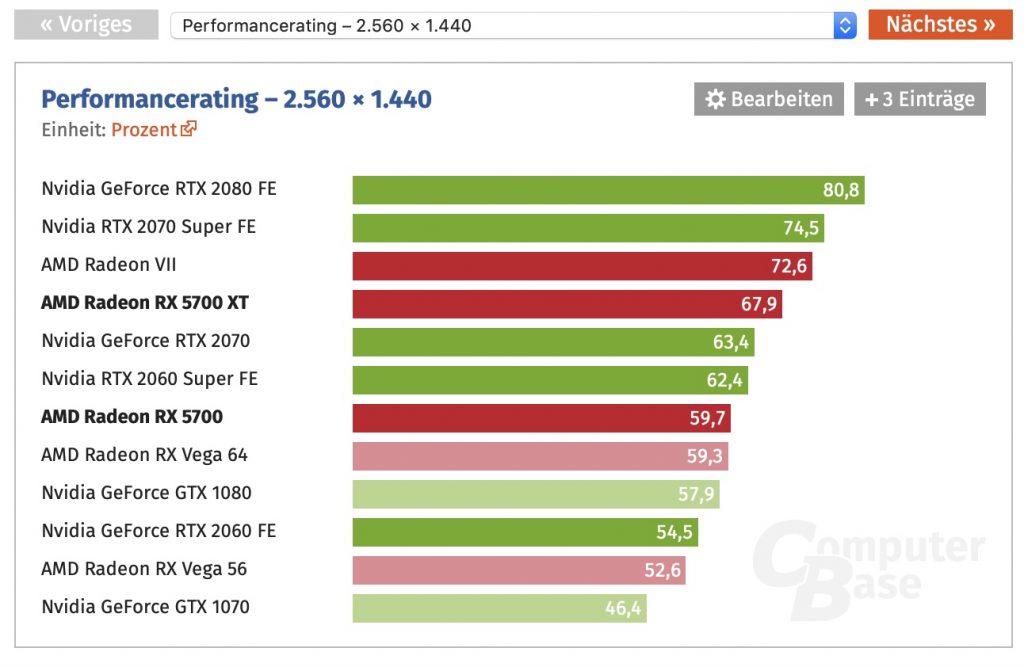
According to Computerbase, the Radeon 5700 XT shows the following average FPS picture in 2560×1440 resolution:
| Radeon 5700 XT | 100 percent |
| Radeon 5700 | – 12 percent |
| RX Vega 64 | – 13 percent |
| RX Vega 56 | – 22 percent |
| RTX 2070FE | – 7 percent |
| RTX 2070 Super | + 10 percent |
| RTX 2080 FE | + 16 percent |
| RTX 2060 FE | – 8 percent |
| RTX 2060 Super | – 20 percent |
- The 5700 XT can distance itself from the 2070 as promised, but falls behind the 2070 Super and 2080
- The predecessor RX Vega 64 leaves the 5700 XT notably 13% behind
- In Full-HD, the relative differences are nearly identical, although the GPU does not become as much of a bottleneck as it does in WQHD
Let’s take another look at this from the perspective of a title that is important to many readers on Mein-MMO.de.
Case study: The Division 2 RX 5700 XT vs GeForce RTX 2070
In The Division 2, AMD’s new RX 5700 XT shows that it consistently outpaces the 2060 Super, for which Nvidia demands a similar price. At a resolution of 1920×1080, the new card positions itself ahead of Nvidia’s GeForce RTX 2070 according to PCWorld’s own benchmark test of The Division 2. In WQHD, there is a tie, especially as the GPU quickly becomes a bottleneck at this resolution. However, the Super model of the RTX 2070 or also the old RTX 2080 remains unbeaten. Of course, the significantly more expensive RTX 2080 Ti is far ahead.
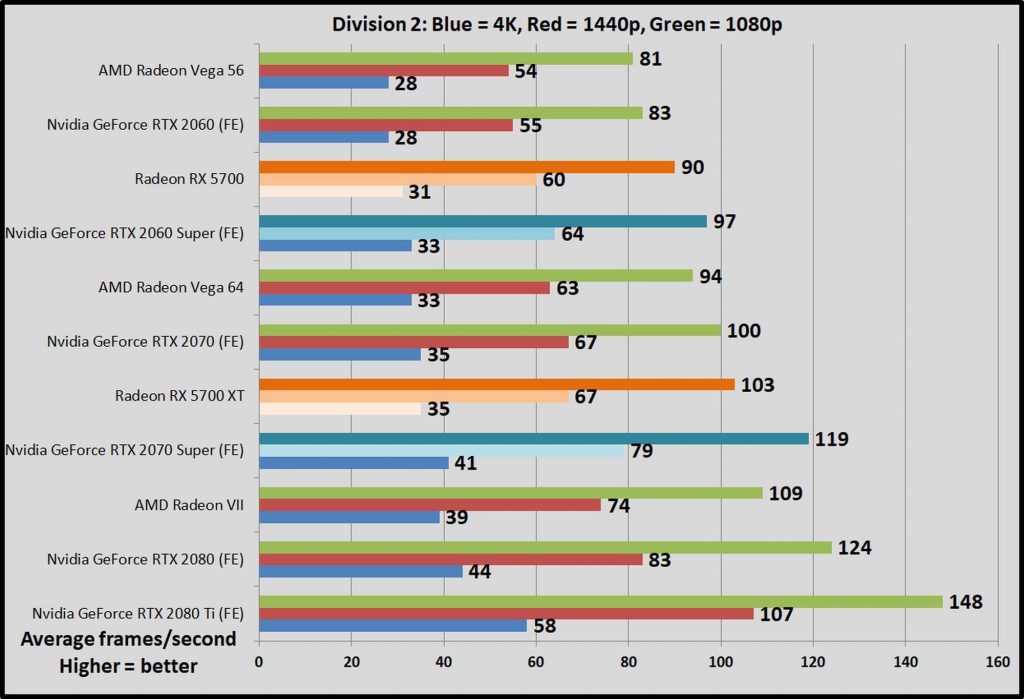
In WQHD, the RX 5700 XT still offers more than 60 FPS at full details. If you have a 60 or 75 Hz monitor, the 5700 XT is perfect for you. However, the capabilities of a 144Hz monitor are hardly utilized by the 5700 XT in the WQHD area in The Division 2. Rather, the upcoming 2080 Super or even better the 2080 Ti should be considered.
Higher “Frames Per Second” (FPS) generally provide the player with a smoother gaming experience. This becomes even more important when higher speeds are required in-game, such as with shooters. The refresh rate of the screen limits how many FPS the screen displays. 60Hz screens can display a maximum of 60 FPS, while 144Hz screens can take much more from high frame rates and thus can process up to 144 images per second sent by the graphics card. Many players refer to this as noticeably smoother gameplay. The G-Sync and FreeSync technology ensures that the FPS from the graphics card are optimally synchronized with the Hz frequency of the monitor. This also prevents the so-called screen tearing. This video illustrates it quite well using Fortnite:
If you increase the resolution up to Ultra-HD, you should also rely on a Ti 2080 or wait for the imminent release of the RTX 2080 Super: It should offer more performance than the previous GeForce 2080 models. With this, 50-60 FPS should be possible at higher, albeit not maximum, settings.
Of course, you can play The Division 2 smoothly in 4K and lower graphic settings with an RX 5700 XT. However, you shouldn’t expect miracles and should anticipate occasional stuttering.
Why should I wait for the custom designs of the RX 5700 XT?
Cooling and noise. Most testers complain about the high noise levels under load with the reference designs: These are once again equipped with a weak cooler. During normal operation, the cards are pleasantly quiet, but during gaming, the card can become noticeably loud. If you value a quiet PC, you should wait, as it won’t be long before the first custom models hit the market.
When will the first custom designs of the RX 5700 XT be released? Likely mid-August.
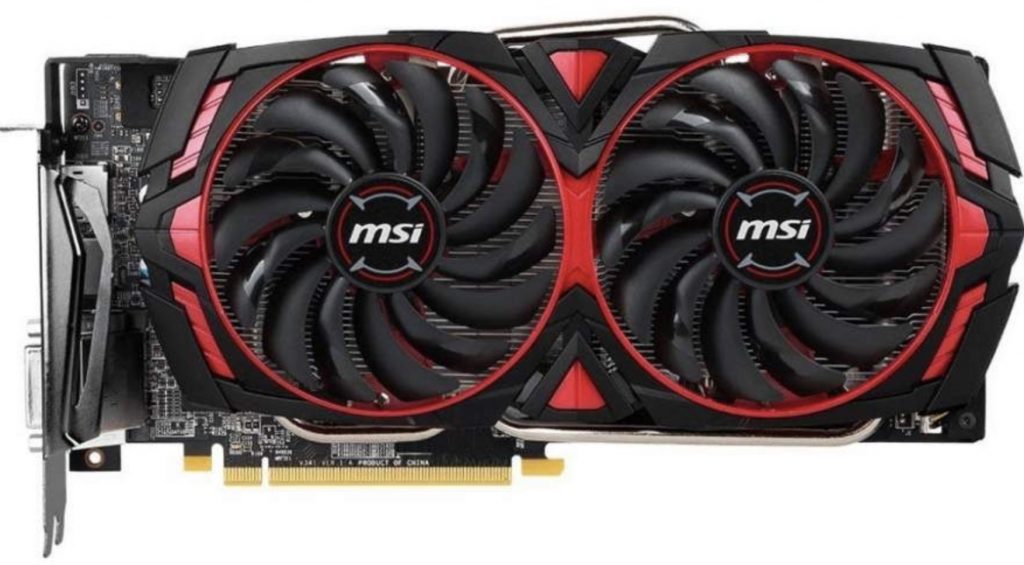
What is the advantage of a better cooler? The significant advantage is that the card can already be overclocked from the factory, and overclockers have already shown with the 5700 XT that there is still a lot of potential to be unlocked.
You cannot simply detach the cooler from a reference design and replace it like a processor with another one. In any case, you’ll lose your warranty, and it is generally discouraged. Therefore: If you want a quiet and better cooler, wait for the custom models, which are usually much better with AMD and often provide a few percent more performance or better go directly for Nvidia’s custom designs.
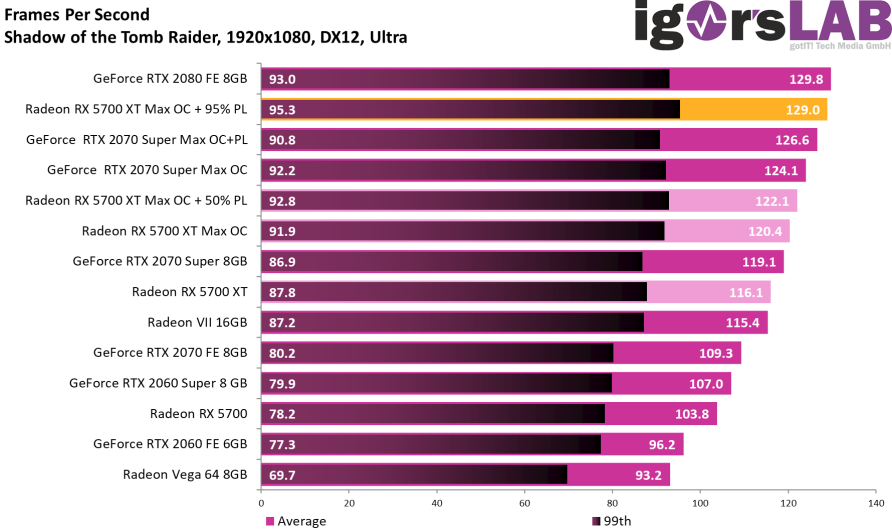
Overclocking with the reference cooler is only conditionally recommended: The power consumption and high temperatures can cause irreparable damage to memory, socket, or voltage converters. Therefore once again: If you want to actively overclock, wait for the custom models, whose coolers are significantly better. And the wait could be worth it, as the test mentioned two paragraphs above from TomsHardware shows.
Have you become curious? If you want to learn more about the custom designs, then check our article about the custom designs for the RX 5700 XT: Here we collect all information about custom designs and update the article regularly for you:
I want to buy the 5700 XT now! Okay, if you don’t care too much about a lower noise level, lower temperatures, and slightly higher performance – but rather prioritize the price – then you can also comfortably go for a 5700 now. There have already been some first deals that make the purchase even more worthwhile. It is also assumed that the prices of the custom designs of the Radeon RX 5700 will be higher.
Prices of RX 5700 (XT), 2060 and 2070 (Super)
| Prices according to Geizhals, as of 18.07.2019 | Price in euros |
|---|---|
| Nvidia GeForce RTX 2060 6 GB | 336 |
| AMD Radeon RX 5700 8 GB | 363 |
| Nvidia GeForce RTX 2060 Super 8 GB | 406 |
| Nvidia GeForce RTX 2070 8 GB | 438 |
| AMD Radeon RX 5700 XT 8 GB | 414 |
| Nvidia GeForce RTX 2070 Super 8 GB | 529 |
Should I choose the GeForce RTX 2060 Super or GeForce RTX 2070 Super instead?
Reason 1: Custom models are already available. The first custom designs for the GeForce RTX Super are already available, in addition, Nvidia’s reference design is significantly quieter than the competition.
Reason 2: Ray tracing. It’s also important to note that Nvidia graphics cards support DXR ray tracing. Ray tracing simply refers to the calculation of rays after they hit a surface. Until now, only GeForce RTX cards have been capable of handling this, and AMD plans to support hardware-accelerated ray tracing only officially from next year (2020) and will initially only offer hybrid-ray tracing. In software ray tracing, the shaders are used instead of the compute cores; performance gains should not be expected.
At the moment, only four games support ray tracing: Tomb Raider, Metro: Exodus, Battlefield 5, and Quake 2 RTX. 14 other titles are listed by Gamestar, which plan to support ray tracing.
Wait for the RX 2060 or the RTX 2080 Super at the end of July?
Interesting for players who are reluctant to invest 400 euros in a graphics card could be the announcement of the weaker RX 2060. So far, there is little information available; it is expected to be based on the Navi-14 chip and should roughly match the performance of a GeForce GTX 1660 Ti, thus costing around 250 euros like this. However, it is expected that this card will only offer 4 GB of video memory, which is now barely sufficient for modern games.
Which graphics card is worth it for me?
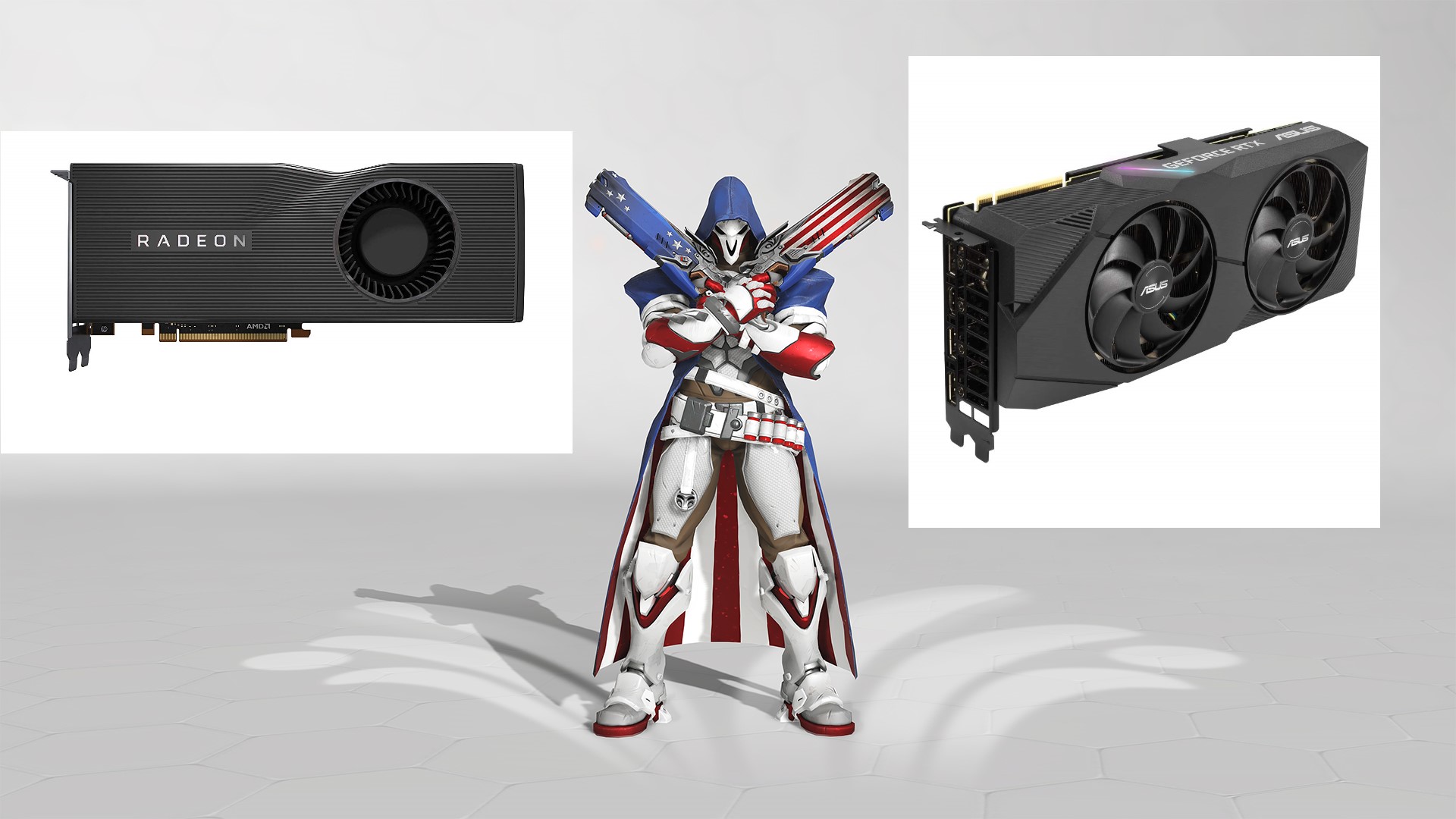
If I play in Full HD (1920×1080): In the Full HD range, which is currently most relevant for most players, the new AMD graphics cards are convincing. The RX 5700 clearly distinguishes itself from the GTX 1070 and also has a few percentage points ahead of the GTX 1080. The XT variant can also hold its own against the RTX 2060 Super and the RTX 2070. For those of you who primarily game in Full HD and rarely use significantly higher resolutions, the upgrade like the MSI Radeon RX 5700 XT is worthwhile.
If I want WQHD (2560×1440): In the WQHD range, AMD’s new card gains ground compared to Nvidia. Here, the Radeon graphics card averages around 88fps according to Gamestar. If you use a 75 Hz screen, the RX 5700 XT is completely sufficient for you, and you can play at the highest detail level; however, a 144Hz screen may also be worthwhile.
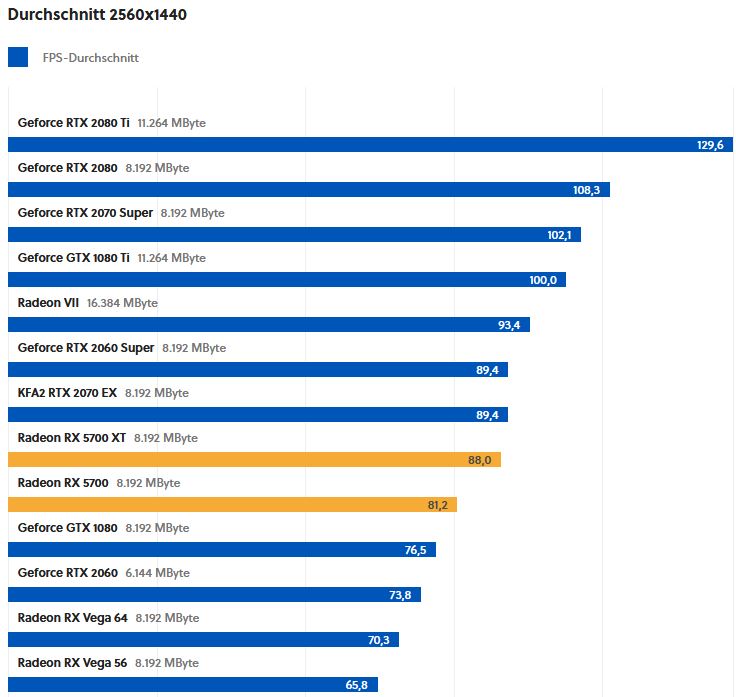
However, those who want to take full advantage of a 144Hz monitor will need at least a 2080 or better for games like The Division 2 in WQHD.
P.S. Do you also need a new processor besides a graphics card? Then check our article on Ryzen 3000, where we give you an overview of the newest processors:

How do competitive shooters like Fortnite and Overwatch run with a Radeon 5700 XT?
Fast games and shooters benefit from a high frame rate and Hertz rate. This means that you should generally aim for more than 100 FPS in order to better utilize 144Hz monitors. As the benchmark results from Computerbase show, the new 5700 XT at least outperforms the GTX 1080 and the 2060 Super, achieving high FPS rates of 135.7 frames per second in Fortnite. In Overwatch, you can even achieve 184.7 FPS and in Rainbow Six: Siege 182.3 FPS. Thus, typical e-sport titles run quite well with the Radeon RX 5700.
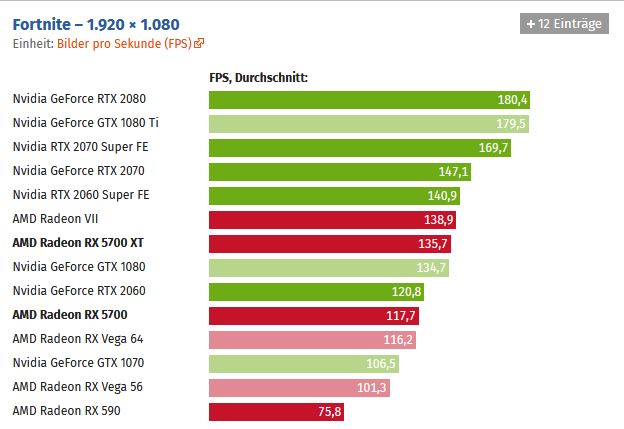
In the Full HD range, the 5700 XT can therefore also fully utilize 144 Hz monitors very well. For 144 Hz in the Full HD range, Gamestar recommends the AOC 62460PF in particular. For around 200 euros, it offers a fast Full HD panel and many extras. The audio output is moderate; however, the screen offers excellent Hz rates for most games.
Conclusion about the Radeon RX 5700 from AMD
The Radeon RX 5700 XT is slightly faster than the competition in direct comparison to the GeForce RTX 2060 Super, and the same goes for the comparison to the standard GeForce RTX 2070 model. At the top of the price segment up to 550 euros remains the GeForce RTX 2070 Super.
Well suited for WQHD in the 60/75 Hz range. Especially in the highly contested WQHD area, which Nvidia has dominated until now, AMD shows a significant performance improvement: In most tests, the RX 5700 XT achieves a few more FPS than the 2060 Super and the 2070, while the RX 5700 can overtake the 2060.
Conditionally suitable for WQHD in the 144 Hz range. With a 144Hz monitor, it primarily depends on the game and settings whether the 5700 XT is worth it for you. The 5700 falls off more here.
In current and graphically demanding games like The Division 2 and Metro Exodus, the effect diminishes to around 70 FPS if you want to achieve the best graphics. In GTA 5 or Destiny 2, however, the 5700 XT maintains around 100 FPS at maximum settings. With a few changes, even more FPS can be quickly achieved so that the 144 Hz can be better utilized.
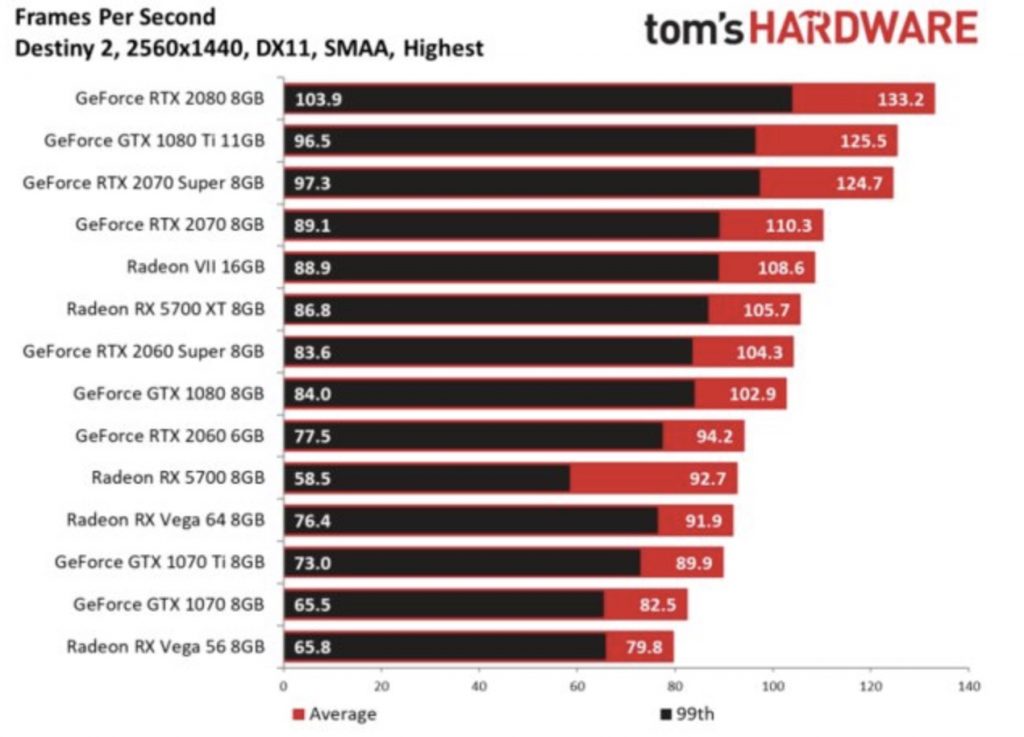
Not so suitable for Ultra-HD. You can actually play all games with an RX 5700 XT – if you are willing to make stronger concessions in terms of graphic quality. This should be questioned. If you want to switch to 4k gaming, in most cases it will be for the best possible graphics.
Here, it is worth waiting for the release of the new RTX 2080 Super, which will officially be released on July 23. Or you go for the significantly more expensive 2080 Ti, with which you can play even more smoothly in 4k.
Pro and Con – 5700 XT or RTX 2070 Super (2080) to buy?
Overall, however, the RX 5700 XT offers better value for money than the Nvidia models. If you value the euro per FPS, then the new 5700 XT is worth considering, as it costs 50 or respectively 110 euros less than the competing models. Especially in Full HD (5700, 5700 XT) and in the WQHD range (5700 XT), AMD’s new cards provide good performance.
What speaks for the RX 5700 XT?
- Good price-performance ratio in the Full HD and WQHD segment
- With some limitations, 4K gaming is also possible
- Well suited for e-sports or typical competitive shooters with more than 100 fps
- Stronger than the 2060 Super and 2070, for which Nvidia demands a similar price
- Custom models will soon be available, which will further unlock the card’s potential
- As it is a new architecture, the next drivers could significantly enhance performance (similar to the RX Vega)
- PCIe 4.0 support
What speaks against a RX 5700 XT and for a GeForce RTX 2070 Super?
- The 2070 models have better reference coolers and there are custom designs with even more powerful coolers
- Hardware accelerated ray tracing
- About 10% more performance, which can even reach the old RTX 2080 – if there’s still a budget, the Super 2070 is a great choice
- Tip: Since the 2080 is a phased-out model, there will be regularly attractive deals in the near future, so it might also be worth looking at offers from good custom models like the 2080 Asus ROG Strix and MSI Gaming X Trio
Can I use the new cards as a Linux user?
Support from Kernel Linux 5.3: The new kernel expected mid-October will likely support the new graphics cards from AMD. Torvald has now integrated the patches for the Amdgpu kernel driver, as can be seen on Github. AMD now offers a driver package for Linux on its own homepage. Meanwhile, according to Golem, the first open-source driver for Ubuntu is also available.
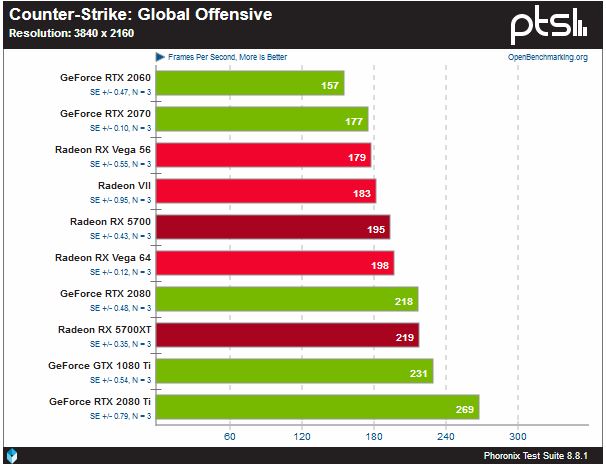
Initial tests on Linux already show positive results for the 5700 XT: Thus, the 5700 XT consistently achieves high FPS, for example in the now somewhat older shooter Counter-Strike: Global Offensive.
Currently supported by only a few distributions. However, the new Open/Pro driver from AMD currently (as of July 17, 2019) only supports the enterprise distributions RHEL/CentOS, SUSE, and Ubuntu 18.04.2 LTS; other distributions are currently not supported.
No Vulkan support yet: Moreover, there is still no Vulkan support, which means that Linux users are currently limited to OpenGL, which is particularly disappointing because newer Linux games work with either Vulkan or Proton.
A reason why you should buy a new graphics card:


Your opinion is important to us!
Do you like the article? Then let us know!