

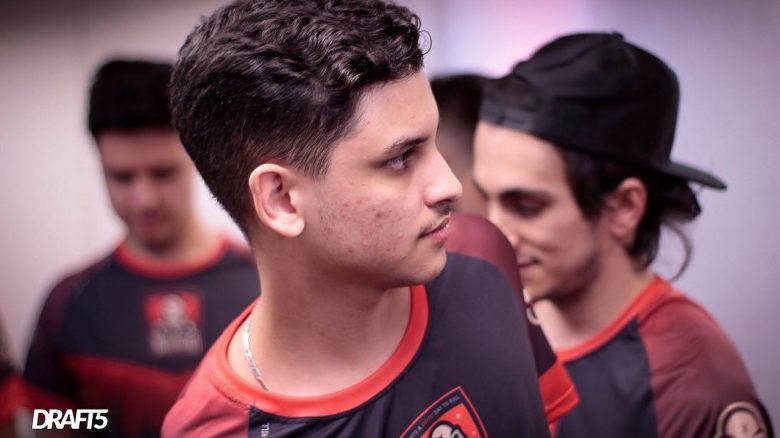
A professional player of Counterstrike: Global Offensive died in 2019 at the age of 19. A labor court in Brazil has now ruled that his last CS:GO team bears partial responsibility for his death and must pay €72,000 to the family of the deceased. The player had complained of headaches and vision loss after moving into the team’s gaming house.
Who was the young man?
- The player’s name was Matheus “BruttJ” Queiroz. In 2019, he was just starting to make a name for himself in CS:GO as an AWP player/Rifler.
- He won the “Up Expo Game” tournament with the Reapers team in July 2019 and earned a reputation in the Brazilian league at that time. At the end of 2019, the professional team “Imperial” took notice of him and signed the young man. In November 2019, he moved into their gaming house in Sao Paulo.
- But before the career started, it ended tragically.
What was known about the player’s death: In December 2019, the Imperial team announced that their player Matheus Queiroz had left the team and had since passed away: He had suffered from headaches and decided to leave the team in Sao Paulo and return to his family in Rio de Janeiro.
He died in a clinic in Rio de Janeiro.
He had only played for Imperial for two months; his performance with the Reapers had attracted “everyone’s attention”.
Everyone was deeply saddened by the loss (via twitlonger).
The young man’s condition worsened when he moved into the gaming house
After the player’s death, a teammate from his former team stated that he had already suffered from “severe headaches, constant vomiting, and loss of vision” while he was with the Reapers. This apparently began when he moved into the “Team Reaper” house in August 2019.
Other players in the house also complained of ailments. It was suspected that it might have been due to the water or the food there.
In the new gaming house with Imperial, it reportedly got even worse, said the mother of the deceased: He suffered from insomnia because the house was too close to an airport. Also, there was not enough food.
After the player’s death, his parents sued both eSports organizations (via dexerto).
The cause of death is believed to be an “unspecified infection of the central nervous system”.
Judge rules: Team neglected duty of care
This is now the verdict: Three years after the player’s death, a Brazilian judge, Patricia Almedia Ramos, ruled that the team had “indirectly” contributed to the player’s death by failing to fulfill their legal and contractual obligations.
The judge argued that the eSports club Imperial did not make sufficient efforts to create a “safe and healthy working environment” and did not provide enough support as the player’s health deteriorated.
It was noted: During his short time in the team’s gaming house, he was hospitalized several times, but the doctors could not make a diagnosis.
According to the judge, the player was in the care of the eSports organization when he moved into the gaming house: from then on, there was no separation between professional and private life.
The structure of the gaming house leaves much to be desired, to the point that the athlete could neither sleep nor eat healthily. It is obvious that his condition could not improve in such an environment. This was apparent to anyone who met him. This is evidenced by the three or four hospital stays in a very short period.
What is the verdict? The judge acknowledges that it is unknown whether the player would still be alive if the team had fulfilled its duty of care. However, it cannot be assumed that his death was unavoidable.
The court has ordered the team to pay about $72,000 to the family.
Team plans to appeal, sees no responsibility on their part
How do the teams respond? The Reapers team denied the allegations in 2020. They stated that while he was still living in their gaming house, the player showed no symptoms.
Also, the Imperial team denied the accusations: They claimed that the circumstances in the house could not have contributed to the player’s death, as he had only been there for a few days.
After Imperial was now convicted, their lawyer announced plans to appeal. They stated that they had fulfilled their obligations and even offered support to the family. The player had only been with the team for about 40 days – so it is therefore unreasonable to assume that the company is responsible for his illness and death.

Your opinion is important to us!
Do you like the article? Then let us know!