

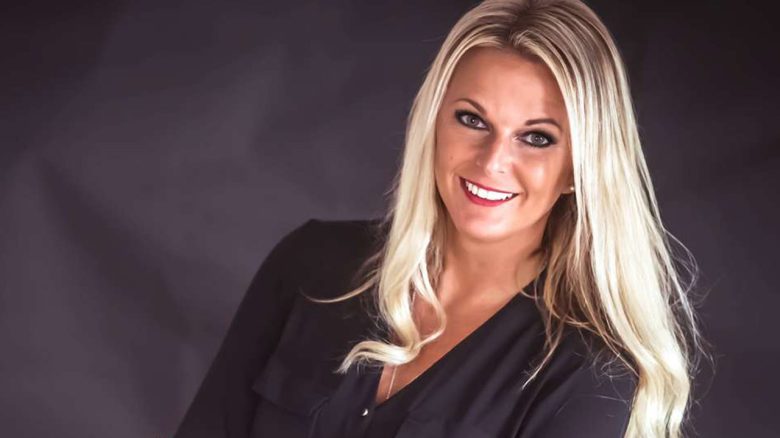
The school principal Silke Müller has been advocating for digitalization in schools and educating children on how to use the internet, social media, and influencers responsibly for years. In an interview, she shares with us her concerns, wishes, and successes in this area.
Social media, Twitch, and YouTube play a significant role in the lives of kids today. With smartphones, they are always connected, aware of the latest trends, and know what is happening on the internet.
However, the unfiltered consumption of online content also brings problems. They start with “harmless” pranks and lead to life-threatening trends. Silke Müller, a principal from Niedersachsen, has been addressing these issues at her school for years. (Link to Twitter profile)
In a two-part interview, we talked with her about the digitalization at her school and her role as the Commissioner for Digital Ethics in Niedersachsen.
“Somehow we have forgotten to transfer our values and norms to the internet”
Irina from MeinMMO: Hi, can you introduce yourself to our readers?
Silke: My name is Silke Müller. I come from beautiful Niedersachsen, Landkreis Oldenburg, and I am the principal of a secondary school, the Waldschule Hatten. We have about 850 children and 85 colleagues, as well as school chickens and dogs.
In Germany, we have what feels like 30 different types of schools. You can imagine it as a combination of main and secondary schools, up to grade 10, but with a different concept called secondary school. The children go into professions, to further schools, or however they pursue their first educational qualification in Germany.
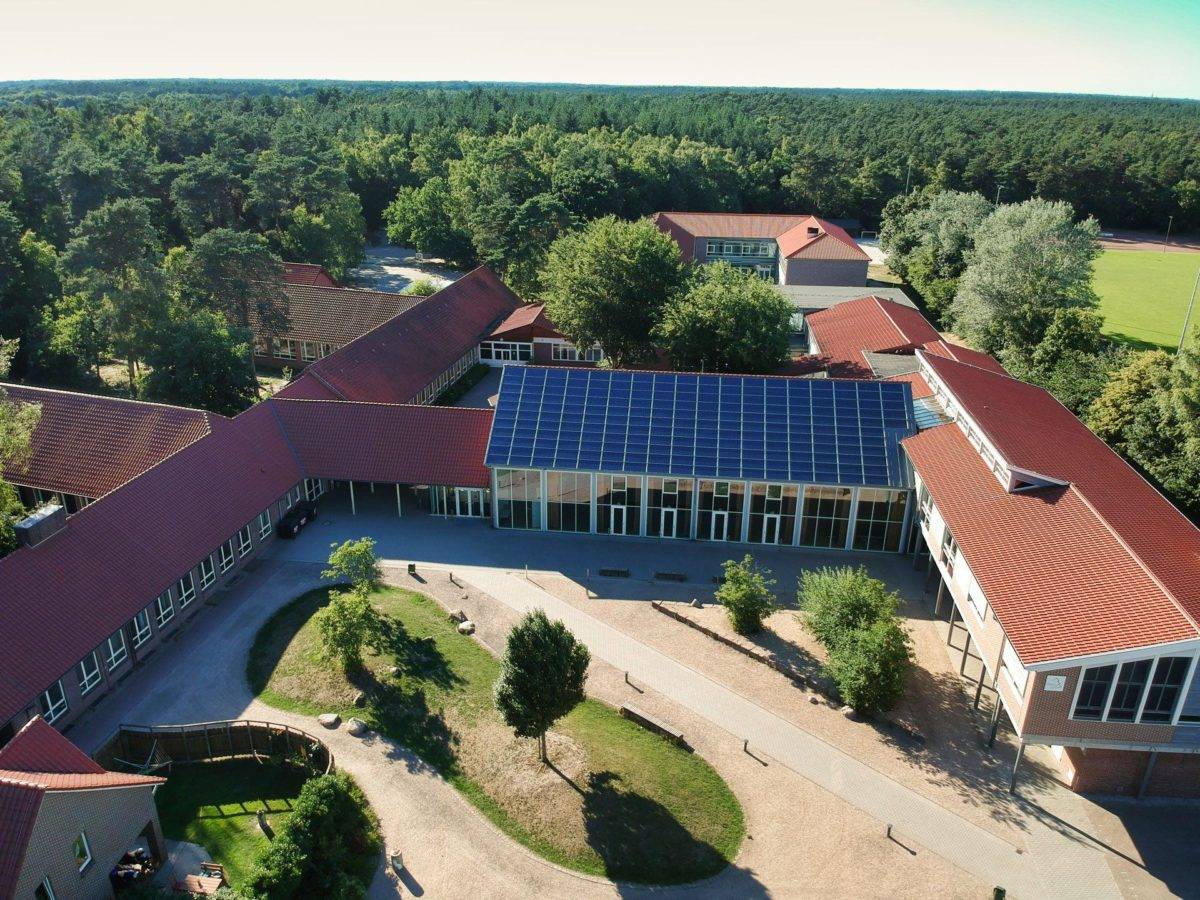
We have been strategically digital since 2009, starting with projects back then. Since the 2013/14 school year, all children from grade 7 have had a parent-funded tablet.
We focus on three core objectives alongside the regular analog teaching: imparting low-threshold IT skills, a foundational understanding of AIs, and especially a digital ethics.
Irina from MeinMMO: You are the Commissioner for Digital Ethics in Niedersachsen. What can our readers imagine under this term?
Silke: I have actually been involved in this digital development world for a very long time, and it is very important to me that we connect civil society, industry, market economy, education, and politics. Because we can only be successful if we understand each other and are in exchange.
This led to my being awarded by the Niedersachsen Ministry of Economics in 2021 as the first Digital Ambassador of Niedersachsen. My focus is on highlighting, mediating, and awakening awareness for digital ethics.
The term digital ethics is as ridiculous as it may be easy to imagine, as it concerns peaceful coexistence online. And we are touching on the topic that, in my view, is not only endangered online. It also spills over into the analog world.
We have somehow forgotten to transfer our values and norms to the internet. It is still not a lawless space, but it continues to be perceived as such. And that is a huge problem. We do not need to think about censorship. Should we think about legal regulations or legislative proposals? Or do we first have to start with ourselves and ask, “How do we want to interact with each other?” And this discussion is, in my opinion, not being held.
“They care about how many hearts they have”
Irina from MeinMMO: Twitch, YouTube, and TikTok have become integral to kids’ everyday lives, much like VIVA and MTV were in the past. What effects on kids’ behavior in school and on the playground have you observed over the years?
Silke: I’d like to interrupt briefly because I see it a bit differently. I also had MTV, Unplugged, and so on. The difference is that we were often consumers of provided content. We were not content producers at that point, but those who simply consumed.
We had to accept the programming that was aired, whether it was pop, rock, or heavy metal. Now, of course, it’s entirely different. One reason is that the channels are very diverse and offer so many different programs. TV channels still have a certain ethos in what they broadcast. It is getting worse with trash TV, but it is regulated.
Social networks are not regulated. This means that children remain consumers, but on the other hand, they are also producers. They can create and post content themselves. And that is where the real disaster begins. Character formation through likes begins.
It is extremely important to them how many followers they have. They care about how many hearts they receive. And if you think about the fact that people who don’t even know you are rating you, then you as a person take a backseat. It is only a facade that I present.
This leads to kids becoming very superficial. They aspire to “look what he or she has, I want that too.” This “fame” behind it. Possibly even misguided by cosmetic and health trends. This leads to extreme directions, with a lot of fitness and body forming.
On the other hand, it leads to them trying every ridiculous thing. We had this trend where deodorant was sprayed on the arm until it turned blue, resulting in injuries and scars. Everyone would say, “What kind of nonsense is that?” They do it because it’s a TikTok trend.
Photos from the school bathroom, next TikTok trend. Facebook has already become the old people’s network for the kids.
This is a huge disaster because not only does character formation through likes exist, but influencers have also gained a status where they can, in a certain way, operate manipulatively, even if unintentionally.
But real democracy education, engaging with topics, with political and social themes, is not happening. If someone says, “I think it’s cool, I don’t think it’s cool,” the follower thinks the same without forming their own opinion.
And I would say: I recently spoke with someone who told me, “You know what, Silke. I’m really thankful that we didn’t have smartphones back then. Otherwise, I would have drifted off just like that.” That is a true statement.
On one hand, it is very practical. If I’ve driven 10 km and realize I’ve forgotten my phone, I turn around. I don’t want to demonize everything. But on the other hand, as unreflected and unfiltered as we let it happen, it is simply an extremely great danger for children who are in the process of finding themselves.
The issue is that we in the school bubble have too little knowledge and typically say as teachers, “Everything was better in the past. Kids need to stick together again.” Yes, because they live a different life.
With the introduction of social networks, everything has changed socially. We can demonize this and brush it off, but we can’t simply sweep it under the rug. And we are too little concerned with this. I believe that this issue is much too little in the societal spotlight.
One says, Germany is lagging behind in digitalization. That is certainly one aspect, but we also talk very little about the content issues.
“I wish for a greater understanding of how much influence influencers actually have”
Irina from MeinMMO: What is your stance on influencers whose fan groups primarily consist of kids and young adults?
Silke: I believe this has always existed. We also had our Bravo posters in our rooms, and if a star wore a pair of pants, then you had to buy it. The essence of influencers has always existed.
We once had Daniel Jung as a math influencer here. The kids said, “Hey, you are the math giant!” One has to ask oneself why there must be people who explain math on the internet? Yes, because we seem to be failing in schools. We indeed do not reach everyone.
More about Daniel Jung can be found in our interview with him:
There are many influencers who are only commercially driven, but there are also those who are “meaning influencers.” One can demonize it or say, “Okay, this is now the time.” Fame and celebrities have always existed. And there have always been good and bad ones.
Now there are new dimensions of direct contact. In the past, stars from movies and music were unreachable. Now an influencer can say, “Hey guys, you are my family.” This direct way of feeling addressed leads, of course, to me hanging on that person’s every word and dealing with what someone does much less critically.
This “glass between us” no longer exists. One feels part of an influencer’s life. Problems arise when I find everything totally great and more or less follow a guru. That is difficult.
Due to the constantly growing social media landscape, especially influencers now have the opportunity to engage with their fanbase much more significantly and bind them in different ways. More on this can be found at houseofyas.de.
Irina from MeinMMO: What do you think of the statement: ‘Influencers, due to their reach, have a role model function that they must live up to’?
Silke: A lot. There are two sides to the coin. On one hand, you cannot blame someone who says, “I have the means, I want to try something and earn money with it.” The network has achieved that, and there are people like Daniel Jung who also put in an incredible amount of work. This is a legitimate business model. One does not just hold the phone in front of one’s face, and that’s it.
However, it must be said that anyone who is in the public eye must know that they influence people. That is a responsibility that one has. One can express their opinion, but still be a democratic person. So not “What I say counts,” but “This is my opinion. Follow me or not, but think about it yourself.”
This sentence is often missing from influencers. I also try to be an “influencer” for digital ethics and state that I want to have a positive impact. I still hold myself open to criticism and am open to discussion. If someone else finds it silly, I say, “Let’s step into the ring and discuss it out.”
One cannot simply say that the responsibility lies there. For me, responsibility also means not following someone blindly. This does not only depend on the person leading but also on those who sometimes follow blindly and stupidly.
One has to say, “Okay, it is also the responsibility of each individual to question critically, at all times.”
Irina from MeinMMO: What would you wish for more from influencers regarding their young fan base?
Silke: I think I wish for a greater understanding of how much influence they actually have. And how much danger they can pose if they do not reflect on what they are selling.
If they are advertising figures, then everything is fine. Everyone must decide for themselves what to buy. Everyone is responsible for themselves. It is not about raising a warning finger and saying that one should be careful.
But sometimes I miss this awareness of how much influence they can have on a child’s psyche. I wish that an influencer would realize: What I do changes and shapes young people. How do I want to shape young people? This question should be asked by everyone at the beginning.
The former largest streamer on Twitch has a different opinion, however:

Irina from MeinMMO: What role do games as a social network play in the everyday lives of kids from your perspective?
Silke: Every online game, in my view, is a social network because they always have multiplayer modes. Kids can communicate with each other through various contact options, which naturally offers a significant space for people with not-so-good intentions.
If I pretend to be Carola12, I could just as easily be Günther56 to lure kids in. Keyword: cybergrooming. One tries to lure children to lead them into sexual dependency. In the “best-case scenario,” as harsh as it sounds, only digitally. But it can also become analog, with meetings and thoughts of abuse.
It is simply the case that many children play games, and many parents do not know which platforms offer what possibilities. Keyword: Roblox. When I hear from elementary school parents that their children are playing Roblox, I say, “Okay, but you do know that there are possibilities for violent right-wing radicals and pedophiles there?” And then one just gets wide-eyed, “Excuse me? But that’s just like Lego.”

We again have the problem that we leave children completely unaccompanied in a world that we cannot control or know at all. It’s like sending a child on a bike to the highway and saying, “I don’t have a helmet for you right now, but be home by 6 PM. You’ll be fine.” And of course, it is not okay.
What can parents do?
Irina from MeinMMO: What tips do you have as a principal for parents who are overwhelmed by all this digital stuff? Where should they start?
Silke: I am well connected and work closely with Prof. Dr. Thomas-Gabriel Rüdiger. He heads the Institute for Cybercriminology at the University of the Police of the State of Brandenburg. I am a huge fan of his and do everything he says. He once gave a lecture at the school, and I remember one sentence from him, where he said, “People, don’t give your kids a game that you haven’t played yourself for two weeks to see what happens.”
Great tip. I think it’s fantastic. No network without being registered yourself and knowing what happens there. Of course, this not only involves questions of attitude, but also what one can effectively do.
We have also spoken with Prof. Dr. Thomas-Gabriel Rüdiger at MeinMMO:

There’s the “Law4School” initiative by lawyer Gesa Stückmann. She organizes webinars against cyberbullying for students, parents, and teachers to educate: “What am I allowed to do? What am I not allowed to do?” And I tell you, you will be astounded. She explains which penalties apply and makes clear what is happening online.
Then there’s the “Weitklick” initiative, which offers great materials for parents, children, and all areas of society. There’s also Klicksafe against cybergrooming.
One really has to say: Media education does not mean: “My child has only 2 hours of screen time.” Five minutes are enough for kids to be run over.
Media competence is not a restriction. Of course, children should not be hanging in front of the screen all day, but if you think you can protect them that way, that is nonsense. At the same time, bans do not help either. That’s almost like removing social life by saying, “You don’t have your phone anymore.” That is a sanction, but not education.
The second part of the interview will be released next week and will cover the technical questions about the digitalization of schools.

Your opinion is important to us!
Do you like the article? Then let us know!