

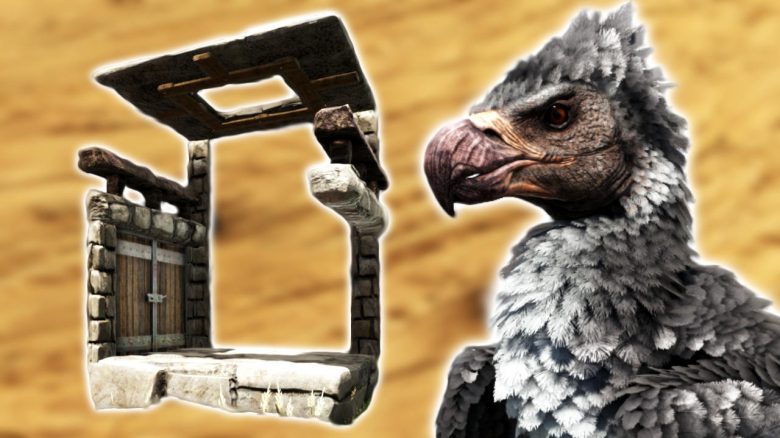
In ARK: Survival Evolved, players not only fight for survival, they also tame wild creatures and build elaborate bases. However, one player discovered strange structures on his server that he couldn’t make sense of.

What is it about? The ARK player u/Jelly1153 discovered strange constructions by other players on the server he plays the survival game on. The peculiar structure has no proper walls on all sides to protect from dangers, nor a proper roof or enough space to store loot and resources.
Wondering what these constructions are that he found all over the server, he reached out to the community on reddit with a screenshot.
Below we embed the reddit post by u/Jelly1153:
Strange Structures Help You Tame
What are these structures? The strange structures discovered by u/Jelly1153 are a trap for the Argentavis. This was invented by YouTuber captain fatdog.
The Argentavis is a very useful creature and is a true jack-of-all-trades in ARK: Survival Evolved. The bird has an enormous carrying capacity, is a flying workbench, and a solid fighter. Additionally, it halves the weight of numerous resources it carries in its inventory.
The Argentavis is also one of the reasons why ARK is made too easy by flying creatures. Therefore, it is very valuable to tame this all-rounder with little effort.
Trap for Argentavis Requires Few Resources
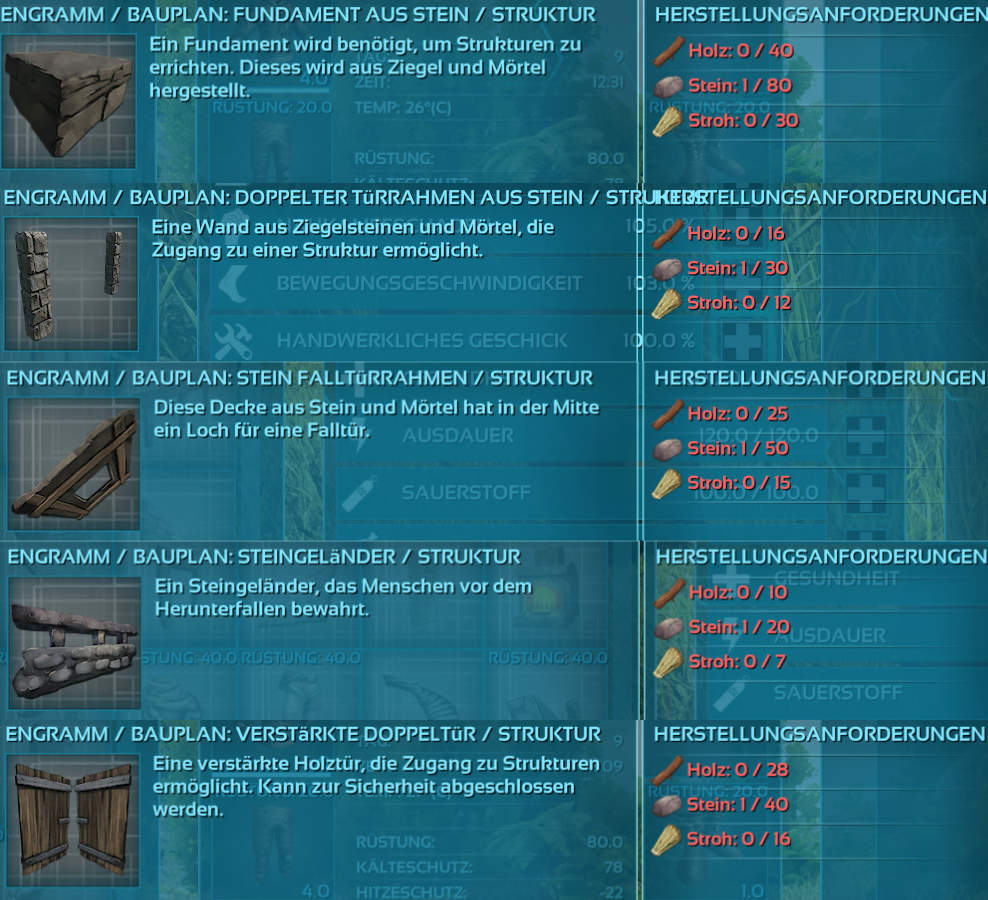
What do you need for the trap? You can build the Argentavis trap by captain fatdog with just a few resources. You will need only 300x Stone, 161x Wood, and 111x Straw. From this, you build the following items:
- 1x Stone Foundation
- 3x Stone Double Door Frame
- 1x Stone Trap Door Frame
- 2x Stone Railings
- 1x Reinforced Double Door
Below you can find an overview of which items you need to build and how many resources are needed for the one-time crafting of each object.
Build Your Own Argentavis Trap
How can you build this trap yourself? If you are wondering how you can build this practical Argentavis trap yourself, we embed the video in which YouTuber captain fatdog explains his creation.
If you prefer a written explanation instead of the video, which you can always refer back to, we describe the process in 8 short steps:
- Step 1: Place a Stone Foundation on the ground, ideally not far from an Argentavis spawn.
- Step 2: Place a Stone Double Door Frame (T1) on the Stone Foundation
- Step 3: Place another Double Door Frame (T2) on the first (T1)
- Step 4: Now place a third Double Door Frame (T3) on the adjoining side
- Step 5: On the highest Door Frame (T2), place a Stone Trap Door Frame. Make sure this is right above the foundation and acts like a roof.
- Step 6: On the standalone Door Frame (T3), now place a Stone Railing (S1)
- Step 7: On the opposite side of the standalone Door Frame (T3), now place a second Stone Railing (S2) that runs parallel to the first (S1).
- Step 8: Finally, you need to place a Reinforced Double Door in the standalone Door Frame (T3). Ensure that the door opens inward. However, when you lure the Argentavis into the trap, the door must be closed.
A Door is the Key to Success
How does the trap work? At first glance, the trap seems like the Argentavis could easily fly out of it. But this is not the case if you use the trap as follows:
You lure the raptor through the wide open side of the trap where there are no Door Frames or Stone Railings placed into the interior of the trap. You can even sit on a Pteranodon for this, as it can fly straight through the double Door Frames. The Argentavis cannot do this because it is too large.
Then you walk outside the trap to the Door Frame with the Double Door inside and open it. When the door is open, it juts into the flight path through which the bird flew into the trap. The Argentavis can no longer leave the trap due to its size.
What do you think of the trap? Do you find the idea behind it good, or do you think a trap for taming an Argentavis is rather unnecessary? Feel free to let us know here on MeinMMO in the comments!
The Argentavis is one of the most important animals in ARK, but it did not make it into our list of the 10 strongest dinos:
The 10 Best Dinos in ARK – Who is the Strongest?

Your opinion is important to us!
Do you like the article? Then let us know!