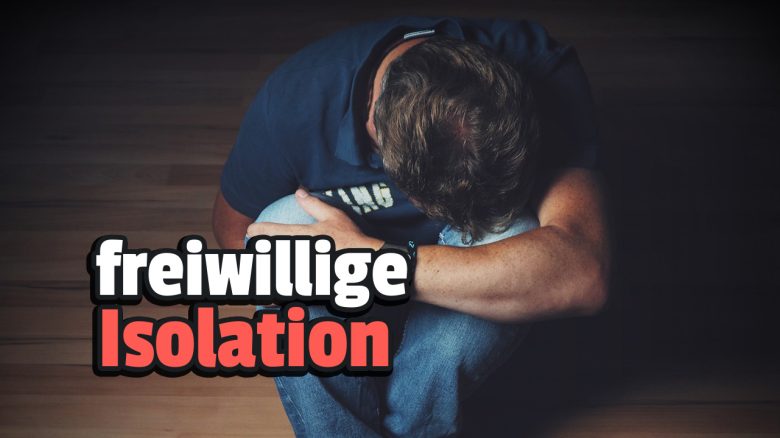
In South Korea, parents voluntarily isolate themselves in cells. They try to understand their children who have retreated into loneliness.
In South Korea, there is a trend: people voluntarily go into isolation to be alone. They wear plain, uniform clothing and spend days alone in a tiny, sparse cell that is not much larger than a wardrobe, foregoing company, phones, and other electronic devices.
The BBC has now spoken with female and male inmates who have retreated into this isolation.
And all have one thing in common: they are parents of young people who are either teenagers or in their thirties, who have turned away from society. In Korea, this is referred to as “Hikikomori.”
Parents try to understand children who withdraw
Young people living in withdrawal, like the children of these parents, are referred to as “Hikikomori,” a term that was coined in the 1990s in Japan to describe the severe social withdrawal of adolescents and young adults.
Why are the youths doing this? One theory suggests that youths withdraw from society because the pressure in the working world is too high, and they do not want to arrive in this life because too many obstacles stand in their way before they can fulfill the tasks that society expects of them.
Other theories believe it may also be due to middle-class families being financially able to support an adult child – or it may relate to overly close bonds between mothers and children.
But why do these parents do this? The BBC spoke with two individuals who consciously entered this isolation. Both shared under the protection of anonymity that there are family reasons for what they do:
- A mother has a son who lives withdrawn in his room and neglects his personal hygiene and nutrition.
- A father has a son who decided seven years ago to cut off all contact with society. He rarely leaves his room and refuses to take the medication prescribed by his doctors.
The parents go into isolation to better empathize with the situation of their children and understand why they want to live so lonely and isolated.
Certain companies offer special programs where people are given the opportunity to isolate themselves. This also includes a special educational program funded by organizations such as the Korea Youth Foundation and the Blue Whale Recovery Centre.
The program has a clear goal: to show parents how they can better communicate with their children. It includes a unique experience, namely three days in which the participants stay in rooms modeled after an isolation cell.



Parents believe they understand their children better after isolation
Does it work? The interviewed individuals explained to the BBC that they can at least somewhat empathize with their children’s situation.
As the father questioned explained: “I asked myself what I did wrong… that is painful.” But now, after his time in the cell, he says he has gained “some clarity.”
The other person interviewed admitted that the solitary confinement helped her understand her son’s feelings: “I realized that it is important to accept his life without forcing him to fit into a certain mold,” she says.
Corona locked many people in and out: During the Corona pandemic, many youths were confined and purchased their quality of life with debt. And this now negatively affects their situation, according to experts: Experts believe: Generation Z is doing poorly because they spent a lot of money at the wrong time.