

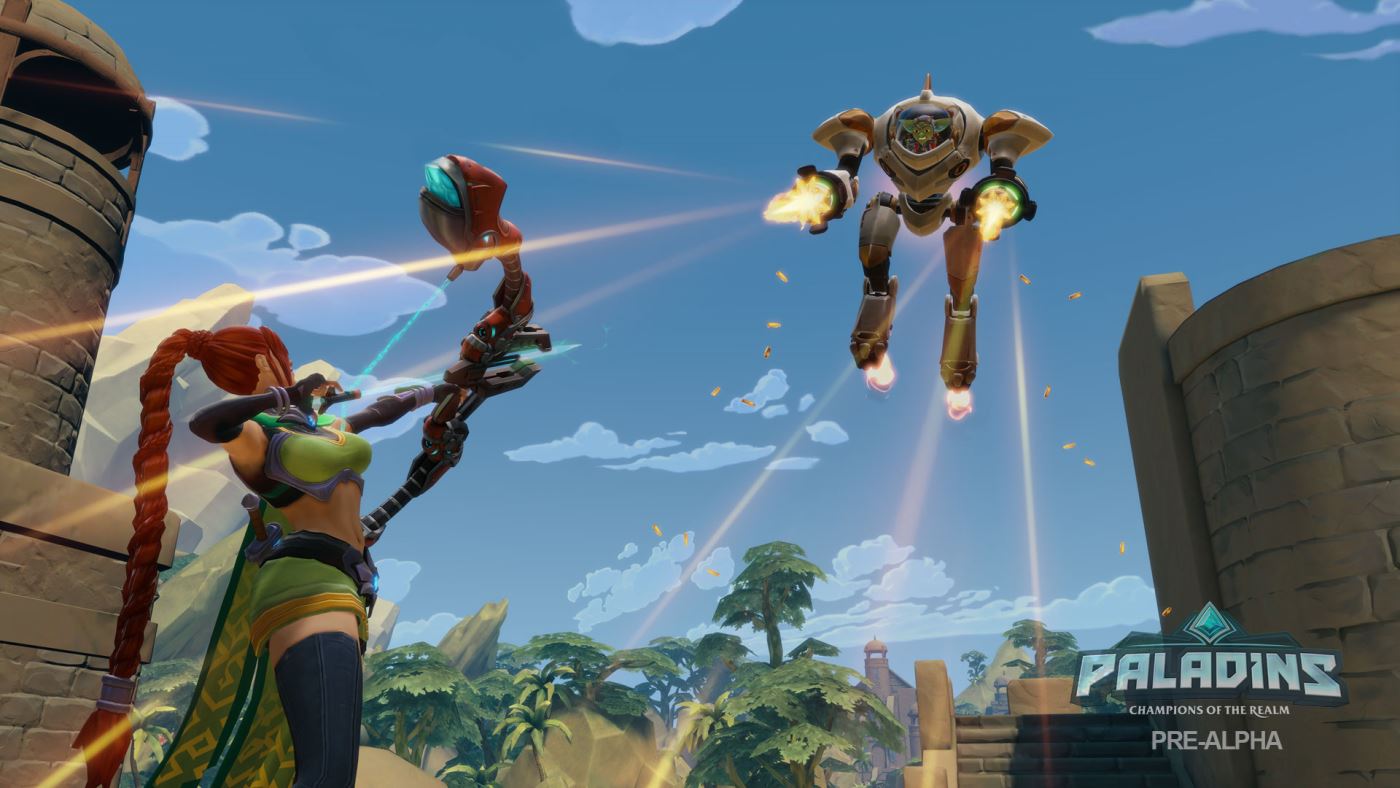
The maps – The talent system
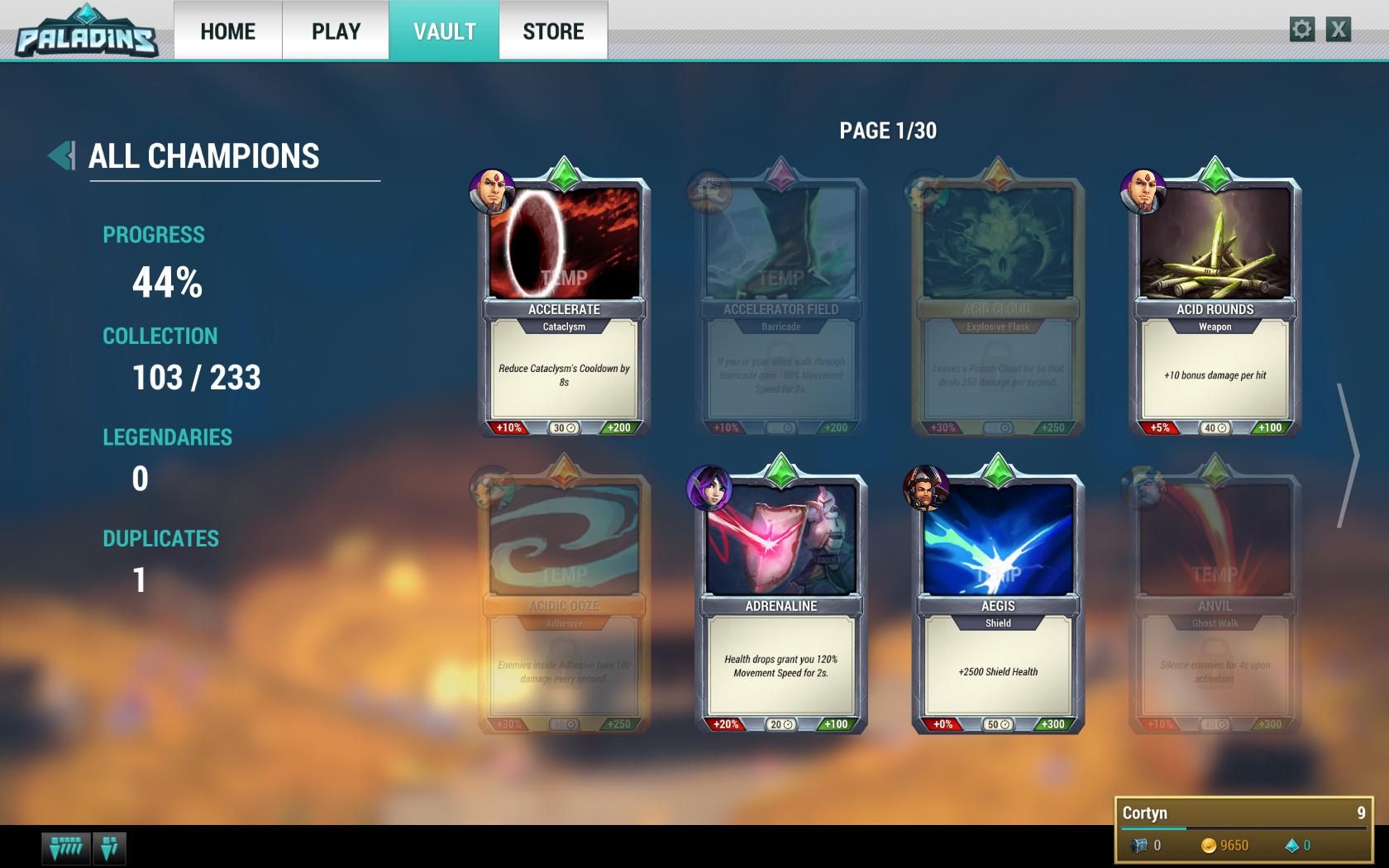
Especially the principle of collectible cards as talents impressed me. During a match, your character levels up – starting at level 1 and then increasing up to maximum level 5 (in theory, even further, but in practice, matches usually end before that). With each level up, you are presented with three cards from your own collection that match the character. You can choose one of them: For the rest of the match, it grants you a passive bonus in the form of extra damage and additional health points, as well as an adjustment of your abilities.
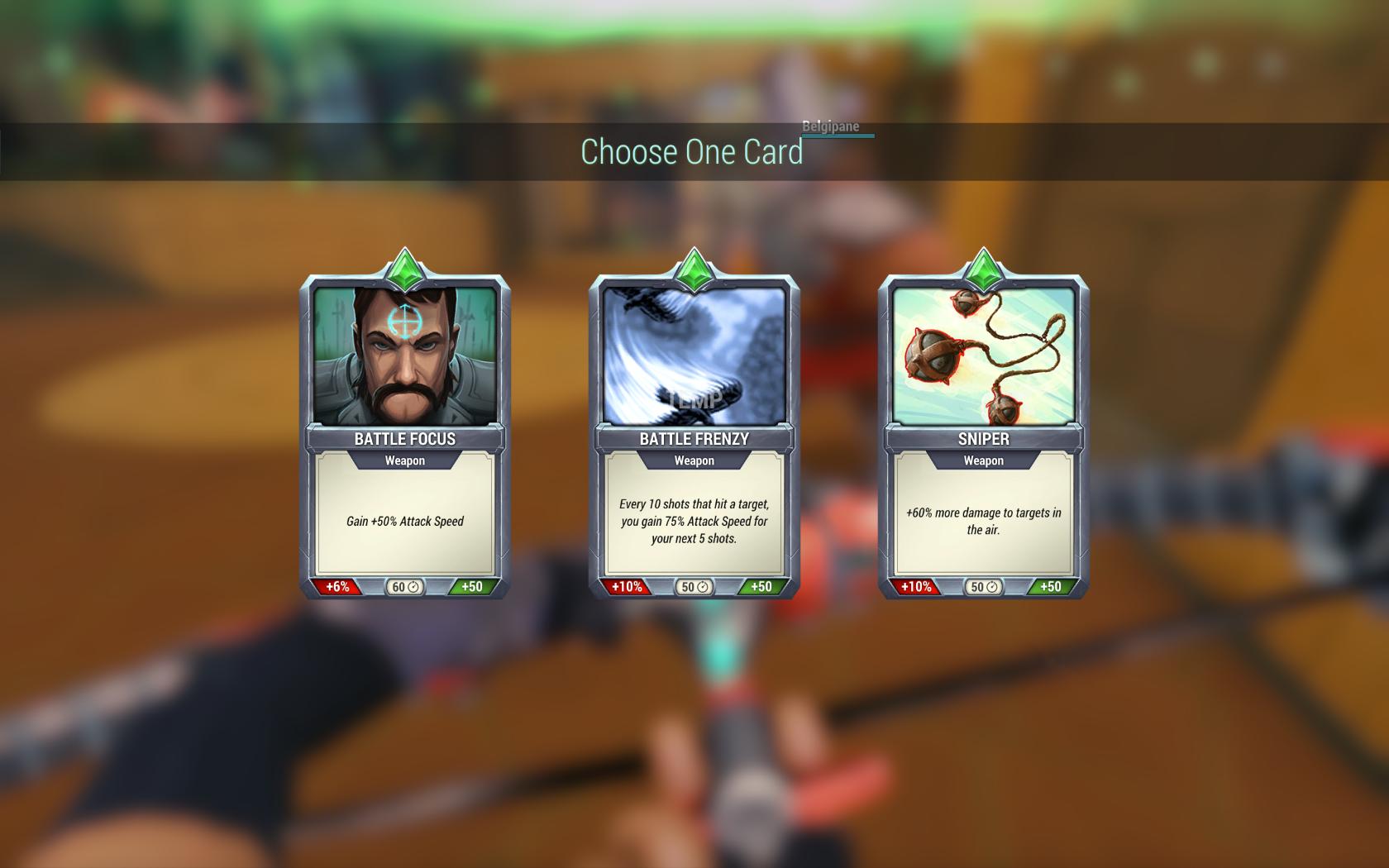
The effects of the individual cards strongly resemble talents from Heroes of the Storm. Sometimes you can enhance an arrow to leave bleeding effects, or increase the range of a turret.
Some talents even completely change existing abilities. For example, from Fernando‘s shield, a flame wall can be created, which he can push against opponents to drive and burn them. Assassin Skye can manipulate her time bomb so that affected enemies are poisoned after the explosion. Another talent allows her to activate stealth while on a mount – extremely practical because it allows you to get behind enemy lines unnoticed.
The only negative aspect is the randomness of the cards. Personally, I liked it, as it forces you to play the champions a bit differently each time, but frustration can also be high if you can only improve defensive abilities, even though you wanted to play a damage dealer. In the full version, you will be able to build your own decks – but the game mode for that has not been included yet.
Especially practical: If you are missing some cards, you can ‘borrow’ them from friends as long as you are playing as a group. They then appear randomly in the selection when you level up.
Paladins – Overwatch for the poor?
In these days, anyone launching a team shooter with a comic look must certainly endure some comparisons with Overwatch . Yes, there are indeed some parallels, and especially in character design, I would almost call it a copy – but only almost. Although Fernando and Reinhardt are quite similar (both are knights according to lore, and both can set up identical shields), the card system makes them play completely differently.
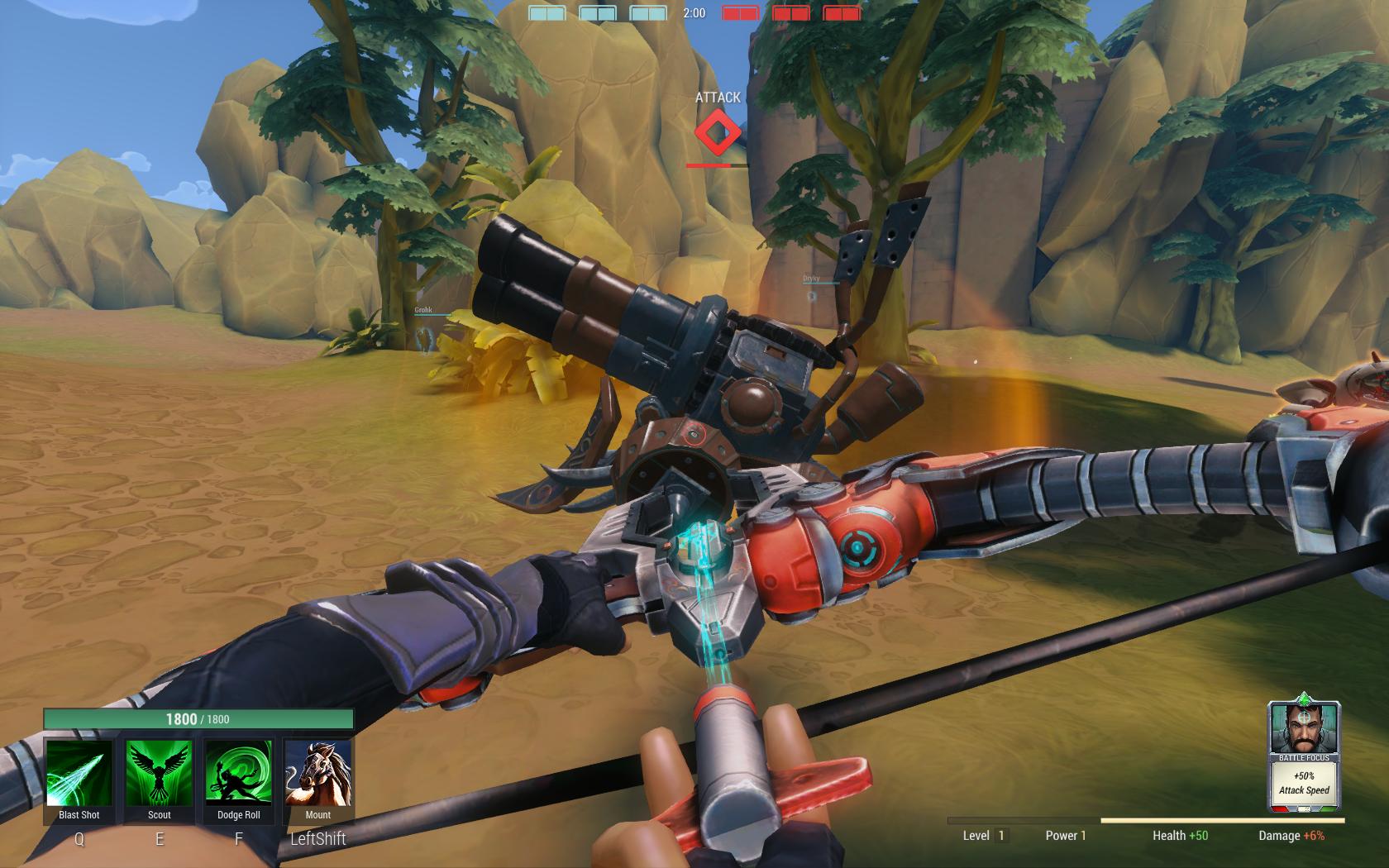
Overwatch usually focuses on tight maps that nearly force combat, whereas Paladins features many open areas where you can hop and shoot in a duel (until someone comes from behind and steals the kill, of course).
A beta that deserves the name
While in recent years it has become common for “beta” to mean “finished product in promotion phase”, Paladins returns to the original meaning. To call this even remotely a finished game would be an exaggeration.
Many graphics in the game (such as the maps) have illustrations that were directly taken from SMITE – these are only temporary placeholders, but I had to chuckle several times when I recognized the symbols again.
Moreover, aside from the two game modes (against bots or humans) and opening the earned chests, very little works in the game. The currency cannot be spent, a shop is not yet implemented, and the menus look spartan, just functional.
But as HiRez humorously states: “We don’t make mistakes; we have happy moments!”
On the last page: Will the game be Pay2Win? What does Cortyn’s conclusion look like?

Your opinion is important to us!
Do you like the article? Then let us know!