

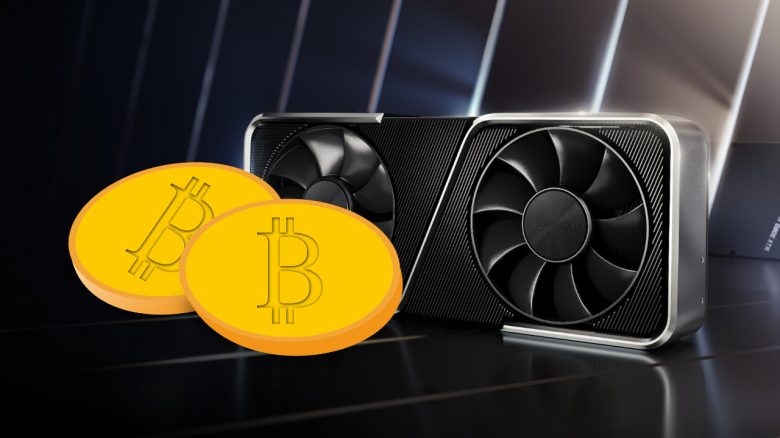
Nvidia wanted to make the RTX 3060 uninteresting for miners. For this, they relied on a hardware and software solution. However, hackers managed to bypass these measures.
Here’s the deal: The RTX 3000 graphics cards (GPU) are currently in high demand, and both miners and gamers are fighting for the few graphics cards available.
Nvidia made the RTX 3060 uninteresting for miners by utilizing a combination of software and hardware solutions.
However, in China, it seems they have managed to bypass these restrictions and utilize the full efficiency of the card.
A user recently posted a picture on Twitter showing that Chinese miners have bypassed Nvidia’s restriction:
On Facebook, Taiwanese miner Lê Anh Tuấn posted further information. Another user added that it likely only requires three tricks to restrict the driver and achieve full efficiency.
How trustworthy is this? Anyone looking at the Facebook post will notice that this is not an isolated case and that several others have likely managed to bypass the restriction.
However, we would generally advise against attempting such modifications.
The title image shows an RTX 3060 Ti, as there is officially no Founder’s Edition of the RTX 3060.
Nvidia originally wanted to make mining uninteresting with the RTX 3060
This was Nvidia’s idea: Nvidia configures the software for the graphics cards so that the software can recognize certain mining algorithms.
The software must be installed by anyone who wants to use the graphics card. Once this software detects that someone wants to mine cryptocurrencies, the hash rate is halved. And this hash rate is crucial for mining.
However, it’s not just about the software, as the software also works together with the BIOS of the graphics card:
This way, Nvidia aimed to make the smallest RTX 3000 card uninteresting for miners.
A BIOS can also be found on your motherboard, which starts the computer and checks if all components are functioning correctly.
In the same breath, Nvidia also presented the CMP (Cryptocurrency Mining Processor), a graphics processor aimed at professional miners. Instead of buying the RTX 3060 for mining, they should consider buying the new series instead.
Changes in cryptocurrency play a role for graphics cards
What do miners do at all? Miners use graphics cards to mine digital currencies like Bitcoin or Ethereum. With their hardware, they solve complex cryptographic puzzles, for which they are then rewarded with currency. Currently, the rule is: those who contribute the most power to the solution receive the reward at the end (Proof of Work).
What will happen in the future? In the long term, it looks like graphics cards will no longer play such a significant role in mining starting from 2022.
- The easiest cryptocurrency that can be mined with graphics cards is Ethereum.
- However, with the upgrade to Ethereum 2.0, the performance of the graphics card will likely no longer matter. Here, a new concept is being introduced, which is expected to replace the old reward system in the long run.
This should (hopefully) positively impact the graphics card market starting in 2022. Prices for graphics cards may then drop a bit.
How much money you are willing to spend on a graphics card, we are currently asking you here on MeinMMO. Feel free to stop by and let us know what you think about the current prices.

Your opinion is important to us!
Do you like the article? Then let us know!