


In international comparison, the internet expansion in Germany is quite poor. But don’t worry, the internet is still expensive.
In 2018, it is hardly possible to live without permanent internet access. Therefore, it has been recognized in Germany for several years that access to the internet is a basic right for all citizens.
Conversely, this would mean that internet access in Germany should be cheap and powerful. However, that is not the case.
A study by the network operator Cable.co.uk lists the costs for a broadband connection in a global comparison. In doing so, no consideration is given to the actual internet performance as long as it counts as “broadband” in the respective country.
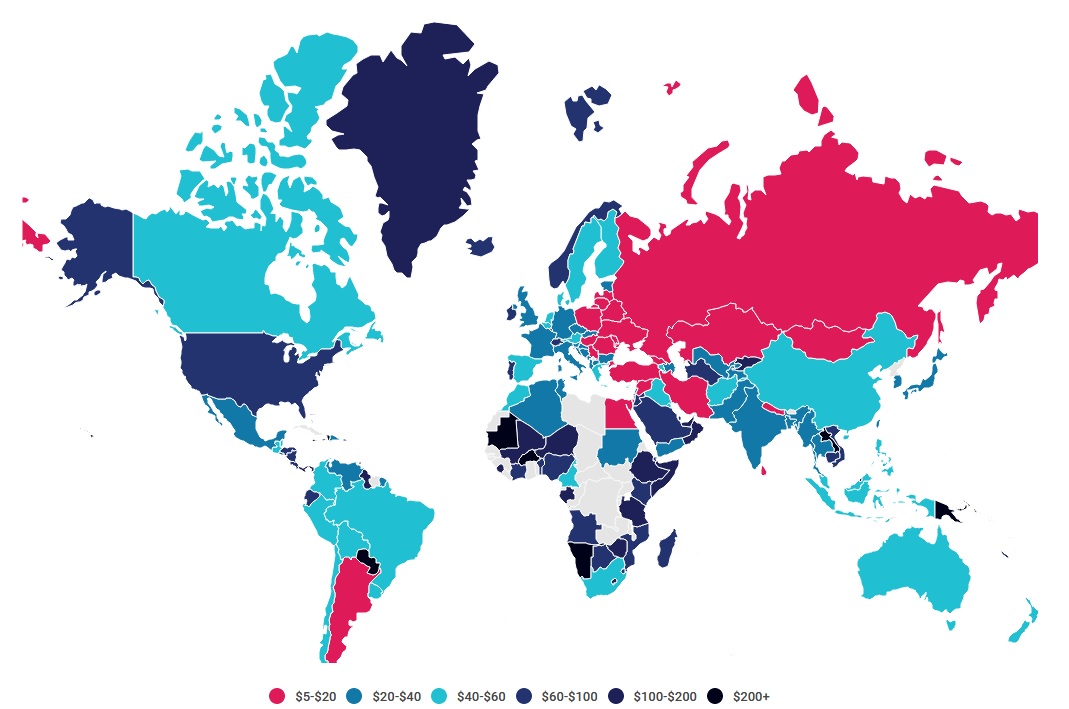
The top 3 places for cheap internet access are:
- Ukraine: $5
- Sri Lanka: $5.65
- Iran: $8.20
What do you pay in Germany? Germany currently ranks 53rd, which is in the middle of the pack. On average, people pay $36.68 (~€32.12) for fast internet.
Perhaps somewhat comforting is that it’s much darker at the lower end of the statistics. In Papua New Guinea, the last of 194 places, people pay a staggering average of $1850.
Experts keep saying that Germany is slowly but surely being downgraded to a “digital developing country.” This is partly due to the fact that the network expansion in Germany is progressing slowly or, in some areas, not at all. This is now clearly reflected in several statistics.
Germany half as fast as the best: In the global comparison, the average internet speed in Germany (2017) ranks 25th with 15.3 Mbps. While that sounds good, it has the negative connotation that two years earlier, it was 3 places better.
By the way, South Korea ranks first here. The average internet connection there is 28.6 Mbps – almost twice as good.

Fiber optic expansion much too slow: The fiber optic expansion is viewed particularly critically. Last year, only 2.3% of all connections in Germany used fiber optic technology. On average, OECD countries are at 23.3%. Germany is thus dragging the statistics down significantly.

It remains to be seen whether the government will finally apply more pressure to promote new technologies. Because if we only make real progress with fiber optic expansion in 10 years, it will likely already be an outdated technology.
Are you satisfied with the costs and availability of the internet in Germany? Or should something urgently change there?


Your opinion is important to us!
Do you like the article? Then let us know!