

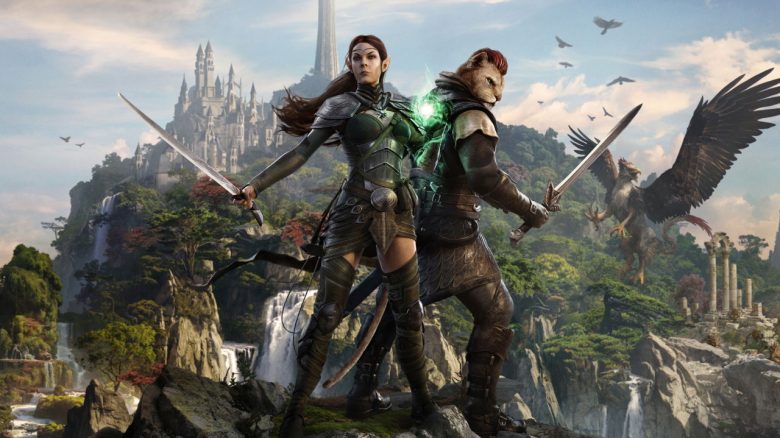
With the Blackwood addon, NPC companions are introduced into the MMORPG The Elder Scrolls Online (ESO). But does that even make sense in an online game?
MMORPGs are social gaming experiences. Meeting other players, forming groups, and experiencing adventures together is essentially the heart of the gameplay. However, there are MMORPGs where NPC companions can take on the role of players. The Elder Scrolls Online introduces this this year with the major storyline Gates of Oblivion and the Blackwood addon. NPC party members also play a major role in SWTOR.
But doesn’t this feature completely contradict the fundamental social aspect of the genre? Let’s take a look at the situation.
A look back at the history of NPC companions
Where do NPC companions come from? When tabletop role-playing games emerged in 1971 with Chainmail created by Gary Gygax and the 1974 release of Dungeons & Dragons, the gameplay principle was that several friends would come together to experience adventures as a group. Even here, it was the social aspect that formed the foundation of the game.
In the mid-1970s, role-playing games were transferred to computers. The first games were dnd from 1975 as well as pedit5 and Dungeons, which followed shortly after.
At that time, multiplayer was already a topic in the computer gaming sector, as the multiplayer game Maze War was released in 1973, but it was difficult to implement this on a commercial scale. Multiplayer games were then limited to universities and test environments.
With Richard Garriott’s Ultima series and Wizardry: Proving Grounds of the Mad Overlord by Andrew Greenberg and Robert Woodhead, it became evident in the early 1980s how commercially successful such games could be. This laid the foundation for a success story that continues today.
However, due to the lack of widespread multiplayer options, it was necessary to simulate the group experience in some way. Hence, computer RPGs introduced the option to create multiple heroes, who would take on the roles of the players in a tabletop game – that is, warriors, healers, mages, and thieves.
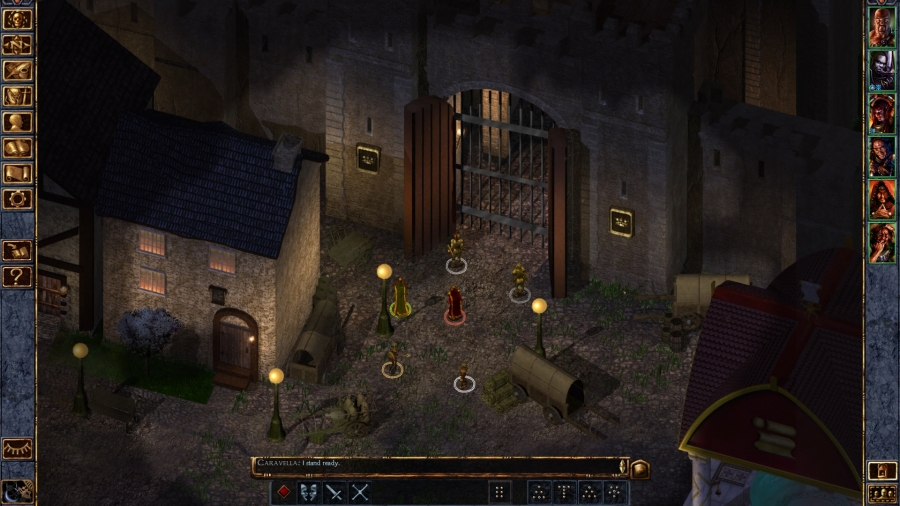
This group simulation was later modified in some RPGs. The player created not a complete party anymore, but only a hero. Along the way, they would encounter non-player characters (NPCs) whom they could recruit for their team. This appeared in Ultima 4 in 1984 and was adopted in many other video games. A prominent example is Baldur’s Gate from 1998, which gave NPCs a deep backstory as well as personalities and even allowed for romances.
NPC companions were essentially born out of necessity to provide RPG players with a quasi-group experience because multiplayer options were still extremely limited at the time.
Do NPC companions make sense in MMORPGs?
With the rise of MMORPGs in the 1990s, the situation changed. More and more households had access to the internet, which gradually became more affordable. Thus began the triumph of online games.
MMORPGs still relied on the principles of tabletop RPGs: a group of heroes experience adventures together in another world.
But now it was possible for real players to take on the role of party members. The social aspect of the tabletop template found its way into the game – and it was very successful.
However, problems also arose:
- What if players wanted to experience adventures alone?
- What if they quickly couldn’t find a group?
- What if players became so accustomed to NPC companions that they didn’t want to miss out on experiencing their stories?
Games like Guild Wars or Dungeons & Dragons Online and also Neverwinter allow players to hire henchmen who assist them in quests. These are not NPCs with deep backstories and personal stories. Essentially, they are just sidekicks who fight and allow players to experience content that is actually meant for groups alone.
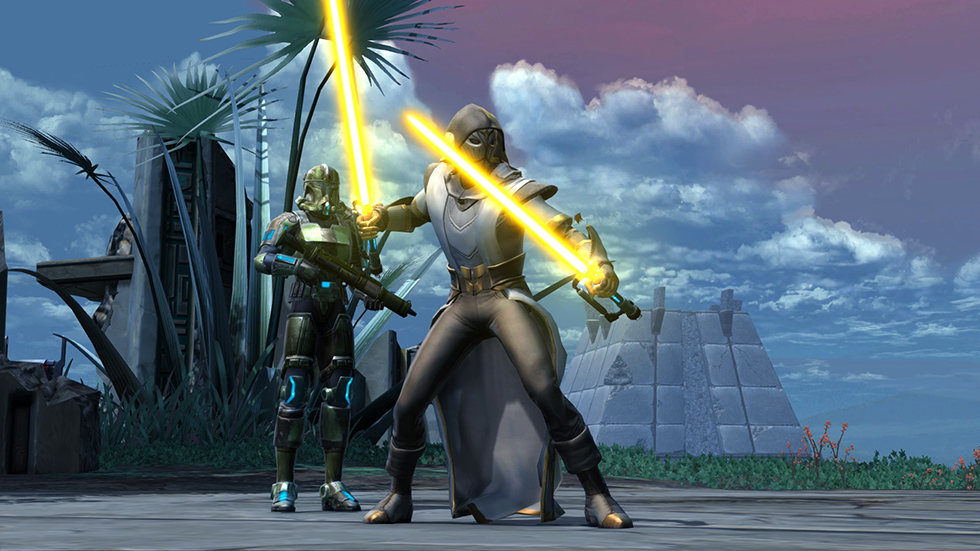
That’s different in Star Wars: The Old Republic (SWTOR). The MMORPG developed by Bioware builds on the experiences the studio gained with titles like Baldur’s Gate. The NPCs you find along the way come with their own quests that let you learn more about these characters. This makes it interesting to travel with them. They are more than just cannon fodder.
Likewise, Zenimax Online’s MMORPG The Elder Scrolls Online aims to introduce NPC companions with the Blackwood addon. These are also meant to be more than just sidekicks who simply fight. It’s also planned that you will get to know these NPCs to learn more about them and their motivations.
The NPCs in ESO are also designed so that you can play group content alone. If you can’t find anyone to play with at the moment or simply don’t feel like social interactions, you can take an NPC with you on your adventures.
The pros and cons of NPC companions: The system has its light and dark sides.
Advantages:
- You don’t always need other players to complete group content
- You always feel like you are in a group
- You experience additional adventures that relate to the NPCs
- Fights become easier
Disadvantages:
- The social aspect suffers a bit
- Players might prefer to use NPCs rather than look for real players
- It could become harder for groups to find players since they prefer to travel with NPCs
- MMORPGs could evolve more into single-player games as togetherness might not be necessary anymore
Conclusion: NPC companions do have their place in MMORPGs. However, they should not undermine the social aspect of an online game to the point where players become irrelevant.
What do you think? Do NPC companions make sense in MMORPGs for you, or should they not exist at all?
Do you want to know when item levels came into MMORPGs? We’ll tell you.

Your opinion is important to us!
Do you like the article? Then let us know!