

With the milestone forge that once created Diablo, Warcraft, and Starcraft, Blizzard in 2024 has nothing in common. But who is to blame for this change? Many fans point to Activision. However, the main responsibility lies with the most successful MMORPG in video game history.

Do you know the saying “Where Blizzard is written, Blizzard is in it!?” After the disastrous Warcraft 3 Reforged, the virtual monetization hell Diablo Immortal, and mixed WoW expansions like Battle for Azeroth, it’s hard to believe, but there was indeed a time when the Blizzard Entertainment logo stood for quality.
With Warcraft, Diablo, and Starcraft, the Californians ultimately created three of the most well-known brands in video game history and several celebrated games with milestone status. But that was a long time ago.
Today, Blizzard is primarily associated with heavily monetized service games and some of the biggest scandals in the gaming industry. For many players, it seems clear: Activision is responsible for this change! After all, it has been downhill since the merger with Activision Blizzard in July 2008. In our analysis, we show you that the crucial turning point can actually be found much earlier.
What was Activision’s influence on Blizzard?
First, let’s clarify: When Activision and Blizzard merged with Vivendi Games to create the new holding company Activision Blizzard, Vivendi still held the majority rights. Activision’s CEO Bobby Kotick took over management in almost all areas, while Blizzard was given a special role and was allowed to develop games independently and release them through Vivendi.
This power structure only shifted between 2013 and 2016, as Vivendi gradually sold off its shares. And who was the buyer? Of course, Bobby Kotick or Activision. As a result, Blizzard was then fully under the publisher’s thumb eight years after the merger.
But was the influence felt immediately from that moment on? With Jay Wilson (Game Director of Diablo 3; he was with Blizzard until 2016), there is at least one insider who reported on this during a panel at the Retro Gaming Expo in Portland (via Youtube). The influence was supposedly hardly noticeable at first and was limited to certain areas.


Wilson reports, for example, about meetings set up by Activision that aimed to discuss how to make more money with Heroes of the Storm. The MOBA had many of the typical Blizzard strengths (low entry barrier, good readability and playability, high polish), but could not hold its ground against the established, overpowering competition from League of Legends or DOTA 2.
According to Wilson, Activision was also involved in the conception phase of Diablo Immortal. The publisher was adamant about having a Diablo with a free-to-play payment model.
2018 as a watershed year: Save, save, save!
In a Kotaku article by investigative journalist Jason Schreier from November 2018, it is stated (based on eleven anonymous sources) that the culture at Blizzard began to noticeably change in 2018 due to the increasing influence of Activision.
Instead of “It’s done when it’s done” (an old Blizzard motto: games are only released when they are finished and meet their quality standards), the focus was on cutting costs and increasing the number of releases per year.
The reason: as of the third quarter of 2017, the number of monthly active players at Blizzard drastically decreased (from 47 million MAUs in the second quarter to 22 million MAUs in the first quarter of 2022). There were hardly any releases. New releases like Destiny 2 fell short of expectations.
Moreover, it certainly didn’t help that Blizzard’s co-founder and CEO Mike Morhaime left in October 2018. His successor, J. Allen Brack, was only president and therefore no longer operated on equal terms with CEO Bobby Kotick.
These reports were already confirmed in December 2018 by another insider report from Jason Schreier for Kotaku. In it, sources report that many of the strategic decisions since 2018 have been made by the finance department (which supposedly had no say in the previous years). Victims of the austerity measures include the esports sector of Heroes of the Storm (with the cessation of the Storm Global Championship in December 2018) as well as the far too early release of Warcraft 3 Reforged (according to a Bloomberg report from July 2021, Activision insisted on the early release and the elimination of various features).
Grown from Blizzard’s own mistakes
According to various reports, there was indeed a negative influence from Activision on Blizzard, widespread only from 2018. Until then, Blizzard managers had already sullied their clean slate from the first ten years with a few stains. Here’s a best-of the Blizzard fails until 2016:
- Cataclysm (released in December 2010) is the first WoW expansion that has been loudly criticized by large parts of the community and is still one of the most unpopular expansions in WoW history.
- In July 2010, Blizzard wanted to introduce that you could only comment in the forum under your Real ID real name. After a brief but fierce shitstorm, the decision-makers retracted this plan.
- Diablo 3 made negative headlines upon launch – “thanks” to the online requirement, server problems, and real money trade in the auction house.
- Blizzard missed securing the rights to DOTA. Valve was quicker. Blizzard DOTA had to become Heroes of the Storm. The development of the comparatively small title took at least five years.
- In September 2014, Blizzard canceled the development of Titan. Due to the early announcement in 2008 and the grand promises of some developers, this premature cancellation felt much more like a failure for the involved team than had been the case with a Warcraft adventure or a Starcraft Ghost.
- The WoW expansion Warlords of Draenor launched in November 2014 with plenty of potential but suffered from huge content gaps and perhaps the worst content patch in WoW history (Patch 6.1 brought highlights like the selfie camera, Twitter integration, or the new character models for blood elves).
- In 2015, Blizzard introduced the WoW token and with it official real money trade in the European version of World of Warcraft.
- In 2016, the Blizzard developers fulfilled a frequently mentioned wish from the community, but the implementation couldn’t have been more careless: the first Diablo received a remake as a simple retro event in Diablo 3.
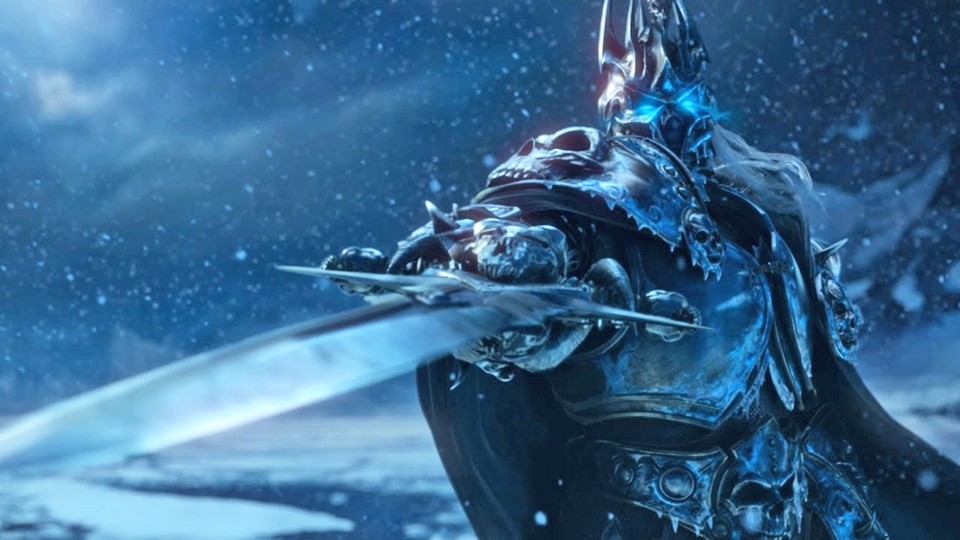
Suspect Number 1: World of Warcraft
Let’s rewind a few years. There were already two important dates before 2008 (and the merger with Activision Blizzard) that fundamentally impacted Blizzard as a company: November 23, 2004, and February 11, 2005. You surely know the dates.
With the release of World of Warcraft, everything changed. For many players, for the industry, and of course for Blizzard itself. At its peak, twelve million subscribers played the enormously successful online role-playing game (during the WotLK expansion, starting in October 2010). And what to do with all that money? As so often, Blizzard’s answer was: grow!
Before the WoW launch, the company had less than 500 employees, but by 2009 the number had risen to about 4,600. That such rapid growth leads to major problems that can even bury entire companies is shown by examples like Westwood and Bullfrog.
At Blizzard, two main things happened: First, the company culture supposedly changed noticeably, which only came to light during the major sexism scandal in 2021. According to a report by Jason Schreier for Bloomberg from August 2021, the top developers were treated like rock stars due to the success of WoW, rendering them untouchable for complaints.
This supposedly led to a so-called “frat boy culture” developing at Blizzard (similar to that at Ubisoft): male employees would gather at work for drinks, only to prey on and hit on female colleagues at their workstations.
Secondly, after 2004, Blizzard’s focus clearly shifted to World of Warcraft. While almost every year saw Blizzard games released for various franchises since 1994, between 2004 and 2009 only WoW existed.
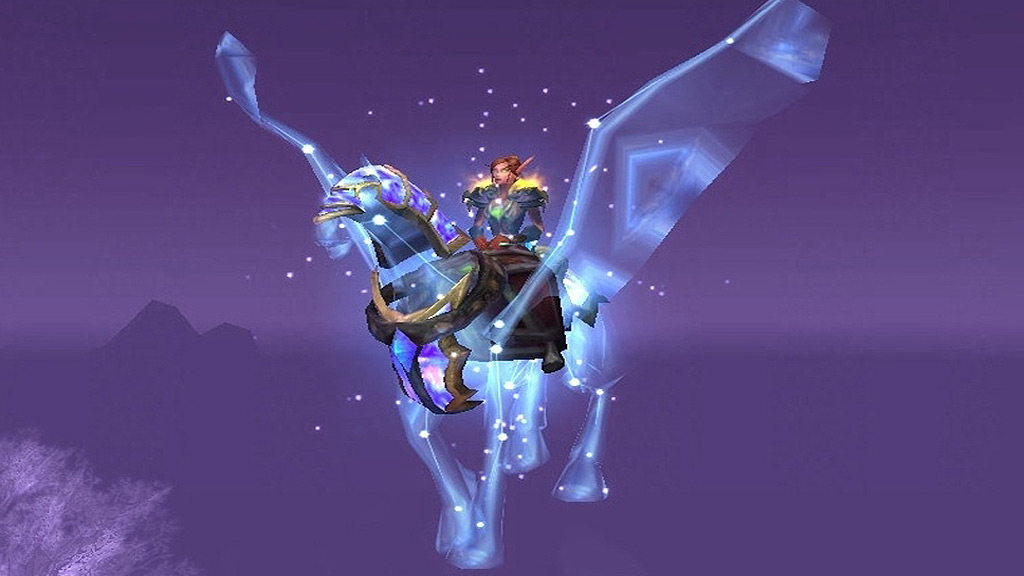
Starcraft 2 was again a Blizzard game of the “old school” in 2010, managing to achieve a good start, but former Blizzard developer Jason Hall revealed in November 2023 on Twitch why the team was disheartened despite good sales figures: the recently released and first paid Skyhorse mount for World of Warcraft brought in more money than Starcraft 2: Wings of Liberty.
Such experiences, as well as the enormous success of WoW, partially explain why Blizzard gradually drifted in the direction of games-as-a-service. The other part can be traced to the ever-changing market realities. This includes the fact that developing games is becoming increasingly expensive, but also that success on the stock market comes with obligations. After WoW, Blizzard had to measure itself against this very success and adapt its corporate strategy accordingly.
All these factors combined, triggered by World of Warcraft, ensured that the “Blizzard corporation” – with its thousands of employees, service focus, and a partly toxic culture – had already little in common with the “good old” Blizzard long before the influence of Activision.

There is no going back, but …
The bad news: There is no way back for the company. The “good old Blizzard” will never return. On the one hand, because Blizzard now likely employs significantly more than 6,000 people. The focus will therefore continue to be on service and mobile games that can be extensively monetized.
On the other hand, hardly anyone from the veterans is still on board. Instead of the Blizzard founders Mike Morhaime, Allen Adham, and Frank Pearce, Johanna Farie (formerly Activision), Rod Fergusson (formerly The Coalition), Holly Longdale (formerly Daybreak), and others are setting the direction. Only a few of the old Blizzard veterans are still around. Chris Metzen, for example, Aaron Keller, Wyatt Cheng, or Tom Chilton.
However, the list of former long-standing Blizzard developers is considerably longer. It was only recently revealed that Marc Messenger left the company in January 2024 (via Reddit). He was among others the leading force behind the fantastic intro cinematic of WoW: Legion.
But there is also good news: As part of Microsoft, Blizzard now has the opportunity to implement projects outside of the core portfolio without a service model, which fit well with the Xbox Game Pass. Small pearls like Hi-Fi Rush from Tango Gameworks or Pentiment from Obsidian prove this. Would you also like to see a new story-focused game in the Starcraft universe?
If you are looking for more reading material about Blizzard under Team Xbox, check this out: Blizzard wanted to be free of Activision – But Microsoft won’t allow that

Your opinion is important to us!
Do you like the article? Then let us know!