

Angry fans often demand that failed AAA games be taken offline and rebooted – like the MMORPG Final Fantasy XIV. Our author Irie believes: They are not broken enough for that.

This is happening in the community: Disappointing launches of new games are unfortunately not uncommon. Many developers and publishers have faced a great deal of criticism in recent years, and the shitstorms over poor releases have raged in many gaming subreddits.
And time and time again, players have demanded that seemingly failed projects like Destiny 2 or Fallout 76 simply be taken offline and rebooted.
Just like Final Fantasy XIV did six years ago. They managed to do it. Why shouldn’t Bethesda, Bungie, or EA be able to?
However, these demands are usually made by people who have only heard about the 1.0 version of FFXIV. They have no personal experience of how fundamentally unplayable Final Fantasy XIV actually was at launch.
Reboots were demanded for these games: In recent years, threads have frequently appeared on Reddit calling for reboots of certain games. They also receive many upvotes and positive comments because the state of these games often leaves much to be desired.
These games include, for example:
- Anthem (one of the many threads of this kind)
- Fallout 76
- Destiny 2 (at launch)
The launches of these games were undoubtedly poor, and people had every right to complain. A reboot akin to FFXIV would not have sufficed for any of them. They simply are not broken enough.
Let’s take a look at what made 1.0 so bad.
A game that lacks everything
These were the problems with Final Fantasy XIV: The flaws of 1.0 were as simple as they were numerous. In most cases, the most basic elements that were already considered a staple of game design in 2010 were simply missing. Combined with other issues, it resulted in a long list. To name a few examples:
- No quest log in the game
- No official forums for giving feedback, or community management in general. There were forums during the beta phases, but they were closed after launch
- Jumping was not possible and you couldn’t fall from ledges
- Enemies did not drop equipment or generally valuable loot
- No option for optional key bindings
- No shortcuts for important menu windows, like equipment, inventory, etc.
- Constantly repeating map designs and assets
- Even the minimap was only introduced shortly before release – it was not present in the betas
- No dungeons or raids – or generally an endgame
- No side quests
- No sorting function for the inventory
- No level display for enemies. You never knew how strong or weak a monster was
- NO CHOCOBOS! Or any kind of mounts at all
- Terribly confusing and slow menu navigation, which was actually optimized for controller control
- Hot bars with abilities were reset and cleared when you changed your job, so you always had to reorganize them
- Every interaction was registered by the server first and was thus delayed by several seconds
The basic handling of the game was also incredibly cumbersome in design.
Every action took significantly longer than it should have because players had to deal with countless menu windows. Simply selling useless junk sent people on a trip through 3-4 different windows and often took more than 20 minutes.
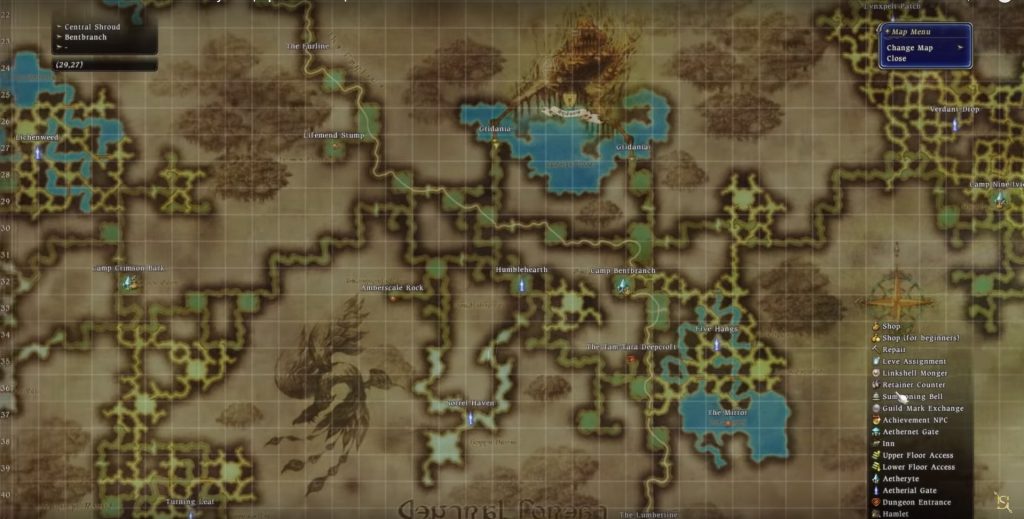
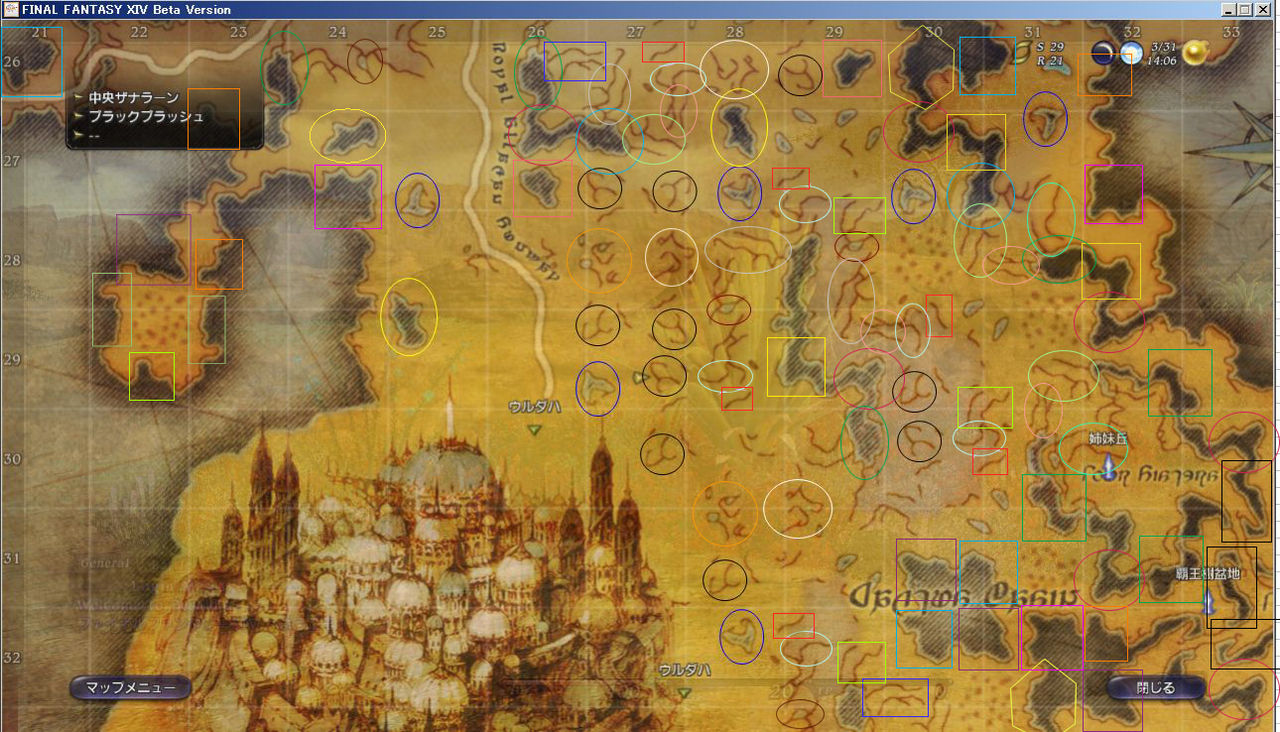
Map section of the area Black Shroud. You could only move within the green area. 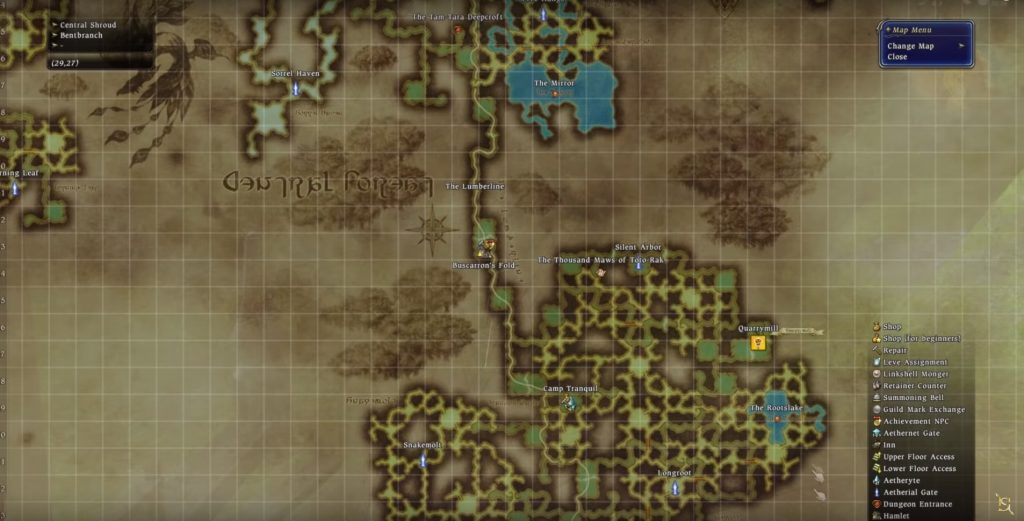
Map section of the area Black Shroud. The areas were huge, and it took forever to cross them. Especially completely without mounts.
It felt as if the developers were 10 years behind and had not kept up with developments in the gaming field.
This is Crystal Tools: One of the biggest problems was also the fact that the 1.0 version was developed using Square Enix’s in-house graphics engine: Crystal Tools. This engine also powered the already released Final Fantasy XIII.
Crystal Tools could do many things, but representing a modern MMORPG was not one of them. Although Square adapted the engine for this purpose, it unfortunately wasn’t enough. Among the problems were:
- Massive FPS drops
- Graphics and compatibility issues
- Many PCs were unable to even run the game
Additionally, there was the SE developers’ love for details, which became their downfall. Many environmental objects in the game had massive amounts of polygons and very elaborate lighting.
The developers wasted an immense amount of time creating these actually unimportant assets, and the richness of detail further contributed to FPS problems.
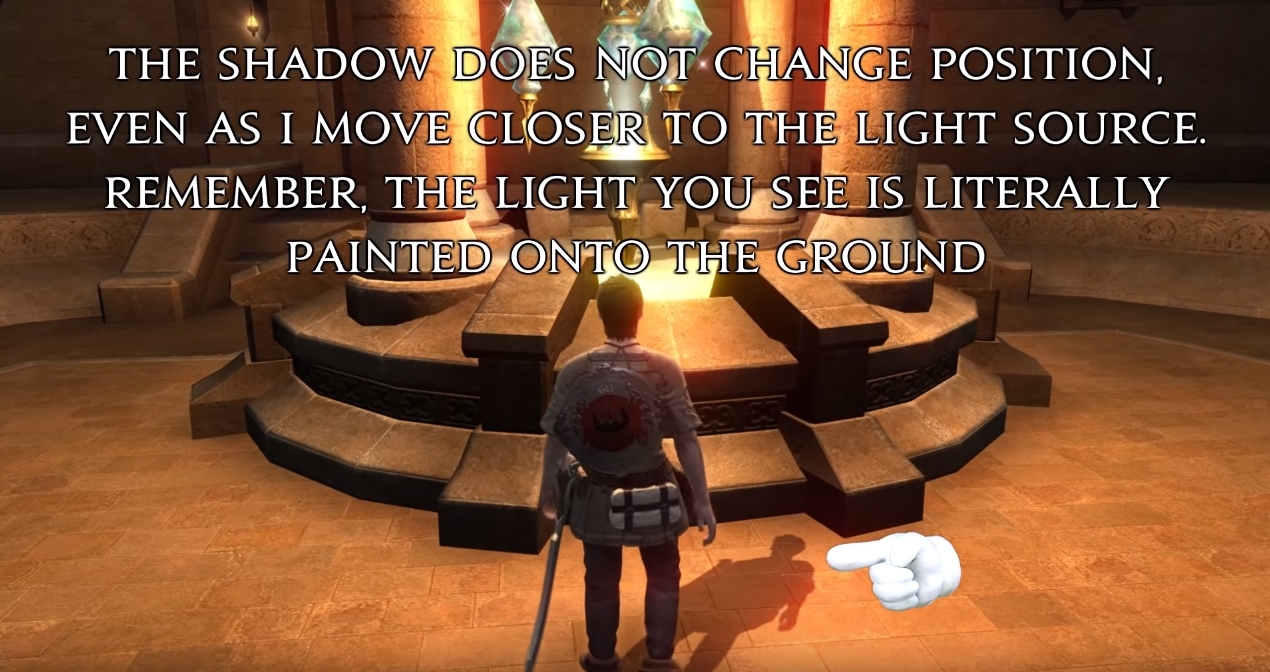
Final Fantasy XIV 1.0 did not simply “not be fun” or have too little content, as is often the case with failed AAA titles today. It was nearly unplayable in its original state on almost all levels.
Broken by Design
These were the 3 worst “features” of FFXIV: Among all the “inconveniences”, there were 3 features that particularly stood out due to their poor design.
Keep in mind that these things were intentionally built into the game as they were, with the goal of functioning as described here.
The Fatigue System – No EXP for you!
This system will be familiar to some Destiny veterans, because it also existed briefly in Destiny 2. It revolves around reducing the amount of earned EXP over time, the longer someone levels continuously.
So, if a player in Final Fantasy XIV 1.0 accumulated EXP for more than 8 hours, the amount of EXP received would continue to decrease until it hit 0.
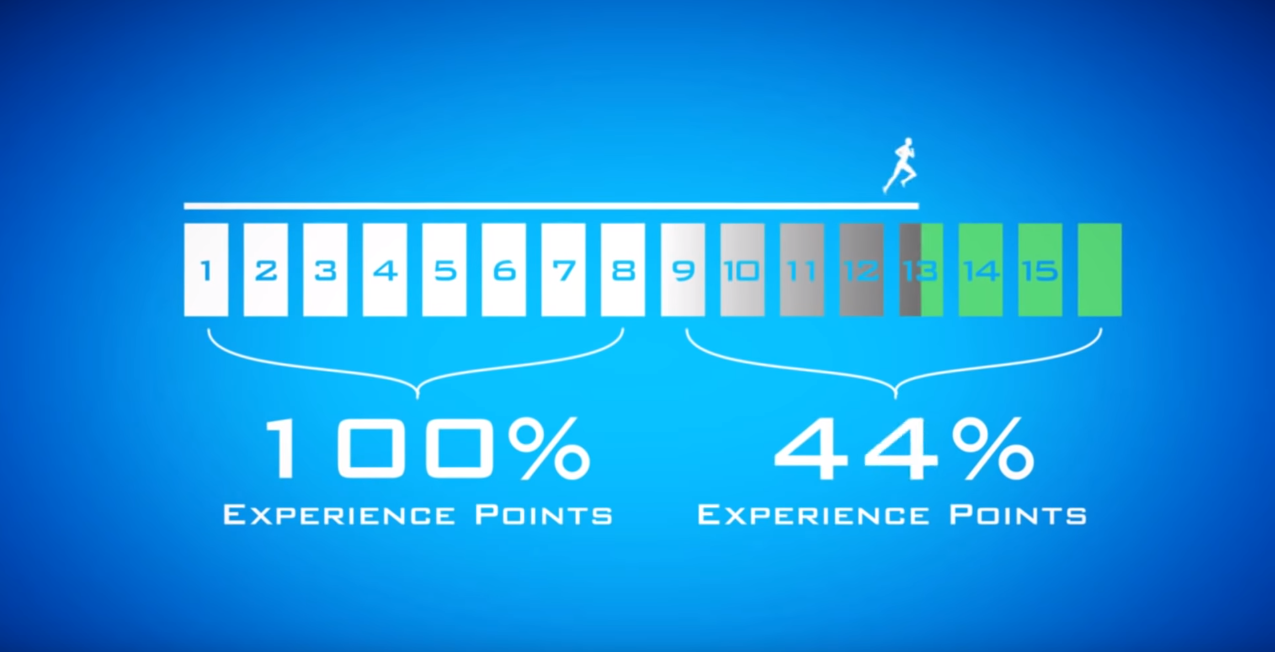
This timer was reset weekly, meaning players were allowed, according to the logic, to spend just over an hour per day leveling. After 2 or more hours a day weekly, they received no EXP anymore.
In short: The system punished people for actively playing FFXIV.
There was a way to circumvent this penalty by playing another class. Because the received EXP was recorded by the system per class, but that was a weak consolation.
Leve Quests instead of Endgame
Square Enix made it clear from the start that Leve Quests should essentially be the core feature of Final Fantasy XIV. They appeared in the beautiful opening cinematic of the game and were also turned into merchandise.
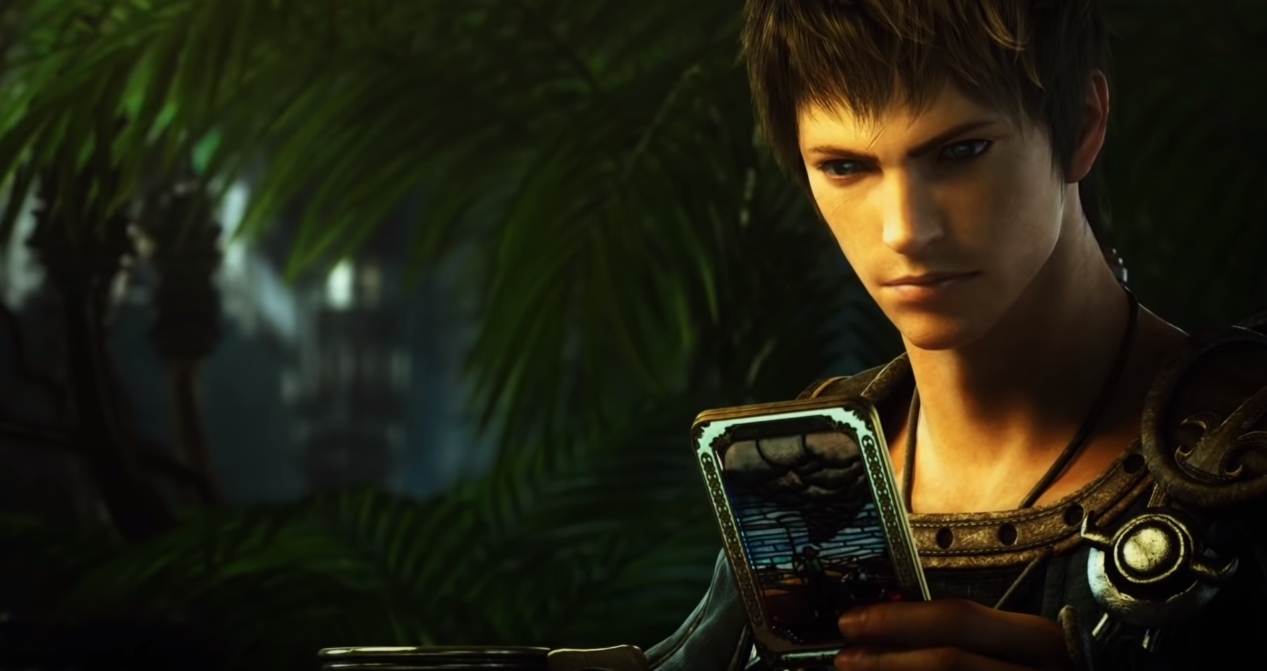
The problem with the Leves was that they were extremely limited. The system worked like this:
- To start a Leve Quest, you needed an authorization
- Each character could have a maximum of 8 authorizations
- The authorizations were replenished every 36 hours
Most Leve Quests lasted no longer than about 20 minutes, when generously estimated. Thus, players were forced to grind regular monsters in the open world most of the time to gain levels.
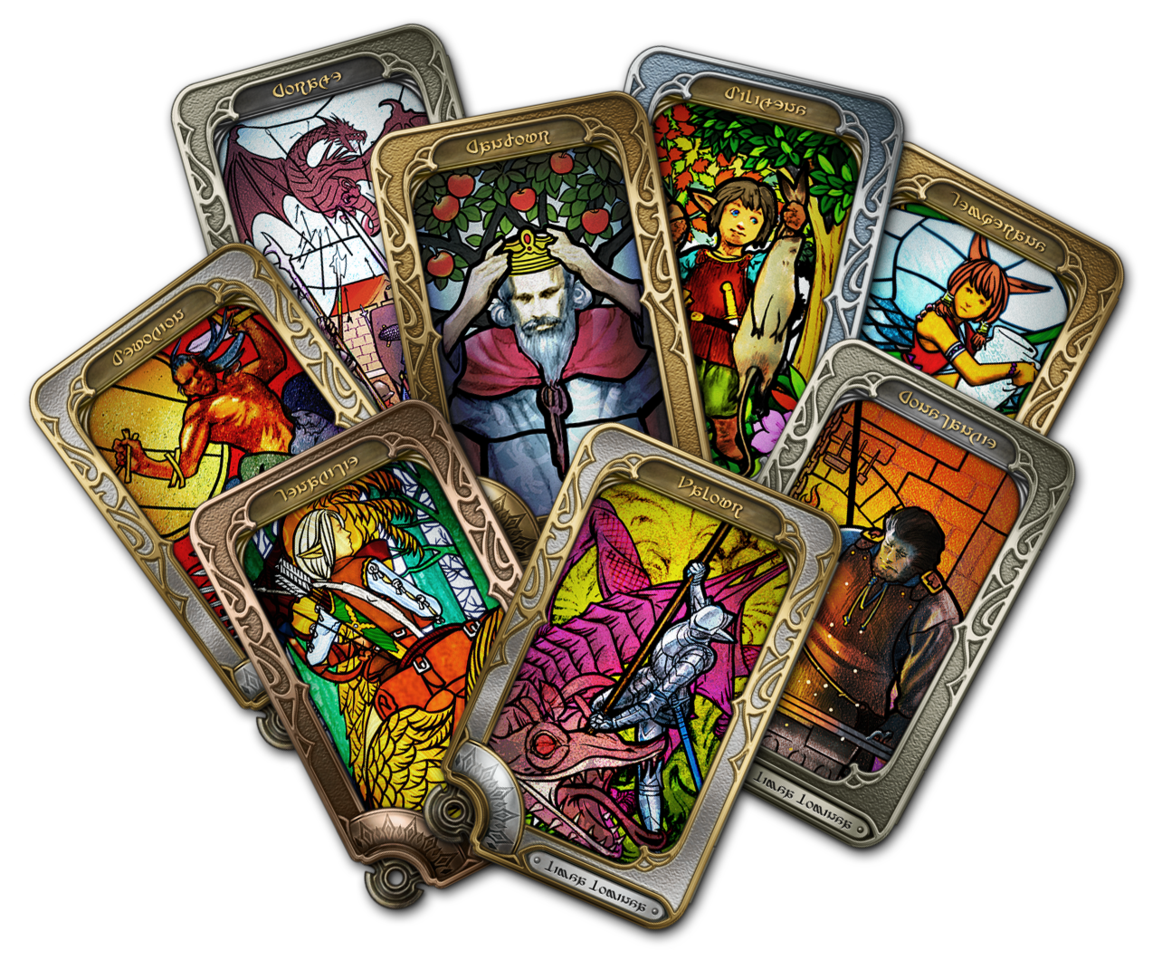
This wouldn’t be so tragic in itself if the Leve Quests weren’t the only type of quests in the game. There were no dungeons, no raids, no collecting and upgrading equipment, or other types of endgame.
In 1.0, there was only leveling, and even that was hindered by the Fatigue System. The 4 fortresses and different difficulty levels from Anthem, which are actually considered poorly balanced endgame content, sound like pure luxury in comparison.
A market where you find nothing
The feature that still gives me the worst flashbacks today was the assistant system, aka the FFXIV equivalent of the auction house. Here, too, the concept was very simple.
- Players hired an NPC that acted as their “shop”
- This NPC was placed in a “Market Ward” instance, where they stood physically
- Other players could teleport into these instances and browse all NPCs for things they wanted to buy
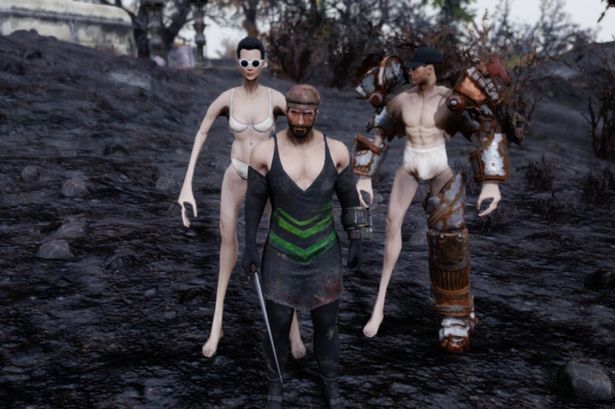
It looked somewhat like this:

In 1.0, there was no way to obtain equipment from enemies; everything was crafted by crafters. Thus, players were reliant on using these Market Wards.
Unfortunately, it was impossible to find what you were looking for in this horde of shops. There was also no option to compare prices, and some NPCs were often not even visible because the number of displayed characters on a screen was heavily restricted.

Many NPCs also often just stood there with only a single item that carried the maximum price so they could keep their place in the Market Wards.
In short, the system was undoubtedly one of the worst features I’ve seen in a game.
Red numbers in financial reports
These were the consequences for Square Enix: The catastrophe of FFXIV 1.0 in 2010 hit Square hard financially, from which the company could not recover for years afterward, as can be seen from their financial reports to investors.
Yoichi Wada was the CEO of Square Enix during the time of the 1.0 catastrophe and stepped down in 2013.

He left Square Enix in a worse state than Square Soft had after the release of the failed film “Final Fantasy Spirits Within,” which was one of the reasons for the merger of the RPG studio with Enix.
This means that the Japanese RPG giant and publisher Square Enix was on the verge of selling its assets to cover the damage. This was never the case for companies like EA or Activision after their poor launches.

This was the damage to the brand: In addition to the financial losses, which peaked at 83 million pounds in 2013, there was also damage to the “Final Fantasy” brand. And this was, in Square’s eyes, considerably more severe, as it is cited by Naoki Yoshida as the main reason for the reboot.
At that time, the game series was over 20 years old and known and loved worldwide for its quality in graphics, gameplay, and stories. It was one of the company’s crown jewels, and for developers within SE, it was an honor to work on it.

The failure of FFXIV was like a loss of face and has severely shaken fans’ trust in the brand. If they had simply given up on FFXIV and taken it offline, the damage to the name Final Fantasy would have been irreparable for a long time.
The reboot of 1.0 was therefore fraught with enormous risks for the entire company, as well as physical and mental strain for the entire development team.
High risk, hard work, and a bit of fairy dust
It is hard to put into words and pack into a limited article just how abysmal the state of FFXIV 1.0 was. There are video series on YouTube covering the topic that could fill an entire day. No wonder that a question about “Final Fantasy XIV Classic” was met with laughter by both the director and the community.
I really understand the frustration over a failed launch. But FFXIV 1.0 cannot be compared to either Destiny 2 or Fallout 76. For the simple reason that they function.
Personally, I think Anthem in its current state is most comparable to FFXIV 1.0. But there is still hope that it can become a decent game under proper management with enough patches. It has gameplay elements that are actually fun.
For most other games where fans are demanding a reboot, this is definitely not necessary and would likely cause even more damage.
Above all, a successful reboot requires not just a bad game, but also the right circumstances. In the case of FFXIV, they were:
- The name of the brand “Final Fantasy” was at stake
- Naoki Yoshida had the organizational skills and the endurance to carry out such a reboot
- The development team was motivated enough to save the project
- The management of Square Enix was willing to take the enormous risk and provide the financial resources for it
These circumstances are not always present, which is why the success of the FFXIV reboot depended not only on the hard work of the team but also on some luck.
The right people were in the right place at the right time.


Your opinion is important to us!
Do you like the article? Then let us know!