The MMORPGs (Massive Multiplayer Role Playing Game, often simply referred to as “online role-playing games”) are probably the most well-known representatives and a subgenre of MMOGs. Games like “World Of Warcraft“, “Aion“, or “Final Fantasy XIV: A Realm Reborn” fall into this category, yet there are also significant features that differentiate them from other forms of MMOs, but they are not necessarily required. After all, the boundaries are not closed, and so overlaps naturally also occur.
This listing can and should only provide a brief outline, as computer games of this type, now increasingly found on consoles, are very complex and offer many opportunities for players to express themselves. This also includes different ways of thinking about what constitutes a role-playing game in a virtual world.
More online role-playing games:
1. Embodiment of a Role
In this genre, one usually controls only one character at a time, as one embodies the “role” of this avatar. Within the given possibilities, the character can be customized, and we can give him a – more or less – unique appearance. It is usually possible to create more than one character and play separately – but never two at the same time. Your alter ego is accompanied by a backstory that follows you throughout the gameplay.
More on the topic: Our role-playing guide for MMO players.
2. Social Features
It is important to mention that social features represent a significant part, allowing you to interact with other players in various ways. This part is particularly strengthened by, for example, guilds or group-oriented content.
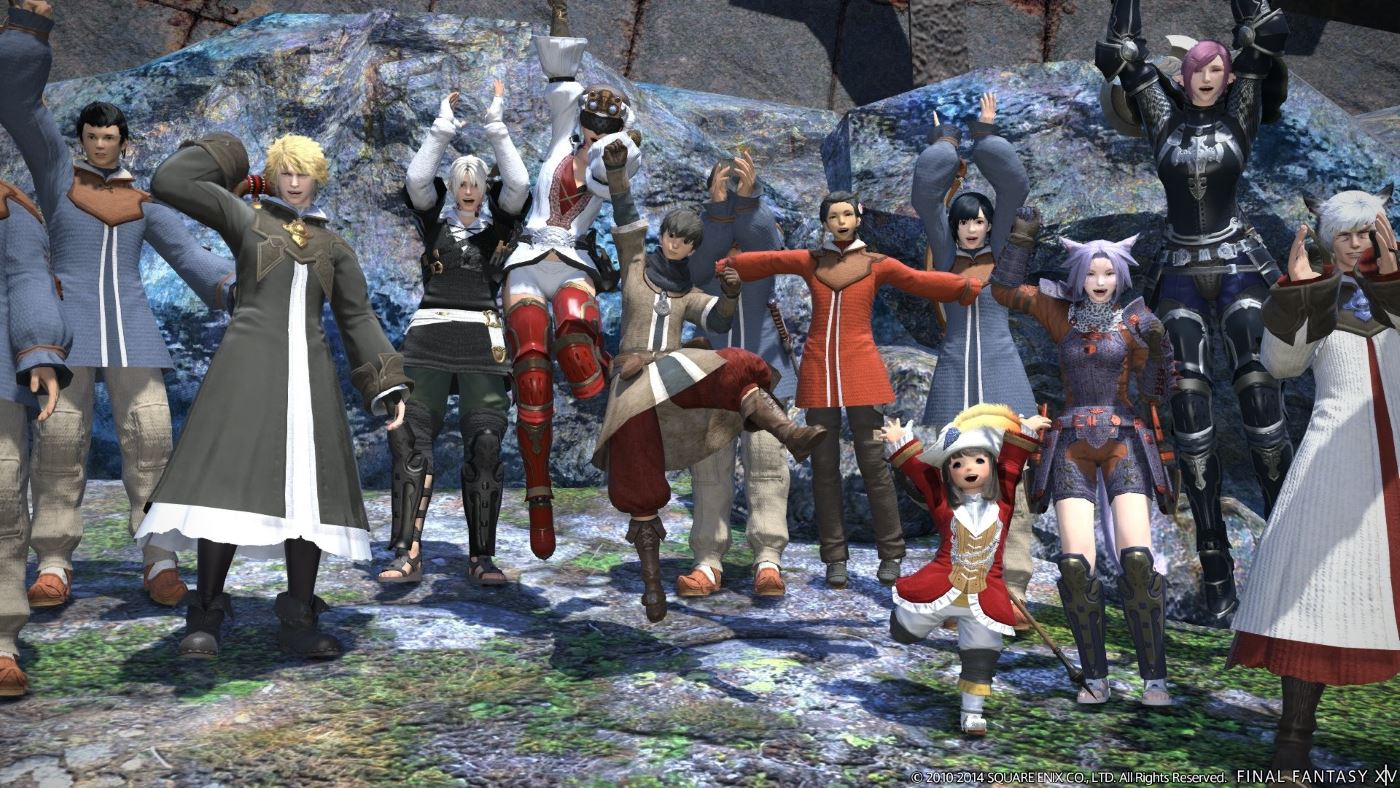
The interpretation of this is quite broad, as there are political systems, for instance, that allow you to levy taxes during a ruling period – these also affect other adventurers in the world. On the other hand, this point may also include content like decorating shared guild houses or fighting together against an enemy faction, conditioned by a historical background. However, it should be noted that you are rarely forced into this until the endgame, more about that later.

3. Collection Quests
MMORPGs often have collection quests as a long-term incentive, which can vary in weight from more to less significant. This can involve simply accumulating experience points to reach the next level or gathering resources to equip yourself or other characters with new gear or various buffs. This is frequently associated with crafting professions, commonly referred to as “Crafting” in the jargon.
4. The Endgame
All games of this genre feature group quests, particularly in the so-called “endgame”. This often implies the conclusion of the main story and the “condition” that your character no longer becomes stronger through experience points but only through better gear. An alternative might be, for instance, the appearance of the equipment, which does not necessarily make your character more powerful but earns more prestige.
The best items are usually obtained only by teaming up with other players to tackle the most challenging gameplay tasks. Depending on focus or game orientation, this happens by fighting AI-controlled bosses or proving oneself in player-versus-player battles, known as PvP.

5. Long-term Motivation
In addition to the usually challenging group tasks, there are also other areas that provide long-term motivation. Good online role-playing games are expected to keep players engaged even after countless hours of play, referring to hundreds of hours, in the world. Of course, this happens, among other things, with the help of regular game updates, as an MMORPG is continually developed. The group content mentioned earlier also plays a significant part in this, but that is not all.
Very popular among developers and accordingly among players are the so-called “dailies,” which are found in almost every MMORPG. Essentially, they are collection quests already mentioned in point 2. Often, the background is to increase reputation with a faction or party. However, this cannot all be done at once, as otherwise the engagement would be rather short depending on the player type.
Characteristic is that the tasks are updated daily or even weekly and can only be approached again after a certain time to “slow the pace” of the game. As rewards, better gear and vanity items like cute companions, stylish mounts, or pretty outfits await you. In addition, features like housing, achievement hunting, or continuing the story also provide incentives to stay in the game longer – in any case, there are several options available.
Finally, an important point is that MMORPGs are continuously and extensively developed over a long period, which is also referred to as Games-as-a-Service.
Combat Systems in MMORPGs
The core of every MMO(RPG) is combat, whether against monsters or other players. Often, characters only progress by killing opponents, become stronger, and loot treasures and riches.
There are two different design philosophies regarding how combat should be structured and what task is assigned to the player: one is the classic method, a semi-turn-based combat system, and the other is the more modern one, which is more action-oriented.
Semi-Turn-Based Combat System
In the classic method, the target enemy is selected with a mouse click or the tab key. Normal hits (auto-hits) or special abilities (skills) are used against this target. Healing works similarly: the healer selects their target through the in-game interface, healing spells affect exactly this target. For some healers, more complex fights in this system sometimes resemble an Excel spreadsheet.
The combat primarily revolves around which abilities can be used at which point, as the individual abilities have different cooldowns. The abilities are activated using hotkey buttons. Usually, there is an optimal sequence in which the different cooldowns are taken into account. This is referred to as a “rotation”.
Even in games that use this classic method of combat systems, you will find elements of action combat systems with area-of-effect skills (AoE) and in more complex boss fights. Some of these games also introduce elements of the newer system (like the monk class in World of Warcraft for example). It is to be expected that the “tab” combat system will become increasingly rare in its pure form. However, this variant is still appreciated for its diverse tactical options.
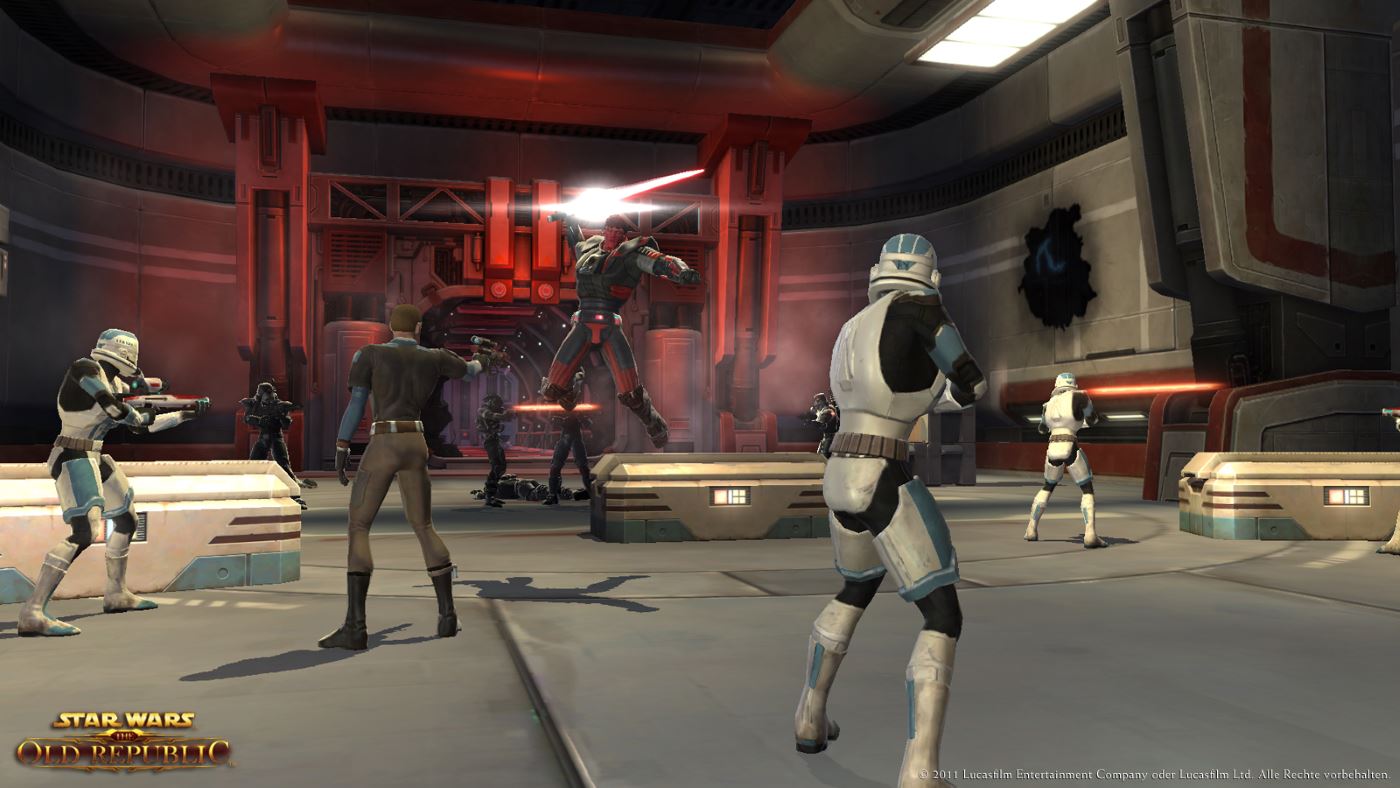
Alongside World of Warcraft, Final Fantasy XIV: A Realm Reborn, and Star Wars: The Old Republic are also very successful.
Real-Time Action Combat System
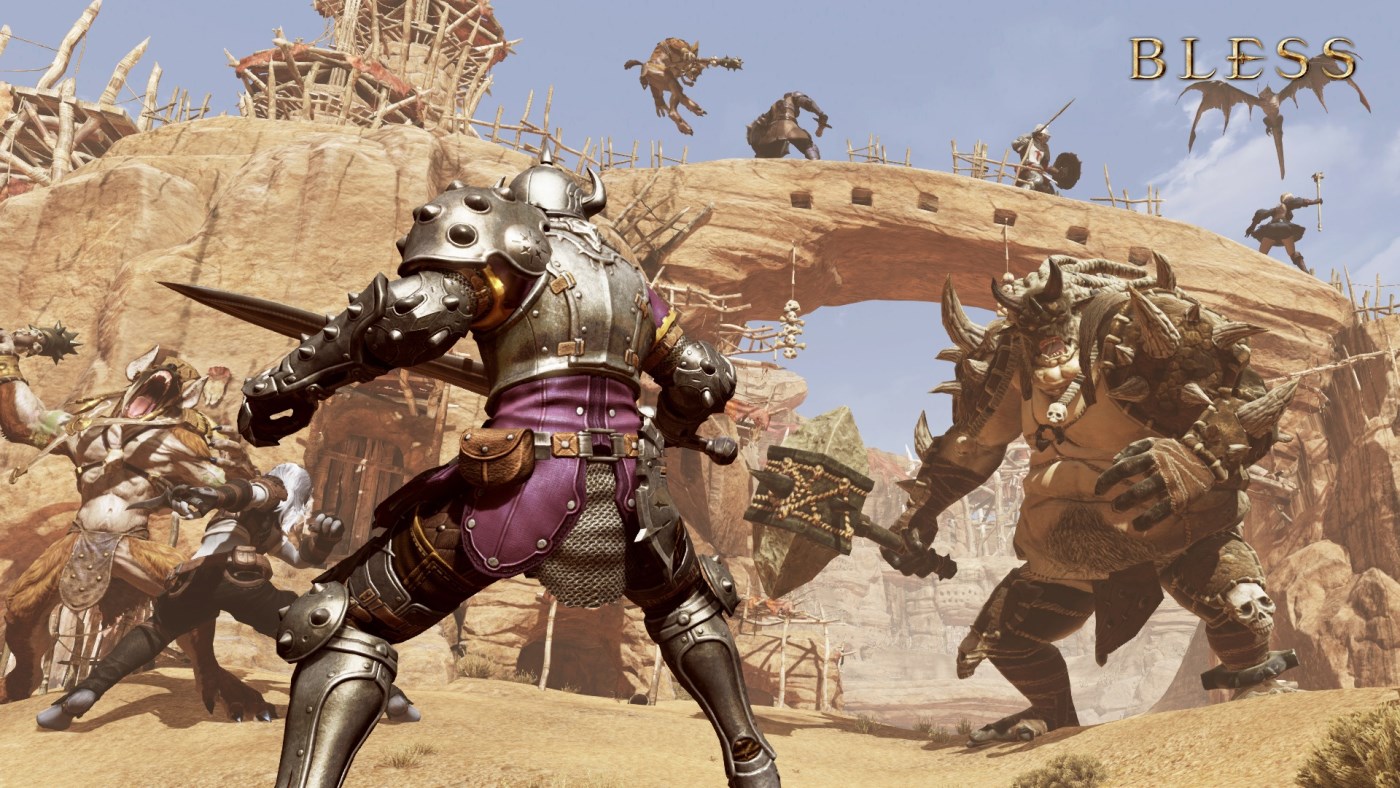
The action combat system generally places much more emphasis on the positioning and movement of players. Players can now dodge normal attacks, not just area-of-effect abilities. Players are more compelled to actively participate in combat, especially as aiming gains importance (usually a crosshair is then employed). It is more important to pay attention to the screen and the opponent than to the hotkey bar. Usually, there is also a collision detection.
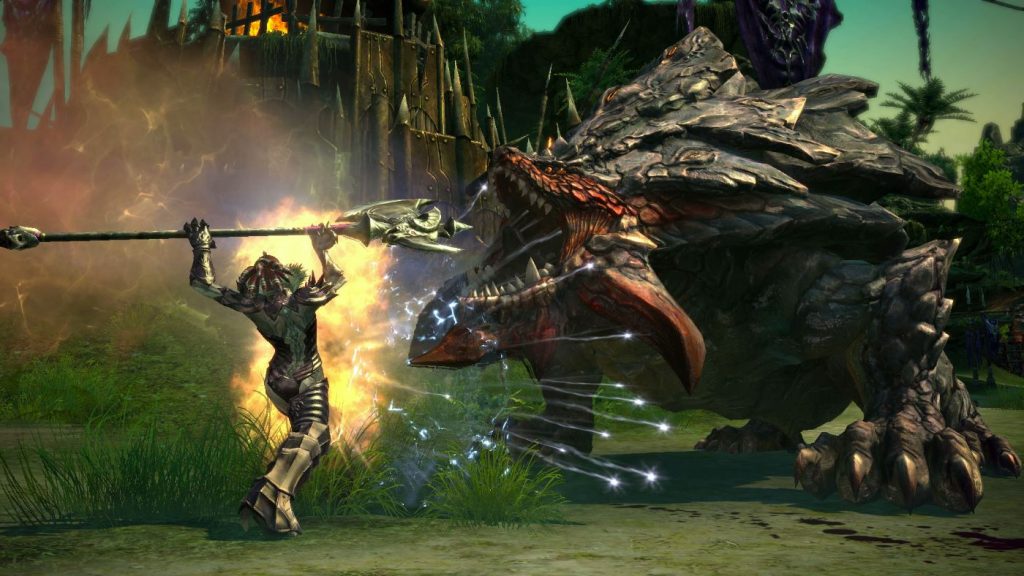
The action combat system also typically knows an ideal rotation of abilities. In practice, the transition between combat systems is fluid. The action combat system is less a revolution of the classic design method but more a consistent evolution. However, this does not necessarily mean that this variant is better. It is still a matter of taste and should be experienced by everyone individually.
Famous games that feature an action combat system include TERA, The Elder Scrolls Online, WildStar, and Guild Wars 2.
Finding the MMO That Suits You
Moreover, one should be aware that it also depends on the direction in which the developer is heading with their work. Perhaps you could take a look at the “MMO Search” and click through the games to recognize the differences between online role-playing games. This way, you will get a feel for what might suit you better after some time.