
A strong release is not a guarantee of long-term success. Various publishers and developers of MMOs and MMORPGs have had to learn this the hard way over the years. In this special, we look back at games and expansions that were able to attract record player numbers at launch but then disappointed.
For new MMOs and MMORPGs, it is extremely important that the launch is driven by a large wave of hype. The more players rush to the servers, the better it is for all competitive and cooperative content. Additionally, the regions and hubs feel wonderfully lively.
On the other hand, high player numbers ensure that such a release becomes significant on Twitch, Twitter, Reddit, and other platforms. Ideally, this attracts even more players to the servers and further enhances the hype.
However, history has shown multiple times that a strong launch does not provide a guarantee for long-term success. This special is dedicated by the MeinMMO editorial team to several MMO(RPG)s that were able to make a lightning-fast start but then turned into a disappointment for fans and the responsible studio.
In the Footsteps of the Predecessor
Let’s start with two online shooters that were able to step into big shoes thanks to strong first installments. This is a commitment, but it certainly brings the hype.
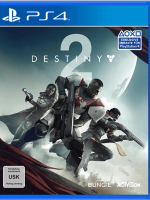
With Destiny 2 from Bungie, this very anticipation before launch resulted in significantly higher pre-order numbers than those for its predecessor. On September 9, 2017, just three days after release, the developers celebrated 1.2 million simultaneously active players (via X).
In several markets, it reached the first place in the sales charts. The Activision leadership celebrated the largest PC release in the company’s history. In North America, there was only one other console game that sold more in 2017 (Call of Duty: WWII).
However, the high hopes of many fans were never fulfilled by the game. Specifically, the endgame, the PvP, and later the DLCs, as well as many seasonal content disappointed:
- As early as 2018, Forsaken could not bring back as many players as publisher Activision had hoped, and they dropped out.
- By the time of Lightfall at the latest, player numbers were said to have dropped so significantly that Destiny 2 no longer generated enough money to support Bungie’s large team.
According to industry insider Paul Tassi (via Forbes), Bungie would not exist today without the takeover by Sony in July 2022 due to the weak revenues from Destiny 2. However, even Sony could not prevent layoffs. The development of the new multiplayer shooter Marathon is currently not going smoothly either.

Brother in Spirit: The Division 2
Similar to Destiny 2, the situation for The Division 2 in March 2019 was quite similar. Here too, there was a predecessor that had done many things well, but not everything, and a community built over years.
In fact, Ubisoft celebrated more than six times the number of pre-orders of The Division 2 through the Ubisoft Store. However, at release, the sales figures for PC were only at the level of part 1. On console, there was no game in March 2019 that generated more revenue.
Unfortunately, the developers here also failed to meet the expectations of most fans and build a content plan that would keep players on the servers long-term. This was not changed by the Steam release in January 2023.
In just one single weekend in the past 14 months, more than 14,000 players were online simultaneously on Valve’s distribution platform in The Division 2. And on that occasion, interested parties could try the online shooter for free for the first time.
Despite Steam Records, No Long-Term Success
Speaking of Steam: The next two games have been there from the beginning and share several commonalities. Both Lost Ark and New World
- are true MMORPGs (even if they feel and play completely differently)
- were released after a long drought period for fans of ambitious online role-playing games
- were managed (in the West) by Amazon Games and were able to utilize maximum synergies with the streaming platform Twitch and the Prime Gaming service
The result of this combination was comparable for both games: there was a huge hype that catapulted the titles into the all-time top 10 of Steam for “most concurrent players.” New World briefly reached 913,634 players (8th place), while Lost Ark even managed 1,325,305 players (4th place).
However, the highs lasted only for a short time for both projects. The hype collided sharply with the shortcomings of Amazon’s first ambitious MMORPG and the peculiarities of Asian online role-playing games. Player numbers plummeted.
New World clearly seemed like it wanted to transform an online adventure focused on sandbox, survival, and PvP into a half-theme park MMORPG with significantly more PvE content in a very short time based on feedback from beta testers.
Along with generic quests came server issues, gold duplication exploits, and other challenges. Strengths such as the audiovisual design of the game world or the lively combat system were not enough to compensate for the weaknesses.

Your opinion is important to us!
Do you like the article? Then let us know!