
The genre of MMORPGs has fascinated and thrilled millions of players for decades. In a multi-part report, MeinMMO editor Karsten Scholz sheds light on the roots, development, and future of online role-playing games. Part 4 focuses on the heyday of MMORPGs from 2004 to 2014.
The rocket-like success of World of Warcraft, which we highlight in the third part of our report on the genre of MMORPGs, marked the beginning of the heyday of MMORPGs, which lasted from 2004 to 2014.
In this decade, countless representatives of the genre emerged, looking to emulate WoW and grab a big piece of the success pie. We analyze why the competition failed despite big names and budgets below.
Part 1: The Pioneers of Online Role-Playing Games
Part 2: The First 3D MMORPGs
Part 3: The Exceptional Success of WoW and Its Reasons
Part 4: Heyday of MMORPGs and the Failure of WoW Killers
Part 5: The Great Drought and the Escape into Other Genres
Part 6: The Status Quo of the MMORPG Genre and the Future
The Perfect Service Game
World of Warcraft was the perfect example of “Games as a Service” at a time when no one had this term on their radar. The blueprint of the model: Sell the game and release a major expansion every two years, while charging each player a monthly fee to play the purchased product.
This must have sounded like a musical rain of money in the ears of many publishers. Especially when you can attract five, ten, oh what … twelve million players to the servers, and additionally rake in income from services like server and faction transfers or an in-game shop.
During Wrath of the Lich King, more than twelve million players worldwide played WoW.
Everything That Has Name and Fame
Below you’ll find a list of the most notable online role-playing games that were released after the launch of WoW and before 2015. Many of these MMORPGs, like WoW, relied on a subscription model, a well-known franchise, and theme park content like quests, dungeons, raids, instanced PvP, and so on.
- The Matrix Online (Release: March 22, 2005)
- Guild Wars (April 28, 2005)
- Dungeons & Dragons Online (February 28, 2006)
- Tabula Rasa (November 2, 2007)
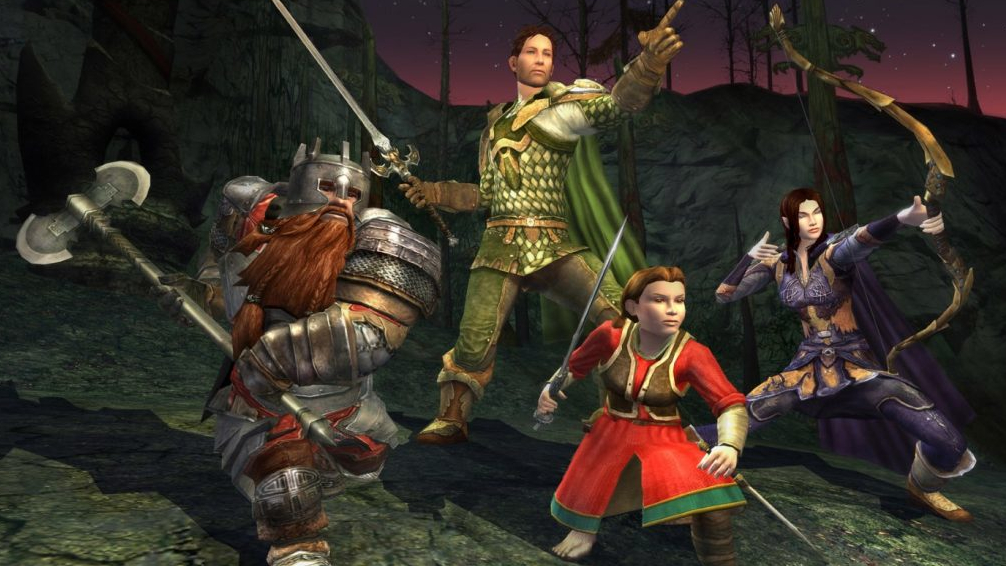
- The Lord of the Rings Online (April 24, 2007)
- Age of Conan (May 20, 2008)
- Warhammer Online (September 18, 2008)
- Aion (November 25, 2008)
- Runes of Magic (March 19, 2009)
- Champions Online (September 1, 2009)
- Star Trek Online (February 2, 2010)
- Final Fantasy XIV (September 30, 2010)
- DC Universe Online (January 11, 2011)
- Rift (March 1, 2011)
- Star Wars: The Old Republic (December 20, 2011)
- The Secret World (July 3, 2012)
- Guild Wars 2 (August 28, 2012)
- Neverwinter (June 20, 2013)
- Final Fantasy XIV: A Realm Reborn (August 27, 2013)
- The Elder Scrolls Online (April 4, 2014)
- WildStar (June 3, 2014)
- ArcheAge (Release in the West: September 16, 2014)
Starting in 2005, almost two to three exciting MMORPGs were released each year (some of which were referred to as potential WoW Killers) – and the list is far from complete. Genre fans could only dream of such a product in the last ten years.
After all: Only four titles on the list have their servers offline today (WildStar, Warhammer Online, Tabula Rasa, and The Matrix Online). The worlds of ArcheAge, however, will have to shut down in June. FFXIV only managed to turn things around thanks to A Realm Reborn (more about this later). Most MMORPGs from this phase continue to be regularly supplied with content today.
First Subscription, Then Free2Play
Almost all games on the list eventually had to admit that they were not a second World of Warcraft and therefore should bake smaller rolls in the future. This often led to significant modifications to the payment model, which in most cases meant a transition from mandatory subscription to Free2Play access.
The subscription itself proved to be a tricky trap for WoW competitors. On the one hand, this was because the heyday of MMORPGs coincided with a time when many people still had a problem regularly investing money in online services. Netflix, Spotify, YouTube Premium, and such were not yet a topic.
Those who were willing to spend 11 to 15 Euros per month for an MMORPG in the 2000s and early 2010s were likely focused on a single game. A difficult situation for any new online role-playing game with a subscription requirement when many millions of players are already tied to World of Warcraft.
The alternatives that were designed from the get-go to be Free2Play during that time – like Runes of Magic, Battlestar Galactica Online, Fiesta Online, or Hello Kitty Online – did not fare too well in direct comparison with the much higher-quality subscription competition. However, they were able to attract younger genre fans, especially due to the free access.
A Matter of Expectation
Such a monthly subscription brings another difficulty for every MMORPG provider. The regular costs awaken a certain expectation in the customer regarding finish, server availability, content quality, and update supply. Especially if one has already played other established genre representatives.
Who wants to buy a subscription game that struggles with technical difficulties, queues, bugs, and balancing issues? However, such problems usually await nearly every MMORPG at the first launch.
Additionally: When switching from the online role-playing game in which one spends the most time, one would have to sever all social ties and leave behind all that one has earned and learned. Give up the virtual home, where one feels comfortable, for an unfinished construction site? Very few do that.
If the problems of a new genre representative are too severe at launch, the subscription gets canceled faster than the developers can deliver hotfixes. And if one has turned their back on a disappointing MMORPG, the chances are low that the game will get a second chance at a later date.
This has been shown in the past with various examples, such as Age of Conan, which was in a disastrous state at launch. Funcom delivered patch after patch and managed to turn the MMORPG with the Conan license into a good game – but by then, very few were interested.
The current Unchained version of Age of Conan has little in common with the disastrous launch version from May 2008.
Killer Feature or Feature That Kills You?
The expectations of MMORPG fans also play a role regarding the gaming experience. Some players prefer action-packed combat systems like in TERA, while others prefer the rather static tab-targeting system of WoW or FFXIV for more controlled group battles.
Do you want to dive deep into the story, with in-game sequences and fully voiced dialogues (like in SWTOR), or do you prefer to sit with guild mates and friends in TeamSpeak or Discord while gaming an MMORPG to chat about everything and anything?
Sandbox or theme park? Asian look or Western style? PvP or PvE focus? Vertical endgame progression with constantly increasing item and character levels or horizontal progression like in Guild Wars 2? Closed language servers or flexible megaserver for all of Europe?
With every decision made, MMORPG developers disappoint a part of the fanbase who have a clear idea of what kind of online role-playing game they want to play. At the same time, however, they must try to appeal to as many players as possible to recoup the horrendous development costs and ultimately make a profit. A mammoth task that many have failed at.
Great Effort Pays Off
From today’s perspective, only two genre representatives from the heyday of online role-playing games have truly managed to operate on par with World of Warcraft as theme park MMORPGs. It is no coincidence that these are exactly the two games into which the most work has flowed after their launch.
Successful Rebirth of an MMORPG
Positive example number 1 goes by the name of Final Fantasy XIV, which was famously taken offline by Square Enix after a disastrous launch to later be completely overhauled and celebrate an unprecedented comeback in the “A Realm Reborn” version.
But it didn’t stop there. Since the relaunch, Naoki Yoshida’s team has delivered high-quality content-packed updates and expansions on a regular basis, which have made even WoW look outdated, and thanks to which FFXIV has gradually improved – and has earned the subscription model up until today.
The fifth expansion for Final Fantasy XIV will be released in June 2024.
The Greatest Flexibility
Major overhauls also occurred in The Elder Scrolls Online, which at launch not only struggled with technical problems but also with a dull endgame and other issues. The developers’ solution:
- make the subscription optional
- open the content of the game world for all level ranges
- introduction of a new tutorial from which one can access all chapters or the main game
- introduce account-wide progression for the time after the maximum level (champion points)
- establish a reliable content plan of DLCs, free updates, and the annual chapter in the summer
- release on consoles
The result of all these efforts is that today ESO is among the successful service games of the past decade, with more than two billion US dollars in revenue and over 24 million players.


A Minefield of a Genre
Many publishers and developers cannot or do not want to invest as much time into an already released MMORPG to address all the errors of the launch version and make the necessary extensive changes that might help them establish themselves among the few top titles. The actual development of such an online RPG is lengthy and expensive enough.
For many already released MMORPGs, there were only two options: go offline forever or continue to exist for a few thousand or tens of thousands of loyal fans.
And of course, one could draw an important lesson for the future from all the failed WoW killers. But that will be the subject of the next part of our report. Until then, you can pass the time with the following special: The 10 currently best MMOs and MMORPGs 2024

Your opinion is important to us!
Do you like the article? Then let us know!