On this Wednesday, I’m reaching out with a problem that isn’t primarily related to a computer game (but certainly has connections in the second and third aspects). This gives you a little insight into the incredibly dreadful issues authors have to deal with these days. But what is it about and how did it come to this?
Currently, I’m writing diligently or less so on the review for the first expansion of Hearthstone “Goblins vs Gnomes”, and whenever I hit a small writer’s block, I listen to some audiobook or – as this time – a podcast based on my roommate’s recommendation. A few prominent YouTubers (including “Cynical Brit”) have discussed rating systems for games in detail, and I can hardly support their opinion more strongly.
No one cares what I have to say

Maybe I’m seeing the whole thing too pessimistically, but it bothers me immensely that there are people who only look at the magic number in the rating and aren’t interested in how I arrived at that number. I can’t force anyone to read my articles in their entirety (well, I could… but I’ll be merciful), and in the end, every reader is responsible for how much they really want to consume.
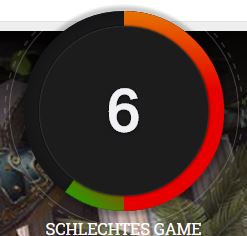
However, if it is possible for authors to encourage readers in some way to read a text in its entirety, then I would love to make use of those methods. Often hours of work go into a detailed review, so I appreciate every person who takes away more than just “6 out of 10 points, bad game”.
To summarize it bluntly and briefly: A numerical rating ensures that the entire text loses its attractiveness. It doesn’t even seem to matter whether the readers can somehow recognize how I actually arrived at my rating. Maybe I just roll a die for it…
When numbers pay off
The biggest problem is probably the attention a page receives as long as it contains a clear rating system. I’m not hiding it: We are absolutely dependent on our readers and the resulting page views. If no one were to visit the page, we could probably shut down our operation in a week. On search engine pages, like Google, posts with a rating system are displayed prominently, which more or less forces me to continue handling it this way.

But why is that? I can’t say exactly, but it’s simply a fact that every page using a number-based rating system generates more attention and is searched for more often by readers. You could say that as soon as a “grade” is awarded at the end, the readers come on their own!
The problem in this advertisement-funded business is for me that ultimately it doesn’t matter what users do on the page. Whether they read my articles, just scroll down and look at the rating or leave an ugly comment, in the end, everything is “equally” good, at least in the short term.
What is your opinion on this?
What I’m burning to know, aside from Google search results and Metacritic scores: What do you think about this issue? Do you like a rating system that ultimately boils down to a score between 1 and 10, which is based on the subjective impression of a single person?
[pullquote]Something like “fun of the game” or “long-term motivation” is incredibly subjective
How would you feel about a system where there is ultimately no grade or score at the end, but you would be forced to really read the text? Personally, I find it increasingly difficult to rate games in certain categories – because something like “fun of the game” or “long-term motivation” is indeed incredibly subjective. Please let me know in the comments what you think about it. I’m curious!