

The interest in headsets remains unbroken. However, their price-performance ratio is catastrophic, as the industry speculates on the ignorance of buyers.
Who buys headphones and a microphone separately instead of the headset saves quite a bit of money with this combo. The statement that a €30 headphone can match the sound quality of a €150 headset is no exaggeration. For this reason, some devices will also be presented here.
Headphones
Before some models are suggested, technical details must be clarified. Paragraphs related to headsets also apply to headphones.
The Surround Effect
Surround sound allows you to determine from which direction the sound is coming. This makes it easier to locate enemies in shooters. With headsets that have one speaker (also called a driver) per side, the effect will either not occur at all or be simulated. Surround or 5.1 headsets have multiple speakers per side and are of course more expensive.
As already mentioned, the industry speculates on ignorance, as there are no real surround headsets. In fact, the simulated effect, which may require a sound card, is better.

Source: bereviews.com
The ear itself does not perceive surround sound. However, our brain can calculate this effect. The sound usually does not arrive at the same time in the right and left ear. It is a matter of fractions of a second, but this is sufficient for the brain to determine the direction via this time difference. A 5.1 speaker system, which is distributed throughout the room, works accordingly.
The 5.1 headset with three speakers per side does not, however. Because they are only slightly offset and the distance between the speaker and ear is far too small. Thus, the brain cannot calculate the surround effect. However, if it is simulated, the sounds are played back with a delay in the left and right speakers.
USB Connection and Sound Card
You can choose between USB and jack connection. To understand the difference, it is important to know that a digital signal must be converted into an analog one. This conversion is either handled by the sound card, which requires the jack connection, or a processor built into the headset. The latter uses USB.
 If you do not have a sound card or only have the onboard variant, a USB headset is the better choice. Those with a sound card installed should always prefer the jack connection. Because it cannot be used in conjunction with a USB headset.
If you have the budget, you can also buy a sound card with a new headset. It does optimize the sound and is important for headphones to enable a surround effect. However, the card only accounts for a comparatively small part of the sound quality. So if you have a limited budget, it’s better to invest it in better headphones.
Terms
Impedance: Also called nominal resistance. The lower the impedance, the more sensitive the headphone is. This means that less power is required. For mobile and thus power-saving devices, a low value of e.g. 16 ohms is useful. However, the sound is less detailed compared to headphones with high impedance.
Headphone Amplifier: These are standalone devices or built into sound cards that amplify the signal. With high impedance, 80 ohms or more, the sound quality is also improved.
Sound Pressure: This value determines how loud the headphone can be at maximum. It is specified in decibels (dB). Sounds over 85 dB are harmful to health.
Total Harmonic Distortion: Also called distortion factor. It indicates the distortion caused by the headphone. The specification is given in percentage. The value should be kept as low as possible.
Closed: These are soundproof. Thus, sound hardly escapes, and the environment does not perceive the noises. A closed design leads to stronger bass.
(Semi-)Open: Sound penetrates outside through holes in the housing. This improves the surround effect and reduces bass.
On-Ear: The headphone rests on the ear. This makes the device smaller, but it also reduces wearing comfort.
Over-Ear: The headphone encloses the ear. It is larger and more comfortable to wear. Depending on the material, e.g. artificial leather, it can get very warm.
In-Ear: These are plugged into the ear. They have the best bass reproduction. However, the ear canal must be sealed airtight. For better wearing comfort, earpieces can be made by an audiologist. These are tailored precisely to the individual’s ears.
Dynamics: Also referred to as signal-to-noise ratio. It is given in decibels and represents the ratio between the loudest and quietest part of a music track. Titles require about 20 decibels, orchestras more than 80 for optimal sound.
Purchase Recommendations
Since everyone perceives sound differently, it makes sense to test these in a store beforehand. Only a few devices are mentioned here; the perfect one depends on many factors, such as which music one prefers. Many prefer a device that has a strong bass.
Superlux HD-681 (~€30)

*Affiliate-Links. Wir erhalten bei einem Kauf eine kleine Provision von Amazon. Vielen Dank für Eure Unterstützung!
This is the previously mentioned €30 headphone with good sound quality. It is over-ear and semi-open. The materials are quite inferior, and the artificial leather leads to heat buildup when worn for extended periods.
There are several models available in approximately the same price range. HD-681 has a warm sound tuning, meaning higher bass and treble. HD-681 B leads to slightly nasal reproduction. HD-681 F has less bass. A sound card is not worth it for this device.
Creative Aurvana Live! (~€60)
*Affiliate-Links. Wir erhalten bei einem Kauf eine kleine Provision von Amazon. Vielen Dank für Eure Unterstützung!
At around €60, this device is twice as expensive as the Superlux counterpart. However, it is the better choice in terms of quality. With an impedance of 32 ohms, it is also suitable for mobile devices. The biggest disadvantage of this closed headphone is its poor isolation. However, this only becomes a problem at high volumes. As a sound card, the Asus Xonar DG is recommended for €30.
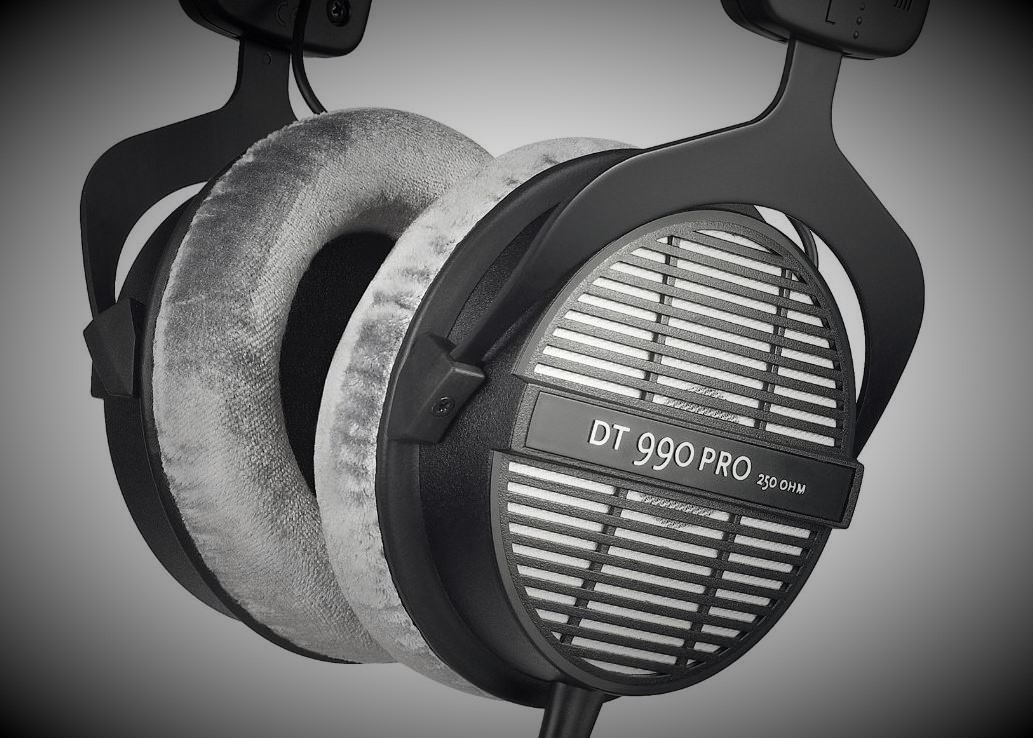
Beyerdynamic DT-990 Pro (~€150)

*Affiliate-Links. Wir erhalten bei einem Kauf eine kleine Provision von Amazon. Vielen Dank für Eure Unterstützung!
With the open design, the surround effect improves. It has a warm sound tuning and thus a strong bass. The device is sold in various impedance variants. For 80 and 250 ohms, the sound card Asus Xonar DX for about €60 is recommended.
An alternative model is the Beyerdynamic DT-770 Pro. It also has a warm sound tuning but has a closed design and thus even stronger bass.
The Big Three (over €200)

*Affiliate-Links. Wir erhalten bei einem Kauf eine kleine Provision von Amazon. Vielen Dank für Eure Unterstützung!

*Affiliate-Links. Wir erhalten bei einem Kauf eine kleine Provision von Amazon. Vielen Dank für Eure Unterstützung!

*Affiliate-Links. Wir erhalten bei einem Kauf eine kleine Provision von Amazon. Vielen Dank für Eure Unterstützung!
The big three refer to AKG K701 (low bass, high treble), Beyerdynamic DT880 (largely neutral), and Sennheiser HD650 (focus on bass and fundamental). They are quite similar, so an audition is recommended. To achieve optimal sound experience, a headphone amplifier is necessary. This can be done by, for example, the Asus Xonar Essence STX sound card for €160.
On the next page, we will focus on microphones.
- 1
- 2