

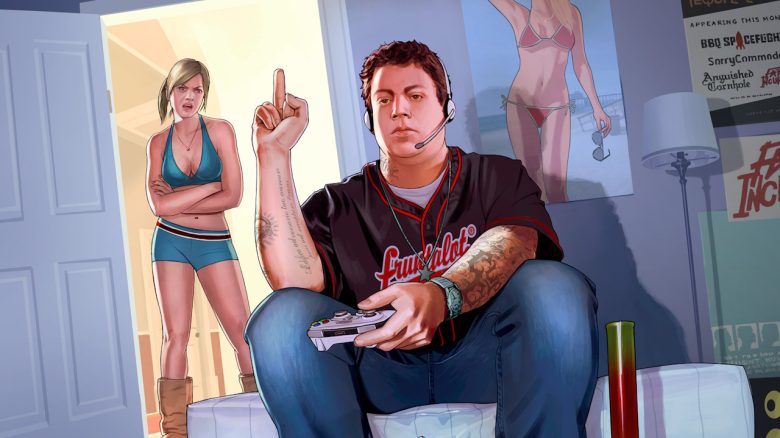
In the USA, a woman from Arkansas has filed a lawsuit against the major corporations behind games like Roblox, GTA 5, Fortnite, Call of Duty, and Minecraft. The woman accuses the companies of luring her then 12-year-old son into gaming with “addictive mechanisms.” Gaming has ruined his life over the last 9 years. The companies’ lawyers cite freedom of speech.

What is her son’s problem?
- As PC Gamer reports, the son is now 21 years old and spends about €325 a month on video games.
- He dropped out of school at 16 to stay home and play video games. He has been diagnosed with severe depression and anxiety disorders.
- The man suffers, according to the lawsuit, from withdrawal symptoms such as rage, anger, and outbursts. The mother was unable to regulate his gaming because she feared these physical outbursts, it is said.
The lawsuit accuses games like GTA 5 of having too much to do and never being boring:
Games are said to exploit the “chemical reward system” in the brain
What are the accusations against game companies? Game designers are accused of exploiting “a chemical reward system in the user’s brain,” especially in minors.
This would result in addictive behavior and could cause additional mental harm:
- As an example, the lawsuit mentions rewards in Call of Duty, such as unlocking weapons and attachments—unlocking forms a conditioning process. Added to this is the fast gameplay, the satisfying graphics, and sound.
- In Minecraft, the multiplayer feature leads to addiction to connecting with others. The lawsuit warns that players with ADHD become “hyper-focused” on building.
- Grand Theft Auto 5 has an “endless series of things to do, which keeps you constantly engaged and ensures that you never get bored.”
Moreover, users are not warned about the addiction risks of the games.



Lawyers for gaming companies see games as a form of expression
What do the gaming companies say? The companies’ lawyers cite a 2011 Supreme Court ruling that “games are a medium of expression.” Therefore, they fall under the statue of freedom of speech.
The accusation that a game is “too entertaining” cannot justify restricting the right to free speech.
From the perspective of the gaming lawyers, the accusations are vague and ominous. With dubious terms like “feedback loop” and “monetization scheme,” the plaintiff only wants to attack normal, creative features that make games better and more challenging.
Companies: You can’t sue us just because our games are too entertaining
The developers say:
“The plaintiffs believe that the expression through games is too compelling—therefore too entertaining—but that does not give them the right to restrict free speech or burden the messenger of the message.”
What does the mother say? The mother feels helpless in her situation. She once said that she took the modem away from her son, and he came down the stairs screaming so loudly that the neighbors called child protection services, thinking she was harming her son:
“When he started playing these games, I had no idea that there were multimillion-dollar gaming platforms and that games could make my son addicted. I never thought it would destroy my family, my relationship with him. [Your son] did not graduate from high school. He is not able to have a 40-hour work week. He doesn’t care about movies. He has no friends. He is a recluse and his family cannot connect with him.”
What happens next? If it were up to the gaming companies, the case of the mother from Arkansas would be dismissed. Currently, everyone is waiting to see whether the court dismisses or allows the lawsuit.
The gaming companies have also requested that the case go to mediation if the lawsuit is allowed.
Law firm aims for better protection of children
This is the larger picture behind the lawsuit: Currently, not only the lawsuit of the woman from Arkansas is in court, but there are a total of 6 similar cases represented by a law firm in Atlanta. The law firm Bullock Ward Mason specializes in video game addiction.
The firm states in a statement to PC Gamer that the addiction seen in children and adolescents is serious. Gaming takes over their entire lives and greatly negatively affects their well-being.
Therefore, they look forward to shedding light on the industry and holding video game companies accountable for the harm they cause. They aim to encourage legislative changes that will protect children in the future.
The attempt to take legal action against gaming companies often leads to strange developments. Here, they rely on freedom of speech. EA compared their loot boxes to surprise eggs before 2019:
EA calls loot boxes a fairly ethical surprise mechanic

Your opinion is important to us!
Do you like the article? Then let us know!