
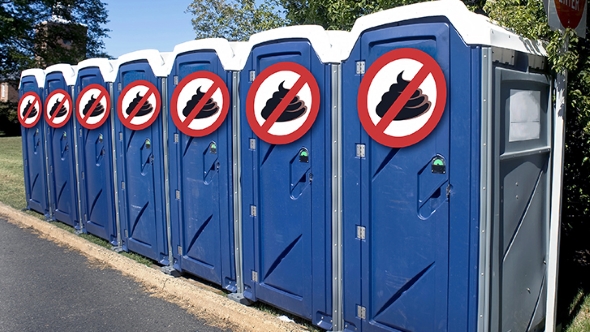
Hardly anyone reads terms of use and clauses when it comes to free Wi-Fi. The internet provider Purple has hidden various silly clauses like toilet cleaning and picking up trash in its EULA, and hardly anyone noticed.
When it comes to free Wi-Fi, many users seem not to think much about it. Otherwise, they certainly wouldn’t have accepted the bizarre clauses of the internet provider Purple. But what exactly does Purple have in its terms of use, and why?

1,000 Hours of Work for Wi-Fi
Those who wanted free Wi-Fi from Purple had to accept the EULA (End User License Agreement) with a click of the mouse. However, while most EULAs only outline the usual rights and obligations of the users, Purple decided to have some fun and embed all sorts of shenanigans in the terms. In exchange for free Wi-Fi, users agreed to complete 1,000 hours of community service. This included, among other things, the following activities:
- Cleaning public restrooms
- Clearing clogged drains
- Scraping hardened chewing gum off the street
- Hugging stray dogs and cats
- Picking up dog poop in the park
- Painting snail houses and brightening up their dreary existence
Over 22,000 users allegedly accepted these terms according to Purple.
Unusual EULA Clauses as an Experiment
But what does Purple gain from these clauses? Do they want to troll and enslave their customers? Not at all, because as can be seen from the rather bizarre clauses (painting snails, really?), it’s all meant as a joke.

However, there is a serious background, as Purple wants to draw attention to the problem that far too few people read what they sign.
A ruthless company could obligate its customers to all sorts of unpleasant things. Purple does not intend to force affected users to complete 1,000 hours of silly tasks.
Rather, they aim to open the eyes of the customers and encourage them to be more cautious. By the way, such surprising and silly clauses would be invalid in Germany anyway.
Incidentally, there was a prize for all users who noticed the additional clauses and brought them to light. However, only one(!) of the 22,000 users did this.
Also interesting: Corporations demand better mobile internet