

The Endgame – Everything is possible, nothing is mandatory
The endgame in World of Warcraft is extremely diverse with Midnight. It offers interesting challenges at various difficulty levels and for different group sizes and preferences.
Depths, Open World, and Story

Even though World of Warcraft is an MMORPG, it can be played quite solidly solo – and a large part of the player base does so.
The primary content for solo players are the open world and depths.
After completing the campaign, you unlock the so-called “world quests.” These are missions that renew every few days and simply appear on your world map. If you travel to the respective locations, you can complete a quest there and earn a reward. Sometimes this brings equipment, reputation, or a certain currency. These world quests represent the easiest part of the solo endgame.

If you’re looking for a bit more adrenaline, you can also activate the loot feature. If you choose this, you have a chance to be ambushed during your travels through the open world and attacked by a powerful enemy. If you manage to repel the enemy repeatedly and ultimately defeat them, there is an additional reward waiting. But beware: such “ambushes” often occur while you are already engaged in a fight. This can really put you to the test.
Depths are probably the most challenging variant of solo content. A depth is a kind of “mini-dungeon” that you travel to alongside an NPC (or optionally other players). There, you explore a small vault, defeat a specific group of enemies, and then receive rich rewards – equipment, fancy clothing, decorations for your house, and resources. Depths have scalable difficulty, so you can gradually increase the challenge, which also leads to better rewards.

Cortyn’s Opinion: In Midnight, World of Warcraft is also a lot of fun alone, primarily due to the depths and the great quests with dense atmosphere and exciting story. In the depths and with the loot system, there are plenty of opportunities to enhance your character and feel noticeably stronger, able to tackle greater challenges.
WoW is also cleverly designed to subtly tell you, “Hey, if you like depths, why not try a dungeon,” in order to encourage someone to engage in gameplay with a group or community. You don’t have to take advantage of it – but the option is there.
Dungeons with Endless Difficulty
For small groups of 5 players, dungeons are the primary content. Dungeons come in several difficulty levels, namely Normal, Heroic, Mythic, and Mythic Plus. You can also visit all dungeons on “normal” alongside NPCs – which is particularly interesting for story fans.
In normal, heroic, and mythic dungeons, things tend to be still quite easy-going. There is no time limit, the enemies’ attacks don’t hurt that much, and you can get a good overview of the layout of the dungeons.
However, at the Mythic Plus difficulty, things change drastically. From now on, there is a time limit and additional modifiers that make the dungeon harder, but also the rewards significantly more enticing.
This difficulty literally scales to infinity. As long as you can complete a specific difficulty within the time limit, you will receive a key stone at the end, which unlocks the next higher difficulty.
However, it should be noted that the difficulty escalates dramatically from “M+12” onwards, at “M+15” essentially no mistakes are tolerated anymore, and everything above “M+18” can only be handled by absolute professionals within the time limit.

Cortyn’s Opinion: “Mythic Plus” is one of the cornerstones of the endgame for me. The increasing challenge and the urge to want to be just a little better can be extremely motivating. However: Mythic Plus is only fun with friends or acquaintances. If you go into it with unknown people (“randoms”), you will experience a lot of toxicity or – depending on your class – not be invited to groups at all. This makes the individual experience in Mythic Plus so varied.
Raids – The Royal Discipline of PvE
If there’s one thing that World of Warcraft is praised for on all sides, it’s the design of raids, commonly referred to as “raids.” These are large instances for groups of 10 to 30 people.
Raids come in 4 different difficulty levels: LFR, Normal, Heroic, and Mythic.
While you can access the LFR mode easily through the group finder, the difficulty here is virtually non-existent. This is essentially the “visitor mode” to see the bosses at least once if you don’t usually play such content.
On normal difficulty, the bosses are considerably more challenging. For a guild or other community, this is a difficulty that average players can quickly overcome.
Starting from heroic difficulty, the “real” raiding begins. Here, much more is required. Solid equipment, a good understanding of your class, and learning the boss mechanics are necessary for the group to succeed.
Mythic raids, on the other hand, are significantly more difficult and are for the top percent of the best guilds. The boss fights are quite complex, often requiring special talent distributions among players and a high degree of communication – a voice program like Discord is often a mandatory prerequisite, as well as extensive preparation.
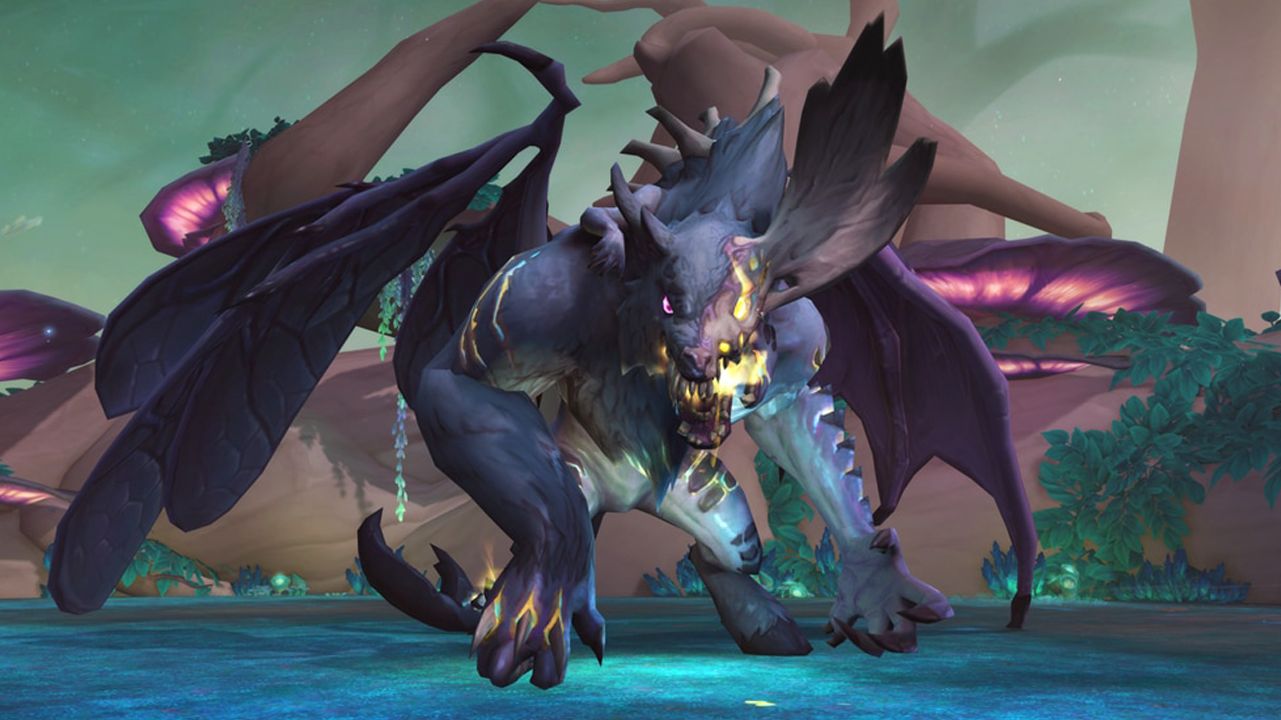
Cortyn’s Opinion: Raids are for me a cornerstone of World of Warcraft and one of the main reasons why I’ve remained loyal to the game for so long. There’s hardly a more wonderful feeling than finally defeating an end boss on heroic difficulty with friends or guild members after hours of slow progress and celebrating together. That’s a high that few things in WoW can compare to. Seeking like-minded individuals, i.e., a community or guild, is essential for this – because with complete strangers, that feeling doesn’t come.
PvP in Various Forms
Player-versus-player battles, or PvP, have been a part of World of Warcraft for 21 years – sometimes more, sometimes less.
If you enjoy it, there are many ways to experience PvP.
In traditional battlegrounds, larger groups compete against each other. There are many different battlegrounds with various objectives. From the traditional “capture the flag” to “king of the hill,” there are many classics represented. There are also real sieges of fortresses or quirky hybrids, where you must carry a ball but keep it in your hands for as long as possible – in a fairly obvious spot where you’ll be immediately surrounded by enemies.

In the arena, fixed small teams compete against each other, proving who is better in fast, focused fights. Here, not only the equipment matters, but especially the understanding of the game and reaction times. Only those who know the abilities of all 40 specializations in the game, can estimate their cooldowns, and know which spells must be interrupted will shine here. In the arena, you can prove your deep game understanding and pure skill – or fail miserably.
You can also experience PvP in the open game world when you activate the so-called “Warmode.” You then have an alternative phase of the game world, in which only characters who have also activated PvP are present. Here you can permanently (outside of cities) ambush characters of the opposing faction or be attacked by them. The war mode can also be lucrative because quests there yield larger rewards like gold – although with the risk that you may also get embroiled in PvP battles when you don’t want to.
The war mode can also be deactivated at any inn at any time, so it is not a permanent decision.
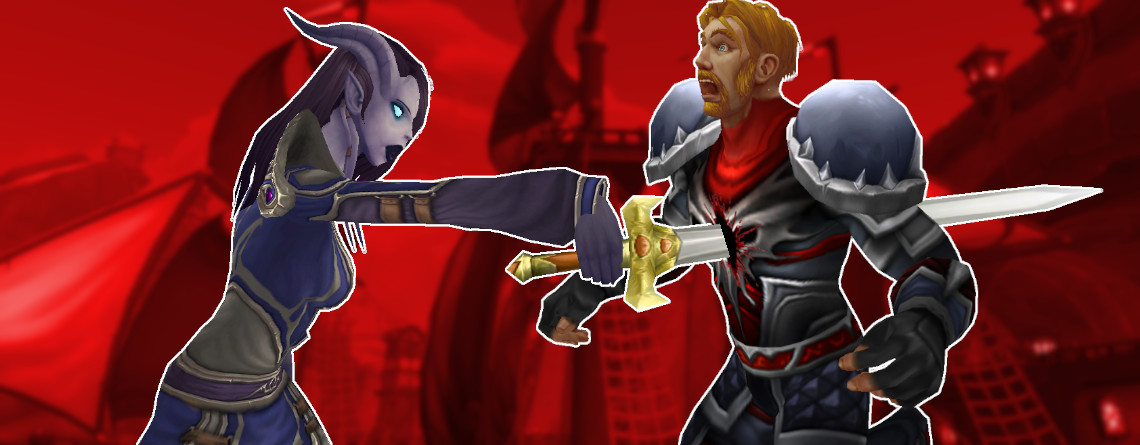
Cortyn’s Opinion: My experiences with PvP are limited, but I do have an interest in it from time to time. PvP feels significantly fairer in recent years, although the entry can be tough if you immediately encounter well-equipped pros. Fortunately, there is now a practice mode where you can train against NPCs (“bots”). There, the pressure is lower, and you can learn the basics without being crushed right away.
The Overwhelming Freedom of the Endgame
All the endgame content presented here is not mandatory. There is no obligation to complete any of it. You can only run depths, only complete raids, spend all day in dungeons – or do everything at once. Or none of it.
Those who want to get the absolute maximum out of their character will tend to check out all content and grab rewards everywhere – but that is not necessary.
Cortyn’s Opinion: My advice here is clear: Be open to all forms of endgame. Take a calm look at everything, even multiple times. Once you have an impression of everything, honestly ask yourself: Do I enjoy this? Does the gameplay bring me joy or am I only playing for the reward? Then eliminate everything you don’t enjoy. It’s easy to take on so many tasks in WoW that you end up suffering from burnout. You can avoid that by really only playing what brings you joy.

Your opinion is important to us!
Do you like the article? Then let us know!