

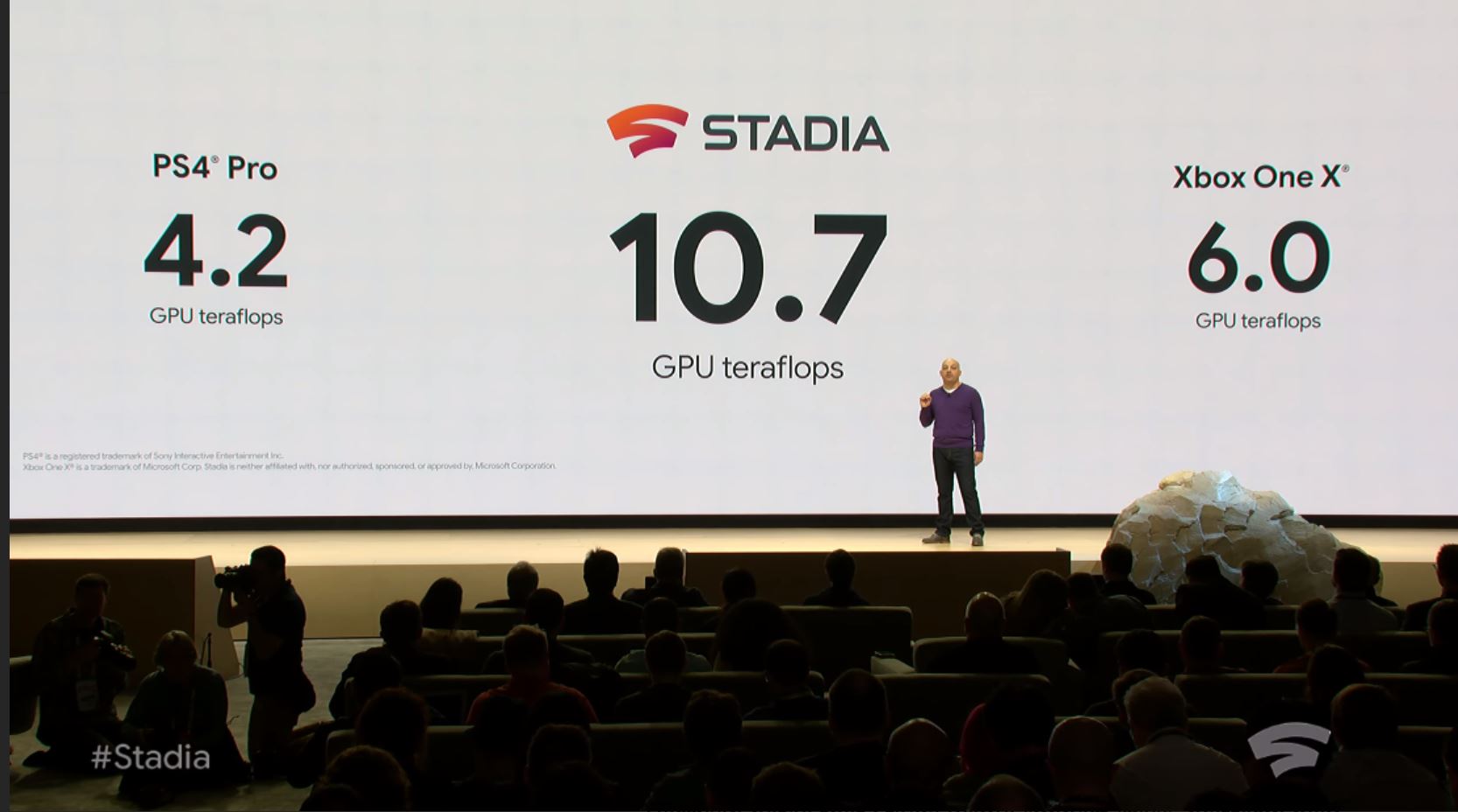
In late 2019, Google launched its gaming service Stadia. Through it, games can be accessed and played directly in the cloud. Expensive gaming hardware or downloads are not required. However, the great success did not materialize, and the porting of games for Stadia is said to have been quite expensive.
Where does the information come from? Gaming journalist Jason Schreier has written a report on Google Stadia for Bloomberg. In it, he talks about the unusual way in which Google has handled Stadia, as well as the costs and problems of the service.
He particularly emphasized the costly porting of video games like Assassin’s Creed and The Division. These alone are said to have cost a double-digit million amount.
Schreier also explains why so many players have a problem with the Stadia model.
Too much advertising, time pressure, and high costs
What did Google do wrong? According to Schreier, Google took an unusual path with Stadia from the beginning. While new products usually start with a long beta phase – GoogleMail was in beta for 5 years – Stadia was advertised from the start and sold as a finished product:
- At GDC 2019, Google was presented as a major competitor to consoles and PCs.
- Phil Harrison, the head of Stadia, called it the “future of gaming”.
- It was introduced with marketing campaigns for innovative features and a game library with exclusive and well-known titles.
However, Stadia employees reportedly told Schreier that the time frame until fall 2019 was too short to deliver all the features players would expect.
From their perspective, Stadia should have been marketed more cautiously and as a beta.
Good, but expensive games: To enable the porting of games for Stadia, it is said that double-digit millions were paid to well-known publishers like Ubisoft and Take-Two.
At the same time, a own developer studio was established, which, however, was closed before it could even release a game. The head was Jade Raymond, a veteran who had previously worked on Assassin’s Creed and Star Wars.
Players struggle with unfamiliar payment system
Why was Stadia still not a success? Despite the high costs, the selection of games at launch was limited, and there were no exclusive titles that players could not use elsewhere.
The unfamiliar payment model added to the difficulties:
- Initially, a starter kit for 130 euros was needed. This requirement was later removed.
- Initially, a subscription for 9.99 euros was mandatory for usage. Now it can be used with restrictions, such as missing 4K, without a subscription.
- Many games offered by Stadia need to be purchased additionally. Because Stadia’s subscription primarily provides the service itself, unlike, for example, Microsoft’s Game Pass. If Stadia were to be discontinued, access to the games might be denied. A risk.
What happens next? Currently, Google still holds on to Stadia, even though they themselves do not develop exclusive titles. Instead, the focus in the future will be on external games.
However, Schreier suspects that if no drastic changes occur, Stadia might follow a different traditional path – that of discontinuation, as seen with Google+, Answers, or Hangouts.
In addition to Google, Amazon is currently also working on a streaming service. Luna is supposed to include games directly in the price:
Amazon announces Luna – What’s inside the competitor to Google Stadia

Your opinion is important to us!
Do you like the article? Then let us know!