English gaming terms like streamer, season pass or free-to-play (F2P) are totally established in Germany as well as internationally. However, in France, it seems they’ve had enough of it.
In today’s gaming world, many elements around new releases have become indispensable. Many games enter early access before they are fully released. Likewise, games often come with a season pass that provides players with additional DLCs after the release.
There are free games, which are free-to-play, but there are also games with unfair funding models, which are pay-to-win. Top players earn their money as pro gamers, and if you don’t want to play yourself, you watch streamers.
Here in Germany, all of these and many more English terms have long taken root in the video game cosmos. People have gotten used to it.
And in France, there is now a counter-movement.
This is what’s happening in France: Of course, gaming is also popular in France, the government has noticed this too. However, it seems they are not entirely satisfied: As reported by the news agency AFP, the many anglicisms are said to create a language barrier, which non-gamers might find difficult to understand (via theguardian).
Now, several terms from the gaming sector have been published in the official gazette of France, for which there will now be French alternatives. For example, public representatives like authorities and other government institutions must now use these.
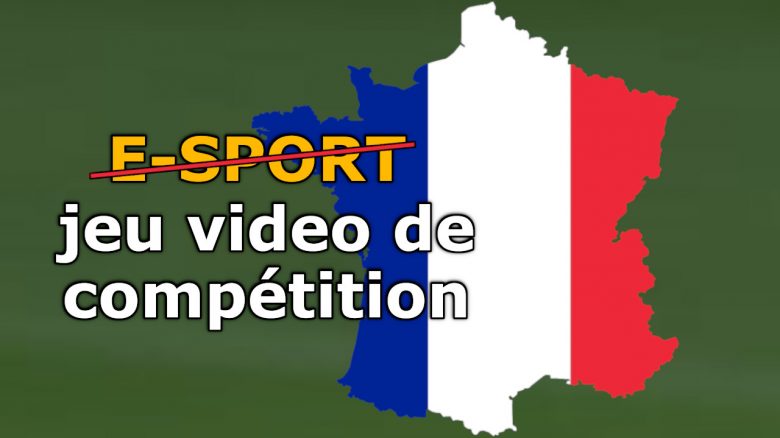
“Pro-gaming” and “E-sport” become jeu vidéo de compétition
What does this look like now? Overall, it is a collection of 19 terms that are getting new translations. You can find the complete list in the official state bulletin (via legifrance.gov).
A list of specific terms and their new, official translations has been presented there. Depending on your French language skills, some may be easier to understand than others.
The “season pass” will be referred to as “passe saisonnier,” “early access” is now called “accès anticipé.” This is still relatively easy to say.
It gets more interesting when looking at the term “e-sport.” This will be translated as “jeu vidéo de compétition,” which at least for those not well-versed seems rather cumbersome.
Other examples include:
- downloadable content (DLC): contenu téléchargeable additionnel (CTA)
- matchmaking: appariement de joueurs
- skill game: jeu vidéo d’habilité
- streamer: joueur, -euse-animateur, -trice en direct, joueur, -euse en direct
- free-to-play: jeu vidéo en accès gratuit
Gaming does not always proceed the same way everywhere – as can be seen in the current controversy surrounding Diablo Immortal in the Netherlands and Belgium.
From a German perspective, the whole story about the terms may initially seem unusual, but in France, it is not at all uncommon for anglicisms or other foreign terms to be avoided. Anyone who has traveled in France will have noticed this as well.
Even from a state perspective, language is repeatedly a topic, as seen in the example above. This has even been institutionalized: The Acádemie française was originally established to “protect” the French language.
What do you think about this topic? Would you wish for something like this in Germany – or are you satisfied with the terms? Let us know in the comments.
And yes – there are indeed a few terms that might not directly make sense to you if you’re not involved in the topic. If you want to put your knowledge to the test: Here is a quiz with terms that every MMO gamer should know.