

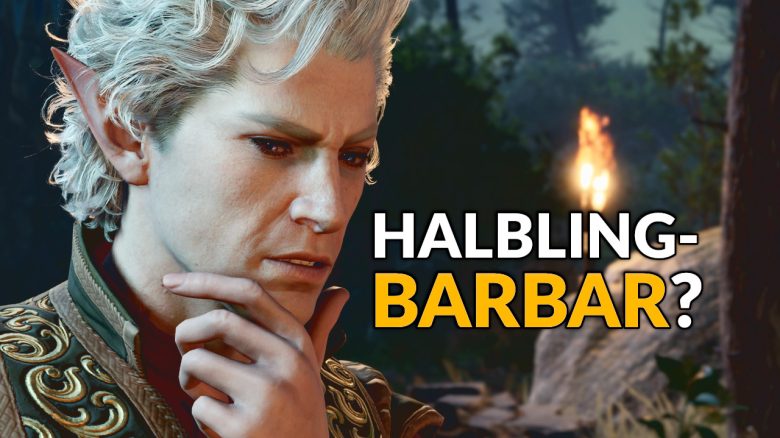
There is a new role-playing game coming soon called Baldur’s Gate 3 where you can create and customize your own character. Developer Larian gives you a lot of freedom but uses a rule that fans of Dungeons & Dragons find problematic.
Why is the folk election “almost” irrelevant?
- In Baldur’s Gate 3, you have the 12 classes as well as 11 races from Dungeons & Dragons.
- In the past, all races in D&D had special abilities and certain attribute bonuses, sometimes even a penalty.
- With an official supplementary rule, these bonuses are gone. Instead, you choose them yourself.
Why could this become a problem? Due to the race-specific properties, classic archetypes emerged in the past. Dwarves were dedicated paladins or clerics, elves often wizards or druids.
Corresponding bonuses to intelligence, charisma or willpower along with special abilities like saving throws against effects, darkvision or even spells granted by the race ensured a certain harmony between class and race.
Now, however, in Baldur’s Gate 3, you can freely decide which attribute you get a bonus on, as a screenshot reveals (via PCGamesN). You receive +2 on one attribute, +1 on another. This makes classes like halfling barbarians or half-orc rogues suddenly “playable” without disadvantages.
Particularly the folk bonus Luck
of the halflings, which allows you to have almost no critical failures, is extremely strong for classes like barbarians. Previously, the attribute bonuses and penalties ensured that halfling barbarians were not really useful.
Race rules from a supplementary book caused trouble before
The problem is that the bonuses of certain races are chosen in such a way that certain classes become unattractive for them because they would otherwise be too strong. You would have to give up strength in favor of other talents. This is no longer the case.
As YouTuber Old Man McLoyf explains with an example, there is a turtle folk that has absurdly high natural armor (via YouTube). This would be interesting for wizards who do not wear armor. However, the race inherently has a bonus to strength and constitution – which wizards only need to some extent.
Now the race could easily be played with intelligence and wisdom, becoming the perfect wizard, and you would have a “broken build.” Something that Baldur’s Gate 3 already gives you many means to do.

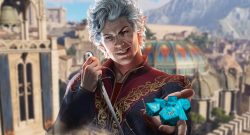

The rule is actually optional and comes from the supplementary book “Tasha’s Cauldron of Everything.” Meanwhile, the rule has been officially adopted, including by Larian, to allow maximum freedom.
That this is the goal was already shown by the developers with the freely customizable genitals and the many romance options. However, this decision has a significant impact on the gameplay, as you can make many situations much easier.
Among D&D fans, the optional rule was already controversial back then, simply because it can break the fantasy and imagination players have about the races. For you, this at least means: if you want to play a gnome warrior or an elf sorcerer now, nothing stands in your way, except perhaps the limited level:
Why you can only play up to level 12 in Baldur’s Gate 3 and why that is a good thing

Your opinion is important to us!
Do you like the article? Then let us know!