

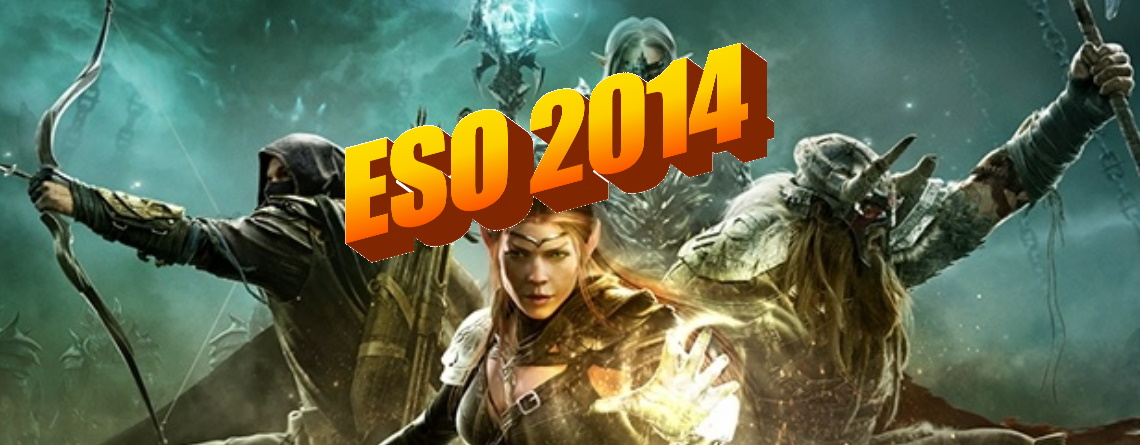
The Elder Scrolls Online was released 6 years ago and has changed drastically since then. Our author Jürgen Horn has been with the game since the beta and accompanied its launch. Read here what he experienced back then and how different the MMORPG was at launch.

I, Jürgen, have been playing ESO since the beta in spring 2014. Back then, to complete my first big job as a game writer because I was part of the team for the first major GameStar special edition for ESO.
Therefore, I also had access to the game when it finally launched on April 4, 2014. But the ESO that is played today was a different game back then. Read here some of the biggest differences between the original ESO and the current game.
Queues, Monkeys, and White Horses
ESO at launch: Back then, ESO was highly anticipated, and a massive number of people wanted to start playing the game. Therefore, there were massive queues at first. Many players could not access the game for hours.
If you finally succeeded, the sight was somewhat disorienting. Because everywhere there were players with white horses and a horde of chattering monkeys ran around. There was a simple reason for that: The monkey was a launch gift for those who played the beta.
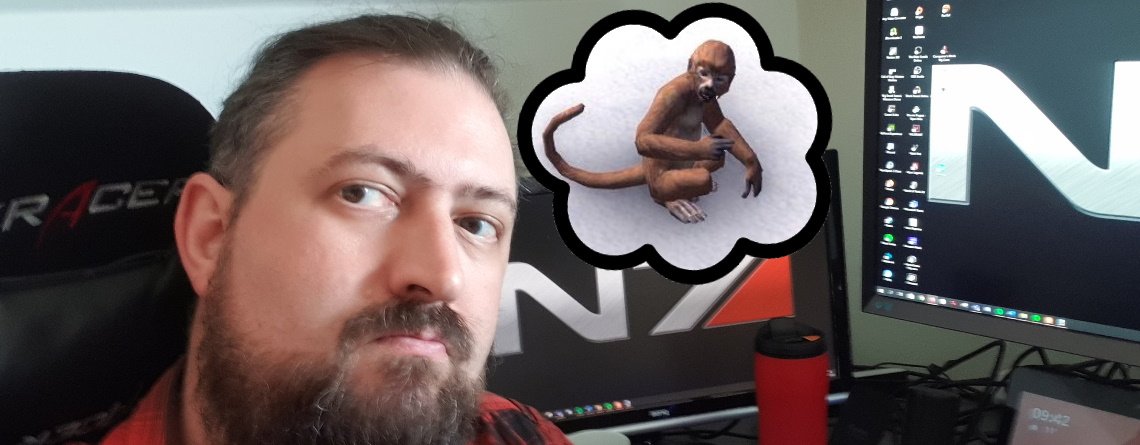
The horse, on the other hand, came from the Special Edition of the game, which many players purchased because that was the only way to access the popular Imperial race.
Also funny: Since all players were on the same megaserver but no one used the language-specific channels, there was a chaotic language mess in the chat.
Issues with Phasing and Missing Elder Scrolls Content
ESO was controversially discussed back then. Because the target audience of Elder Scrolls fans were often hardcore solo role-playing fans. They usually preferred a new Skyrim rather than Elder Scrolls WoW.
The issue with Phasing: Therefore, the developers were always keen to preserve the solo RPG feeling in ESO. A concept that was particularly excessively used back then was the so-called Phasing. This means that a quest runs through different phases and puts players who have completed a certain phase of the quest into their own instance. There you would see, for example, a burning village after bandits have set it on fire.
It was pretty cool when you were alone, but in a group, it was a plague! Because the game only put players into the new instance who were far enough along in the quest.
Therefore, you might suddenly be alone and could not see your peers in the group when you entered the next phase of a quest ahead of them. Playing together was a very tedious affair back then.
On the other hand, there was the region Kargstein, which appeared soon after launch that could only be entered as a group. Solo players had to stay outside at first.
How players were unnecessarily divided back then: Another relic from the early days of ESO that hardly anyone misses today was the faction and race restrictions. You could only play the three races assigned to each alliance. The package that allowed you to choose your race freely came later. The faction restriction lasted even longer.
Until the release of “One Tamriel” you could only complete the areas and quests of your alliance. Only at the end of the campaign was it possible to explore the areas of the other alliances. Anyone wanting to explore their very cool quests and stories earlier had to create a twink.
This, in turn, was a nightmare for the classic Elder Scrolls fans since they were used to being able to go anywhere at any time in games like Skyrim.
That’s why it was no fun to help weak players: In an MMORPG, it is useful for weak players to be carried through instances by experienced players, thus obtaining good loot and experience. But in the original ESO, that wasn’t really enjoyable because the veteran gained nothing from their efforts.
The loot was far too weak for them, making it a tedious chore to carry newbies. This way, veterans stuck to themselves and newbies quickly divided into different experience levels, who also barely interacted with each other.
This only improved when One Tamriel introduced scaling enemies and rewards, and you found an appropriate challenge at every level and in every area.
That’s why thieves were unhappy back then: Also problematic for many Elder Scrolls fans was the absence of the Justice System in ESO. This also came into the game later. Until then, you could not steal anything. Items were just lying around and could be looted without consequences.
Anyone who had been looking forward to a career as a master thief – also a popular path in Elder Scrolls games – could simply not do it. The same went for assassinations, which only came later with the Dark Brotherhood DLC.
That’s why ESO eventually became a better game: As seen in the examples above, ESO was a rather conservative MMORPG whose unique elements did not quite work.
But the developers listened to the players and methodically worked on implementing feedback and improvement requests. Therefore, in 2016, two years after the launch, the major update One Tamriel was released. Finally, it became possible to explore Tamriel together with all players and play ESO like the “Online Skyrim” that fans had wished for since launch.

Your opinion is important to us!
Do you like the article? Then let us know!