

What is actually better: building a PC yourself or buying a pre-built one? Among gamers, this is a common discussion that usually ends with many proudly claiming to build their own. MyMMO editor Benedict Grothaus sees it differently – and has had some disagreements in the editorial team because of it.
Yes, I know, a lot of gamers turn up their noses and look down on those who buy their PC pre-built. But honestly: There are plenty of reasons to do just that.
I would even go further and claim: building it yourself only makes sense if you have a lot of knowledge and specifically want something – like a really exotic case mod or particularly cheap components.
Unlike my colleagues Benedikt Schlotman and Martin Vollert, I am not a tech genius; I’m just a gamer. For me, it’s important that a computer works and doesn’t cause me any worries. That’s why I bought a gaming laptop just for on the go.
That’s why we recently had a discussion. Benedikt and Martin both believe that building it yourself is better. I say: No. Buying is the better option for most gamers.
For some, a reason to build it themselves: fancy cases:
The most important reason: building it yourself is often not even cheaper
What most self-builders cite as the biggest advantage is the complete freedom over the individual parts and the associated cost savings. Because generally, it’s the case that individual parts of a computer are usually cheaper than the final product.
That was true when I started with my first computer. Back then, I was 15 or 16 and had my brother help me assemble the PC. I built my first own computer when I was 17 or 18. Back then, it was definitely the cheaper option.
Today, that’s no longer the case. There are many instances where users can buy a PC cheaper than they can build one. This is mainly due to developments in recent years.
Certain hardware has simply become more expensive. Graphics cards, for instance, have become extremely costly because they’re popular with miners, processors can become real cost traps.
Retailers that assemble their parts can often offer them to users at a better price. That’s what happened with my last computers. I don’t have the historical figures on hand, but in the end, I paid about the same for my last two PCs in pre-built form as I would have if I had built them myself.
Most shops offer configurations
The second big advantage that gamers find in building it themselves is the customization of the machine. Computers from discount stores are often simply not optimized and have some bottleneck – usually the processor.
However, most online shops now offer the ability to either customize the purchased computer or even assemble it entirely on your own. The PC is then simply assembled on site and sent out ready to go.
There may be additional costs involved, but these need to be weighed against the time and nerves spent during self-assembly. Because not everyone enjoys it – I, for example, am annoyed by things like cable management. It’s not worth my time.


Better warranty, less effort, more service
The most important point for me, however, is that when building it yourself, really nasty mistakes can happen. Not being properly grounded even once, touching electronics incorrectly, and suddenly a costly component can be a loss.
Even if you can replace it through warranty, you’ll have to wait a few days for the new part and can’t game during that time. That would be way too stressful for me. When buying, I have a few advantages right away:
- The computer is – during assembly – checked for functionality, so it arrives and can be started directly.
- This isn’t always the case with pre-built PCs, but most online shops like Alternate and Mindfactory do offer this service
- Cables are professionally routed, so I don’t have to worry about cooling flow.
- If desired, I can have software like an operating system or even an office suite installed in advance – although for an extra fee, but this way I get a ready-to-use machine.
- I don’t need tools or spare parts at home, should any screws go missing.
Some shops also offer an extended warranty. For four years I have peace of mind and don’t have to go on a search for faults if something goes wrong. And after four to six years, upgrading or replacing is always sensible.
Additionally, the respective computers can then be set up in such a way that they can be easily upgraded. Extra slots for memory, storage drives, and the like are usually no problem.
Is building it yourself always the worse option?
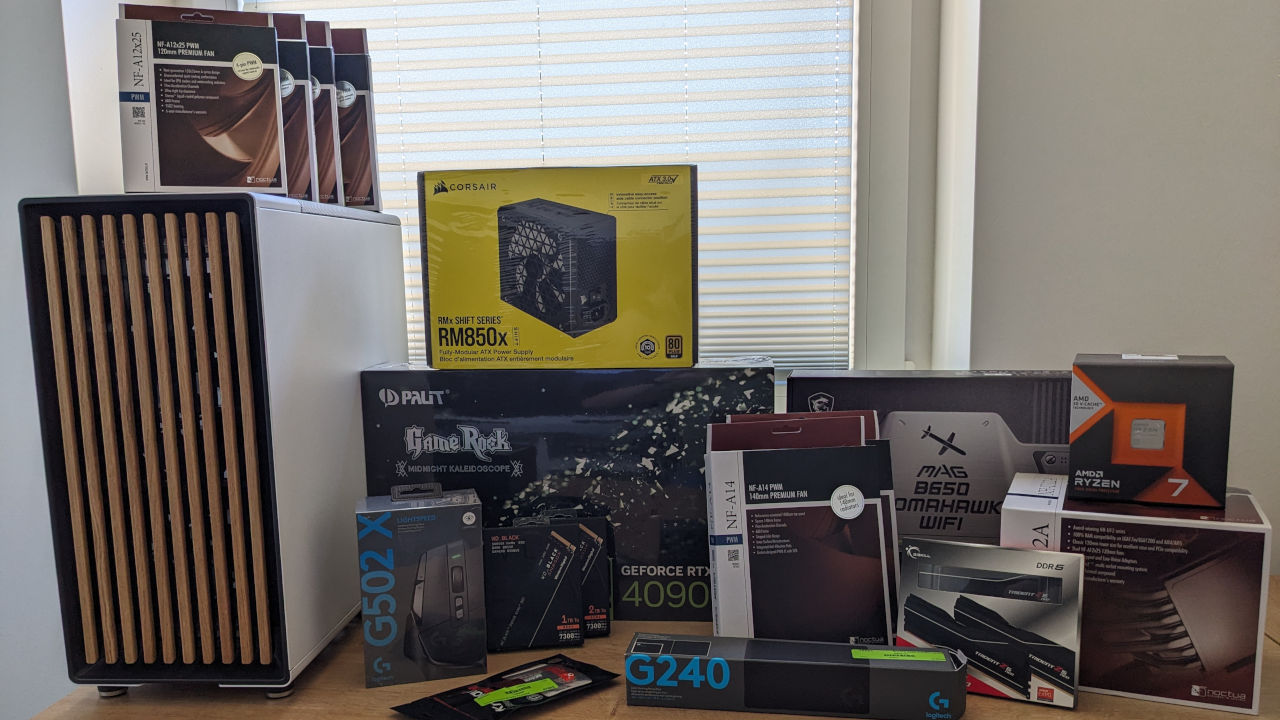
No, building your own computer from individual components still has its place. It used to be the standard and that has largely remained the case. Building it yourself still has some advantages, such as when:
- you have a lot of knowledge but little money, you can save well here
- building as a hobby (or as a service for friends) is relaxing if you’re interested in it
- through building, you learn the odd trick, can exchange ideas with other experts, or even get into things like case modding
However, gaming is no longer just a hobby for tech nerds. Therefore, buying has simply become “more socially acceptable” and for a good portion of players, it’s certainly a better option – especially when you want to game without worries.
For people like me, who mainly want to game (or work), buying is usually the smarter choice. And nowadays it’s not significantly more expensive or worse than building it yourself; in some cases, it’s even cheaper. It always depends on the offers, but that’s the case everywhere. For everyone who wants to know more, colleague Benedict has a few tips: 7 tips you should know before assembling a PC

Your opinion is important to us!
Do you like the article? Then let us know!