

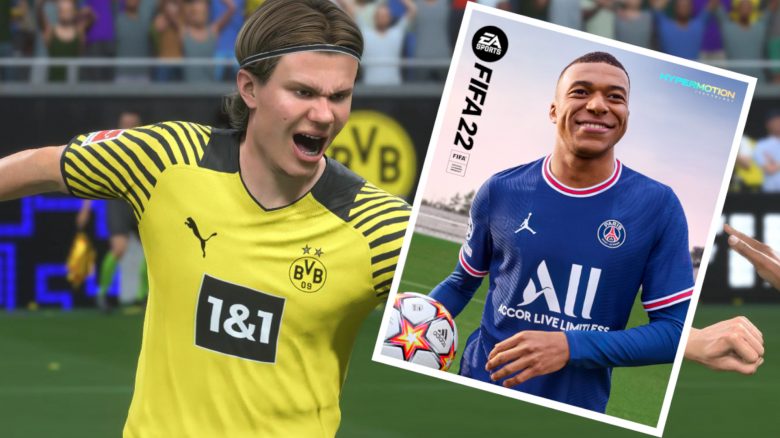
With FIFA 22, a new football season begins on the virtual pitch. MeinMMO author Max Handwerk has already had some fun and put FIFA 22 to the test: What has changed compared to its predecessor?

For me, the new FIFA release always feels a bit like the start of a new Bundesliga season. You look at: What is the favorite team doing? Is there a new coach? Are sensible new players being signed? And above all: Do the new signings deliver what they promise?
Now there are basically two possible extremes:
- The new arrivals make an impact. The first games are won. The table looks great and good spirits abound. I believe Bayern fans feel this way every season (although winning all the time must also be difficult).
- Or, as is often the case with my favorite team (sob): Many interesting names are signed, but it doesn’t really come together. The team stumbles awkwardly over the pitch in the first games, a key player gets injured and the fan mood sinks just like the club in the table.
The question is: Where on the scale between these extremes does FIFA 22 stand? Can newcomers like HyperMotion convince? Were weaknesses from the previous season addressed? Is there maybe a surprising talent – or does it look more like a relegation season?
I have had the opportunity to test the game for several days in the PS5 version.
Let’s get the obvious out of the way: This year, FIFA 22 does not reinvent the wheel. Much is similar to FIFA 21. But there are some interesting points that distinguish the newcomer in the FIFA series from its predecessor. Let’s take a closer look at them here.
Hypermotion in Test – The Toni Kroos of FIFA 22 Gameplay
Hypermotion was the big buzzword when it came to FIFA 22. Based on motion capturing, more than 4,000 new animations combined with features like a revamped AI aim to ensure the most realistic FIFA experience yet. Did it work?
Here, at least after a few days, a comparison to football can be made. There are players who are essential for a team. And this is something that viewers may not always notice.
Toni Kroos is such a player. Praised by coaches and teammates, celebrated for his passing accuracy, showered with titles. His presence is crucial in parts and details of the game that are hardly noticed by viewers – yet you often underestimate him. But situations arise repeatedly, like a precisely placed free kick, in which you think: “Ah yes, Kroos. Of course. Amazing player.”
It’s somewhat similar with HyperMotion.
It may not be extremely evident in every second of the match, but the new animations, the new AI, the new ball physics: All these things make the gameplay better. Or rather: More realistic.
The somewhat slower, build-up gameplay is an improvement and aligns more with what one sees on real pitches. At least in the first days, even in Ultimate Team, matches developed that looked really like football.
- There are powerful strikers like Lukaku or Immobile who are finally useful and are not rendered useless because they are simply too slow.
- If the passing value is weak, the fancy new banana cross does not reach the teammate, but goes out of play.
- If the defender’s physicality is poor, Lukaku will not be pushed off the ball.
- And the joint defending backline will not be easily bypassed because the striker is eight times faster, but rather resolves the situation through smart positional play.
This is supported by small animations that you only see if you really pay attention (or rewatch them in slow motion in the replay).

This may not be the reinvention of the wheel that some may have hoped for. But after FIFA 21 was increasingly determined by the values of “speed” and “skill moves” during the season, I am definitely happy about gameplay where matches are not only decided by who runs faster or tricks better. That’s not how football works, and FIFA shouldn’t either.

But, and this must also be noted: In recent years, FIFA often felt like a “more realistic football game” shortly after release – until elements like patches or over-the-top special cards with high speed values caused first impressions to change.
So, for now, we can only hope that EA, with HyperMotion and the new AI, can ensure that this remains balanced in FIFA 22, rather than in the past.
Equally important: The NextGen version has an advantage over the old generation. Unfortunately, I currently cannot assess how the game looks on the PS4. However, last year, the leap to the new generation already became noticeable with elements like better graphics or the new “GameCam”.
Goalkeepers – The Stars of the New Gameplay?
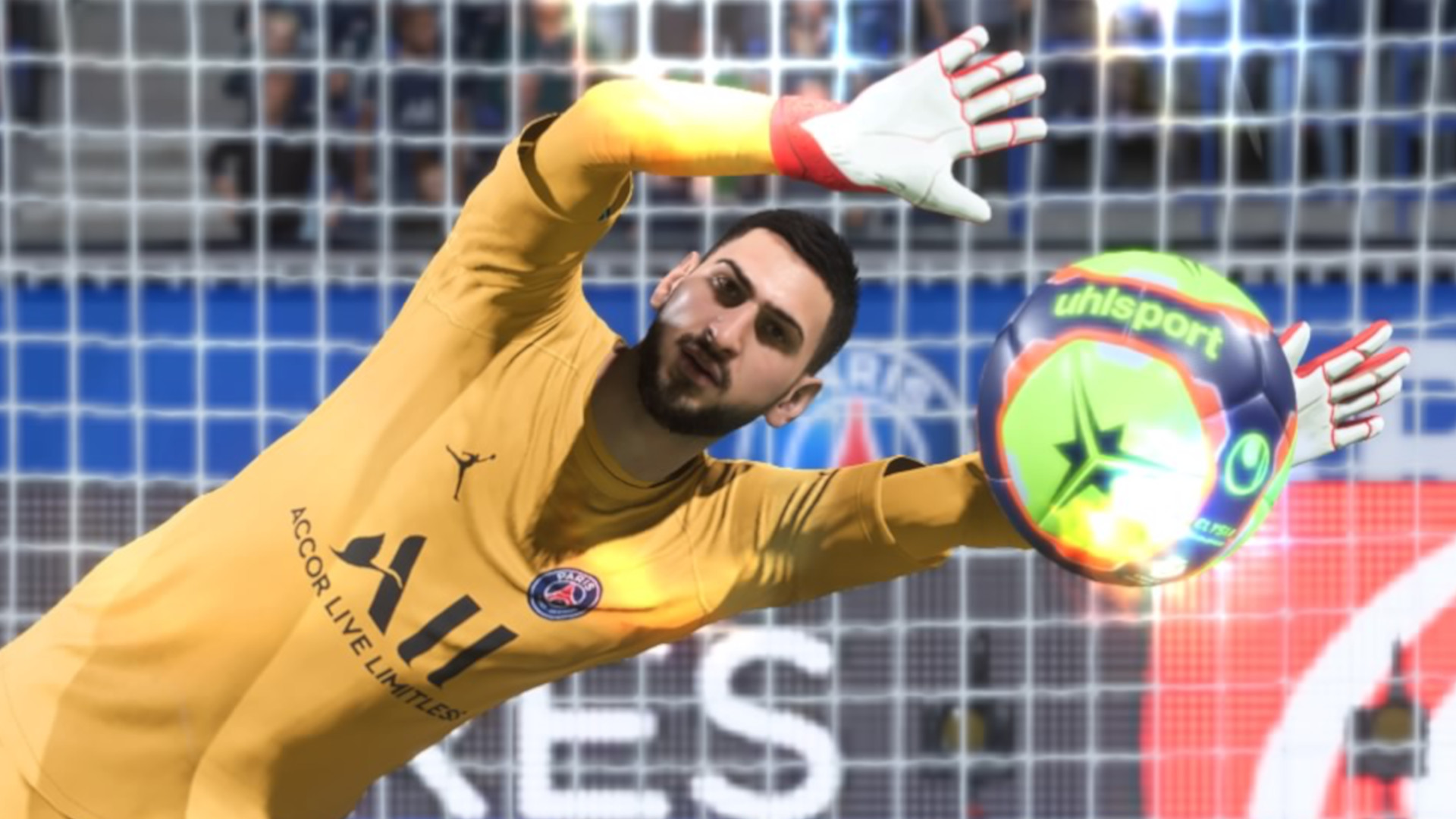
The goalkeepers in FIFA 22 deserve to be mentioned separately. Because while one only sporadically notices the new animations in the outfield players, with the keepers, you seem to see something fresh every two minutes. Goodness, can they suddenly save balls.
This can certainly be frustrating and has brought me to the brink of madness in recent days. Here I create a lovely goal-scoring opportunity, only to fail due to an absolute killer save. Some players have already criticized this.
However: Overall, I see the overhaul as a significant step forward. Goalkeepers prevent real football from constantly ending up with scores like 23 to 48 or similar.
In FIFA 21, the keepers felt a bit like extras that could be outplayed with two to three relatively easy moves. In FIFA 22, they are a challenge in themselves.
I am curious how this theme develops. Because parts of the community feel the keepers are now too strong, while others celebrate the new goalkeepers.
Depending on how the feedback turns out in the end, it is conceivable that a patch will address this and make the keepers a bit more forgiving. But this is merely speculation – and I personally hope that the goalkeepers will remain at their current level for now.
Ultimate Team, Career Mode, Volta – What Do the Modes Do Differently?
During the test, I took a closer look at the modes FUT, Career, and Volta. All three offer a few changes.
Ultimate Team – Familiar Faces Reorganized
What I described above in terms of gameplay is also noticeable in Ultimate Team. In the first days, the games ran smoothly and there were hardly any problems. However, as has been shown in recent years: You have to wait and see how it develops when more people are on the servers.
The old problem in FUT remains: Those who invest real money in the mode have an advantage. After all, depending on the investment, you can earn a lot of FUT coins from players in packs. The gambling aspect of the packs remains concerning.
On the positive side, the preview packs are back – and apparently for good. This allows you to check daily if there might be a worthwhile pack in the store. For players like me, who only play FUT without investing real money, this is an important change.
In recent years, you could also acquire strong players through rewards, objectives, or SBCs. These things take time and take longer than simply throwing money into the store. You will also not be able to sprint across the pitch with Ronaldo and Co. from the start like some streamers – unless you have unbelievable luck.
But I am at least optimistic that it will still be possible this year to put together a good team with the help of trading and rewards.
Interestingly, in this regard, the change in the rewards structure of the Weekend League and Division Rivals. This has only been partially evaluated after the first few days, as there hasn’t been enough time yet to qualify for FUT Champions – the first Weekend League starts on October 8th.
However, it seems that you can operate somewhat stress-free regarding the rewards. Parts of the FUT Champions will now be completed during the week, which means you are not forced to push through on the weekend. This should be a welcome change for players who have other commitments or plans on weekends.
Additionally, you can already earn rewards mid-week through games. This way, you can at least earn some Champions rewards even if you can’t play on the weekend. However, the qualification process seems to be more lengthy at first. We will have to wait in the first weeks.
Volta Surprises with Fun
For me, Volta is the surprise of the year. That may seem crazy since the mode has been so irrelevant in recent years. But this year, it has taken on a new identity for me: Volta is the place where you can just spend some fun hours with your friends.
I mean it this way: If I want to chat or play online with friends, I throw in some casual games. Fall Guys is one such game, or Rocket League (to a certain extent). FIFA wasn’t part of that until now since FIFA online has always been a battle.
But in “Volta Arcade”, there are now some game modes that are simply a lot of fun. Football tennis, wall shooting, dodgeball – there are 8 mini-games available at the start, and more are to come. The surprising thing is: They are simply much more enjoyable than I expected.
While in Ultimate Team you are always just focused on the next goal, the Volta games offer variety. Take wall shooting for example: Here, you simply have to tap the ball against a large wall when it’s your turn. If you succeed, the next player has to pick up the ball and shoot against it. However, there is a time limit – and if they fail, they are out.
Accordingly, everyone tries to keep the ball away from the player whose turn it is. This creates an entertaining chaos on the field that you don’t know from other modes. Additionally, the mini-games run one after the other in quick succession. So it doesn’t get monotonous.
If FUT is the Champions League, Volta is more like an afternoon on the playground with friends. And that certainly has its own charm! I can very well imagine spending a few rounds here in the future. Here’s a look at what it’s all about in the Volta trailer:
I can only recommend that you definitely check out Volta if you want to play FIFA in a more “relaxed” manner than in Ultimate Team. And who knows: Maybe “Volta Arcade” will also impress you for the rest of the mode.
After all, with the new “special skills”, it’s also closer to FIFA Street than ever before. And I used to love that. Let’s just hope that the rest of the community comes to the same conclusion – and that you won’t find yourself in an empty lobby while looking for matches.
But, just a couple of criticisms: Currently, Arcade is only available on weekends, which I cannot understand. And: In the test, I could not find a couch co-op mode for Volta Arcade. This fun mode would be perfect to play with friends on the couch. Why this option is missing is a mystery to me.
Career Mode with More Personality
In recent years, Career Mode has increasingly faded into the background when it comes to new features. This year, the mode stands out mainly with two innovations:
- In the manager career you can create your own club, including badge, stadium, anthem, and more.
- In the player career, there are now more atmospheric cutscenes as well as an ability system that almost resembles an RPG.
Both features have their merits. Especially tinkering with your own club is fun and gives you a greater sense of being a real manager. If you want to delve into this thoroughly, there are many options available.
Regarding the “daily business” of Career Mode, at least as far as I could assess during the test, not much changes. You still need to scout, train talents, and win titles. That hasn’t changed from last year.

However, the player career has pleasantly surprised me – which is simply due to the fact that I’ve largely ignored it in recent years. But if you go into the mode as more or less a novice, it offers a fun challenge.
Developing new skills and seeing them on the pitch gives you a good sense of progress. The fight for a starting position and fulfilling objectives during matches present tasks that you don’t have in Ultimate Team. And just playing your own Pro is a completely different experience than controlling the entire team.
I’m not yet sure how durable the mode is and how long you will enjoy it. But: If you, like me, have little experience with the single-player mode, a little leap into player career might be worth it.

Your opinion is important to us!
Do you like the article? Then let us know!