

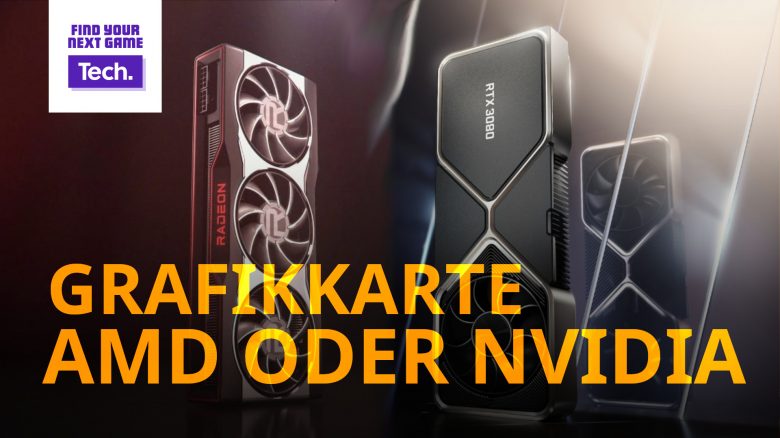
If you want to get more out of your gaming PC, you might consider buying a new graphics card. But does it even matter whether I ultimately choose AMD or Nvidia? MyMMO presents the similarities and differences between AMD and Nvidia and explains what you should consider before your next graphics card purchase.
If you want to buy a graphics card right now, you inevitably have to turn to AMD or Nvidia. Intel has now also introduced graphics cards for under 200 euros, but here, especially the drivers have been causing problems for some time.
But does it really matter whether I end up choosing a graphics card from Nvidia, AMD, or Intel? MyMMO explains where the similarities and differences lie and what ultimately matters when making a purchase.
- AMD vs Nvidia: Where is there more performance?
- AMD vs Nvidia 2025: Power consumption and efficiency
- AMD or Nvidia 2025: Who offers more features?
- AMD vs Nvidia: Price
- AMD or Nvidia: Which graphics card should I buy?
Updates: 01/29/2025, 01/21/2025, 02/20/2024, 10/17/2022
Nvidia or AMD Graphics Card: Where is there more performance?
AMD and Nvidia have both introduced new graphics cards at CES 2025:
- Nvidia its RTX 5000 series, including RTX 5090, RTX 5080, and RTX 5070.
- AMD has at least briefly presented its new RX 9070 to the public.
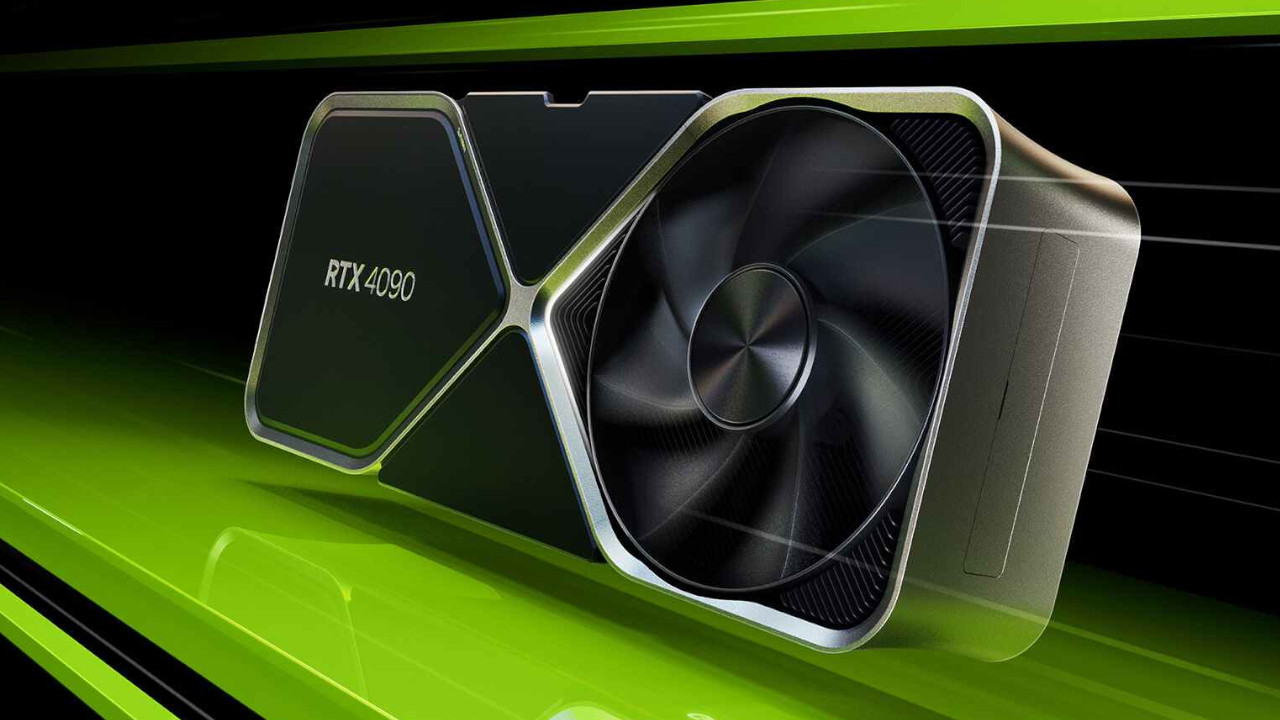
The GeForce RTX 5090 has replaced the GeForce RTX 4090 as the fastest graphics card in independent tests. Depending on the benchmark, the RTX 5090 is between 20% and 40% ahead of the older RTX 4090. Following that, at a slightly lower level, is AMD’s Radeon RX 7900 XTX. AMD’s fastest graphics card is likely to remain the Radeon RX 7900 XTX.
In 4K and raytracing performance, Nvidia is also ahead. Once DLSS comes into play, Nvidia is also slightly better. AMD has now released FSR 3.0 and has convinced several testers in the meantime. The next version, FSR 4.0, is also already in the planning stage.
Who is better? When it comes to overall strong performance, it hardly matters which graphics card you choose:
- With an AMD Radeon RX 7600 XT, the currently best graphics card under 400 euros, you can play current top games on the PC in high detail at Full HD or WQHD just like with a GeForce RTX 4060.
- However, if you want to buy the best overall package in terms of rendering performance and best raytracing, there is currently no way around the RTX 4090 or the slightly cheaper RTX 3090 Ti.
- If you want to buy the currently fastest graphics card, then you have to buy the RTX 5090. Here, the entry hurdle is currently very high with a purchase price of around 2400 euros. However, if you already own an RTX 4090, the purchase is hardly worthwhile.
AMD vs Nvidia 2025: Power consumption and efficiency
Until a few years ago, AMD graphics cards were considered power guzzlers, while Nvidia graphics cards were significantly more efficient. But this has already changed with the last generation RX 5000.
The chips from TSMC in 7-nanometer manufacturing, which AMD uses in its current graphics cards and also in the PS5 and Xbox Series X, offer significantly better performance and energy characteristics than Samsung’s 8-nanometer chip that Nvidia uses in its graphics cards. The somewhat better efficiency is also reflected in the following examples:
- AMD’s RX 6800 XT has a TDP of 300 watts, Nvidia’s RTX 3080 has a TDP of 320 watts.
- The Radeon RX 6900 XT has a TDP of 300 watts, the GeForce RTX 3090 has a TDP of 350 watts.
With the RX 7000 series, AMD has taken a small step back compared to the RTX 4000 series. When it comes to efficiency, Nvidia is again more or less strongly ahead of AMD depending on the graphics card (via computerbase.de).
Who is better? Overall, AMD and Nvidia are now close together in terms of performance and efficiency after years. AMD’s 6900 XT is more efficient than the RTX 3090, but Nvidia’s GPUs are somewhat better in the mid-range.
In the budget range, AMD generally offers the more efficient cards, while Nvidia often significantly outperforms AMD in the high-end (RX 7900 XTX vs RTX 4090/RTX 5090). Nvidia slightly surpasses AMD in terms of performance per watt, but AMD wins in terms of performance per euro. These numbers will not change even with the upcoming release of the RTX 5000 series. Especially in the budget range, there are hardly any viable alternatives to AMD.
AMD or Nvidia 2025: Who offers more features?
In principle, AMD and Nvidia graphics cards offer a very similar range of features. With all graphics cards, you can play games, and both manufacturers support DirectX 12 and other graphics interfaces like OpenGL or Vulkan. Nevertheless, there are a few notable differences.
An important point is Nvidia’s DLSS. With DLSS, the image is calculated at a lower resolution and then upscaled to the set resolution using AI algorithms. This way, you get significantly higher FPS in games, with little to no noticeable loss in quality. AMD now offers FSR 3.0 as a very good alternative. FSR 3.0 works also with Nvidia and Intel graphics cards, but the distribution is not as strong as with DLSS.
With the RTX 4000 series, Nvidia introduced DLSS 3.0, and now DLSS 4.0 is coming with the RTX 5000 series. Annoyingly, some features of DLSS 3.0 are exclusively available for the 4000 series, and the “Multi Frame Generation” feature is even exclusive to the RTX 5000.
Add to that, Nvidia’s GPUs support some special codecs that AMD cannot process. In terms of NVENC, Nvidia still leads with its RTX 4000, but AMD has caught up with the RX 7000 series.
The third point is raytracing. Since the RX 6000 series, AMD also offers raytracing support, but the performance from Nvidia is still clearly better. This difference has not changed significantly with the RTX 4000 and RX 7000.
The fourth point to note is that Nvidia is still leading in the AI field. AMD now also offers AI calculations via the graphics card, but the AI field is clearly the strength of Team Green.
Who is better? Simply put, Nvidia is ahead. Because G-Sync, Reflex, and DLSS are all at least slightly better than the alternatives from AMD. Moreover, Nvidia offers some features exclusively for the RTX 4000 series. For example, you can only use DLSS 3.0 with an RTX 4000.
However, AMD has been gaining ground for months. With FSR 3.0, they offer a very good alternative to DLSS, and with Anti-Lag+, they want to provide competition for Nvidia Reflex. But there have been some issues with Anti-Lag+ with several games:
AMD vs Nvidia: Price
When it comes to price, AMD continues to lead. This does not change with the upcoming release of the RTX 5090. Because for many graphics cards, you pay significantly less at AMD for the same performance as at Nvidia. Depending on the performance class, the difference can be between 100 and 500 euros (as of February 2024):
- For AMD’s RX 7900 XTX, you currently pay just under 1,000 euros. For Nvidia’s GeForce RTX 4090, you pay with at least 1,789 euros over 700 euros more.
- For the RX 7800 XT, you pay around 500 euros, while for the RTX 4070, you easily pay 650 euros if you find a good deal.
For the RTX 4000 and RX 7000, therefore, the same picture emerges as with the last generation: AMD’s graphics cards are always below Nvidia’s graphics card prices.
Who is better? For comparable or similar performance, you generally pay less with AMD. This has not really changed with the release of the RTX 4090 so far. And it hasn’t changed with the release of the new RX 7000 cards either. While AMD currently offers no graphics card over 1,000 euros (the RX 7900 XTX is priced at around 950 euros), Nvidia has two graphics cards (RTX 4080 and RTX 4090) above that price point.


AMD or Nvidia: Which graphics card should I buy?
If you are switching from an old, popular graphics card like the GTX 1060 or RX 580 to a Radeon RX 7000, GeForce RTX 4000, or even an RTX 5000, then you will immediately feel the difference. At this point, it doesn’t really matter whether you buy AMD or Nvidia: You will notice the significant performance jump with any new card.
With both an AMD and an Nvidia GPU from the upper price segment, you can easily play games in 4K resolution.
Currently, Nvidia has the larger feature catalog and offers better raytracing, DLSS, and Nvidia Reflex, but you also pay significantly more for the hardware. With AMD, you pay at least 100 euros less for the same performance. Some features like DLSS 3.0 are also offered exclusively by Nvidia with the RTX 4000 series. The same applies to the release of DLSS 4.0 and RTX 5000.
However, it should be noted that AMD has been technologically catching up strongly for months and now trails Nvidia by only a small margin in many features and is sometimes almost on par.
Which graphics card should I buy? If raytracing and DLSS are not a big deal for you, then AMD is the better choice. Because here you pay less money for the same performance. However, if you want the best possible image quality and all features, then you should opt for Nvidia.
You can find the best graphics cards in the following buying guide directly on MeinMMO: The best graphics cards in gaming for every budget in 2025

Your opinion is important to us!
Do you like the article? Then let us know!