

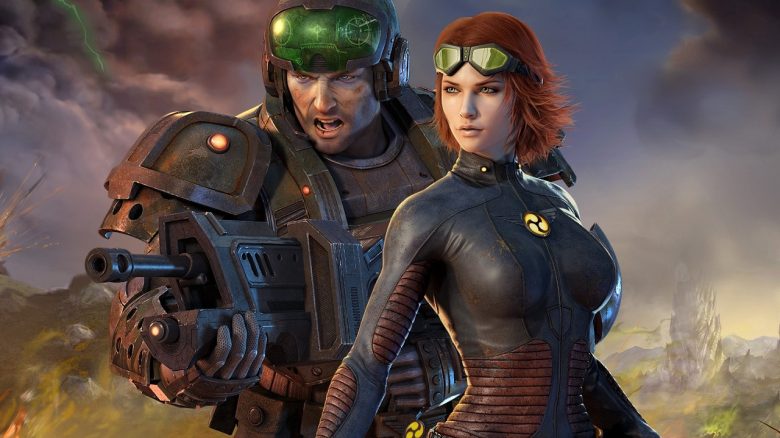
Tabula Rasa was from 2001 the new project of Richard Garriott, the creator of Ultima Online and “father of the MMORPG genre”. His new game was highly ambitious and very expensive. Nevertheless, it was only able to recoup a fraction of the expenses and was shut down after less than 2 years. What happened there?
What made the game so interesting? Garriott himself stated at that time that he wanted to create something new that did not take place in a fantasy or medieval world. Therefore, Tabula Rasa became a sci-fi game with a mix of shooter and MMORPG elements. For the project, he teamed up with the Korean developer NCSoft, who was then celebrating great success with Lineage.
The basic concept sounded promising:
- The Earth was overrun within 5 days by an alien race called Bane. All humans now work together to fight against the threat.
- As a player, you started as a recruit and could then specialize further through various classes. Specialists could end up as xenobiologists or engineers, while as a soldier you could play as a guardian in close combat or as a sniper in long-range combat.
- There were a total of 8 different classes.
- A highlight was the battlegrounds, although not as PvP content. In these areas, players fought together against the advancing aliens. The quests and content of the regions also adapted dynamically to the combat situation. Additionally, there were quests with moral questions that prompted reflection.
- The MMORPG focused heavily on PvE, which was a rarity at the time of Ultima Online, Tibia, and Dark Age of Camelot. There was only one large battlefield for PvP and duels between players.
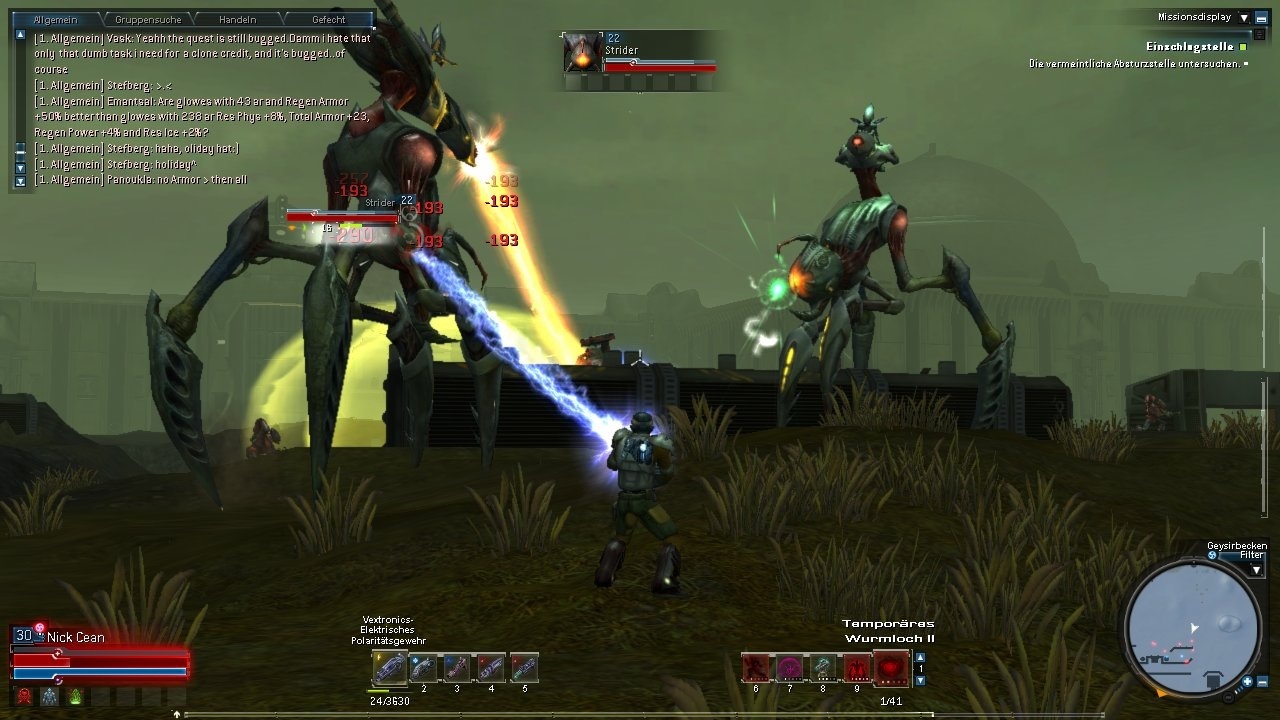
- The combat system offered a mix of tab-targeting and action combat. With some firearms, players had to aim at the enemies themselves.
Tabula Rasa also had a large budget. With 100 million dollars invested by the release, it is still considered one of the most expensive MMORPGs ever. For comparison: SWTOR is regarded – alongside Star Citizen – as the most expensive MMORPG. From the first concept to the release, it is said to have consumed 200 million dollars, according to the Los Angeles Times. However, it has also generated over 1 billion in revenue so far.
However, the success of Tabula Rasa did not materialize. It was released on November 2, 2007, and was shut down again on February 28, 2009. According to NCSoft’s quarterly reports, it only recouped slightly more than 10 million dollars. A flop, then.
Here you can watch an old gameplay trailer:
Promising reviews, but major problems in mid and endgame
How was the MMORPG received? The first reviews of Tabula Rasa sounded very positive. PC Gamer UK gave it an 83 out of 100 and Eurogamer awarded the game an 8/10 at release. IGN gave it 75 points and our colleagues from GameStar gave it an 80.
However, it quickly became clear that while the entry was quite successful, some problems were present in the midgame. There were hardly any explanations for the mod system, which allowed players to customize and upgrade their gear, and the lack of an auction house was criticized.
Furthermore, old areas were quickly overrun by aliens because players with higher levels had moved on to new areas.
In the endgame, however, Tabula Rasa offered hardly any content. Here it became clear that the MMORPG was released too early.
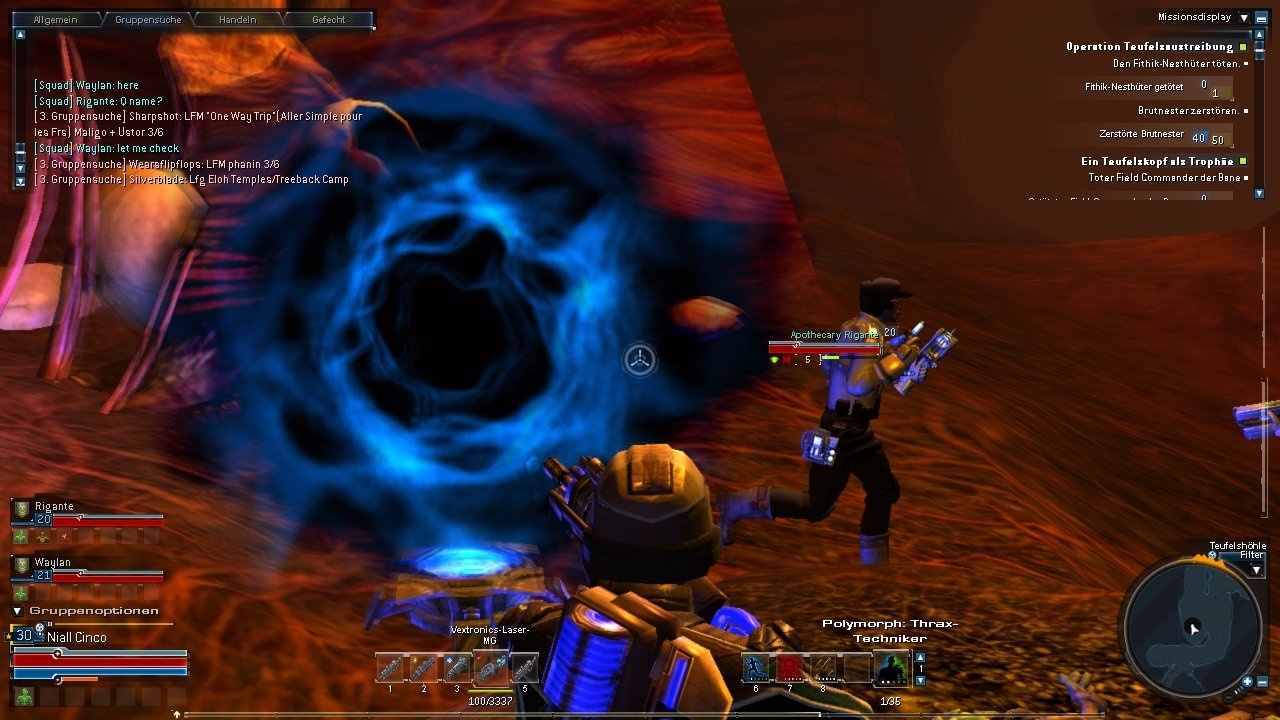
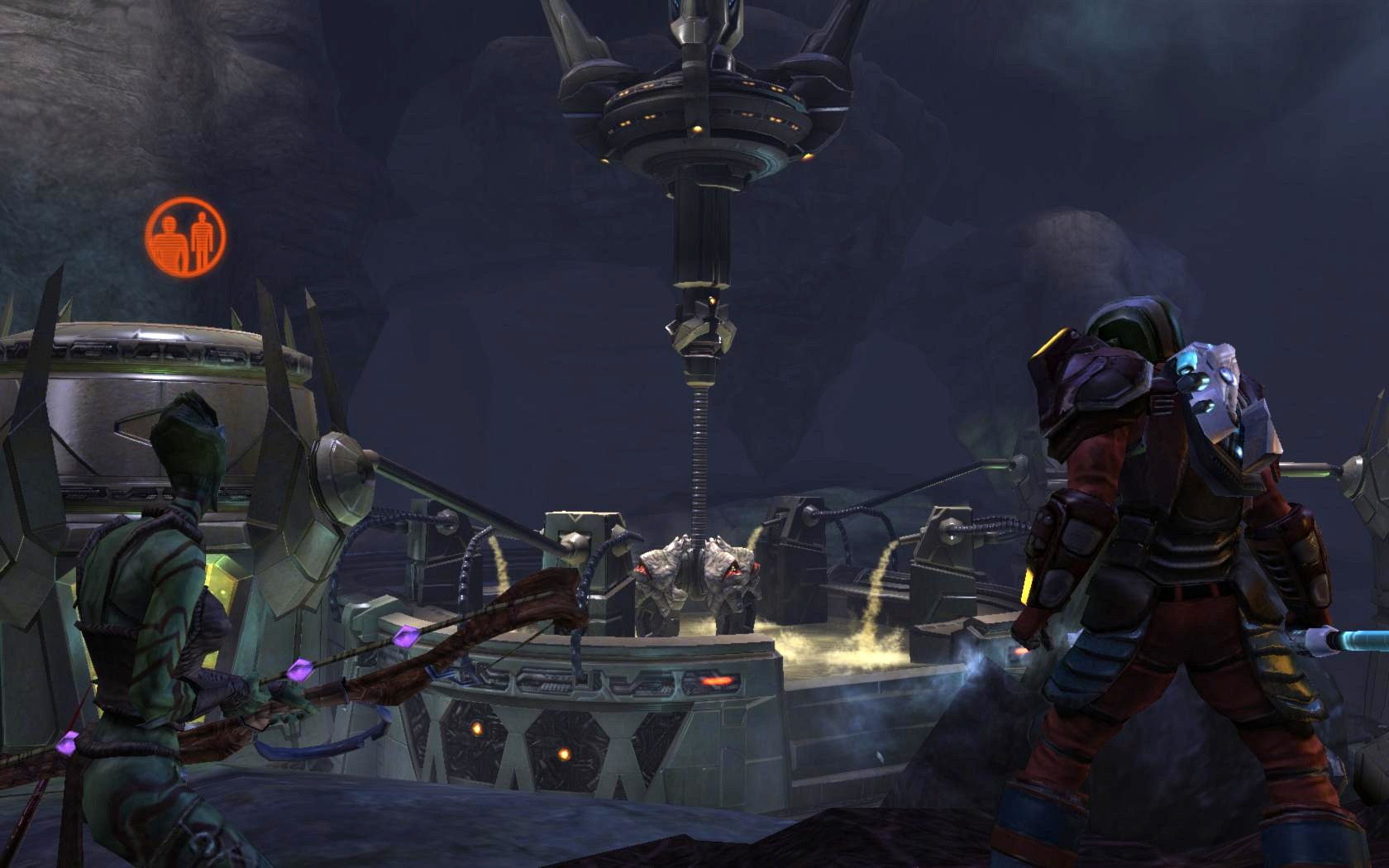
What happened next? Relatively soon after the release, there were first layoffs at the studio. Garriott explained at the time that this was normal, as many employees were brought in before the release to give the game the final polish.
However, such layoffs after release were criticized by the head of the MMORPG Rift, who sees this as a major factor in the failure of his game.
However, NCSoft referred to the release of Tabula Rasa in their conference call as a “disaster”. A few months later, it was even said that they did not believe the game could ever become profitable.
On January 10, 2009, they tried to save the game by switching from a subscription model to free-to-play. A few weeks later, it was shut down completely.


Major problems between the American developer and NCSoft
How did these problems arise? Garriott told in an interview (via Eurogamer) that there were initially great challenges with the setting of the game. Tabula Rasa was originally supposed to be an MMORPG that also appeals to the Asian market, which was then considered very promising. Thus, the collaboration with NCSoft came about.
However, in the first years, the team struggled to create an authentic world. Garriott explained:
We spent the first years developing a game with Asian style and Asian influences to ensure we were popular in Asia. But we kept receiving feedback from our Korean colleagues who said, “You know what, when you try to make Asian pagodas or Asian armor or weapons, it never feels native, it always feels like a foreigner is doing something for us.”
The problem, as we were told, was: “Imagine if we were to make a European castle: Instead of building the stone walls nice and straight, we would create them like an inflatable castle, slightly bent like a marshmallow castle. We might not notice that it doesn’t look like a good castle, but you would immediately see that it’s more cartoonish than strong and powerful.”
After two years, the decision was made to abandon the Asian look and focus on sci-fi. As a result, over 75% of the code and some employees were exchanged. At the same time, however, according to Garriott, there was pressure from NCSoft to release a finished product by a certain date.
This resulted in an MMORPG that exhibited significant problems, especially in the mid and endgame, despite the concept having so much potential.
Tabula Rasa is now one of the dead MMORPGs that you wish to see back the most. It ranks 4th in the ranking, but is far behind the first place.

Your opinion is important to us!
Do you like the article? Then let us know!