

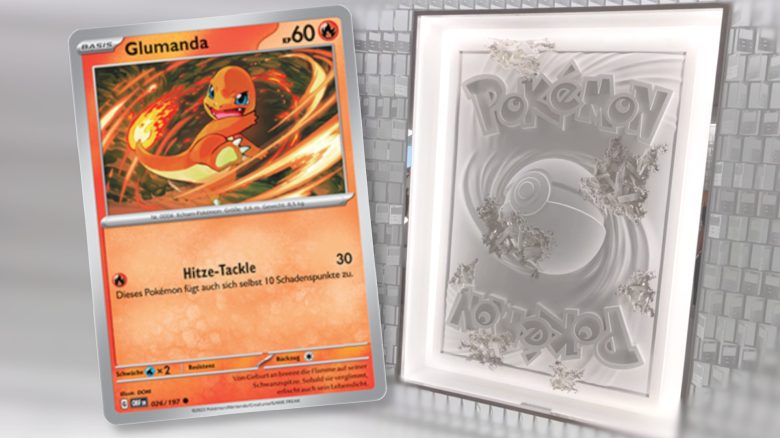
Pokémon cards have been accompanying generations of fans for years. But how are the iconic cards actually created? We got a glimpse at “Creatures.”

Entering the headquarters of “Creatures” in Tokyo feels a bit like stepping into the holy Pokémon halls – and in a way, it is. Here, not only are games, models, and animations for Pokémon created, but also the trading card game that has captivated children and adults for many years.
At Creatures, the theme of “Pokémon” is almost overwhelming. The entire entrance area consists of white, radiant blank card templates – with energy cards hidden in between. There are also gigantic images of a classic Blastoise and Charizard card, as well as the iconic Pokéball.
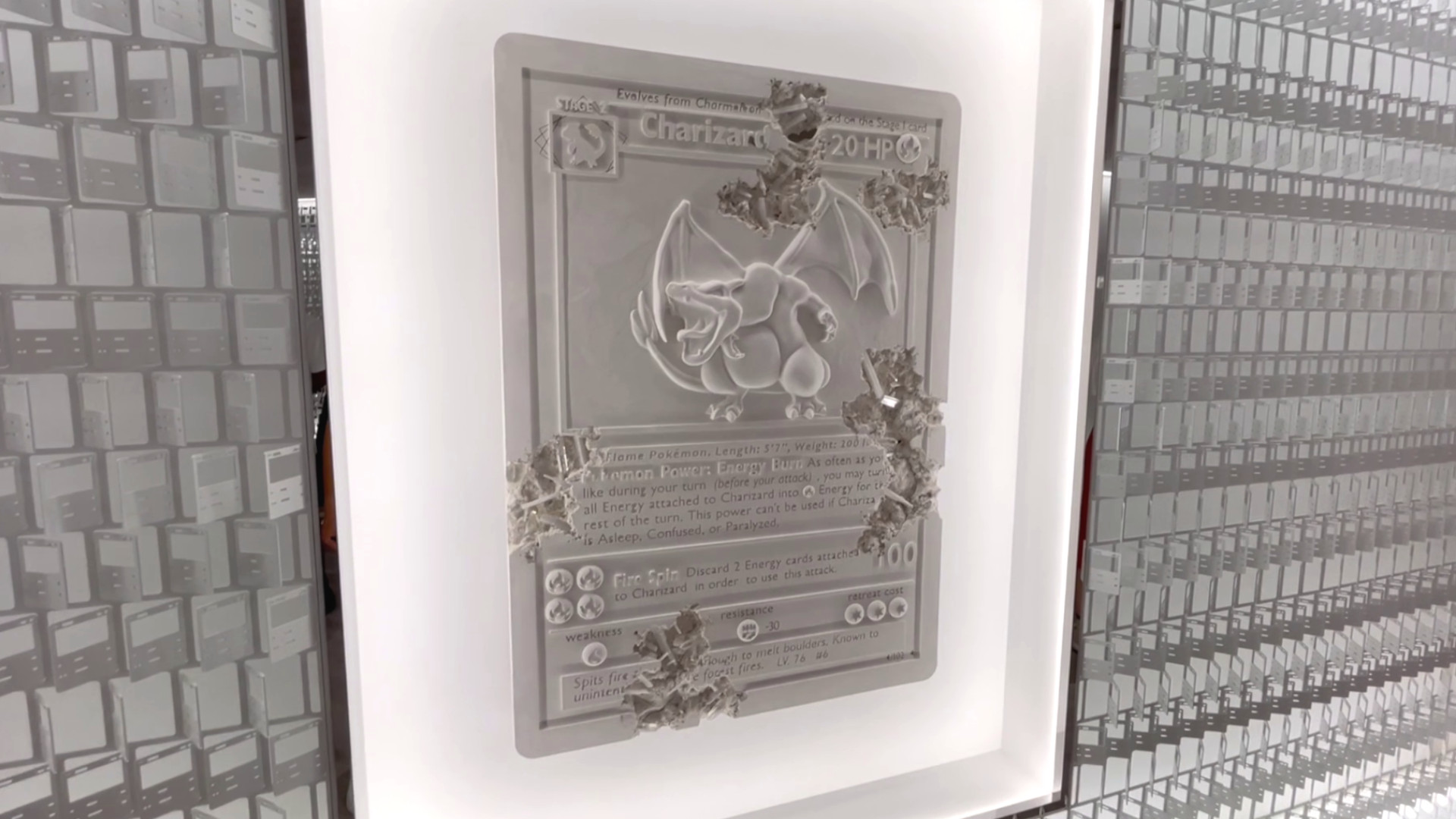
Creatures
Together with several other media representatives, we visited the headquarters of Creatures. Here we were able to speak with some individuals involved in the creation process of the card game during the Pokémon World Championships in summer 2023 in Yokohama.
How do new sets come to be? According to Director Atsushi Nagashima, the goal of Creatures is to create something “that everyone can enjoy and that only we can create.”
The planning of a new card set begins about a year in advance. Five departments work together on such a set:
- Planning
- Game Design
- Art Design
- Illustration
- Quality Control.
These departments must work perfectly together, since Pokémon is a theme for different generations and thus for different age groups: One wants to create a game for children that also captivates adults. Therefore, the goal is to implement a simple game principle that can still impress with a lot of depth.
Collecting and Playing
There are numerous loops and considerations before a set is finalized. For example:
- Which Pokémon in the new set will be the most important monsters?
- Which features from the video games, such as Dynamax or Paradox Pokémon, can be included?
- How do new cards fit into the established game?
- And which artists are the right ones for the cards?
The developers emphasize that variation is extremely important, especially in the images on the cards. Currently, Creatures collaborates with about 240 illustrators, all of whom bring different styles and ideas. They receive an initial briefing but should then develop ideas as freely as possible.
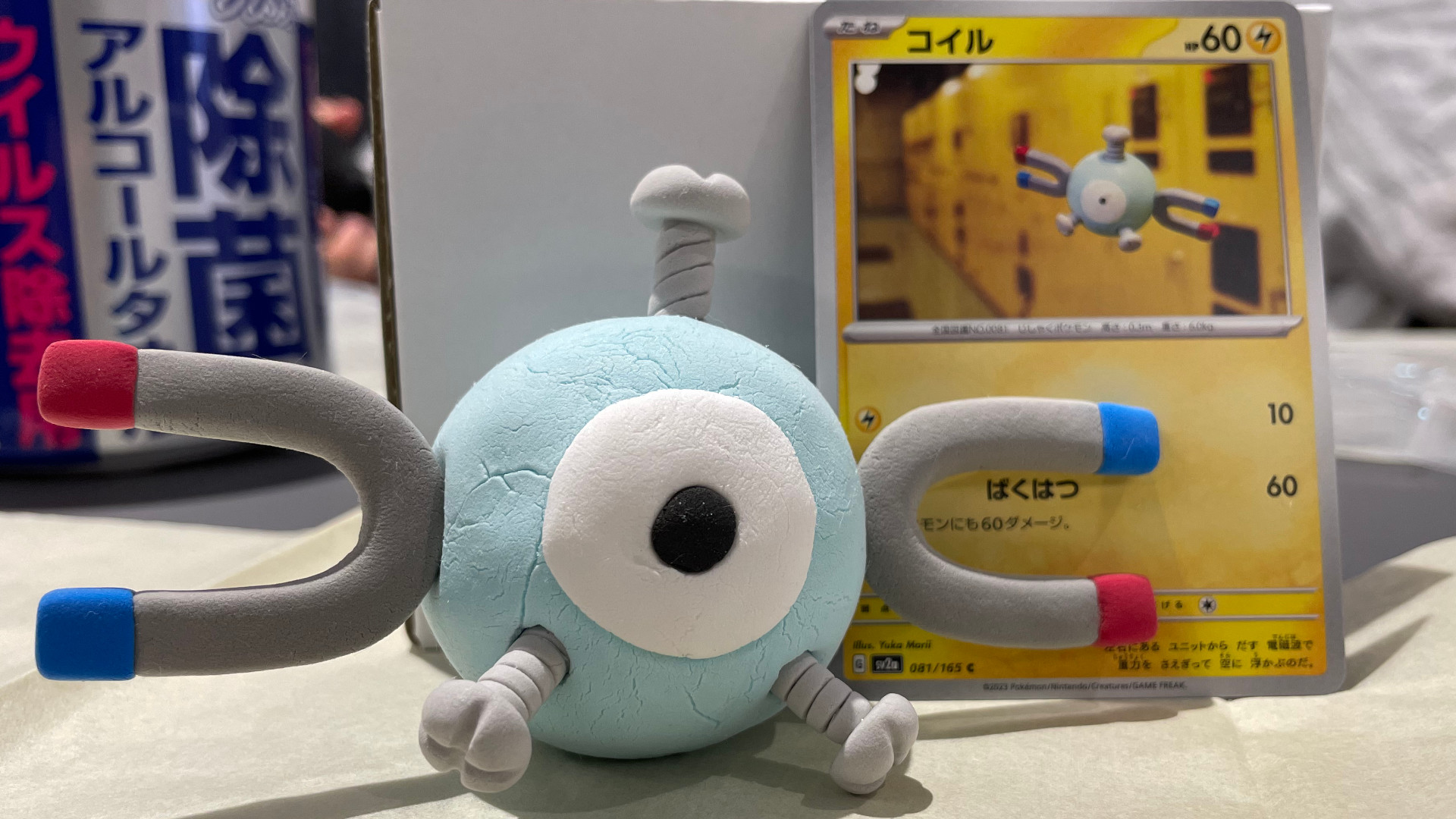
We spoke with artist Yuka Mori, who creates clay models of Pokémon for her cards to then incorporate them into the card image: “I should bring in my own creativity,” she emphasizes. In a small workshop, she demonstrated how this was done and let us as a group try to do the same:
For many of the illustrators, working for Creatures is a long-held dream. Artist “Gidora” also emphasizes: “I am a long-time fan and live my dream.” It takes him about two days to create a new illustration.
The variety of illustrators leads to a wide range of images.
Here you see a card by Gidora (left) and a model card by Yuka Mori (right)

And the importance of the images should not be underestimated – after all, many fans also enjoy collecting the cards without ever playing the game. Nowadays, large sums are often paid by collectors for the rarest cards.
7 hours of play per day, 4 matches per hour
Unlike a video game, cards cannot be patched once they are released. Therefore, the Quality Control department is extremely important: it is responsible for ensuring that the cards function well in the game and are well-balanced.
Kohei Kobayashi (Game Director Development) and Satoru Inoue (Manager Game Design) explained to us how this works.
They focus on three main aspects in their job:
- The “playfulness” of new cards, meaning the fun they bring.
- Secondly: balancing. What is too strong, what is too weak?
- And thirdly: what role could new cards play in tournaments? What combinations may arise that one might not expect at first glance? The meta of the game must be taken into account.
To test these aspects, the card is placed into various test decks to be thoroughly examined.
Currently, 18 full-time testers work at Creatures, who are basically occupied with Pokémon all day long. On average, the testers spend about 7 hours a day testing, sometimes more. They play about 4 matches per hour. Additionally, not only the TCG but also other Pokémon products, such as board games, are tested.
Moreover, a real treasure is hidden in the offices of Creatures: a huge cabinet containing examples of almost all the cards in the Pokémon trading card game. This is necessary because countless resources are needed to test new cards.
The new cards are tested using a variety of test decks that simulate different scenarios: New cards are tested with both championship and casual decks. “We don’t want to develop overpowered Pokémon,” explain Kobayashi and Inoue. Everything should always be as balanced as possible.
However, that is not so simple: “We spend months with the cards but still do not find all combinations. Sometimes there are surprising developments,” the two explain: “We think about Pokémon 24/7.”



How does one become a tester? For many fans of the Pokémon cards, it must be a dream job to be engaged in testing all day. To become a tester, according to the developers, two things are needed: passion and knowledge. The latter should not be underestimated, as one should know as many cards and details of the game as possible.
However, one does not have to be a certified world champion of the TCG: Developers say that they never scout for new testers at championships. They do not place special importance on bringing in professionals of the game as testers. Instead, regular ads are placed online and in magazines that anyone can apply to.
If one gets the position, the learning doesn’t stop: “You have to keep learning,” both emphasize. Logically: After all, new cards are constantly being developed.
Also in Pokémon GO, new content is continually released. Next up is the second part of the Halloween event.

Your opinion is important to us!
Do you like the article? Then let us know!