

Microphone
Just as headphones differ in sound, microphones also vary depending on the application, so an expensive large-diaphragm microphone can be inferior to a cheaper small-diaphragm microphone. Therefore, here too, we start with some basic knowledge.
Condenser, Electret, and Dynamic
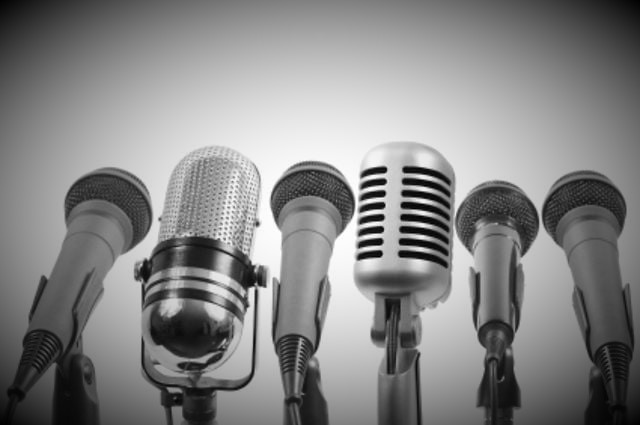
This refers to how sounds are converted into voltage. The normal case is the condenser microphone. Here, two electrodes surround the diaphragm, this construct is called a capacitor. Sounds cause vibrations of the diaphragm and in combination with the electrodes, voltage is generated. The quality of these models is the best.
Electret microphones are very similar to condenser microphones. However, electret films are used instead of electrodes. These microphones are cheaper and smaller. They are primarily used in headsets. Their quality is worse than that of a condenser microphone.
Dynamic microphones do not require a separate power source compared to their counterparts. Their operation is similar to a dynamo, and the voltage is generated using a magnetic field. They are also cheaper and somewhat lower quality than condenser microphones.
Spherical or Cardioid?
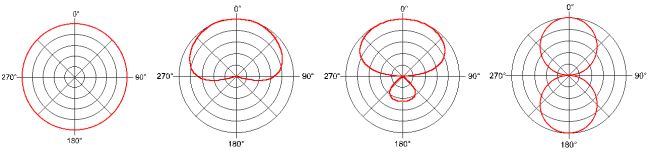
From left to right: Spherical, Cardioid, Supercardioid, Figure-eight
Depending on the microphone, sounds are perceived only from certain directions. Spherical and cardioid microphones are the most well-known. In addition, there are supercardioid, hypercardioid or figure-eight.
The spherical microphone has no preferred direction. Therefore, the angle or direction of the sound source is not relevant. This is a great advantage, especially with clip-on microphones. The downside is its susceptibility to feedback. If you use loudspeakers instead of headphones, you should not choose a spherical microphone.
Directional microphones are more sensible. The most well-known model is the cardioid microphone. It mainly picks up sound from the front. The disadvantage of these models is the proximity effect: the closer the sound source is to the microphone, the bass-heavy the recording becomes. Furthermore, the angle is more important than with a spherical microphone.
Mono or Stereo?
For voice recordings, mono is the right choice. In stereo, recording is done over two channels and therefore not evenly. If you move while speaking or the microphone is not directly in front of you but slightly off, your voice will primarily be heard in one speaker rather than both equally.
Large Diaphragm or Small Diaphragm?
If the diaphragm is smaller than 1 inch, it is referred to as a small-diaphragm microphone. These have a more neutral or accurate sound image. In addition, they are significantly smaller compared to large-diaphragm microphones. The downside is that they are more susceptible to noise.
The larger the diaphragm, the less noise. Although the voice is distorted, it sounds fuller and nicer. Therefore, a large-diaphragm microphone is usually recommended for voice recordings. The downside is that high frequencies hitting the diaphragm from the side sound significantly duller. This may be relevant for music recordings, but for plain voice recordings, it is not an issue, as the microphone usually stands in front of you.
Other Notes
To test whether the microphone is intact, one should preferably speak instead of blowing or hitting it. The device is designed to detect sound and is therefore very sensitive. The airflow from blowing is much more intense than a spoken word. There is a danger that the diaphragm may tear. For sounds with strong air impulses, e.g. P and T, a pop filter is suitable.
To prevent echoes, sound-absorbing objects nearby are suitable. These include curtains and carpets. Egg cartons also work very well due to their structure and also make the wall look much homier when used as wallpaper.
Regarding USB or jack connection, the corresponding paragraph regarding headphones can be read.
Terms
[vc_row][vc_column width=”1/2″][vc_column_text]Self-noise: Also called signal-to-noise ratio or equivalent noise level. It is given in dB-A and represents the microphone’s base noise. It should be below 20 dB-A; otherwise, a slight noise will already be audible.
Threshold Sound Pressure: Is specified in dB-SPL. If the volume exceeds this value, the recording is distorted. For condenser microphones, values in the range of 120 dB-SPL are normal.
Sensitivity: Also called field-bare transmission factor. It is expressed in mV/Pa. The higher the value, the louder the microphone. Background noises such as a computer fan will become more noticeable at high sensitivity. For condenser microphones, 10 mV/Pa is a normal value.
[/vc_column_text][/vc_column][vc_column width=”1/2″][vc_column_text]Frequency Response: A representation as a diagram that indicates how sensitive the microphone is at different frequencies. The optimal or most neutral frequency response is a linear one, which thus reproduces each frequency equally loud.
Transmission Range: Indicates the frequency ranges in which the microphone produces a good recording. The value can usually be disregarded as it is recorded under ideal laboratory conditions, meaning that it will never be achieved in practice.
Total Harmonic Distortion: Also called distortion factor. It indicates the distortion caused by the microphone. The specification is given in percentage. The value should be kept as low as possible.[/vc_column_text][/vc_column][/vc_row]
Purchase Recommendations
Like with headphones, there are also microphones that are particularly bass-heavy or neutral. Neutral recordings usually sound bland and may require post-processing. Below, both lavalier, table, jack and USB microphones are presented.
Zalman ZM-MIC1 (~€7)
At €7, it is a very cheap microphone that attaches to the headphone cable. In terms of handling, it resembles a headset. The recording quality is not particularly good and is only suitable for those who rarely need the microphone.
Speedlink SL-8703 (~€15)
An alternative to Zalman. The recording quality is better and suitable for conversations. However, it is a table microphone, ideally positioned in front of the keyboard. Ambient noise will also be picked up. Typing or loud fans will thus be very audible.
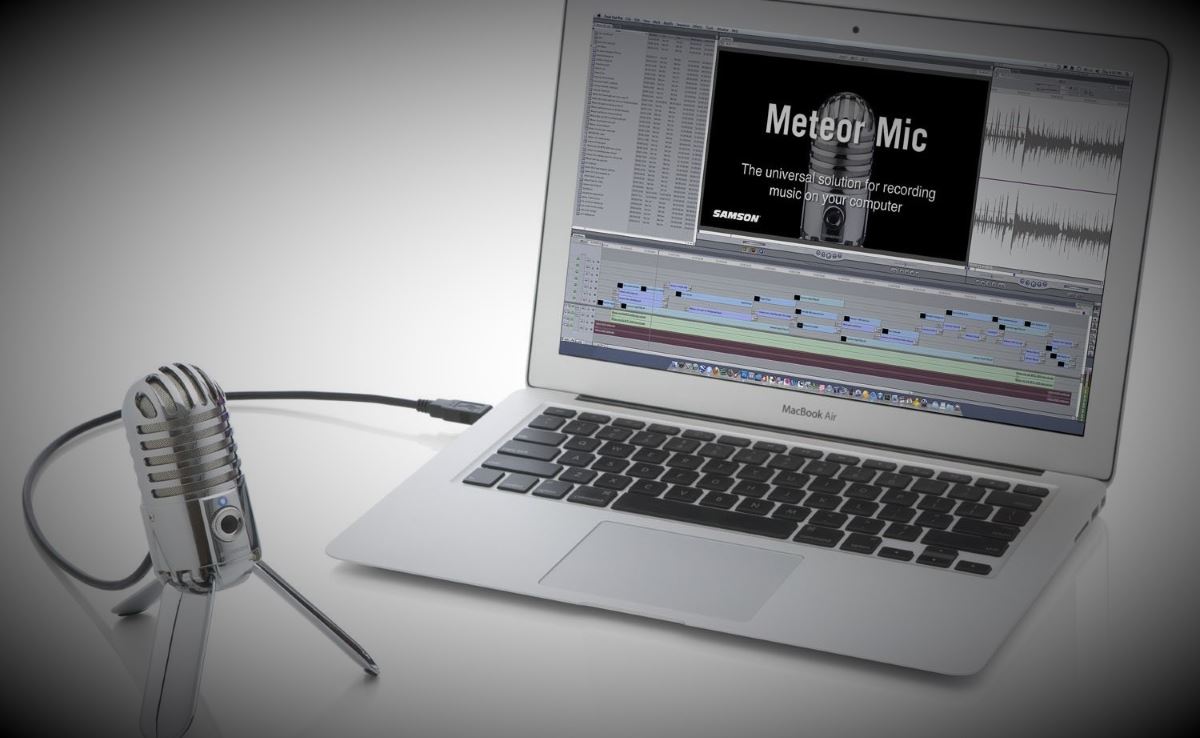
Samson Meteor (~€60)
A USB condenser microphone, hence only recommended if you forgo the sound card. It is good mid-range quality for €60. The appearance is a matter of taste. As with the Speedlink microphone, this is also a table microphone.
ModMic V4 (~€60)
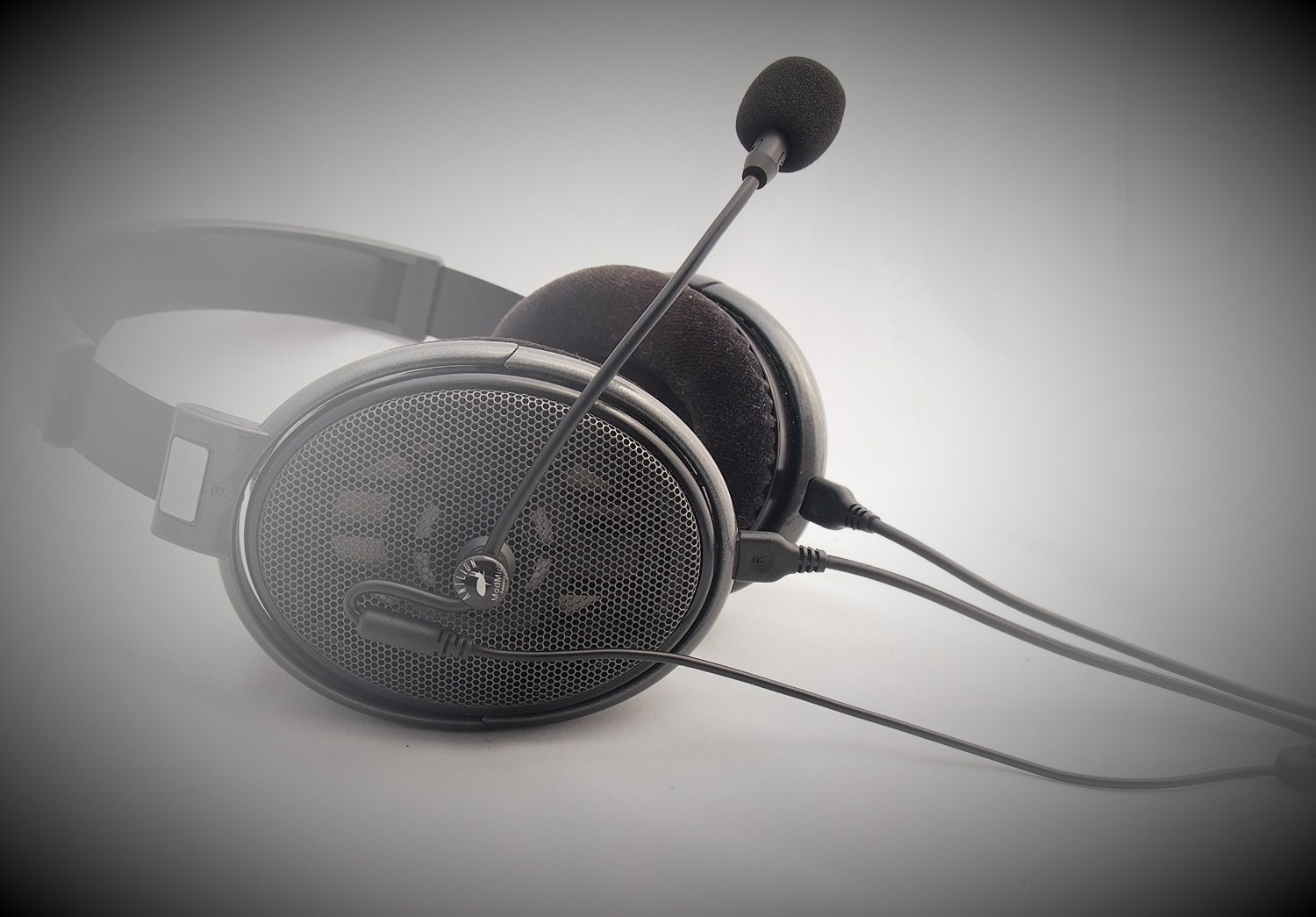
The ModMic is the best choice in this price range. The condenser microphone has a flexible arm and can be directly attached to the headphone using the included magnets. In terms of appearance and handling, it resembles a headset.
T.Bone SC440 and SC450 (€60-100)
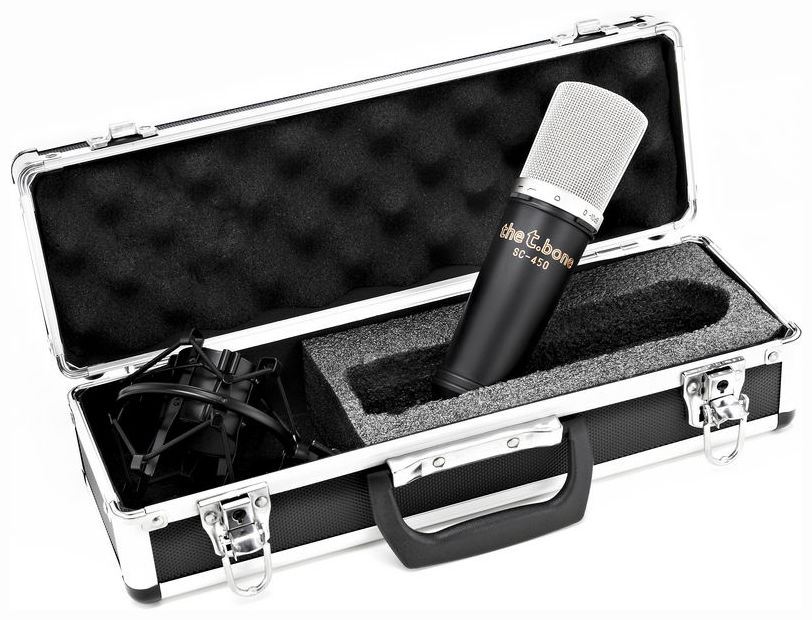
With the T.Bone models, we are now in the large diaphragm microphones. The table microphone connects via USB and is the ideal entry-level model for podcasts. The basic version with the microphone and the spider costs €60. The latter are rubber bands that protect the microphone from shocks. A pop filter and stand can be purchased for an additional fee.
The SC450 is the better choice in terms of quality with lower self-noise. It is available both with USB and XLR connection. The latter connects to an audio interface. The quality improves as a result. The Focusrite Scarlett is already in the lowest price segment at €100 and would thus almost be more expensive than the microphone itself.
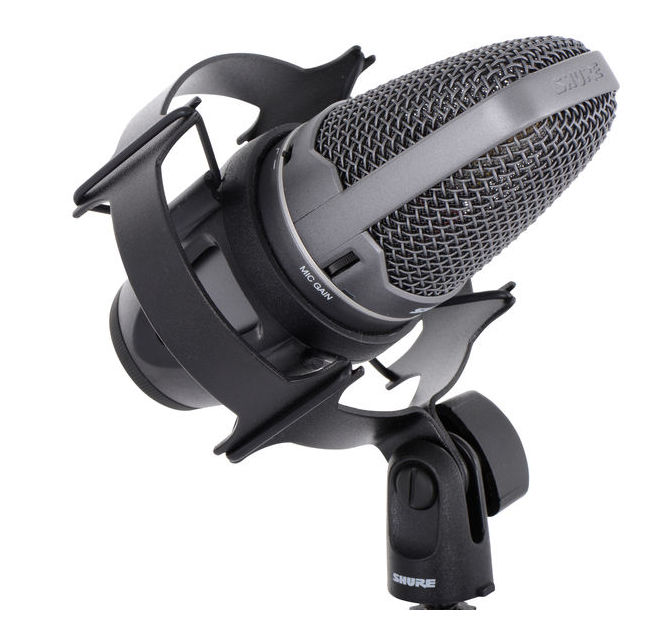
Shure PG42 (~€250)
This is a large diaphragm microphone optimized for voice recordings. The USB version at €250 has an integrated low-noise interface. Those with an audio interface can also use the cheaper XLR version.
Conclusion
Already for €40, the price of an average headset, good headphones with a decent microphone can be obtained, which can easily outperform a headset at the same price. Better quality is available with the Creative Aurvana Live! in combination with the Asus Xonar DG sound card and the Speedlink SL-8703 for about €100. For a headset, it’s almost impossible to keep up here. And for those who still want the feeling of using a headset, the ModMic as a microphone is highly recommended (see title image).
These are just a few suggestions. They are models recommended on many relevant sites. However, it mainly depends on oneself which device is truly the right one. Those who love classical music prefer neutral headphones or those that focus on higher frequencies. Others prefer headphones with strong bass. The same applies to microphones. A bass-heavy voice only truly shines with a large diaphragm microphone. And those with many ambient noises will rely on a directional microphone.
Interested in other hardware guides? Then we can recommend the following posts:

Your opinion is important to us!
Do you like the article? Then let us know!