
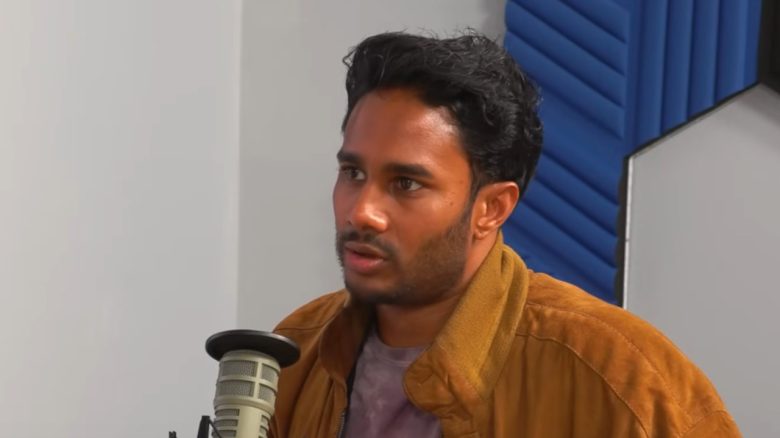
Loom is a recording app for mobile and PC. The founders have now sold their software for a lot of money. One of the founders, Vinay Hiremath, explained: Now he has a lot of money, but no more goals in life.
Who was sold? Vinay Hiremath, founder of the recording app Loom, sold his young startup in 2023 to the Australian tech company Atlassian. Purchase price: 975 million euros. After the purchase, he stated in his own blog that he had significant problems after the sale.
Hiremath shared his feelings of cluelessness and uncertainty in a long blog post titled “I’m rich and have no idea what to do with my life”.
“Infinitely much freedom, but I don’t know what to do with it”
Hiremath explained in his own blog post that he finds himself in the unusual position of never having to work again. Because he now has enough money. And he also no longer has the desire to earn money or gain prestige:
Life has been like a fog over the past year. After I sold my company, I find myself in the completely untenable position of never having to work again. Everything feels like a side job, but not in an inspiring way. I no longer have the same basic needs that drive me to earn money or gain status. I have infinitely much freedom, but I don’t know what to do with it, and honestly, I’m not particularly optimistic about life.
He himself stated: “When you work on something for a decade that takes up your whole life, it’s hard to let go of the certainty and the goal you’ve become accustomed to.”
By the way, he declined a position at his founded company. Had he been with his company, he would have received a fixed bonus of 60 million US dollars over 4 years. However, he declined it.
What is he doing now? In his blog, he explained that he is now living in Hawaii and studying physics. His next goal is to start a new company, but he wants to acquire some physical fundamentals first.
So now I’m in Hawaii. I’m learning physics. And why? The reason I tell myself is that I want to acquire some basics so that I can start a company that creates real-world products. That sounds plausible, but I’m currently learning to accept that I’m happy learning physics.
In a podcast with Moneywise (via YouTube.com) he explained, however, that he is currently unemployed and looking for an internship.



His Indian compatriot Daksh Gupta views work quite differently: The young boss explains that in his company one must work 80 hours a week. But this receives little positive feedback. He himself defends: As a startup, one has to struggle against great competition and must assert oneself against it: The 22-year-old boss of a company demands 80 hours a week from his employees: “We offer no work-life balance”