

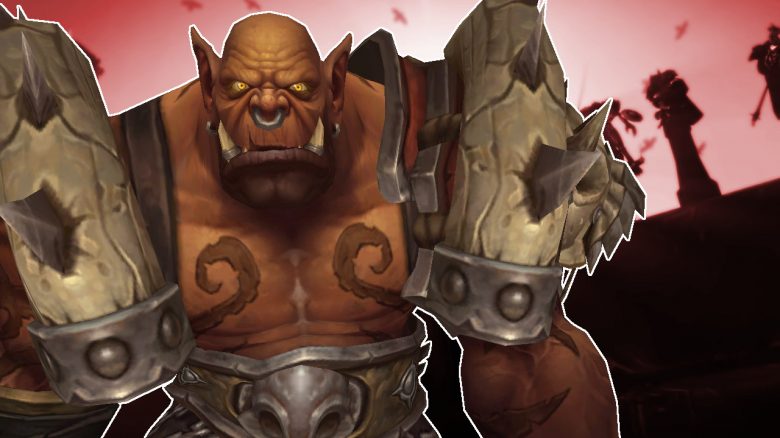
Garrosh Hellscream is quite popular in World of Warcraft , even though he was a warmonger like Sylvanas. But why do many like the racist orc?

During the new raid “Sanctum of Domination” in World of Warcraft, an interesting phenomenon occurred. Although the story actually revolves around Sylvanas and the end cinematic is being controversially discussed, there is an entirely different person who interests many more: Garrosh Hellscream.
We take a small look at it and try to understand why the community likes this orc so much.
Who is Garrosh Hellscream?
The whole story of Garrosh is quite long and extensive and would exceed the scope of this article, so a brief summary must suffice.
Players of the Horde first came into contact with Garrosh during the first expansion of World of Warcraft – The Burning Crusade. Garrosh was the son of Grommash Hellscream and remained behind in the shattered world. He grew up knowing that his father succumbed to the blood of a demon and brought shame to his species.
It was only through Thrall that Garrosh learned that Grommash had achieved great things. Thrall then took Garrosh under his wing and brought him along to most major events. This repeatedly led to initial confrontations with the Alliance, such as shortly before the assault on Ulduar.
With the start of the Cataclysm expansion, Garrosh became the new Warchief, as Thrall devoted himself to shamanism to help the tormented elements.
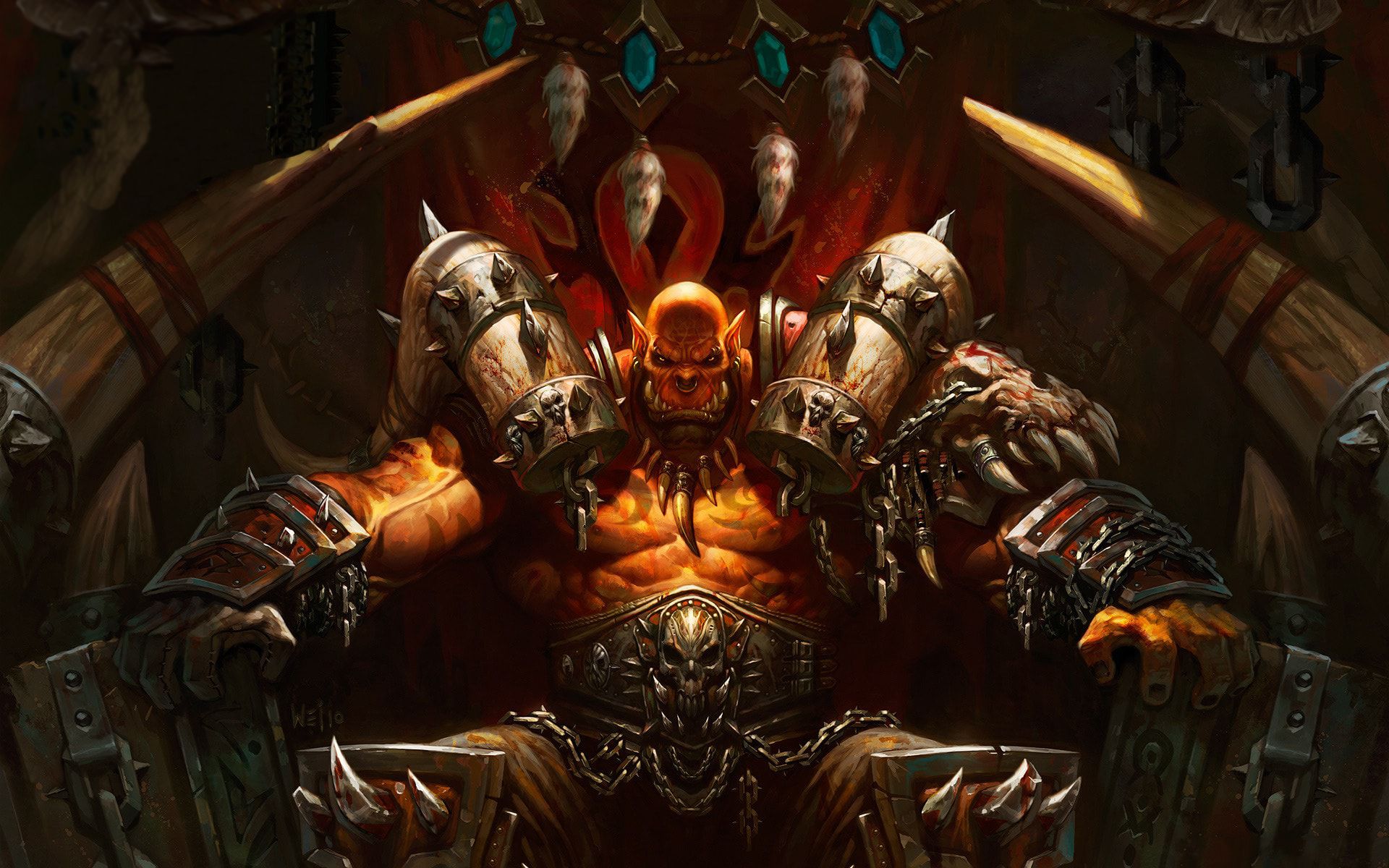
The direction of the Horde changed. From an attempt at peaceful coexistence with minor frictions with the Alliance, it became an openly conducted expansionist war.
But Garrosh also rallied the Horde at other corners of the world. Ashenvale, Stonetalon Mountains, Azshara, Barrens – the Horde advanced everywhere, and even in Gilneas they invaded with the help of Sylvanas.
Garrosh was an open warmonger and wanted land for the Horde – and he made no secret of it. This continued in “Mists of Pandaria”, as Garrosh wanted to conquer Pandaria for the Horde and eliminate the Alliance in the process. He also used a mana bomb to destroy Theramore – a city governed by Jaina Proudmoore and which had peaceful relations with the Horde until that point. All hopes for peace were extinguished with this bomb.
In doing so, Garrosh also became increasingly radical. He often used the other Horde races for the “dirty work”. Anyone who did not agree with his view of the Horde had no place in the Horde.
All of this ultimately culminated in the Siege of Orgrimmar. For not only did the Alliance want to get rid of Garrosh, but also a rebellion within the Horde, led by Vol’jin.
Even though Garrosh in his last moments of freedom even resorted to the dark powers of the Old God Y’Sharj, he remained true to his views: His pure Horde should rule, and what he did, he did for the good of the Horde.
Garrosh was captured and put on trial. However, with the help of a dragon, he could escape into the alternate timeline of “Warlords of Draenor”. He alters the course of time and prevents his father Grommash from drinking the demonic blood, brings new technologies to the Horde, and tries to overrun and conquer Azeroth again with these “pure” orcs of the Iron Horde.
In the end, Garrosh is confronted in Nagrand, leading to his final battle with Thrall, which is very emotional. Thrall wants to hold Garrosh accountable, but Garrosh still believes he is right – he only took over Thrall’s “broken” Horde and tried to build from the ruins what was best for the Horde. Garrosh is defeated as Thrall draws upon elemental powers. He dies, and his soul wanders into the Shadowlands.
The Final Farewell in the Raid
Even before the expansion “Shadowlands”, it became clear that Garrosh’s soul would appear again. In the film “Afterlife: Revendreth”, we see Garrosh. He is held captive there by the Venthyr, who want to free him from his sins and at the same time drain a lot of Anima from him.
In the truest sense, Garrosh is kept like a livestock in chains and is repeatedly drained of his Anima to nourish the Venthyr.
Players come into direct contact with Garrosh only in the latest raid Sanctum of Domination, in the fight against Dormazain. He tries to break Garrosh – but even that does not succeed.
One (probably) last in-game cinematic shows Garrosh after the battle. He still stands by all his actions and declares that he would do everything exactly the same way again. He will bow to no one – neither to the Jailer nor to Thrall. With a final “FOR THE HORDE”, he attacks, destroying Dormazain and himself in the process.
No matter how hateful he was – he remained true to himself until the end.
Fans did not like Blizzard’s original video and even created their own version.
The Core: Thrall versus Garrosh – Two Types of the Horde
At the center of this topic are the two different views of the Horde. One led by Thrall, which aims more for peaceful coexistence, and one under Garrosh, who thirsts for war and glory on the battlefield.
Many also believe that Garrosh finally gave meaning to “War” in Warcraft. The Horde and Alliance had cooperated too often, and a conflict was something players on both sides longed for. Garrosh fulfilled this wish.
Finally, there was a clear reason for the battles. PvP had meaning again in the story, and the plot picked up speed. From minor skirmishes, open hatred emerged between the parties. Peaceful characters like Jaina transformed, and it seemed that things were moving “forward” in Warcraft.
Under Thrall’s leadership, the Horde had become a “cuddle faction” for many. In Warcraft 3 and also the trailer for WoW, the Horde was still wild. The first impression many players had of the Horde was “These are the cool bad monsters” – Orcs, Trolls, Undead, Tauren. Not traditionally “good” fantasy creatures. However, the Horde under Thrall was not really evil but rather sought peace, which conflicted with this initial perception.
But why is Garrosh so much more popular with a large part of the players than Sylvanas? Why is it that Garrosh is allowed to drop a mana bomb on a city full of civilians and that’s seen as a grand act to initiate a war, but when Sylvanas burns a city of night elves, she is hated and blunt?
That’s probably only speculation, and the reasons are likely different for many players.
But it probably has to do with the personalities of the two characters.
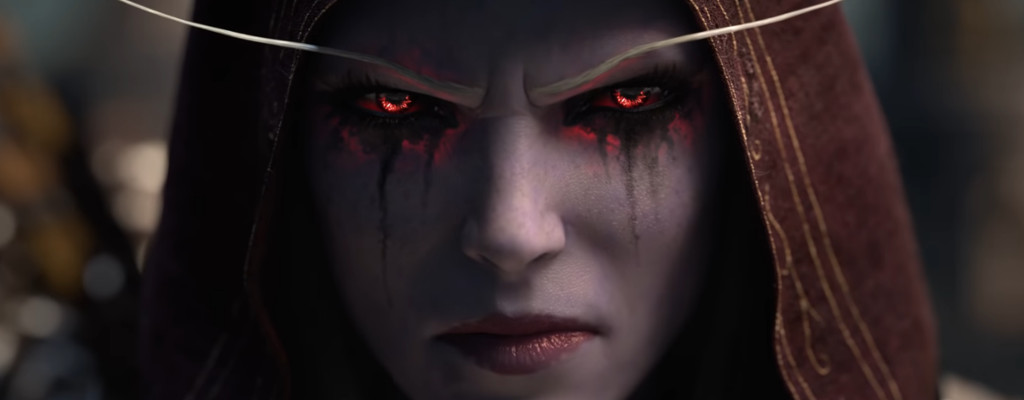
Sylvanas was often a character who acted more from the background. She directed from the shadows, always doing her “own thing”, more or less good at tactics. Then she was thrust into the role of Warchief and transformed. From “acting secretly from the shadows” it became an open war with brutal efficiency, deception maneuvers, and psychological warfare.
Garrosh, on the other hand, is a rather “simple” character who fits the orc ideal. He wants to earn honor on the battlefield, follow in his father’s footsteps, and provide living space for his people. He doesn’t weave great intrigues. He slams the table and attacks – blunt and direct.
A simple character who just did what he wanted, whose motives are laid bare.
Sylvanas has often been accused of playing “4D chess”, with no one really knowing what she wants. With Garrosh, it was exactly the opposite, as he loudly declared his intentions to the whole world.
Garrosh was also the only one who called Sylvanas a “bitch” – even if Blizzard recently patched that out of the game.
Garrosh – A Character with Little Development
Another circumstance is that Garrosh has comparatively little character development. While many major characters in Warcraft evolve over the years, changing their views and motivations, this was not the case for Garrosh.
- Jaina went from being a peace-loving mage to vengeful, then wise.
- Anduin transformed from a small, naive prince to a pacifist king who gradually realizes that war is sometimes unavoidable.
- Sylvanas evolved from a broken ranger to the Banshee Queen, who first acted in the shadows, sought a place for her people, became a warmonger, and thinks on larger dimensions than “Horde and Alliance”.
Garrosh’s character development, on the other hand, has practically been completed since Wrath of the Lich King. Garrosh loves the Horde according to his ideals and hates the Alliance.
The only change is that he comes into a position of power and can finally express his wishes freely as Warchief. He follows through with that.
Many players are drawn to exactly that. Characters who hardly change and whose desires and identities are clear. Characters who have no significant inner conflicts, do not doubt, and do not develop. Characters that players know what they are getting into. Characters who will still be the same in 5 years as they were when they first met.
Characters like Garrosh Hellscream.
That may be one of many reasons why so many players wish for an orc who is not fundamentally different from Sylvanas and is anything but “objectively good”.
After all, Garrosh was a massive racist who placed his “true Horde” above all else and considered other races inferior. An orc who impaled residents of Orgrimmar who did not fully share his views on the city walls.

Much of what Garrosh did recalls dark chapters of real history.
Of course, racism and war crimes in the context of an exciting video game world are something completely different than in reality. They are interesting elements that drive the plot, highlight moral dilemmas, and can often be educational – or simply thrilling.
Still, it’s astonishing that many remember something good about Garrosh, while Sylvanas – whose actions in many cases are comparable or even identical – only evokes an eye roll.
Maybe WoW players will think this way about Sylvanas in a few years. About a Warchief who did not hesitate and simply burned down a city of the Alliance.
The Warcraft community tends to – like people in almost all areas – romanticize the past and perceive it as better than it was then. Therefore, it’s only a matter of time until players wish for a “real Warchief like Sylvanas” to return.
For now, however, Garrosh will likely still hold this position.
Why do you find Garrosh so much better than Sylvanas? What did the orc have that Sylvanas does not? Or do you see it differently?

Your opinion is important to us!
Do you like the article? Then let us know!