

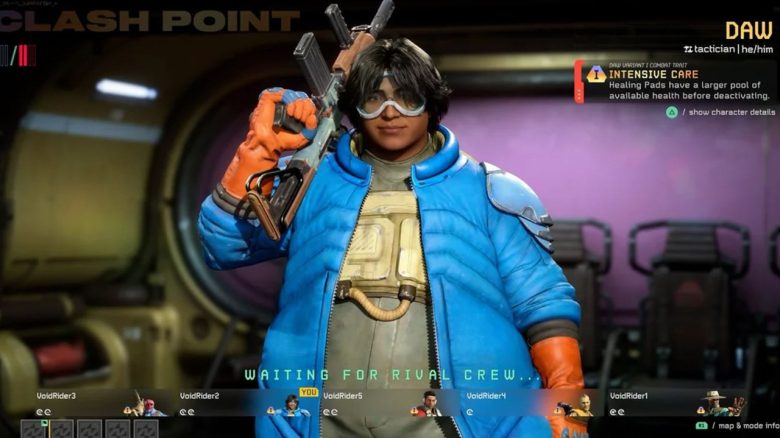
The gaming industry believes that players are into items and loot in live service games like Destiny or GTA 5 and want to imitate their successes with their own games, but they are making a mistake. This is said by MeinMMO author Schuhmann:

What does the gaming industry think? The gaming industry follows a certain logic. This can be seen in the example of survival games:
First assumption: The survival genre is popular and there are many good representatives like Rust, ARK, DayZ.
Second assumption: But there is a lack of one big title with maximum accessibility that dominates the genre – as WoW does for MMORPGs or LoL does for MOBAs.
Conclusion: There is room for more in the survival games market. So we develop this one super accessible title and become rich.
From this line of thought, the flood of survival games a few years ago such as Conan Exiles (2018), Fallout 76 (2018), and others.
GTA Online is an extremely successful and above all profitable game:
Destiny and GTA make a lot of money – We want that too!
What does this mean for live service games? Since 2013/2014, with the console generation of PlayStation 4 and Xbox One, it has been possible for successful multiplayer games to appear in the console market that are permanently expanded and provided with content in the manner of an MMO. They are referred to as live service games.
Previously, such games were only possible on PC; these were games like WoW, Counter-Strike, or LoL.
Pioneers of this phenomenon of live service games on consoles were GTA 5 Online (2013) and Destiny (2014). Both are financially extremely successful projects.
It is estimated that GTA 5 has generated about 1.5 billion $:
With Destiny, we do not know the sales figures, but especially Destiny 1 must have been enormously profitable.
This is the logic behind the many new live service games: Fans of these games complain that they become bored and need new content. The standard phrase of every MMO player is My game is dead
.
So it follows:
First assumption: Live service games that are regularly expanded are extremely successful.
Second assumption: However, these live service games regularly become boring to players while they wait for a new DLC or a major update.
Conclusion: There is room for more in the market for live service games. So we develop a live service game and become rich.



The myth of the successful live service game
This is the consequence of this assumption: For many years, at least since 2016, studios that had developed single-player games until then have been trying to establish their own live service games under pressure from the publisher.
Sony, for example, originally wanted to place 12 new game series of this kind by 2026. And for that, they have acquired numerous studios:
- Sony bought Bungie for 3.6 billion $
- They acquired the Concord developers Firewalk in April 2024 for an undisclosed sum
- Sony acquired “Haven Studios” from the former Ubisoft producer Jade Raymond
However, in recent years, it has become apparent that attempts to establish such games that are developed over the years repeatedly fail, and catastrophically at that. Many service games are not only unsuccessful but are so unsuccessful that they drive the studios behind them to ruin, which are then dissolved.
The list of victims is long: Redfall, Crucible, Lawbreakers, Marvel’s Avengers, Suicide Squad, only recently Concord.

Successful live service games thrive on loot
What are the games doing wrong? The studios apparently think that Destiny or GTA 5 were successful because they are developed further, grow, and are supplied with content.
This is true, but the actually important element is that it is possible in the games to build a virtual existence, collect items and goods, and thereby become more powerful – or at least something special
to have things that not everyone has.
An author from MeinMMO was invited on a date in GTA 5 in 2020, where the GTA-5 player was apparently proud of his virtual possessions and what he could offer his date.
It is precisely this satisfying progress within a service game that is the decisive factor that binds players to a game.
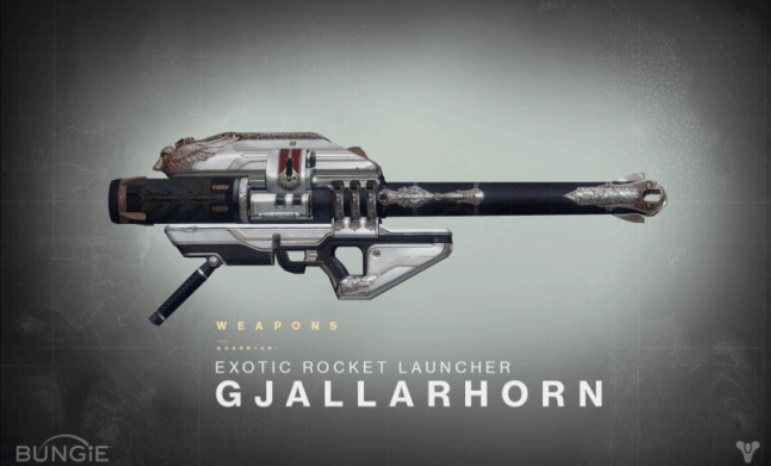
You can see this in Destiny just from how obsessed players were in the early days of Xur and the possibility that the vendor might have the Gjallarhorn rocket launcher in stock, a legendary powerful weapon.
Players of Destiny were so addicted to loot, that they used the loot cave
, where they had hardly any fun but just mindlessly fired in one direction, just to get loot as quickly as possible.
Even in GTA 5, the most important question after an update is often what new possessions are coming into the game, what new cars there are, and where to buy them.
Live service games are not competing with Destiny – but with LoL and Valorant
This is the thinking error: When companies develop service games that are structured as PvP experiences and do not appear with such a satisfying equipment spiral, they do not compete with games like GTA5, Destiny, or Division – for which there is a high demand because players are running out of content and getting bored.
No, they compete with games like Valorant, LoL, Escape from Tarkov, or Fortnite, which are doing well and in which players do not build a real “virtual existence through better items,” but invest time in the games to learn them and get better or accumulate skins.
Other games do not even give players the opportunity to find strong items but are purely focused on microtransactions.
It is a completely different gaming experience whether you play a live service game with loot or one with PvP:
- In games with loot and consistent progress, processes are often ritualized. You play to relax, often with half attention, comfortably chat with friends, switch off, and unwind. Luke Smith once described Destiny as “I shoot aliens in the face while talking to my friends about the Oscars.”
- Live service games with rounds are tailored for PvP, you play them focused and with ambition. Communication in the team is important – there is not much relaxation here.
It doesn’t make sense to buy Bungie and then develop a game that has nothing to do with Destiny
It doesn’t make sense to buy Bungie, say we are making live service games, and then not to release a live service game like Destiny – but a live service game like Valorant or Overwatch.
Even Bungie itself is not working on a new game like Destiny, but on an extraction shooter that already looks as if there’s no market for it.
Games with loot systems perform well – games without die quickly
If you look at the live service games that have been released in recent years, you can see that the games that had a good loot system at least sparked some initial hype and found their player base, such as Anthem or The First Descendant. Even Wolcen, a not particularly outstanding Diablo clone, sparked considerable hype at release.
Sony’s statement: “We are now making live service games for the PS5” is a mistake. The majority of people do not want live service games – the majority of people want a specific form of live service game.
While many games that did not offer such a loot system, like the recently released Concord, have crashed spectacularly and become these huge flops that have high production values but hardly anyone wanted to play: Why did Concord fail so miserably on Steam and PS5 and cost Sony 250 million $ for a woke catastrophe?

Your opinion is important to us!
Do you like the article? Then let us know!