


“Endless” games that can be expanded indefinitely. This strategy has been pursued by Ubisoft for several years. In an interview, Executive Vice President of Creative, Lionel Raynaud, discussed Games-as-a-Service and future technologies.

Ubisoft is now known for supporting and further developing games over the long term. Examples include titles like For Honor, The Division, and most recently The Crew 2.
Executive Vice President of Creative, Lionel Raynaud, explains in an interview how the Games-as-a-Service principle will be further expanded in the future and how future technologies can significantly influence the games.
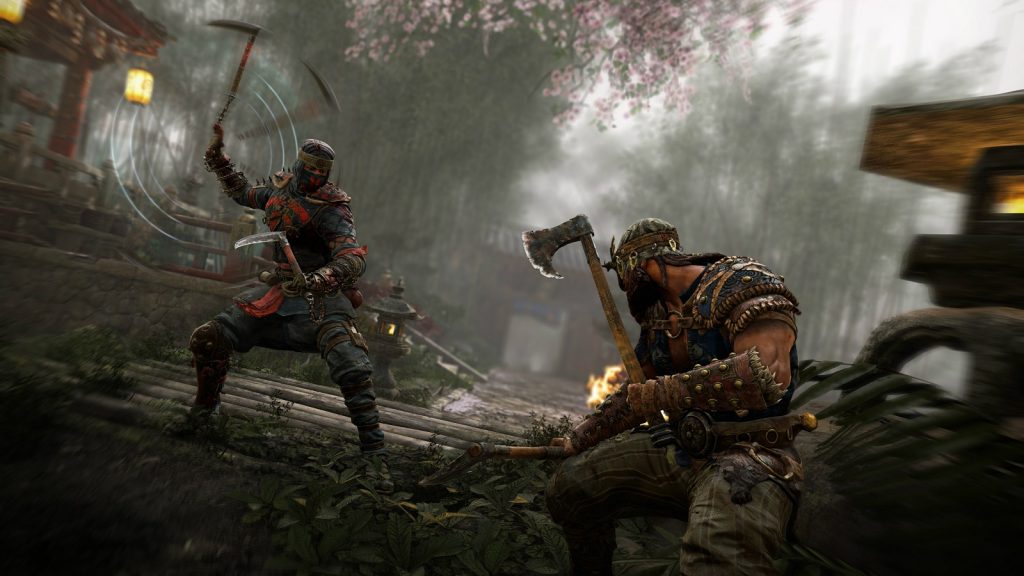
Games should no longer be simply concluded
“Finite” games belong to the past: Raynaud describes a classic pattern: one follows a storyline, kills the villain, and has completed the game. Usually, the game is then over, one puts it away and moves on to the next one.
The goal is to break this cycle by restructuring the narrative. By defeating the main antagonist, one would cause changes in the game world, leading to further actions. The game world as a whole could continue to function and evolve in the future.
No story that stands alone: Stories should no longer be self-contained but rather parts of a larger whole, a universe that continues to grow, keeping players engaged. This allows single-player titles to be supported long-term. New tools for developers are also expected to broaden the developers’ repertoire in the future.
New technologies could enable “endless” games in the future
One game – multiple worlds? According to Raynaud, technologies currently in development can significantly improve the long-term expansion of games. Part of the future vision involves open-world games. It could well be that in a few years, an Assassin’s Creed comes out where players can visit multiple eras – until now, nearly every installment has limited itself to the present as a starting point, from which one “looks back” into a specific time through the Animus.
This technology could also be applied to franchises like Watch Dogs and Far Cry. Why not simply fast-travel to cities and areas spread around the world in the future? The potential is vast.
Artificial intelligence as a factor: Here, artificial intelligence plays a role in influencing NPC behavior. It greatly contributes to immersion when NPCs exhibit natural behavior and respond to players’ actions.
Not only NPCs but also the search for bugs and their resolution can be simplified through more advanced artificial intelligences. Much of this is still in the early stages of development.
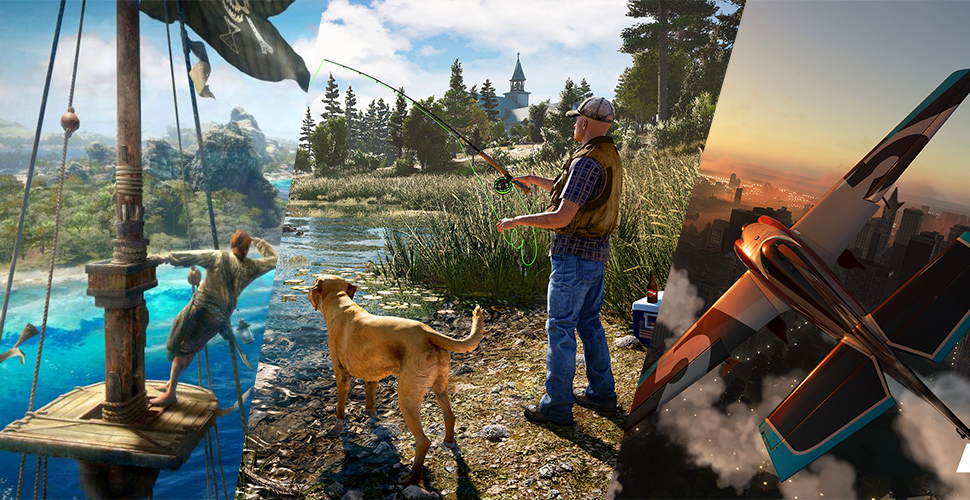
Development based on player data
Analyses of player behavior and community feedback are strongly integrated into the development process.
The Division 2 as a prominent example: Many changes compared to the first installment are based on such analyses. Detailed surveys, data collected from the games, and direct feedback from recent years are now being used to deliver a better experience in the sequel.
Especially in games with diverse characters, this approach can cater to the different preferences of players, whether they are romances or friendships between characters. Many Ubisoft games are ready to offer more than just gunplay and combat.
And some of our games are really ready to offer not only gunplay and fights, but romance, or friendship, or a ton of other things that would be super-interesting – and make the characters become more interesting and lovable because they don’t speak only about fights, but also about things that players live in their own lives.
Players should feel connected to their games
Far Cry Arcade – A community within a community: Through the long-term support and lifespan of games, the aim is to foster the emergence of communities. This can be achieved even through certain gameplay mechanics. Raynaud illustrates how a simple gameplay mechanic can lead to community formation using the Arcade mode of Far Cry 5.
This allows for the creation of maps that players can share with each other. Multiplayer matches and coop sessions are also possible in Arcade mode. This makes the game interesting for many beyond just the campaign.

Similar mode soon in other Ubisoft titles? The map editor has been available since several Far Cry installments. According to Raynaud, they want to enable such mechanics for more games. Unfortunately, he didn’t provide more details on that.
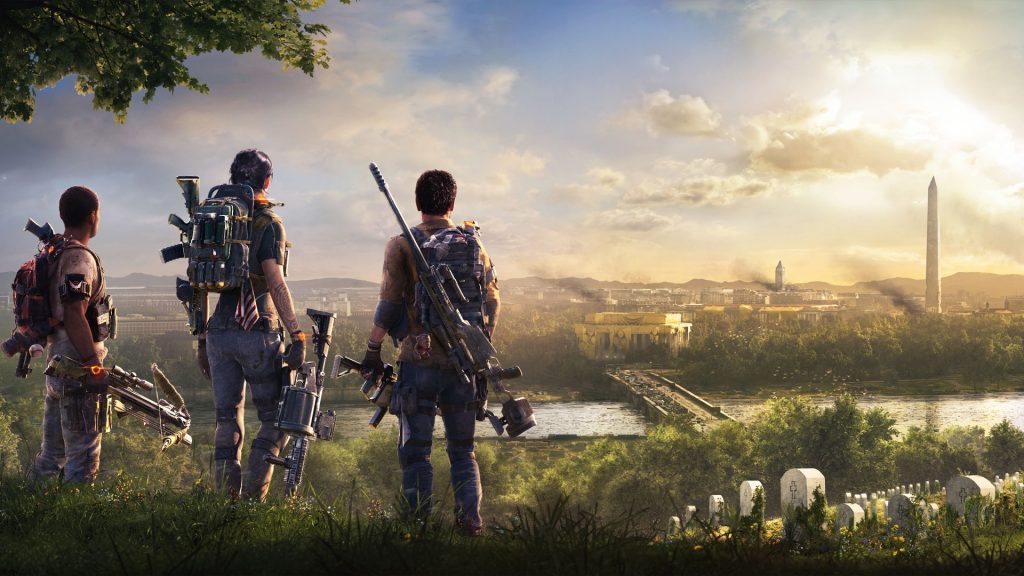
We are excited to see in which direction the Games-as-a-Service model develops. Ubisoft has definitely committed to this path, almost achieving pioneer status and is very successful with this approach – both financially.
Other publishers have long since followed suit, or have already done so in the past. Destiny and Destiny 2 from publisher Activision are among them, as well as Bioware’s and EA’s Anthem, which is supposed to be continuously expanded with new content and stories.

What do you think about the topic? Are you pleased with the focus on the model, or do you approach it with skepticism?

Your opinion is important to us!
Do you like the article? Then let us know!