

A gamer saved money for an upgrade for a new Nvidia graphics card. But after months he is dissatisfied and regrets the upgrade. The problem is not the graphics card, but the other installed hardware.
A user replaced his old Radeon RX 570 with a GeForce RTX 3060 Ti. On paper, it’s a noticeable upgrade. But he is not really satisfied, he explained in a reddit thread:
- The performance is hardly better than before and sometimes the games even stutter.
- Moreover, the new card is annoying with coil whine.
He himself explains that he honestly regrets the upgrade and that the new card has only caused him a lot of stress. However, he does not want to return the card anymore.
So where lies the problem? On reddit, several users explain that his installed processor is much too weak. His Ryzen 5 2600 is simply too old for the new Nvidia graphics card and is limiting his system. However, the gamer just does not want to accept this. Someone writes: “He is absolutely CPU-limited, but he does not understand it.”
But what is a “bottleneck” and when do you recognize that hardware can be limiting?
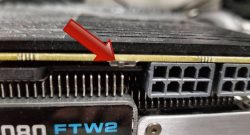
With an upgrade, forgotten old hardware can limit
What does “bottleneck” actually mean? Bottleneck means that often a certain component slows down the rest of your system. You buy a new graphics card, but your processor is also 10 years old or you still have a slow hard drive (HDD) installed. Such a “bottleneck” then means that individual components cannot be fully utilized.
How do you recognize such a limitation? You usually recognize this when you check your hardware under load. Normally, the load should distribute fairly evenly across all hardware. If one part, such as the processor, is limiting, then this is often quickly recognizable:
- Your RAM is only low-loaded.
- Your graphics card is hovering at around 10%.
- But the processor is near maximum and has hardly any room to spare.
These are often helpful signs that your processor cannot keep up with the rest of your hardware.
When does such a limitation happen? This often happens when gamers upgrade their old systems. Often the graphics card is thought of, which symbolizes concentrated performance in gaming for many players. If money is available for an upgrade, hundreds of euros are often invested in a new graphics card – and it is quickly forgotten that a gaming PC consists of many components.
Especially beginners quickly pump money into a graphics card and are surprised that the impacts are not as great as hoped.
However, it is often forgotten that all parts of your gaming PC play an important role. With older systems, it is often sufficient to replace your slow HDD with an SSD.

Your opinion is important to us!
Do you like the article? Then let us know!