
An MMO shows no mercy with its loot boxes and mocks its own fans. However, they love it and celebrate it.
The fact that free-to-play games must make their profits through microtransactions is old news. Yet, while many games sell not only cosmetics but also clear pay-to-win advantages, the Japanese Fate/Grand Order takes a different approach – it sells story and emotion in loot boxes.
These loot boxes, also known as “Gacha,” can contain various characters that serve as companions in Fate/Grand Order. They not only strengthen the player’s party but also bring unique dialogues and story sequences.
The game concept and characters are based on the popular anime series Fate/, which now has many spin-offs. The characters are well-known and have taken a place in the hearts of many fans – after all, Fate/ is among the most successful anime series of all time. It is not surprising that viewers build an emotional bond.
And this emotional connection to beloved characters is ruthlessly exploited by Fate/Grand Order.
It’s not just about “pay-to-win,” as the power aspect behind these “loot boxes” is secondary. By acquiring the respective characters, players also unlock new story chapters.
Especially absurd: To unlock the ultimate abilities (and story elements) of a companion, one must possess them up to 5 times, which, given a drop chance far below 0.1%, is mathematically likely to cost several thousand dollars on average.
Fate/Grand Order parodies its own fans
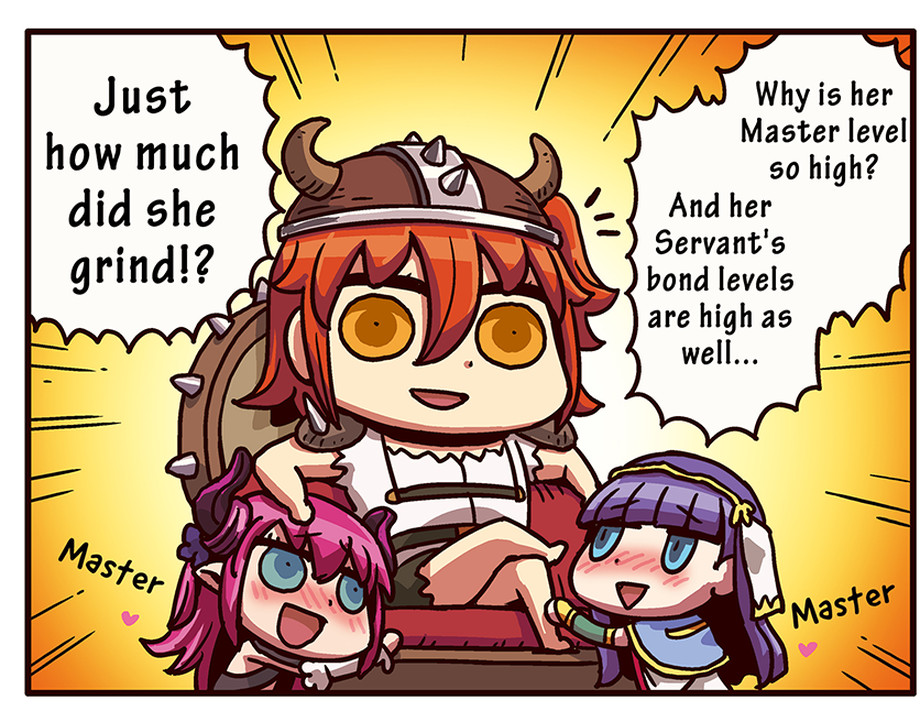
However, Fate/Grand Order makes no secret of this practice. Instead, the developers even created a comic about the girl Gudako – a gamer addicted to loot boxes who throws her money out of the window. In the comics, she asks, for example, “How can I progress faster in the game and where do I need to press for that” – openly implying that it’s about money.
The fans do not react in shock; rather, they like this character and can identify with Gudako. Just like her, the caricature has a problem with addiction and is, in her own words, trapped in “Gacha Hell,” along with a passion for cute anime girls.
But as funny as the comics are, the reality unfortunately is not.
On Reddit, there are numerous posts from players regretting how much money they invested in the game. Some even say they “only work to play this game” and would max out their credit cards each time – and yet they still haven’t gotten the character they wanted.
But as the US site Polygon puts it nicely: At least Fate/Grand Order is honest.
Because the developers have long recognized that players will not stop even if they shove a parody of themselves in their face, showing them that they have become addicted.
Cortyn says: Ultimately, Fate/Grand Order is for me a prime example of why free-to-play games still leave a bitter aftertaste.
In the end, the game has content that makes hardly anyone happy. The “poor” players don’t, because they will never receive their favorite characters, and the “rich” players don’t either, as even with many hundreds of dollars, they don’t get what they want.
The ones suffering on both sides are the fans of the anime series, of the Fate/ universe, who have fallen in love with the characters and want to experience more story – precisely those fans that every medium needs.
They are essentially contents that hardly anyone gets to see and exploit the players’ hunger for exactly those stories. Will developers get rich from this? Quite possibly. Do they step on the faces of all the fans of the characters and honest players? Absolutely.
Developers believe that loot boxes are the future.

Your opinion is important to us!
Do you like the article? Then let us know!