

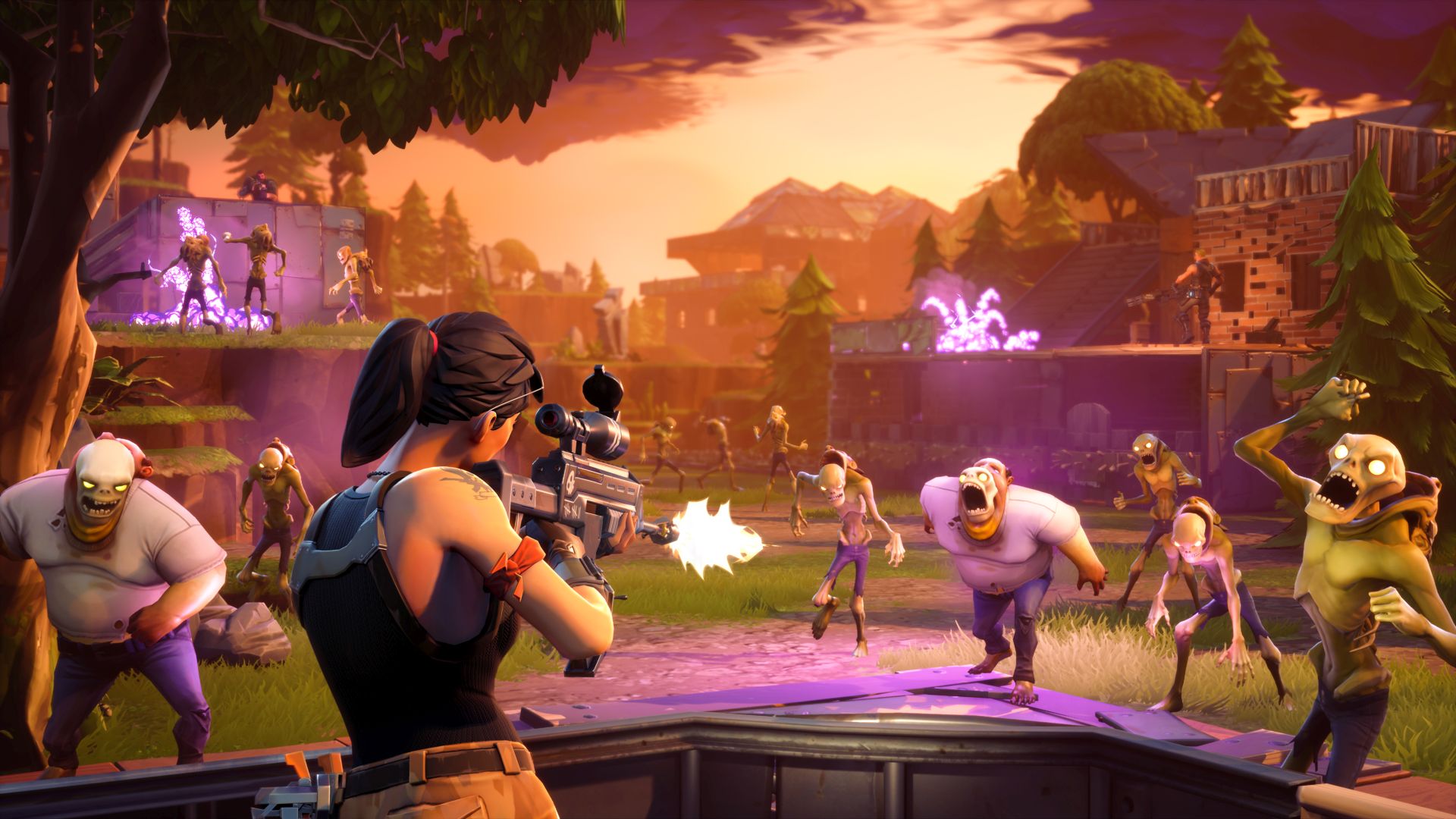
We tested Fortnite (PS4, Xbox One, PC). Fortnite is the new action co-op game from Epic. Minecraft meets tower defense, dungeon keeper and The Walking Dead had a baby. Whether Fortnite has the chance to become a construction for eternity or if it is a wooden shack that the first storm tears apart, you can read here.

Fortnite has a strange development history. It was first teased in 2011. Back then, it was supposed to be a mix of tower defense and Minecraft. In 2011, it was thought: Fortnite will be a couch co-op for Xbox 360 with split-screen and multiplayer. People met and played this Fortnite together. Six years ago, ‘online gaming’ was not as dominant as it is today.
Then nothing was heard about the game for ages, and in the summer of 2017, Fortnite appeared as a pseudo-MMO for PS4, PC, and Xbox One. In a version for today’s time, it has the typical 2017 features of a multiplayer game with ‘always online, automatic matchmaking, a huge progression system, and a cash shop.’
The game is already surprisingly mature and playable, even though it is still in early access.
Fortnite is still ‘Minecraft meets tower defense’, but elements from mobile MMOs have been added: an oversized progression system ensures that everything in the game has a level and a quality level. This makes getting into Fortnite a bit complex.
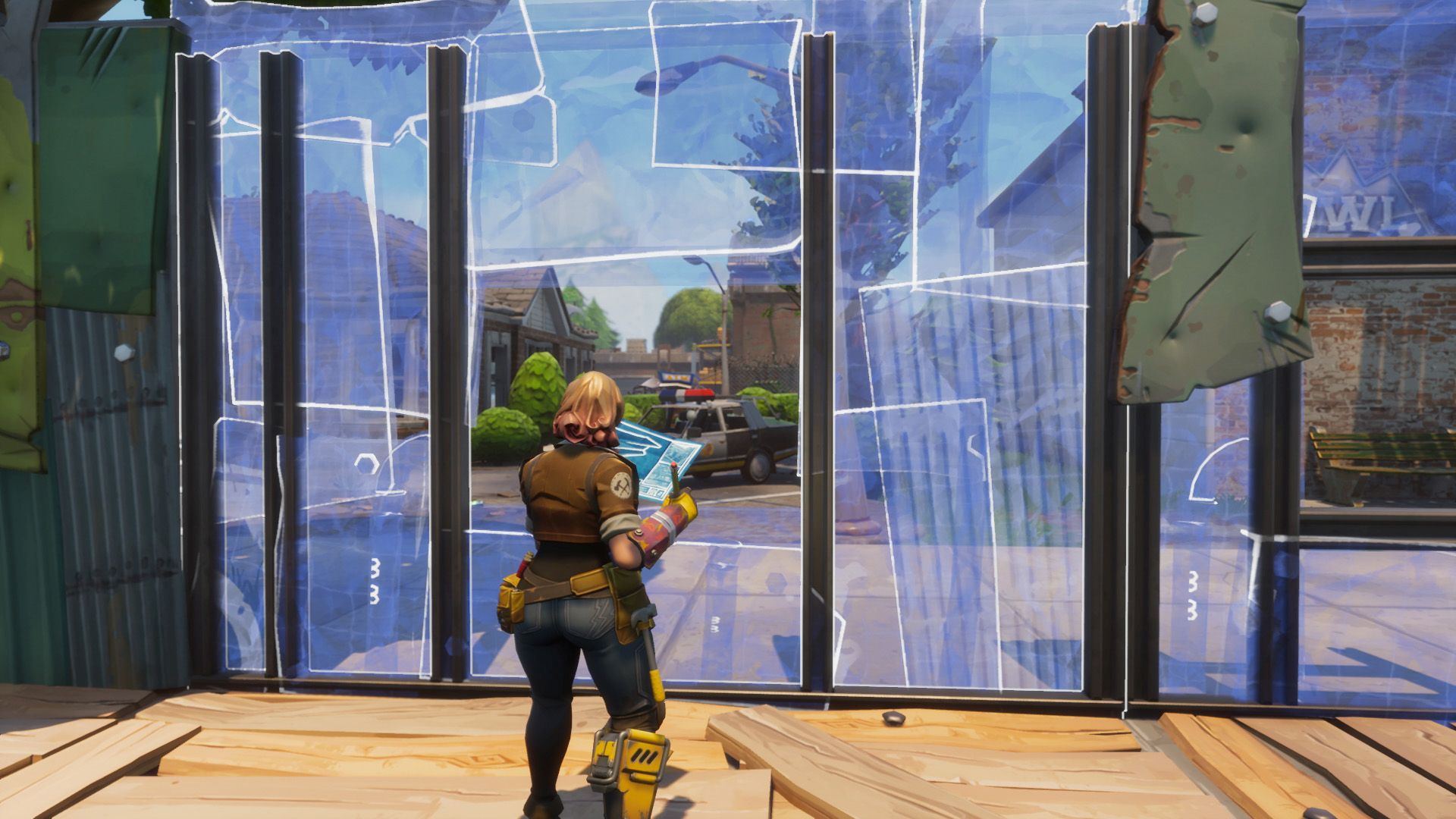
While the ‘surroundings’, the meta-game of Fortnite, exudes the dry charm of an Excel spreadsheet, the actual gameplay is self-explanatory and immediately clear.
The gameplay of Fortnite: Walking Dead meets Dungeon Keeper
The actual missions of Fortnite are divided into two major phases: day and night.
The day phase
You are with three other players in an area, sometimes it’s a suburb, sometimes nature. There, you fulfill various main and side quests: sometimes you collect survivors, sometimes you protect a core from angry zombie hordes by building a fort around it.
During the day, you walk around with your pickaxe and an arsenal of weapons. The player team has three tasks:
- They collect loot from chests or crates that are hidden, and resources by smashing things with their pickaxe.
- The players complete side missions in the form of events while uncovering the quite large maps.
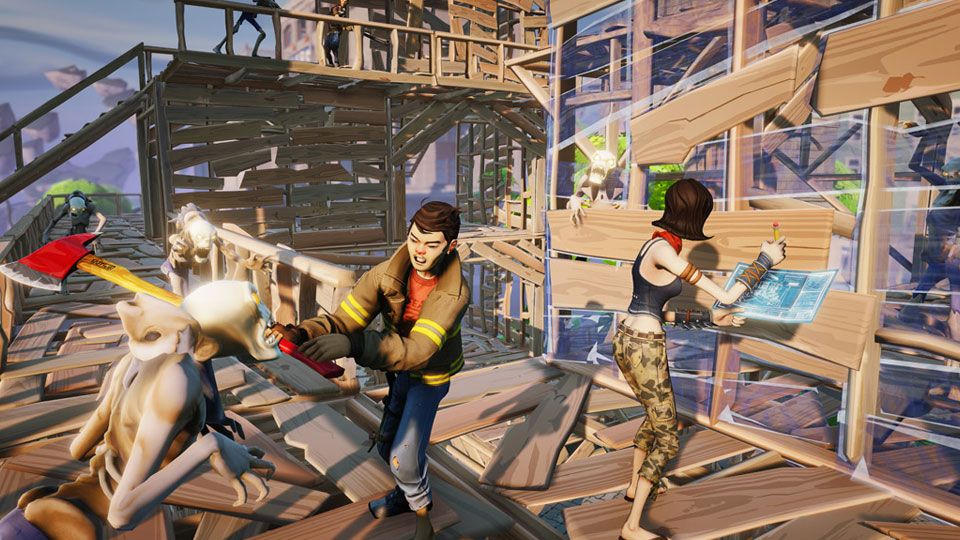
- And they build a fort for the ‘night’, usually there is a special object that needs to be protected. As a player, you can erect walls, build stairs, lay floors and ceilings, and decorate the fort with traps. This starts getting surprisingly easy early on but can reach considerable depth later.
The night phase
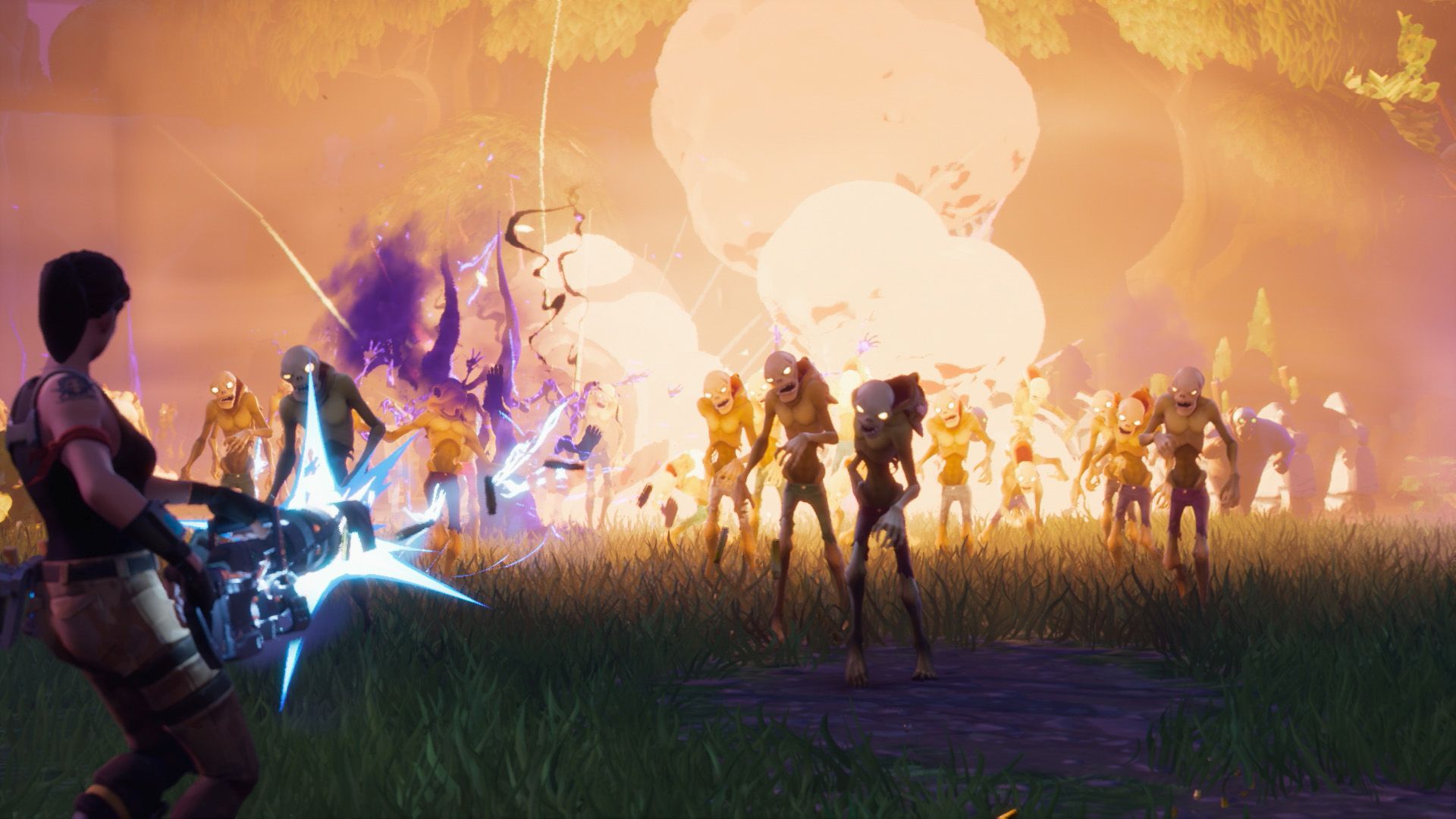
In the combat phase or ‘night phase’, which you can usually initiate yourself, the fort is stormed by ‘Husks’. These are zombies like from a Pixar movie. Undead alien monsters that have draped themselves over human bodies like poorly fitting suits.
Here, Fortnite becomes a third-person shooter. The goal is to take out the husks and protect your fortress.
The arsenal of firearms ranges from laser pistols to sniper rifles and shotguns to rocket launchers. There are ninja swords and baseball bats for close combat. The individual heroes still have skills like double jump or shuriken throwing, or you can deploy a shooting robot bear or call in an airstrike. There’s a lot going on here.
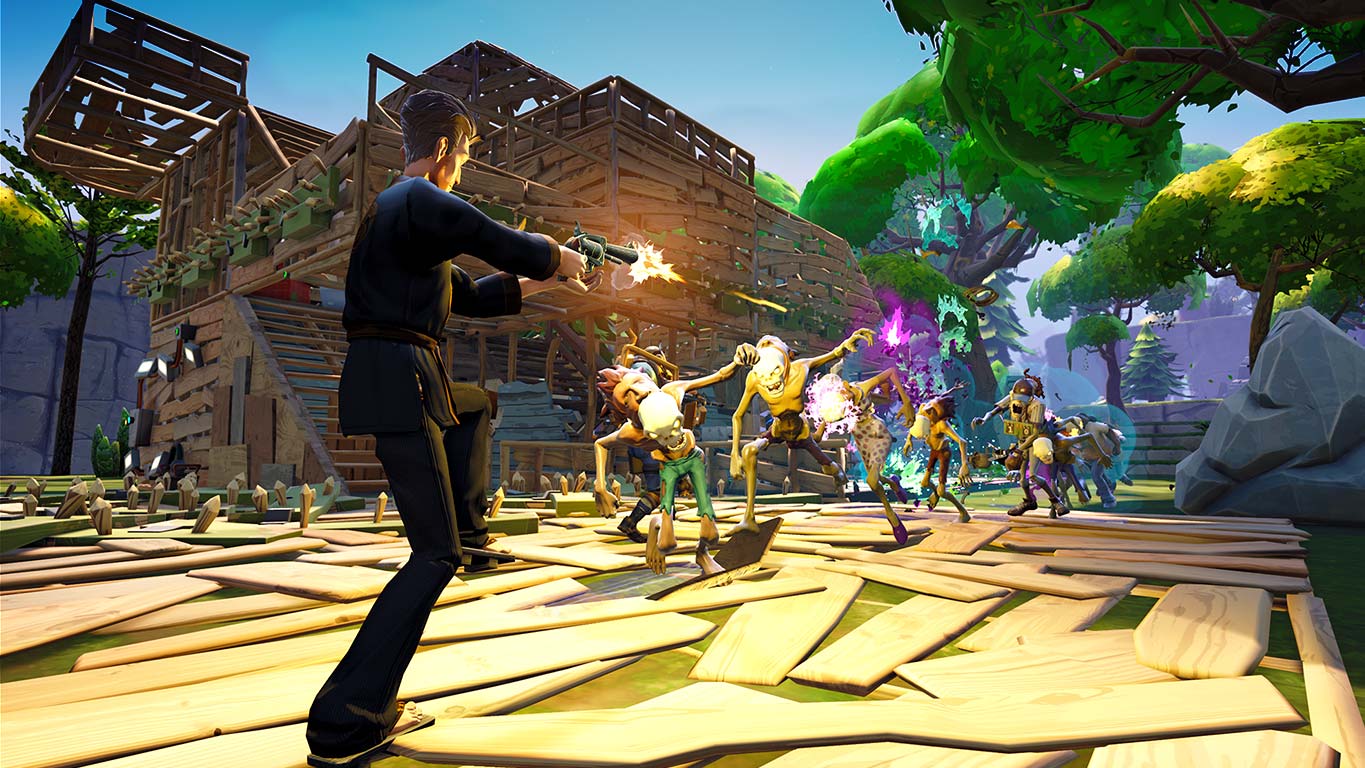
Both phases are good in their own way
Both parts of the game are really fun. The tools for building the fort are easy to use and you get better and better at building a fortress as you progress from mission to mission. There are a lot of tricks and tips that give an experienced builder an edge. Therefore, it is important to assess: Where will the husks attack? Where do they have to go through? Which trap combination is the most effective here?
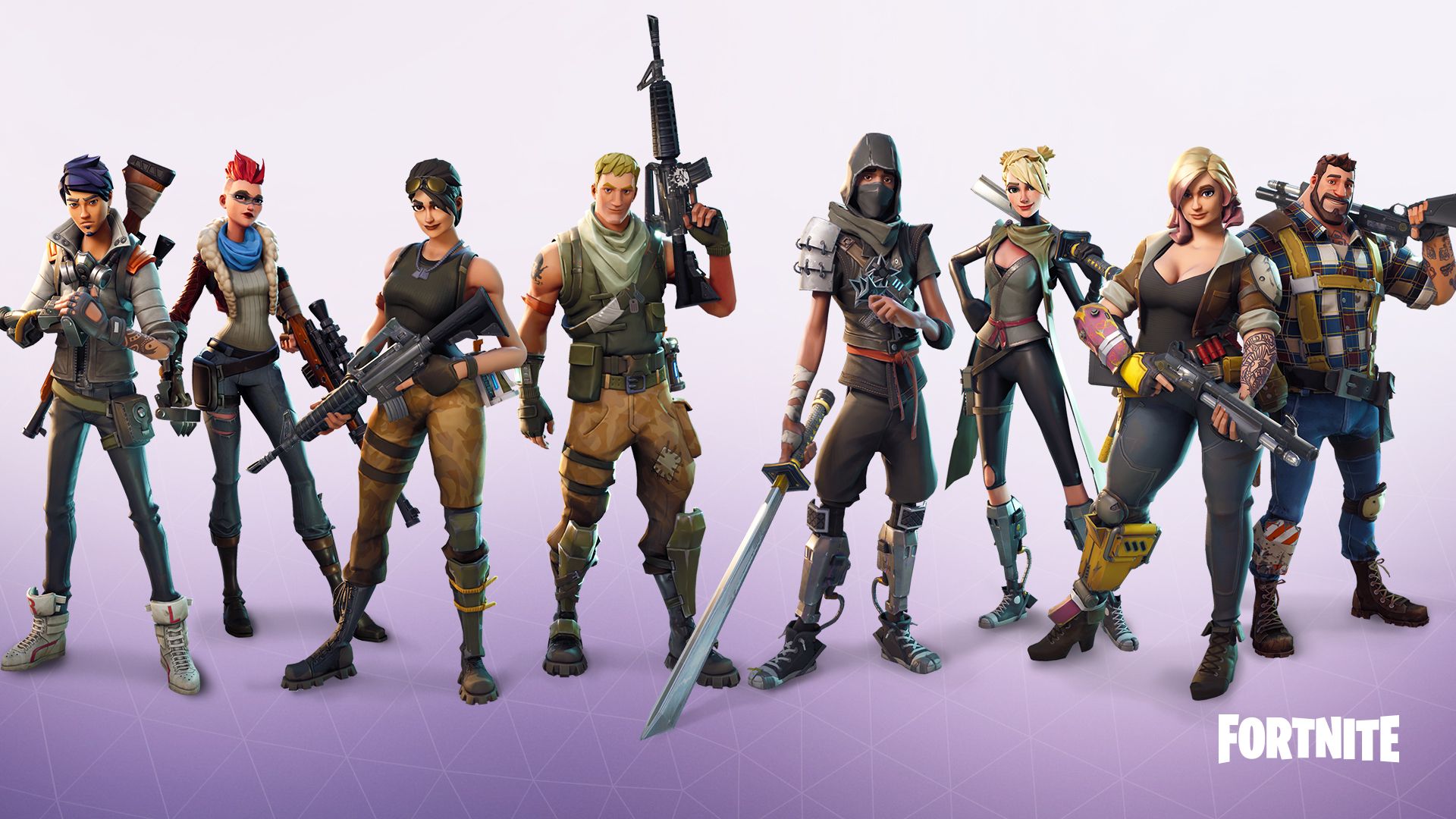
And there are so many kinds of traps: poison gas flows from the ceilings, husks are thrown back by springboards or thrown off cliffs. They receive electric shocks and are impaled from below like a fakir. I had this much fun with placing traps last in Dungeon Keeper.
The loot phase is also exciting. It is fun to search the houses and dwellings and complete a few side missions.
The reward and progression system
Where the actual gameplay shines, the progression system is surprisingly complex but overdone.
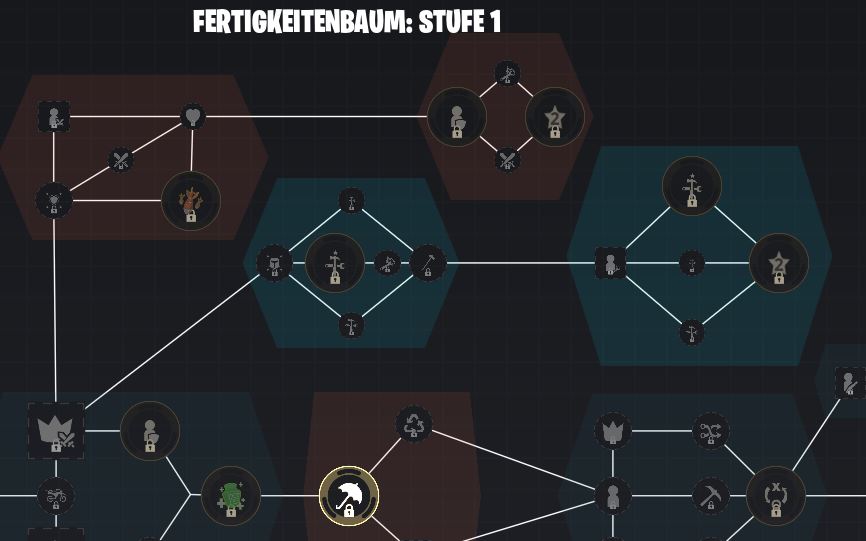
There are skill trees and research trees. Regular points flow into both, and skill nodes can be unlocked. However, the individual points usually have little effect on the gameplay experience. Per point, you improve by a few percentage points in an abstract statistic: traps then do 1% more damage. You get a little more health. Nothing that you really notice in the game from mission to mission.
Something else is ‘gadgets’ – bonus skills that you unlock like airstrike or group heal. They are indeed useful, but your choice is quite limited, and you can only take two with you.
Meta map game pretends complexity, effects seem only marginal
With other points, you receive free ‘map slots’ in which you can then place cards, such as survivors… and through these, you become a few percentage points stronger in a specific area: Also not really exciting.
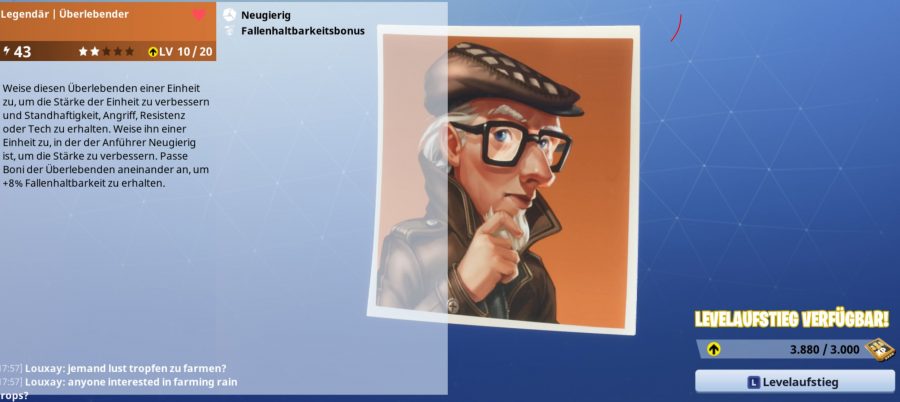
This is all a relatively complex system that gives the impression that the player can make decisions. Ultimately, however, it is linear, and you rarely feel that you are significantly improving when you dive into this ‘card mini-game‘ of Fortnite.
It is indeed fun to dive into it, and you may feel clever if you have organized everything “perfectly” and put the “cards together and organized them correctly” – but it will have only minimal effects on the actual game.
Exp system forces specialization.
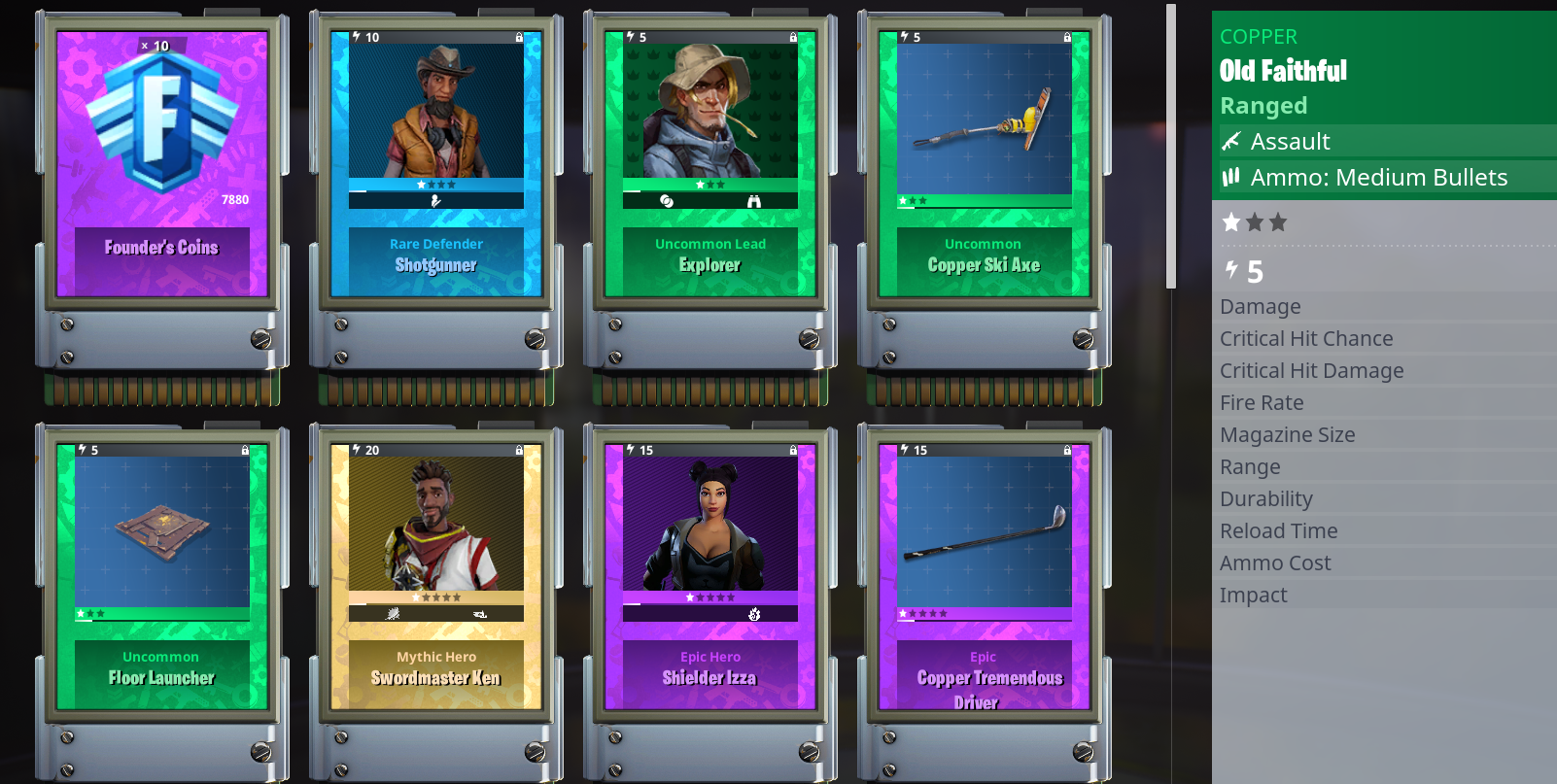
Additionally, every item, every survivor, and hero in the game is part of a ‘meta-game’ with experience points and quality tiers so that you can enhance each weapon, every trap, and every hero individually.
This invites you to specialize and preferably ‘build one maximally strong hero’ or focus on a great weapon instead of several good ones – which limits your breadth. In practice, you don’t have much choice between a pistol, sniper rifle, and MG, but always reach for the MG, because after all, you leveled it.
Smart players look to pull weapons with different ammunition types to avoid running out of ammo too quickly.
This ‘evolution’ system is relatively closely tied to purchasable loot boxes, the lamas – although some can be earned, it smells here of ‘pay for progress.’
The aesthetics and humor
Fortnite gets clear plus points for its aesthetics and many details.
It’s fun to smash classic cars or lowriders with hydraulics with the pickaxe, to find a bomb shelter in a house, or to scrape your way to the top of a skyscraper. Then comes a melody reminiscent of The Walking Dead and you just feel good in this strange world and rummage through bathtubs and find ammo there – for whatever reason?
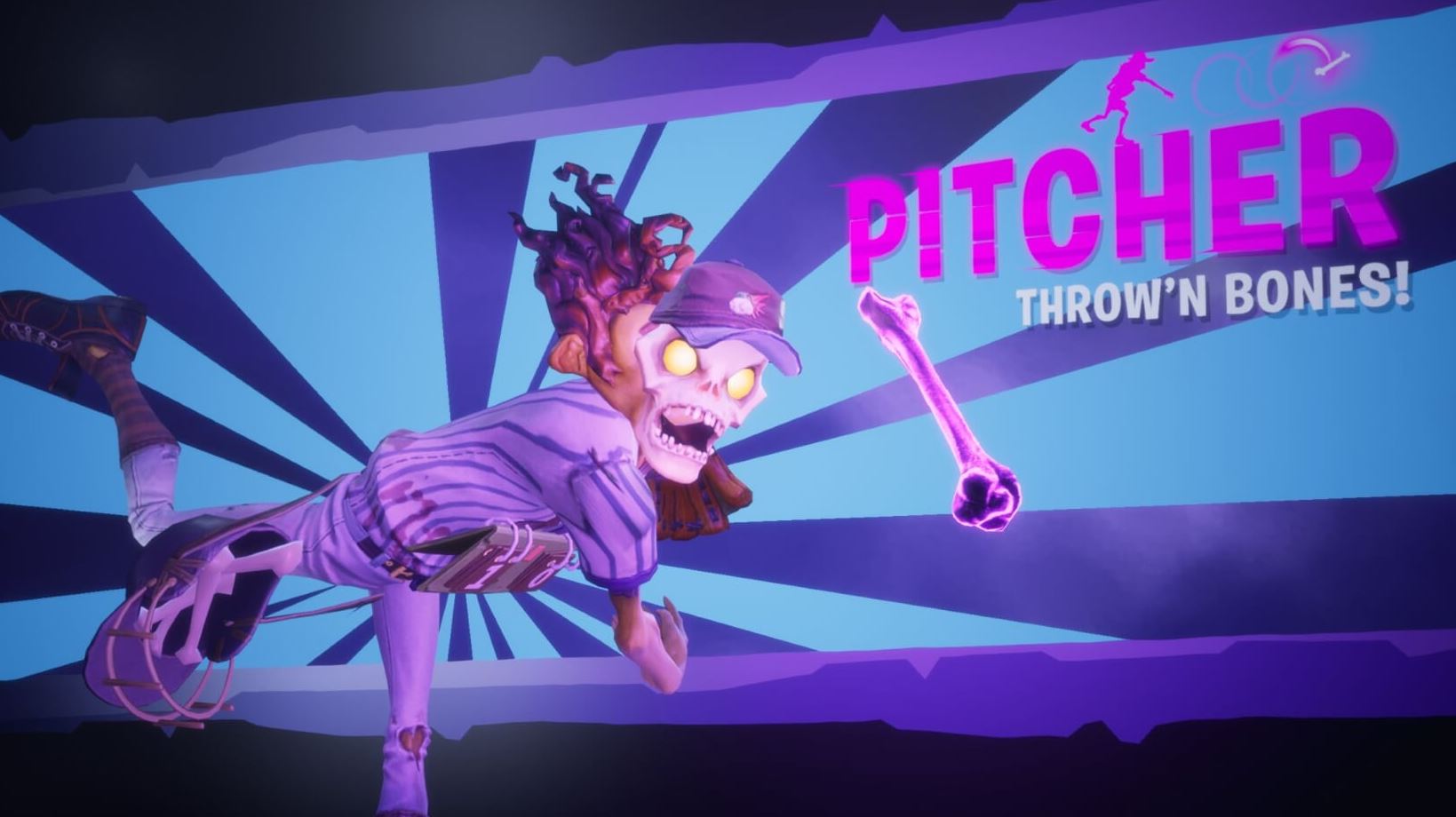
The husks also contribute to this, which, although they look so terrible, are somehow endearing. The artillery husk that tears down forts from afar somehow looks like a middle-aged woman in a floral dress. And the baseball pitcher who bombards my fortress makes me smile every time. Why have so many baseball pitchers turned into husks and now throw their bones? What is going on with them?
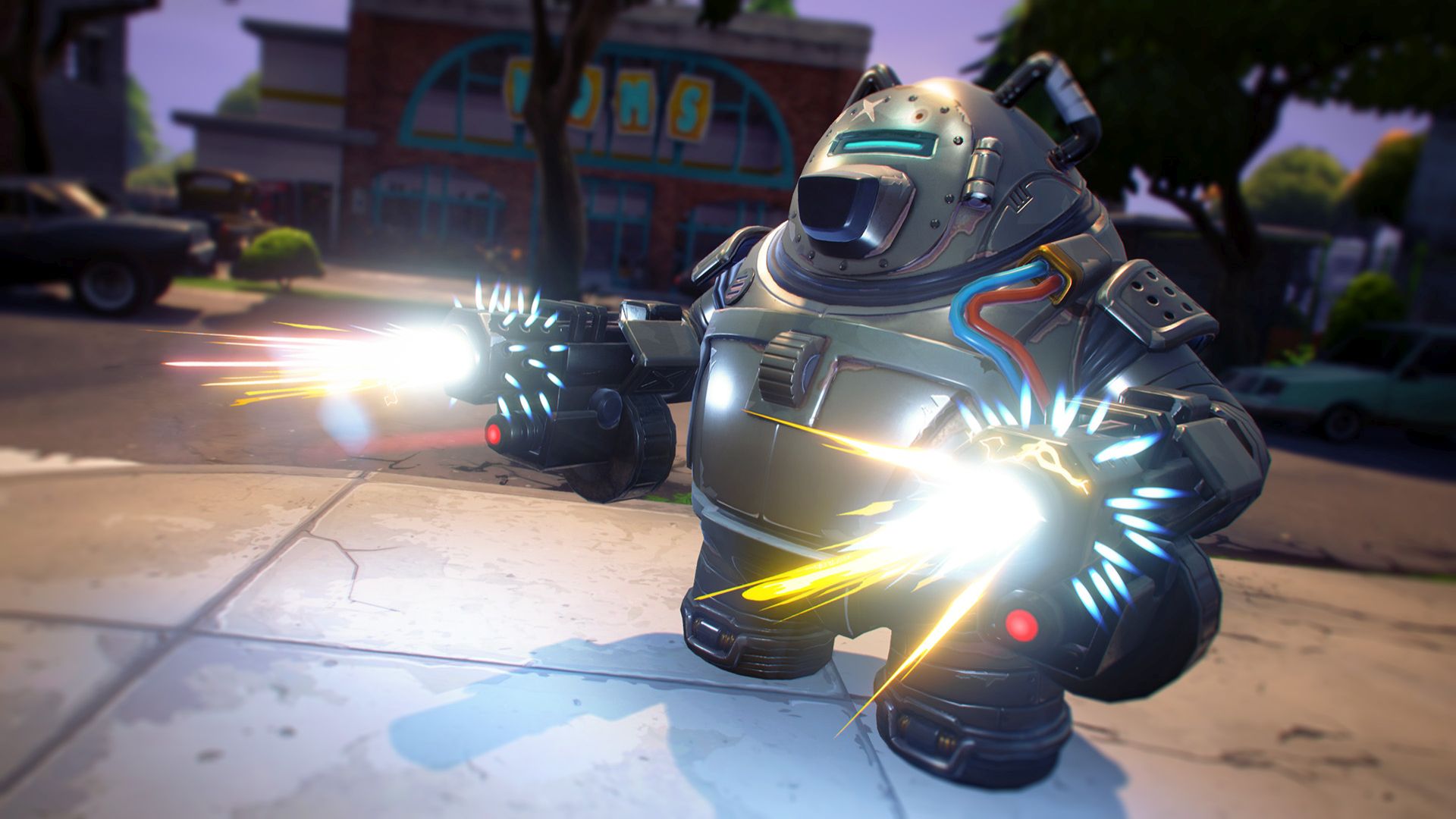
My favorite is the ‘sentry gun’ of the explorer hero: it is a robot bear that apparently is programmed to think of itself as a bear and to shoot at everything that is not a bear with the friendly remark: “You are not a bear.”
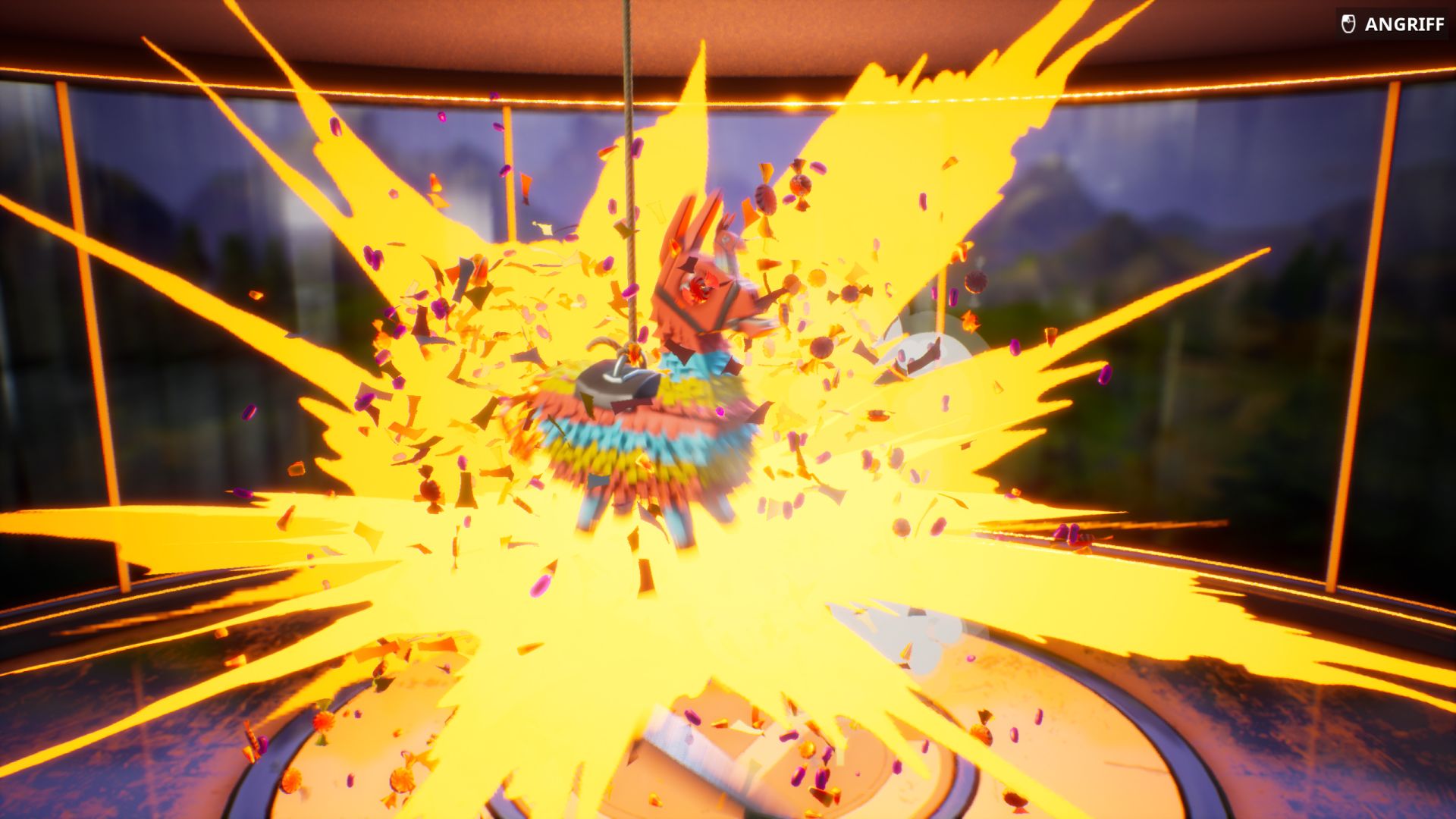
The excellently dubbed reward llamas that happily comment on their own destruction are also really good.
Even the cutscenes that tell the story are full of charm and humor.
Such moments clearly set Fortnite apart from other games. Even if the monetization of the game seems difficult, the aesthetics say: ‘This game is made with a lot of love.’
The story and the mission flow
Fortnite has a linear plot that does not take place in specially crafted missions, but in the normal missions you always play.
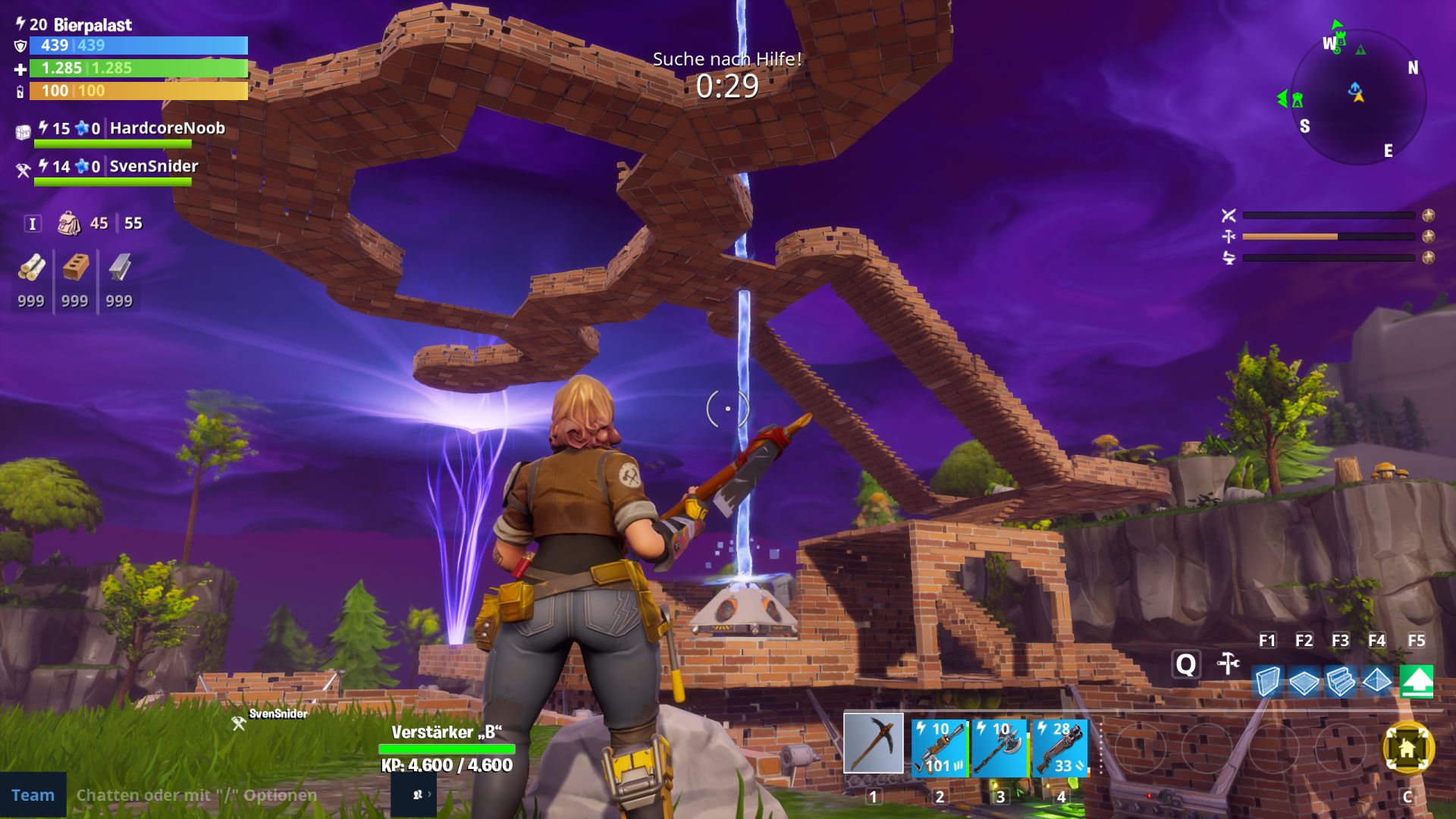
The first zone Stonewood is basically a giant tutorial with a flat learning curve – only after 10, 12 hours is it worthwhile to build forts and the difficulty increases noticeably. Until then, you just knock down the husks.
You always have the choice between several cards with specific main objectives – you complete the story missions on these cards by fulfilling different mission objectives. The story missions can also sometimes consist of deliberately completing actual side missions.
After the mission, Fortnite celebrates its reward sequence.

This is how you quest from area to area. There are a total of four areas. However, they take relatively long – after nearly a month of regular playing, I am two-thirds through the second area. Progress becomes relatively slow from level 20 onwards.
In each of the areas, you gradually build up a home base that remains. You have to defend it multiple times against increasingly larger hordes of enemies. In the higher missions, you get the feeling of an unending onslaught, which depletes your resources, and then you just hope that the base really holds and that you have enough ammunition.
If you are left standing at the end with only melee weapons, hoping that the timer finally ticks to 0, while large demolishers stagger toward the last remnants of your base, then it’s no longer fun: then adrenaline is pumping.
Weaknesses in detail: Multiplayer
In Fortnite, you are in every mission with up to three other players, who can pursue different mission objectives. A mission lasts about twenty minutes.
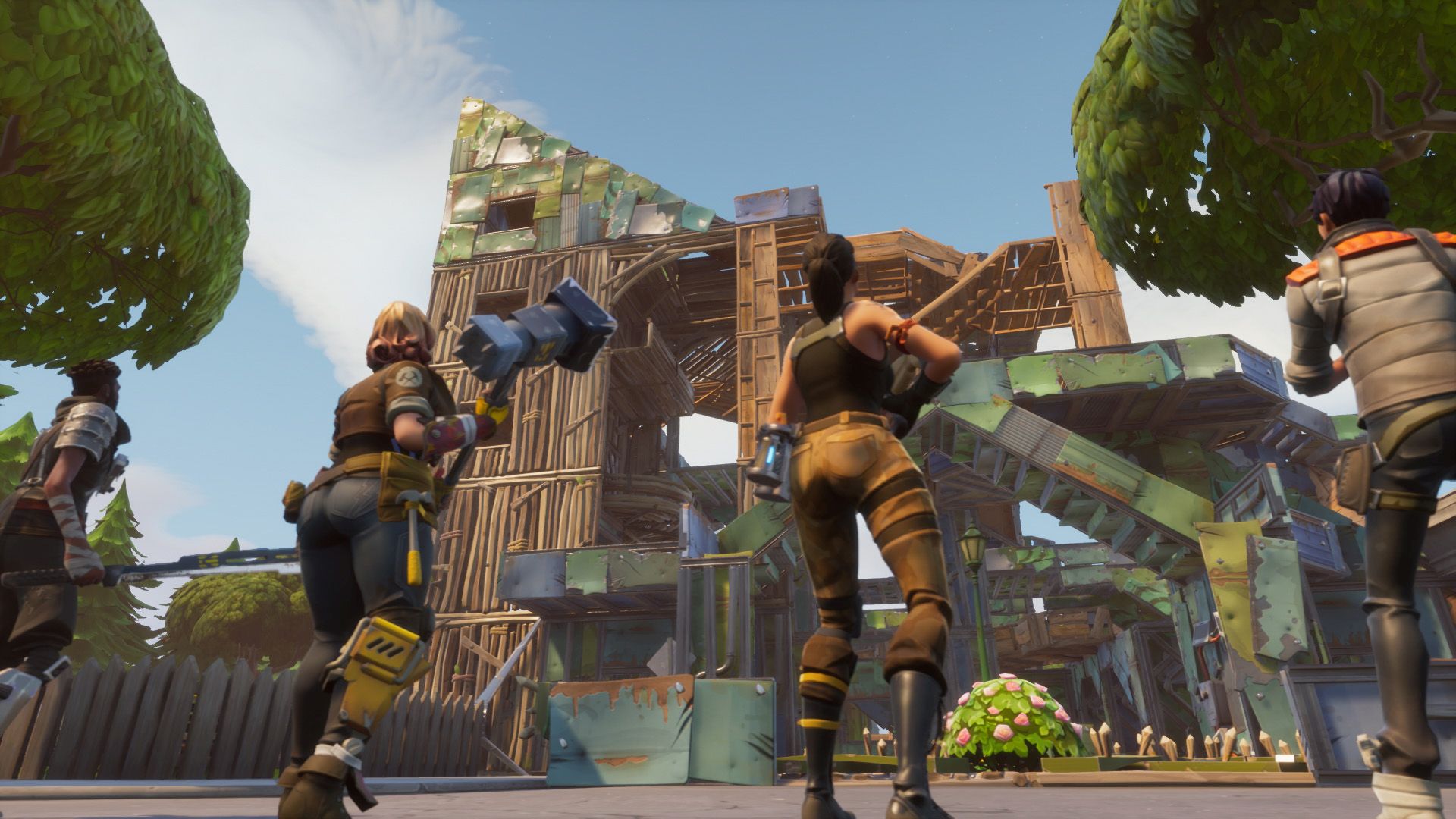
The map has a ‘main objective’, but individual players can pursue other interests through story missions or side quests rather than just completing the main objective as quickly as possible.
Generally, this approach is difficult in a game with automatic matchmaking. This also leads to tensions in Fortnite.
- One tries to build a fort, initiate the night phase as quickly as possible, defend the fort, and complete the mission: He shouts that others should help him
- The next one is stuck on an elaborate side mission, builds a fort in a completely different location and calls for help there, because it’s actually a group mission – but the group gains nothing from helping him
- The third only wants to loot and replenish resources because he wants to build more traps in his home base. He is fighting his way through
- And the fourth might be AFK and only wants to earn points while the rest does the work
Fortnite is a great game when everyone pulls together in ‘co-op’. However, the game mechanics of Fortnite do not really ensure this. This leads to conflicts and frustration. Fortnite is best when you’re out with friends.
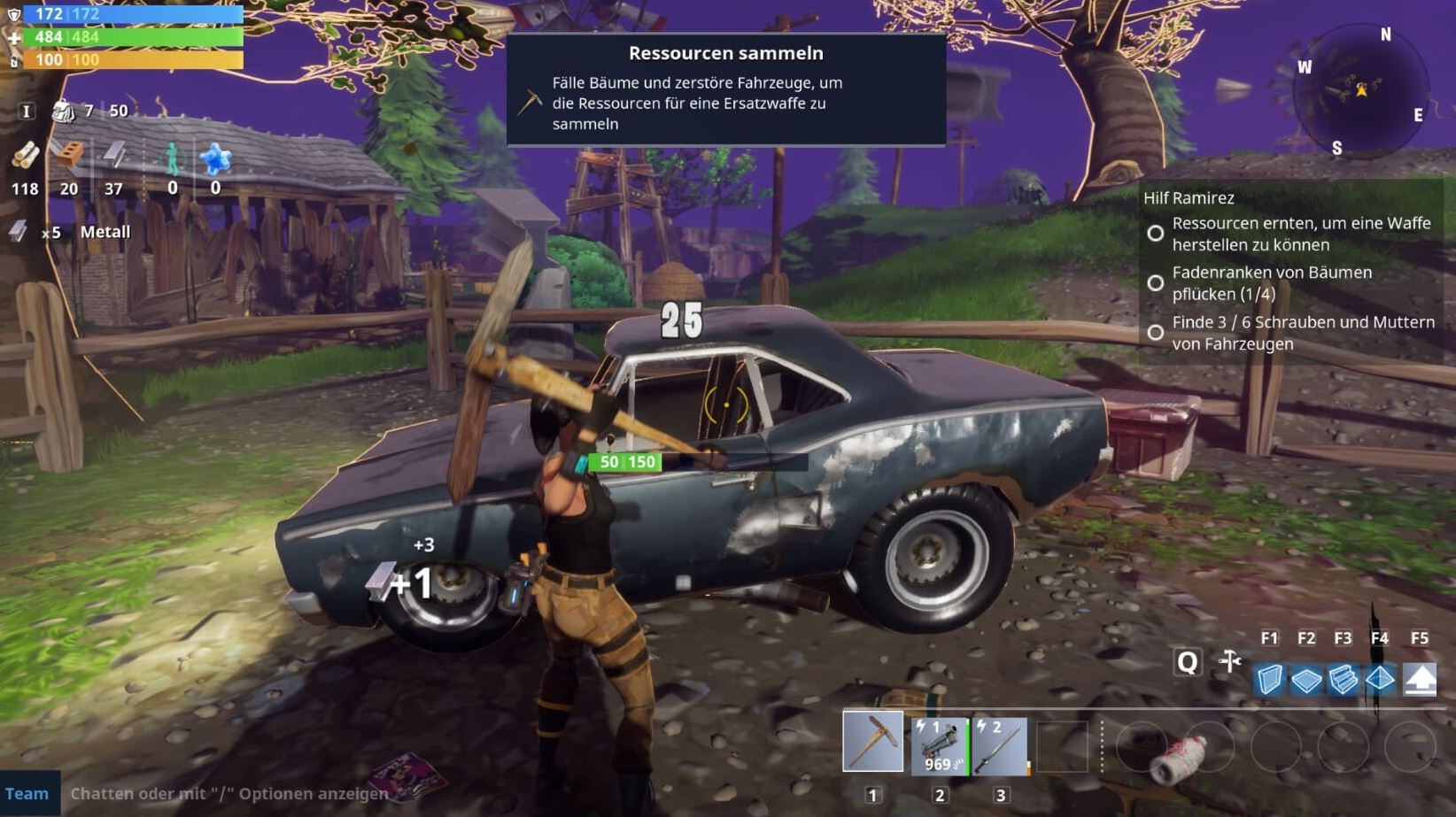
The honest fort builder is sometimes the fool
Also in the exact point accounting and in details, some things still seem poorly thought out. Although traps are great, if you need the same resources to produce ammunition, there will always be a bottleneck. Thus, the ‘cool’ traps are rarely built, and usually, only the cheap standard traps that are held together by spit and tape.
Also, it sometimes seems like you’re the honest fool when you build the foundations of the fort while the rest loots. Many only join once the fort is already built and settle into the ready-made nest.
This is reflected in the classes: while the constructor is responsible for the ‘foundation’ of group success, the explorer with ‘Oh, there it sparkles, I must go there’ is more for personal loot needs.
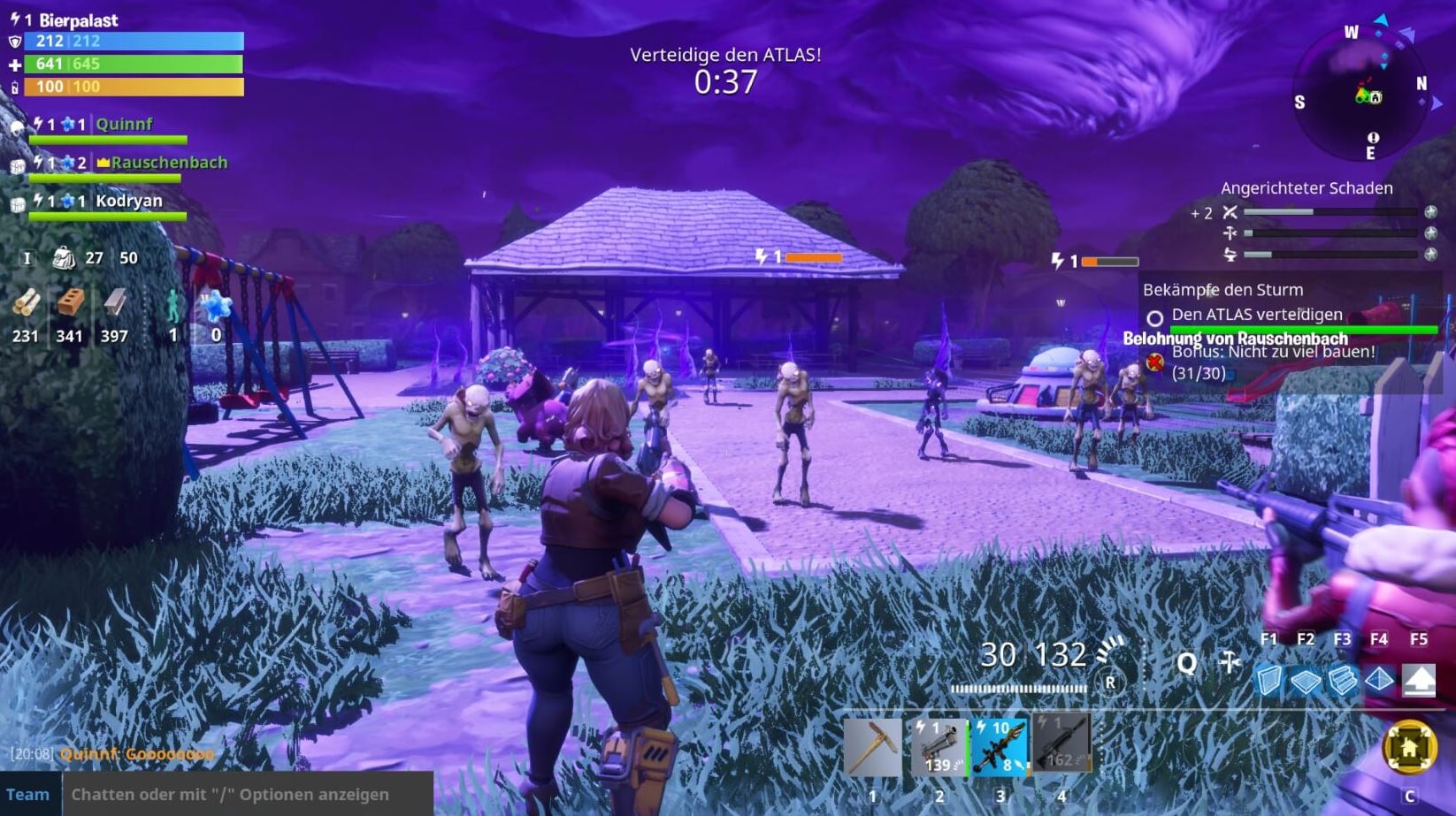
Fortnite conclusion in early access
Fortnite is still in early access. One wonders at first glance because the game is already so far advanced and the core gameplay is so wonderfully round and motivating.
But in detail, as you progress, you see that Fortnite still has some questions it needs to answer, especially in the progression system and the multiplayer aspect. Much of it is simply unfair and invites griefing.
If you can overlook the monetization, you will find a truly strong game in Fortnite, which will surely get better over time.
Despite all the annoyance over teammates and details, the basic idea of Fortnite is fantastic. The aesthetics are outstanding, and the gameplay is truly enjoyable. Fortnite is best with a group and friends; then you can have fun for hours. Then the wobble factor ‘Hopefully, I get decent teammates’ is turned off, and Fortnite is a clear recommendation.
Also, one can befriend with the progression system. Many people derive satisfaction from extracting the optimum from such complex systems, even if it ultimately only leads to minimal progress.
The monetization system with a cash shop in a title for which you are currently supposed to pay 40€: Yes, it is difficult. However, you can painstakingly earn the in-game currency through daily missions and then have to practice self-control. Progress becomes slow but steady from a certain level.
Currently, Fortnite is still in early access for which you have to pay for access. In 2018, the game will become free to play.
Note: We tested Fortnite on PC.
Also interesting: 20 beginner tips for Fortnite

Your opinion is important to us!
Do you like the article? Then let us know!