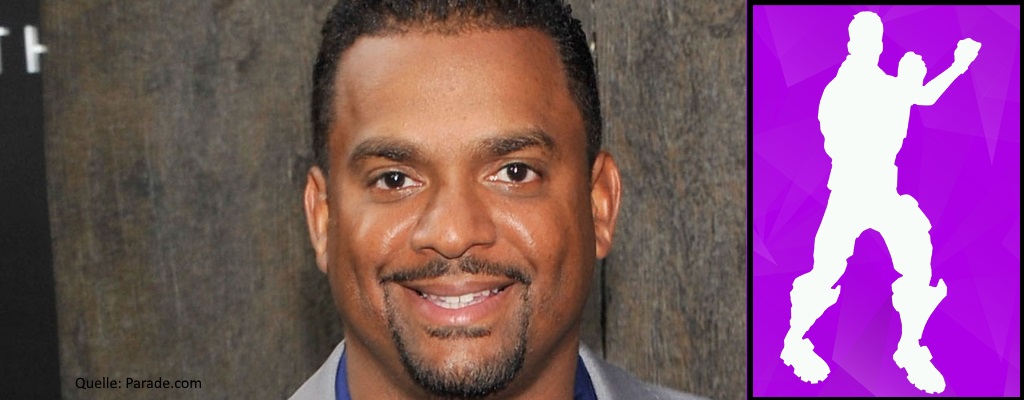
The actor Alfonso Ribeiro wanted to sue the shooter Fortnite because they had stolen his “Carlton dance” from the series “The Fresh Prince of Bel-Air.” This did not go well in an initial review.
That was the lawsuit: The actor Alfonso Ribeiro sued the companies “2K” and “Epic Games” in December.
His accusation was that they had taken his “Carlton dance” from the 90s series “Fresh Prince of Bel-Air” and incorporated it into their games NBA 2k and Fortnite.
Expert finds dance “too simple”
This is how an authority responds: To determine this, it must first be clarified whether Ribeiro actually invented the “Carlton dance” and now owns the rights to it.
The dance would therefore first need to be registered as Ribeiro’s property. This has now been addressed by a state examiner from the “US Copyright Office.”
Saskia Florence analyzed the “Carlton dance.” To do this, she broke it down into its components:
- In the first step, the dancer moves his hips from side to side while swinging his arms exaggeratedly.
- In the second dance step, the dancer takes two steps to each side while opening and closing his arms and legs.
- In the third step, the dancer’s feet remain still as he lowers one hand from above his head to chest height while spreading his fingers.
According to the examiner, these are three dance steps in a simple sequence. That is not a choreographic work that can be protected.
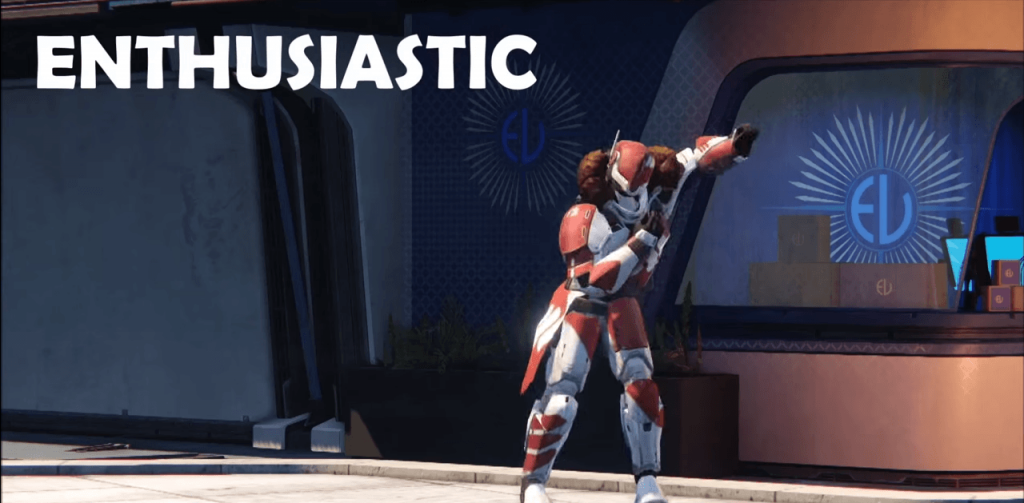
These problems arise in addition: Furthermore, it is said that it is unclear whether Ribeiro really invented the dance. After all, he claims to have developed the dance for the series “Fresh Prince of Bel-Air,” which means that it is also possible that the dance belongs to the network NBC.
Ribeiro’s appearance on “Dancing with the Stars,” where he showed the “Carlton dance,” could also cause problems. On the one hand, everything there could count as commissioned work for ABC, and on the other hand, Ribeiro performed the dance with the professional dancer, Witney Carlton: It could very well be that the professional dancer is responsible for the choreography.
Therefore, the examiner questions whether Ribeiro is really the sole creator of the dance.
This is what Epic says: In a submission to the court, Epic Games states, “No one can own a dance step.”
This is clearly evident from copyright law. Individual dance steps and simple dance sequences are not protected by copyright, but rather are building blocks of free expression and thus accessible to choreographers, dancers, and the general public for use, performance, and enjoyment.

This is the current situation: Ribeiro’s lawsuit has not yet been decided, but the chances of him or other plaintiffs having a chance in court do not look particularly good.
This is what’s behind it: Epic has been accused of stealing dances and then selling them for a high price in the game Fortnite.
The accusation was that Epic Games would mainly steal from “black artists” and deprive them of their share of the pie. The rapper BlocBoy JB accused Epic of “You love our culture but hate our color.”