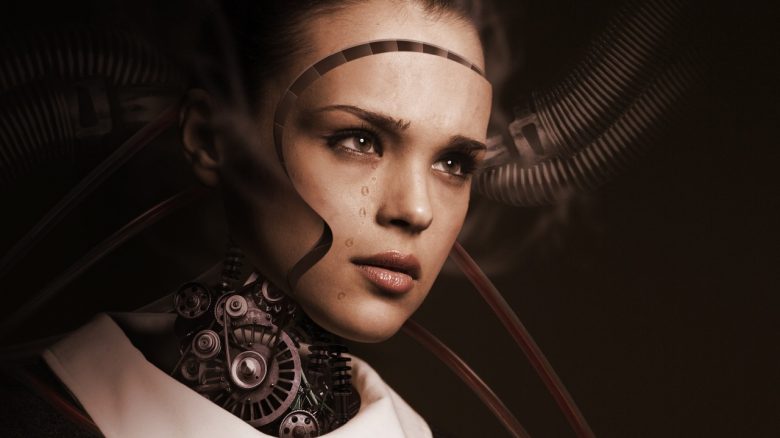
A former employee of Google, now a renowned writer and inventor, stated that he knows when humanity will achieve immortality. However, this idea may not be welcomed by everyone. In any case, his claim is quite ambitious.
Which former employee is being referred to? Ray Kurzweil worked for Google for many years. The renowned inventor and author of several books on artificial intelligence, nanotechnology, and robotics explained that we will reach the “singularity” within a few years.
Nano-robots repair the human body and prevent aging
What is singularity? For Kurzweil, singularity is the moment when artificial intelligence will surpass human intelligence.
And what does that have to do with immortality? As the former engineer explains, he envisions a future where singularity occurs in 2045 and artificial intelligence passes a valid Turing test in 2029. The Turing test is a method for determining the intelligence and thinking ability of machines.
The idea behind Kurzweil’s prediction is that once singularity is reached, the fields of genetics, nanotechnology, and robotics will be so advanced that methods for reversing aging using nanorobots will be discovered.
These tiny nanorobots would then be working in our bodies to repair deteriorated cells, thus delaying aging. The former engineer pointed out an improvement in the immune system as a result of the work of these nanorobots, which also offer resistance to diseases like cancer.
How accurate has Kurzweil been so far? His latest predictions have been more or less correct. According to colleagues from IGN.br, 86% of the 147 predictions Kurzweil is said to have made have been correct:
- In 1990, he predicted that the best chess player in the world would lose to a computer in 2000. This indeed happened in 1997 when Deep Blue defeated chess player Gary Kasparov.
- In 1999, Kurzweil stated that by 2023, a $1,000 laptop would have the computing power and storage capacity of a human brain. This has also now occurred.
Where do we currently stand with research? Nanotechnology has made some progress and is constantly developing. As early as 2016, physicists reportedly managed to create a tiny gripper arm from biological macromolecules capable of controlled picking up, moving, and setting down individual molecules.
Research has also been ongoing for some time on nanorobots that attack and eliminate cancer cells. However, these have only been tested on cell cultures and not on living humans yet.

Others are trying to solve problems in practical ways. For example, three teenagers developed a robotic hand for their classmate that is completely made from a 3D printer. You can read how this works and what the boy can now do on MeinMMO: