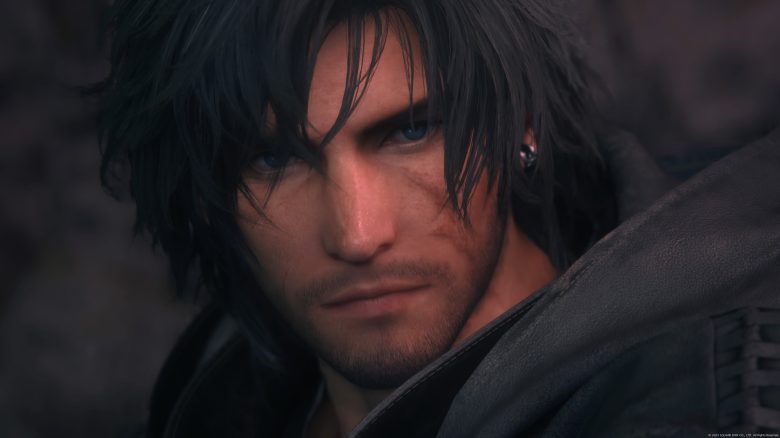
MeinMMO demon Cortyn has been completely immersed in Final Fantasy 16 for a week. Now, extensive details are revealed about how good the game really is – and who it disappoints.
As fate would have it, my vacation this year coincided with the release of Final Fantasy XVI. On opening day, I reduced my life-sustaining functions to the consumption of energy drinks and cut off all communication with the outside world to fully concentrate on the game.
After a good 70 hours of gameplay, I was “finished” and am now ready to report in detail and explain to you exactly what you have been missing if you have not yet given the game a chance.
So make yourself some tea and lean back in your chair – because I have a lot to tell. But don’t worry: I will keep spoilers to an absolute minimum without revealing important details about the story.
Final Fantasy – The great game series was in a crisis
Excluding the MMORPG, Final Fantasy was in a crisis. Even though many are starting to idealize Final Fantasy XV with the lens of nostalgia, I can still remember well what an absurd chaos the game was. Not only was it impossible to understand the story unless you had seen a movie and read accompanying comics (which were partly patched into the game later so that you could even grasp what is going on), but there were also bugs that prevented you from reaching the end of the game.
It also came to pass that Final Fantasy XV was largely just a “Boyband takes a road trip” simulator, where you spent most of the time cruising through the pretty, but rather boring game world. There were no strong female characters, emotions did not resonate, and the open-world approach had done much, but certainly not good for the game.
Indeed, Final Fantasy XV was already an attempt at salvation. The three-part story of its predecessor, Final Fantasy XIII (with XIII-2 and XIII-3), could not convince many and was so absurd and full of “anime clichés” that long-time fans completely lost their love for Final Fantasy.
Accordingly, my expectations for the next installment of the series were quite low. Thanks to the developers, I was pleasantly surprised.
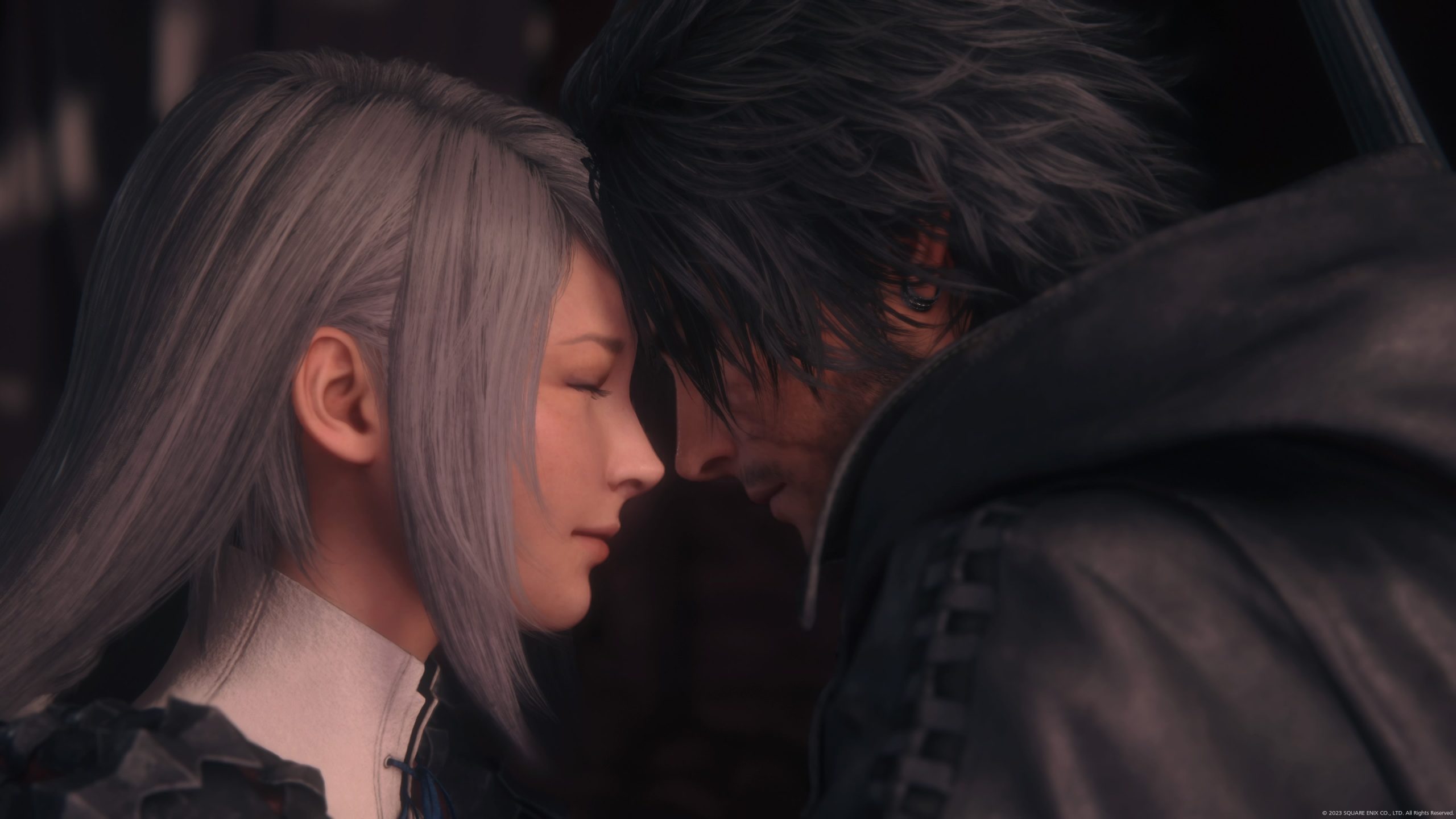
The story – A world full of magic on the brink
Let me first roughly describe the basic setting of the world.
FF16 takes place on the twin continents of “Ash” and “Storm”, which are quite close to each other. The largest monuments, which can be seen from a distance, are the so-called “Mother Crystals”. Various kingdoms, empires, or republics have developed near these Mother Crystals.
From the mines of the Mother Crystals, smaller crystals are extracted, which are then distributed throughout the realm. They allow every citizen of the world – who can afford crystals – to wield magic.
Magic is firmly rooted in the daily lives of people and has essentially been so “since forever.” It goes so far that most people would not even know how to bring a smithy fire to the necessary temperature without magical crystals.
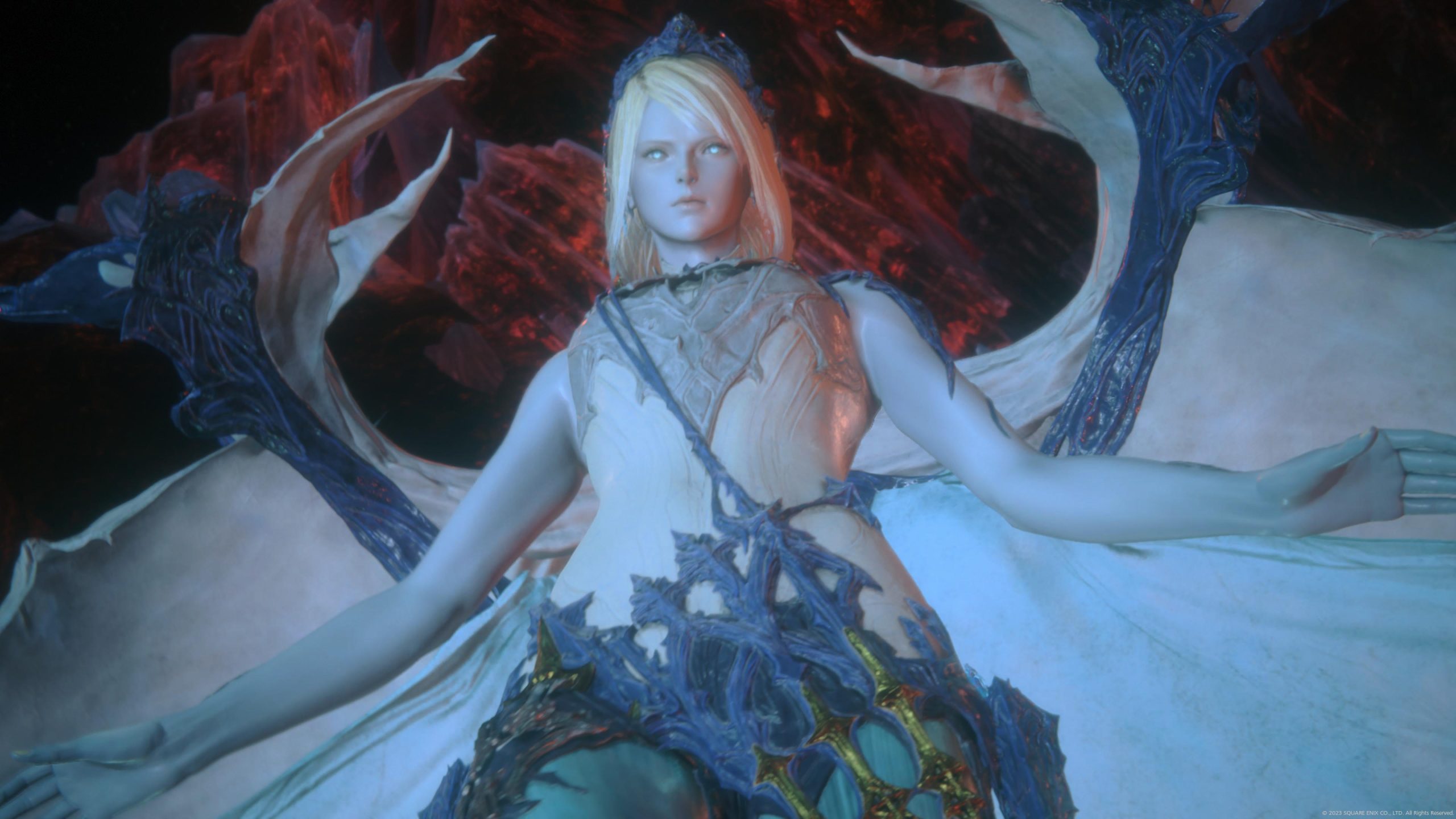
At the same time, there are the Dominants. These are fate-chosen individuals who are capable of transforming their own bodies into powerful creatures, the so-called Eikons. This transformation comes with physical and psychological issues but grants almost limitless power that ordinary people – whether with crystals or not – cannot resist.
In most cases, Eikons are not used in battles. In the world of FF16, Dominants with their Eikons are comparable to nuclear weapons. They are a means of threat and intimidation. Should one side actually use a Dominant for attack, the other side would react accordingly, leading to devastating losses for both realms. Thus, there is essentially a tacit agreement not to use Eikons.
At the same time, the Dominants with their Eikons are also a worthwhile target. If a realm succeeds, say through assassins, in killing the enemy’s Dominant in their human form before they can transform, the realm would lose its leverage and could be easily annihilated.
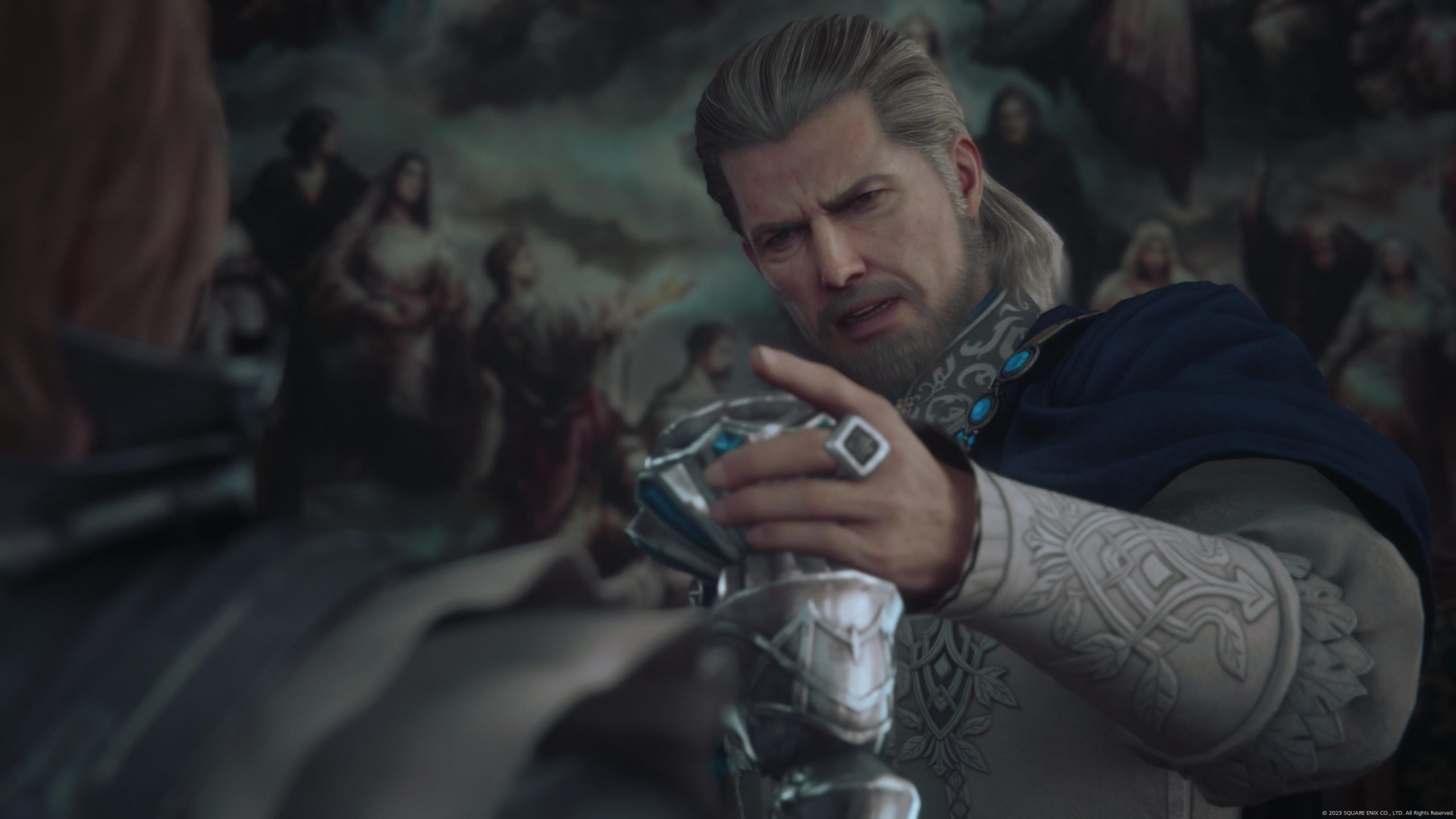
The overarching threat is the so-called “Blight.” A disease that inflicts the land and poisons once fertile areas, draining magic and shrinking living space.
The great realms thus argue over the dominion of the Mother Crystals and fertile land, with the latter becoming increasingly scarce, which drives the rulers to attacks.
In such a world, you step into the role of Clive Rosfield. The son of the Lord of the realm of Rosaria. In terms of size, Rosaria is rather insignificant, but Clive’s brother Joshua is the next Dominant of the Eikon Phoenix. Following tradition, Clive vows to protect Joshua with his life and is granted a part of the Phoenix’s power in return.
The story is told through countless dialogues and cutscenes. For over 10 hours, you simply observe, watch, and listen. The story unfolds over a span of several decades. You experience Clive in his youth, as a young adult, and several years later.
This makes Final Fantasy 16 the perfect “sofa game” where you can just be a passive viewer and enjoy the story while a friend, roommate, or family member plays.
Even without a gamepad in hand, Final Fantasy 16 creates a pull similar to that of series like “Game of Thrones.” And with that, we come to the next topic.
Oh, and before I forget: There is a German voiceover too if you don’t want to play in English or Japanese.
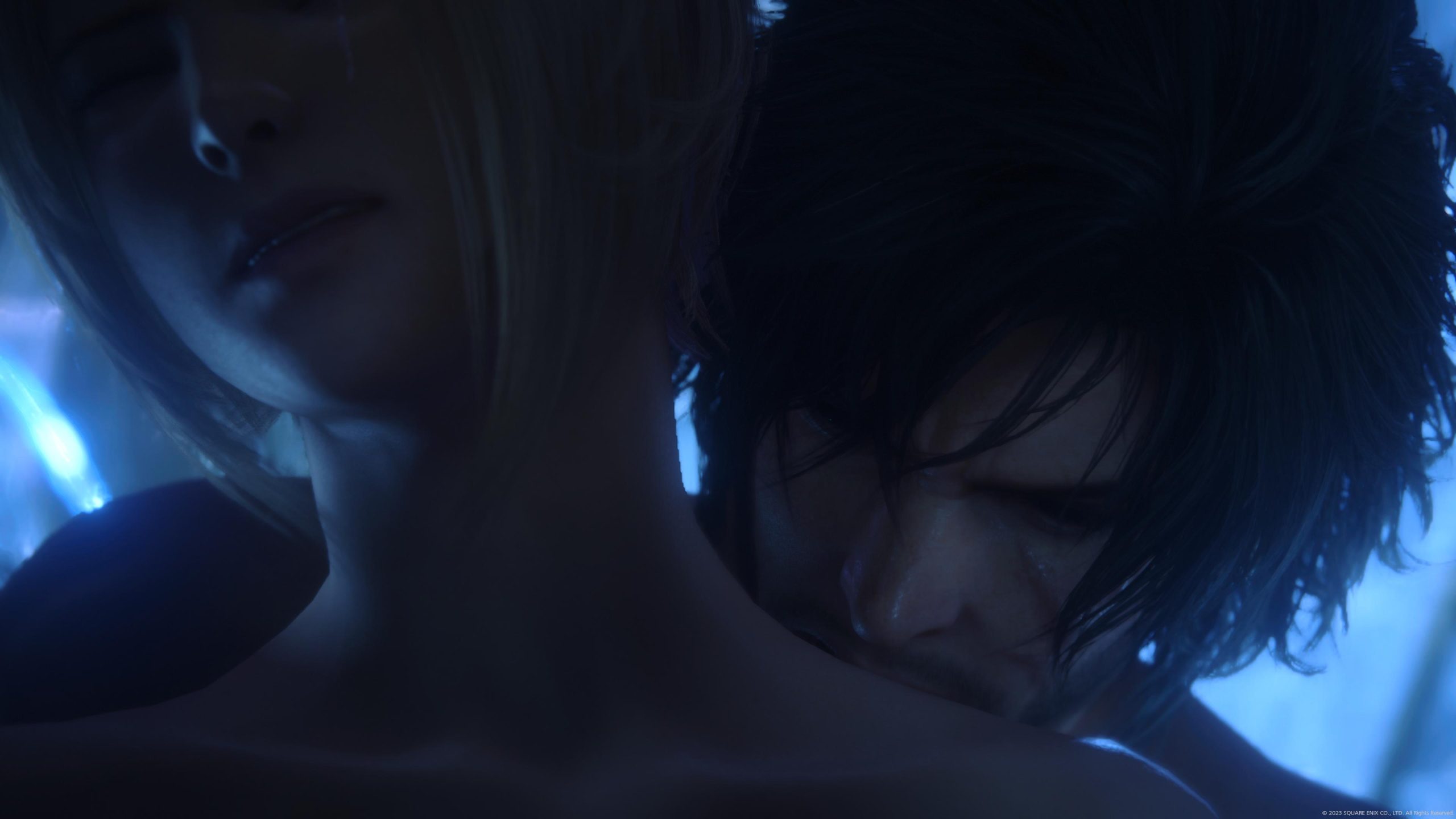
“Game of Thrones” wherever you look
I am by no means the first person to see many parallels between Final Fantasy XVI and Game of Thrones. But it’s not a huge stretch, as the developers have long confirmed that they watched the series and were heavily inspired by it to get a better feel for the interests of a Western audience.
The inspiration is most evident in the sheer number of political players that appear in the game. Half a dozen realms, each fighting for dominance and each representing different values, religions, and political structures. Truly understanding who belongs to which realm, what the goals and intentions are takes a while.
How close some characters are to their Game of Thrones inspirations can sometimes be absurdly obvious.
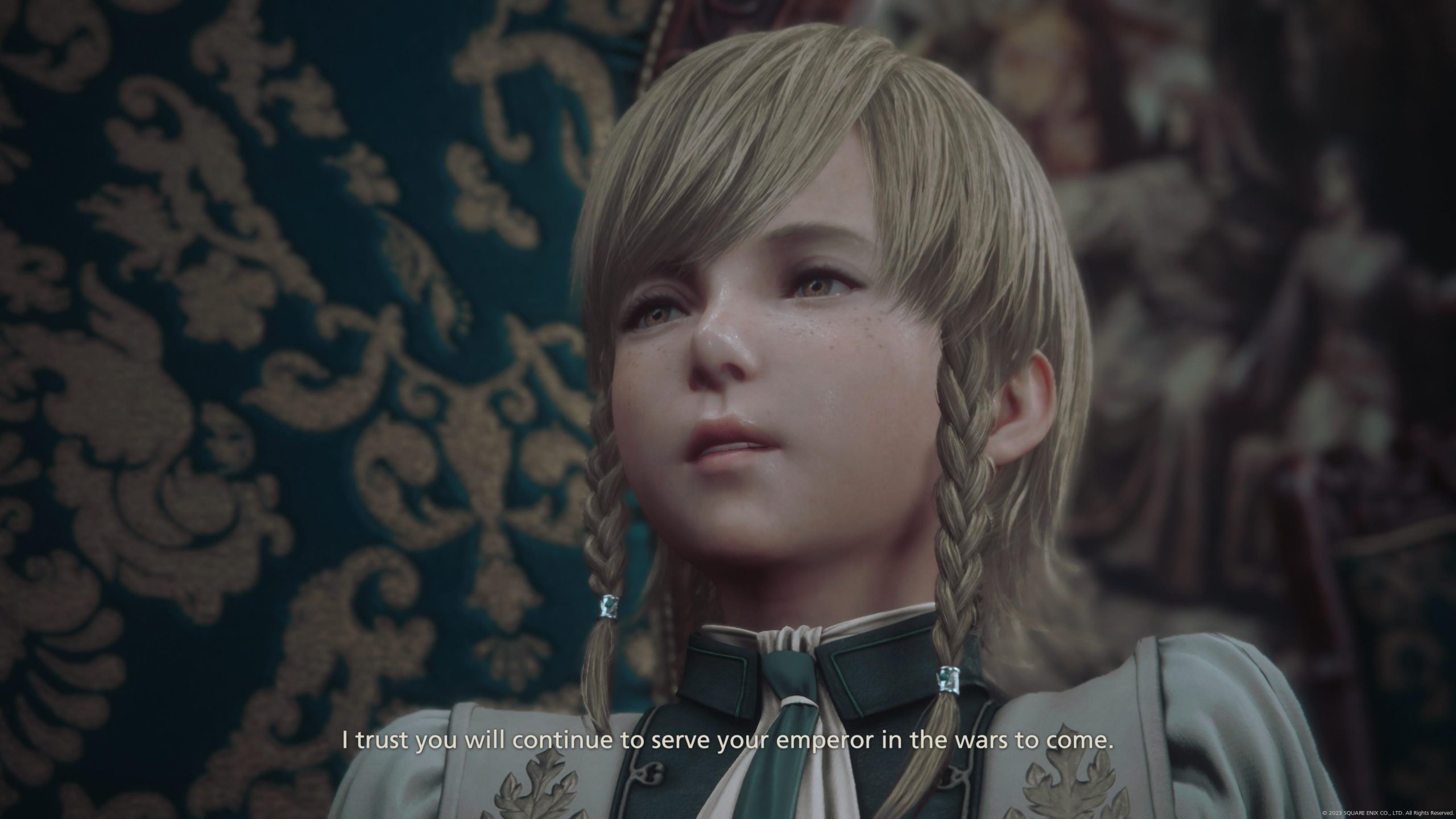
The protagonist Clive Rosfield is basically Jon Snow. Not only does he look like you took actor Kit Harrington and zapped him with a Japanization beam, but also in terms of story and character, there are countless parallels. Need some examples?
- Clive is loved by his father and brother, but his mother sees him as a bitter annoyance, a disgrace to the family.
- Clive has a dog as a companion, who turns out to be a particularly rare wolf species and follows him loyally.
- Clive must join a group that takes on particularly dangerous tasks, but is rather mocked and mistreated by the rest of the world.
But the parallels do not begin and end with Clive.
- FF16 has its very own “Hodor”. A lovable but somewhat mentally challenged giant who constantly hangs on to his “Nana”.
- Despicable children are elevated to the throne far too soon thanks to their mother and are endowed with so much power that Joffrey Baratheon could only bow in recognition.
- There are also dashing guys who are simply too flawless for this world – and, of course, the most handsomest knight is gay.
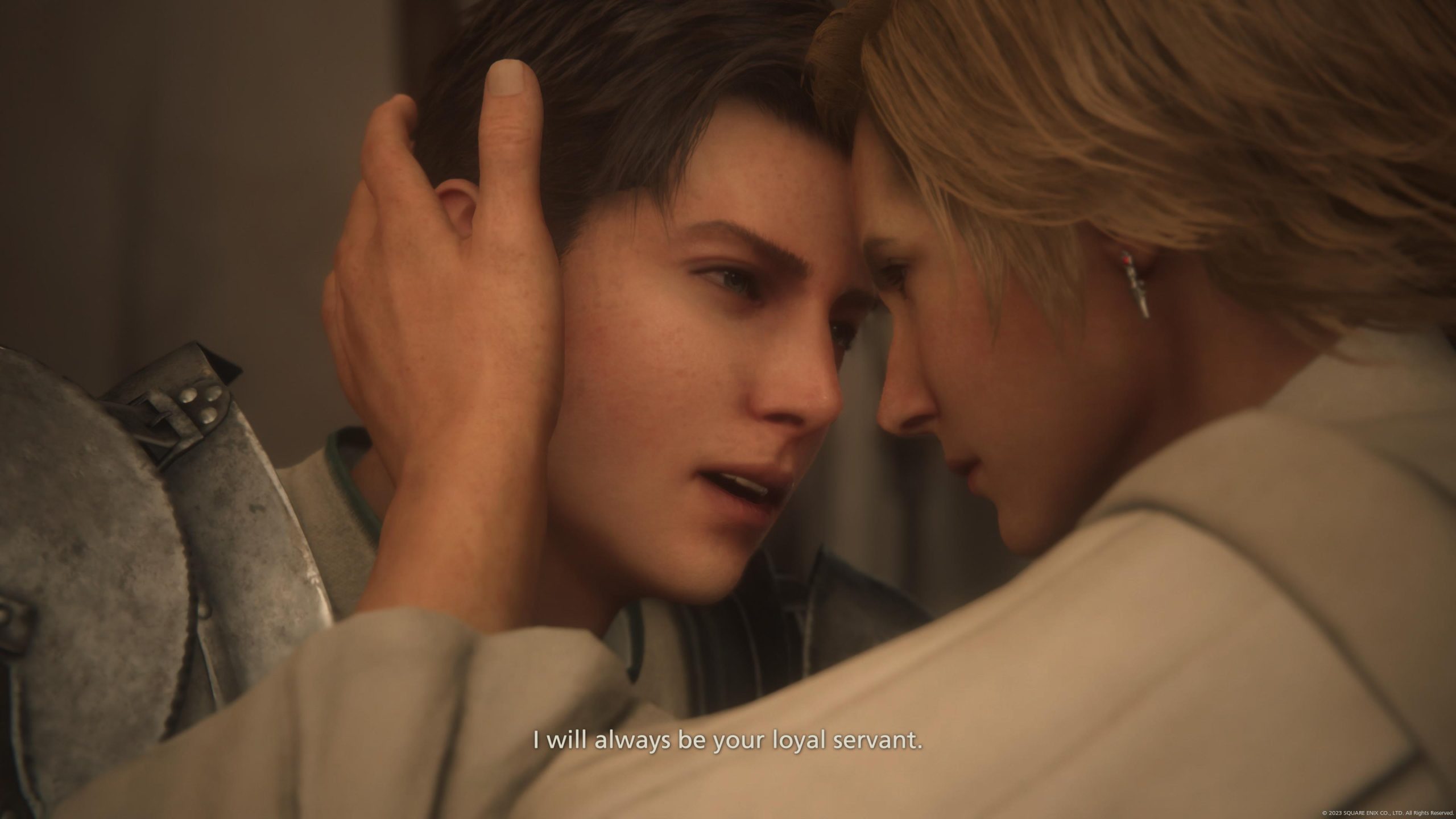
Only on incest is avoided. At least if you don’t interpret the rules too strongly.
A harsh, brutal world
To continue with parallels to Game of Thrones: Final Fantasy XVI does not do things halfway when it comes to seriousness and cruelty. While JRPGs usually avoid a realistic depiction of brutality, FF16 pulls all the stops without exaggerating. This results in a mature and not child-friendly game world.
- Blood sprays in many scenes and sticks to the characters.
- Heads, hands, and arms are severed from the body and fly across the screen in slow motion while the characters open their eyes wide in pain and shock.
- Slavery, abuse, and torture are ongoing themes.
- Rape and other sexual assaults are hinted at multiple times in the game and once even unmistakably implied.
- Prostitutes and brothels exist in almost every town, usually accompanied by witty remarks.
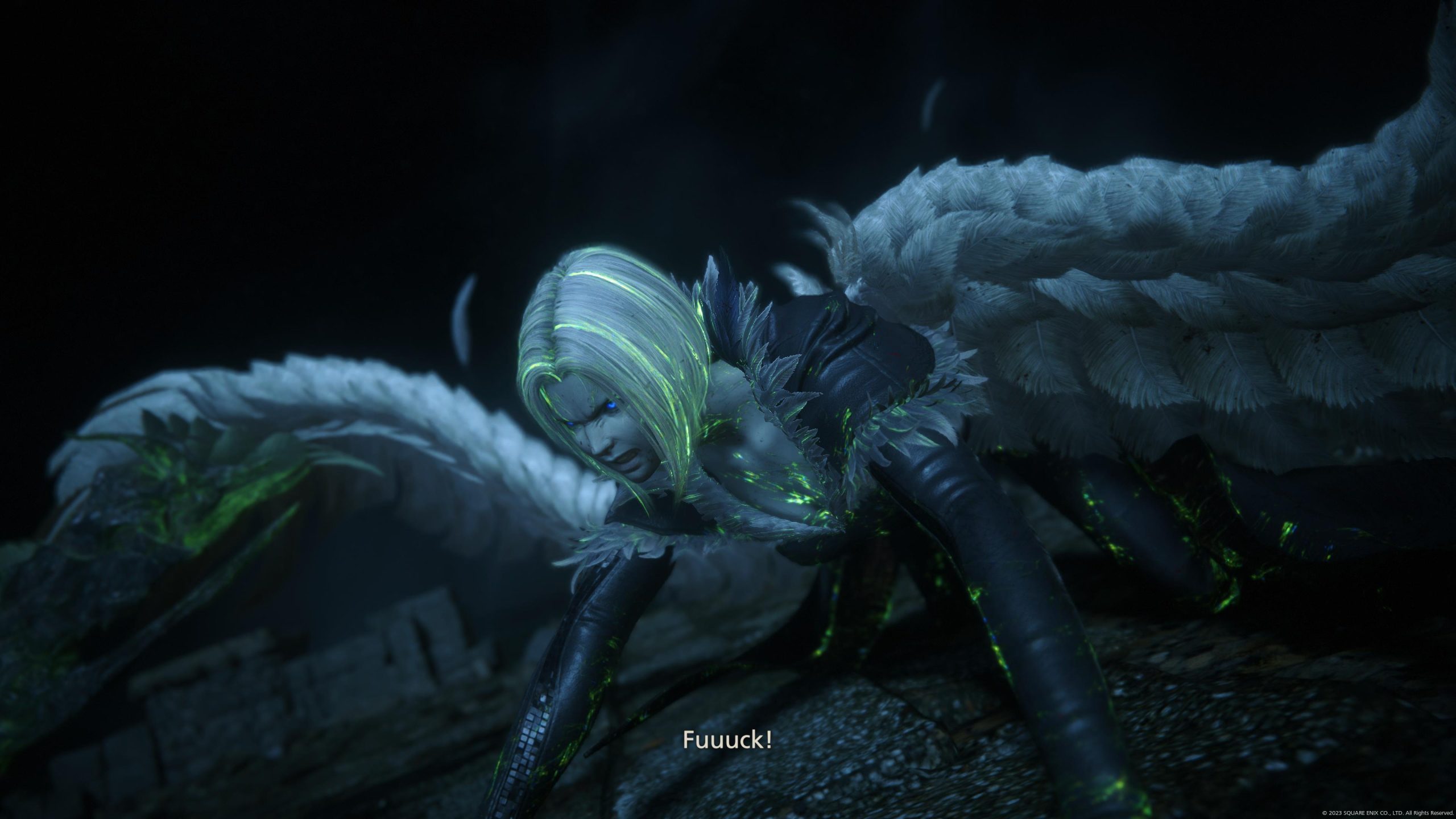
I had to smile when I heard a character loudly scream “FUCK!” in a modern Final Fantasy for the first time. Cursing and swearing occur and contribute atmospherically to the roughness of the world.
The combat system – Unconventional, but better than ever
Like many of you, I still associate Final Fantasy with a turn-based combat system. But if we are honest: We have to say goodbye to that since the series hasn’t had it for over 22 years. Since the release of Final Fantasy X, the world simply moved on.
FFXVI relies on an active action combat system, similar to what you might know from Devil May Cry or Bayonetta. This means you must closely observe your enemies and memorize their attack patterns to avoid and evade their attacks at the right moment.
Dodging or parrying is usually only necessary for tougher opponents. Because against lesser foes like individual soldiers, orcs, or goblins, you usually hold them in a “stunlock” with combos. These enemies only pose a real danger when they appear in large numbers and you dive into a larger crowd.
The approach changes significantly once you encounter tougher mid-level bosses, larger enemies, or bosses. These have not only a significantly more stable health bar but also a second gauge, namely their will (“stagger” bar). While you dodge the devastating attacks from these enemies, you use the few seconds between attacks to deplete the will gauge. Once this drops to 0, the big bad guy collapses and becomes completely defenseless for a short period of time. Combos inflict significantly increased damage during these seconds.
This creates a natural “flow” in battles, especially with larger foes. You dodge, launch only short attacks with the sword and a bit of magic from a distance until you break their will, unleashing your most powerful spells before the cycle begins anew.
Despite the action-heavy combat system, you can customize Clive quite extensively, at least after the first few hours of gameplay. He starts primarily as a melee fighter with fire attacks, but you can also opt for spells with long cooldowns, leading most fights from (seemingly) safe distances.
Different abilities also have different roles in battle. Not only is there a distinction between “single-target” and “area attack” or “melee” and “ranged combat,” but there are also different types of damage. For example, you can use the powers of the Eikon Shiva to quickly break the opponent’s will, while the abilities of Bahamut deplete health points.
However, from about 40 abilities, you can only take 12 into battle, of which 6 are freely selectable.
“Over-skill” is actually not possible. All points spent on learning abilities can be refunded for free outside of combat, allowing you to simply choose a different combination.
By the way, the action combat system also ensures that a lot of “classic” baggage does not exist. Status effects like poison, blindness, zombie, sleep, berserker, or petrification simply do not exist. So you don’t have to worry about always having 20 antidotes, 10 golden needles, and 30 echo herbs in your inventory.
Status effects exist only in two varieties and only apply to enemies, and even these occur extremely rarely. Some spellcasters put shields on allies that can only be broken by magical attacks, while others grant their colleagues a strength buff that allows them to strike more firmly. That’s it.
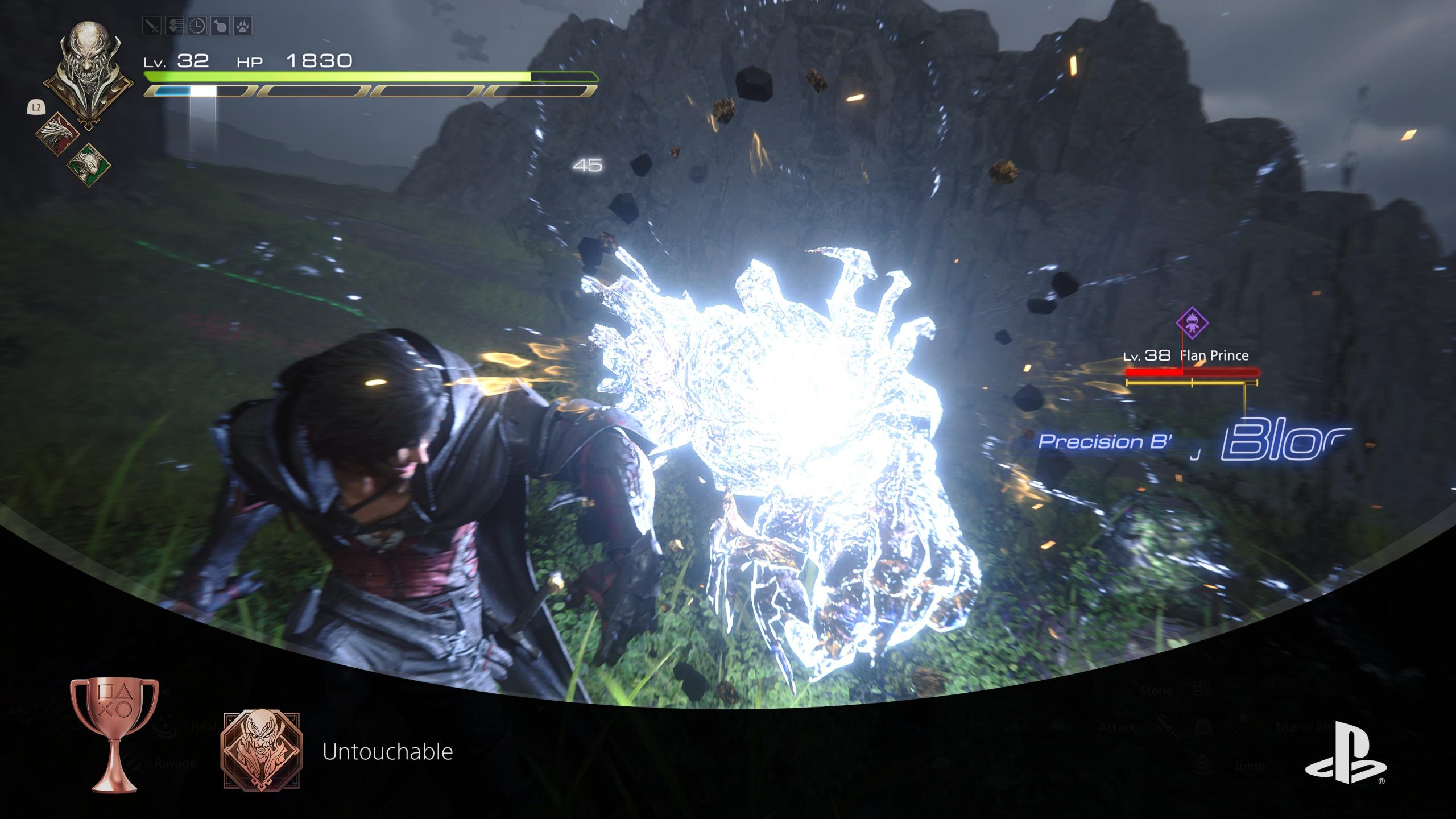
Different magic elements only exist in the story of the game. It does not matter whether you attack a fire elemental with frost or fire – both inflict the same amount of damage. There are no special affinities or vulnerabilities.
You also never have to worry about your companions. They fight and act on their own and cannot be defeated. Only your dog can receive manual commands.
In typical FF manner, there is again a “Limit Break” mode. Here, you heal slowly while your attacks do more damage, and you become harder to stun.
Healing is also a topic. Because the potions you can use per battle are limited. So you can’t keep getting hit by the boss and simply “heal through” indefinitely. That would, of course, make the game too easy.
“Easy mode” for story fans
If all this sounds too stressful, you can actually simplify the combat system to complete banality. Clive starts with 4 amulets in his inventory that activate a sort of “easy mode” for the game when worn. For example, with one chain, you can just smash the Square button and still unleash the most complex combos, which would otherwise require multiple buttons to be pressed. Another amulet ensures that time briefly freezes every time before you would take damage, giving you more time to dodge. Another piece of jewelry lets you automatically use potions when Clive’s health drops below a critical threshold.
I strongly advise against using these amulets. Firstly, to keep a shred of “gamer honor,” and secondly, because they simplify the combat system so massively that absolutely no skill is required, and no fun in the game will arise.
These simplifying amulets are okay if you only want to experience the story. But in that case, you could probably just watch the game as a spectator on the sofa while your friend or partner fights against rampaging Chocobos, pretty hot Garuda harpies, or the spoiled prince from the neighboring realm.
The best boss battles ever in a game
The spectacular highlights of the story are the boss fights, and they are staged in a way I’ve never seen before in a video game.
As a prime example, I have embedded a video of the fight against “Garuda.” This is the first “real” boss fight in the game. The video is a minor story spoiler, but it occurs very early in the game, and you basically have the knowledge from playing the demo (the fight starts at 5:13):
The music with epic choirs, the animations of the bosses, the intensity of the drama, and the cinematic presentation are unparalleled and so far unmatched for me.
Despite the usual “firework of effects” that Final Fantasy puts up with numerous spell effects, the battles are always well readable and the intentions of the bosses are recognizable.
The little flaw here is that the “Eikon versus Eikon” battles are significantly easier in terms of difficulty than the battles as Clive. This is primarily because when controlling the Eikons, you have significantly more health points and are much less likely to get caught in a combo from enemies. This is also due to the fact that the particularly devastating attacks of enemy Eikons are signaled clearly (and visually strikingly) so that it is almost an art not to dodge them.
However, the bombastic music, especially during these fights, ensures that you hold the gamepad tightly filled with adrenaline and fight tense as if you were facing off against a boss from the Dark Souls series.
The best feature for story games
No question, the story and world of Final Fantasy XVI are grand and complex. Keeping track can be difficult here, especially if you don’t “binge” play the game. If you only put in 2-3 hours on weekends, you might quickly feel overwhelmed and simply be confounded by the number of characters. Who was again the blonde femme fatale? Who was the big muscle-bound bald guy? Where did Clive know the woman who insults him all the time from?
This could be overwhelming. But it isn’t. Because during all sequences you can simply hold down the large trackpad button and access the “Active Lore” overview. Here you see all characters in the current scene and can request more information about each character. This information even updates in real-time as Clive gains new knowledge or intrigues are uncovered.
This feature works not only for characters but also for terms and locations. Have you forgotten what the holy realm of Sanbreque is? What exactly are the Dominants, and how do they differ from the bearers? Whenever specialized terms are relevant to understanding a scene, you can check these immediately.
Later on, this feature is even supplemented. In the central refuge, you have an educated political advisor. Depending on your progress, she has different lessons for you. In voiced cutscenes, she shows you on the world map what has happened in the last few days and how the realms have fared. How were the troops moved? Which leader has fallen? What is the political situation within each realm? Where is instability likely to arise?
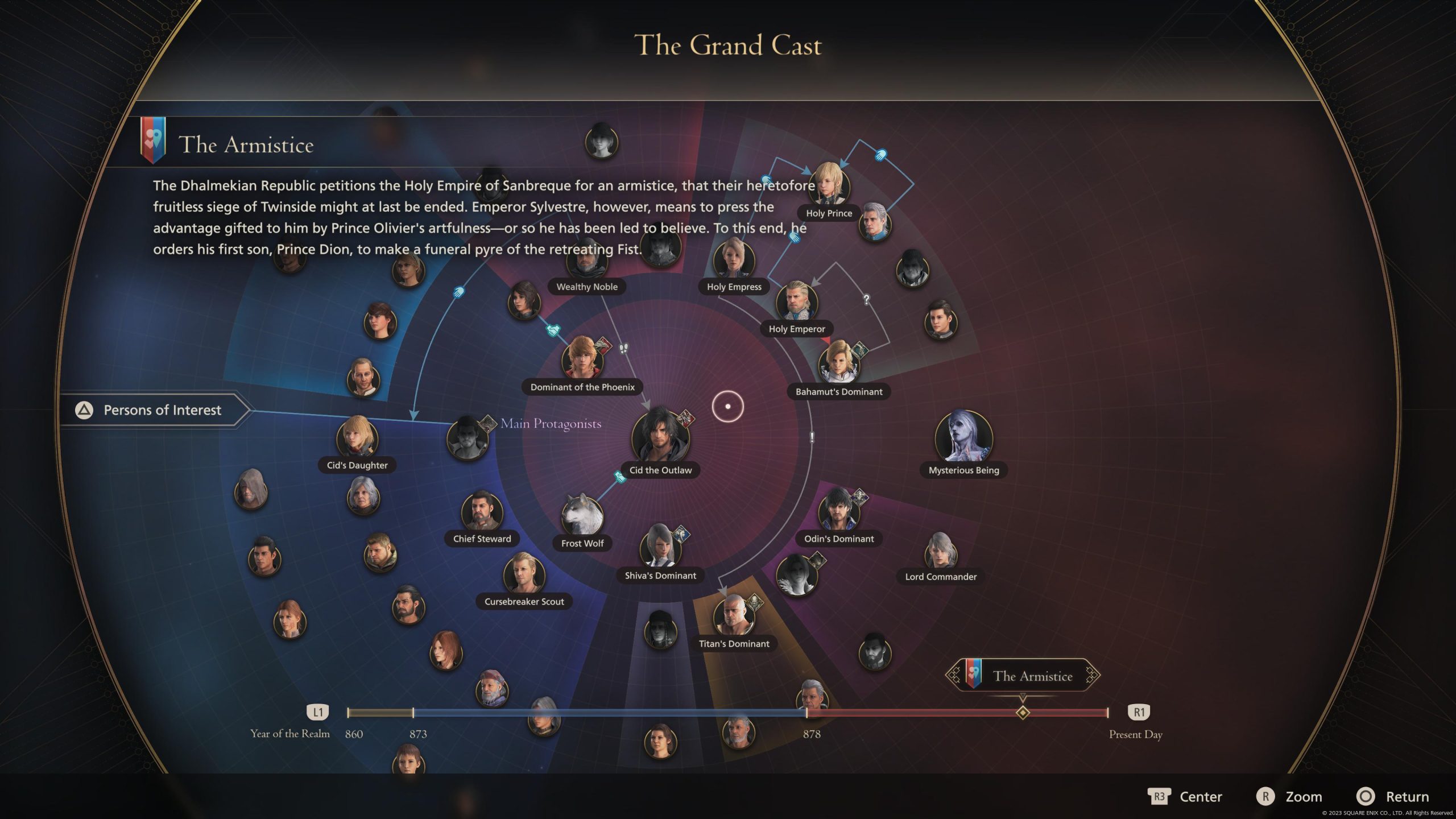
These sequences can be watched multiple times if needed, but you can also track events from the entire game up to that point. With a timeline, you can see exactly where Clive was at what time and what troop movements, plots, or political intrigues were taking place simultaneously in other locations.
I’m aware that these features exist only because the world of FFXVI is so grand and complex and that it in some ways just represents a “stopgap” solution. However, I liked this feature so much, and it should be a relief for those with less time for our beloved hobby that I will no longer want to miss in any complex story game.
If all this hasn’t been enough for you, you can also speak with a story collector in the hideout. This acts as a codex and offers even more information on various topics in the world.
Story fans who want to dive deep will find plenty to enjoy here. Everyone else can largely ignore these features.

A Final Fantasy without “Final Fantasy” bullshit?
I have read in comments time and again that Final Fantasy XVI apparently does without all the “Final Fantasy bullshit” that Japanese games often bring. By this, they mostly mean the use of a lot (melodramatic) drama, colorfully exaggerated characters, and a story that grows ever larger and more significant until it is no longer about battles between soldiers but about toppling gods or overcoming concepts like “death” or similar.
Everyone who hoped that this is not the case in Final Fantasy XVI will be disappointed.
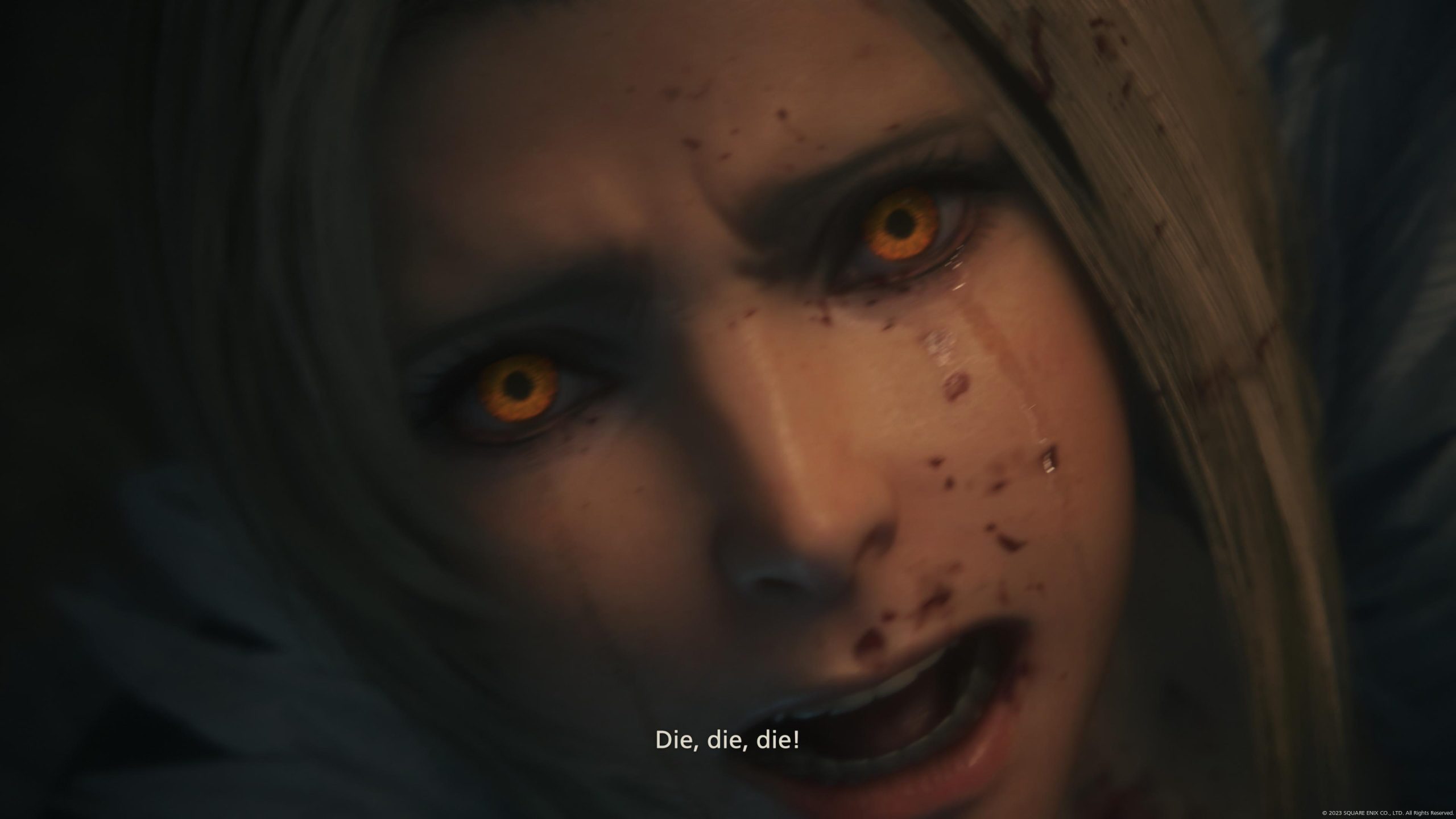
FFXVI is fundamentally a “medieval fantasy world” with plenty of magic. It forgoes high technological advancements, wacky guns, flying cars, airships, or combat mechs. The basic setting of the world is almost simple and down-to-earth.
While the land is covered with ruins that presumably belonged to a previously culturally and technologically advanced people, nothing has survived apart from the foundations.
Final Fantasy XVI avoids “tech gimmicks.” It is a world of swords and carts, simple stone or wooden houses, and chocobos as pack animals to transport heavy loads.
However, as a Western fan, you might still find it hard to roll your eyes at some things. Because of course, the dragon Bahamut not only has “Flare” and “Mega-Flare” as attacks but also “Giga-Flare” and “Zeta-Flare.” You quickly find yourself taken back to your childhood when you concocted fantasy weapons to claim the last candy bar using “superduperultraviolent flare.”
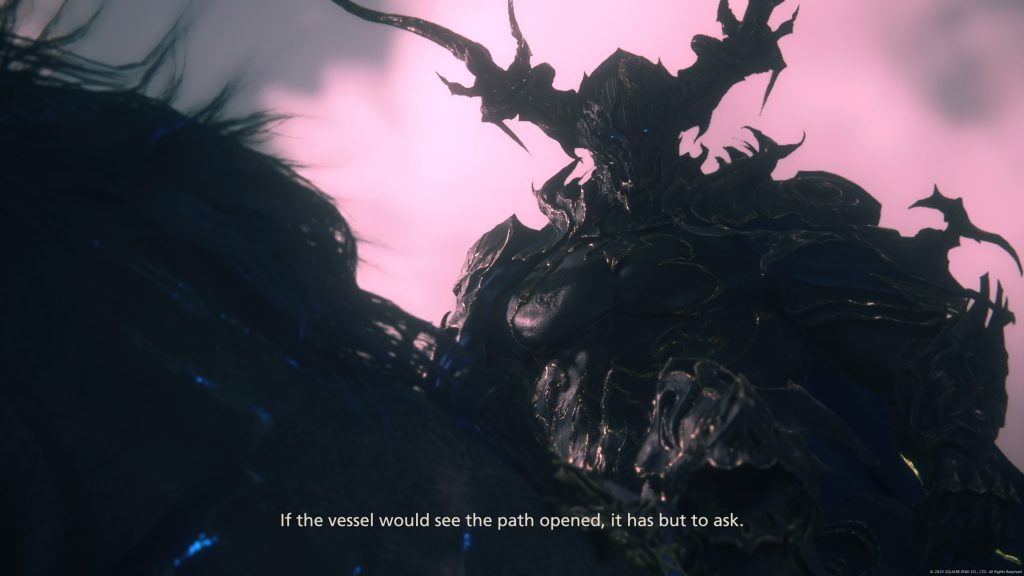
However, and I want to make this clear, FFXVI avoids something that many previous installments have done. This is a mild spoiler that you will surely forgive me: FFXVI does not suddenly pull a new threat from its sleeve at the end, which had been holding all the threads the whole time.
I am mainly thinking of titles like “Final Fantasy IX” where after battling the seemingly last boss Kuja, you suddenly had to fight against “Necron,” aka “The Eternal Darkness,” which you had never heard of before, but which was just conjured into existence with a snap of the fingers.
Final Fantasy XVI builds up its opponents and takes its time doing so. After a good half of the game, you will have a pretty solid idea of what or who the threat is that needs to be dealt with – even if the secrets are revealed gradually.
Everything that is bad
Now let’s move on to the negative things. Because there are, unfortunately, plenty.
Side missions – from grand to terrible
The game has an extensive range of side quests and most of them are really good. Even if they are not challenging gameplay-wise, they are always full of story, exciting backstories, or at least offer a nice reward. Often it is told how places develop after the major events that are not so important for Clive. Side characters gain more depth, and sometimes even new features (like chocobo riding or a larger potion inventory) are unlocked.
However, this does not apply to the first roughly 10 side missions in the game. Not only are they undemanding, but they are a sheer insult to the rest of the game. Sometimes they are not just mindless “fetch quests,” but the presentation also lags behind everything before and after.
My worst example: In one of the first side missions, you are supposed to look for wooden beams that someone evidently did not deliver in time. We set out to search and find the wood not twenty meters away. Clive “grabs” the wood with his left hand and then brings his hand to his pocket as if he were casually carrying 200 kg wooden beams in his pants. The same utterly inappropriate animation can be seen when we deliver the wood.
I want to emphasize here that these first side missions are not representative of what comes later in the game. Later missions are exciting, sometimes dramatic, sometimes romantic, and always rewarding.
But the first 10 side quests are an annoyance that should never have made it into the release version.
Crafting – nothing half-hearted or whole
The crafting in FFXVI does its job, and only just. After each major mission, we return to the blacksmith and have a new sword made, which usually has 5 or 10 more attack power. Almost every time, there is also a new belt that provides a bit more defense and a touch more health points.
That’s basically it. Crafting improves Clive, and the necessary resources are thrown at you in battles or side quests, but apart from a somewhat cool side quest line involving the blacksmith, crafting isn’t worth mentioning.
RPG elements like further attributes or special effects are missing. It feels a bit like the developers themselves did not know where they wanted to go with this feature. Because as it is, the equipment could simply have been distributed as drops from bosses.
The limits of the PS5 are being reached
Another rumor that can commonly be heard is that Final Fantasy drives the PlayStation 5 to overheat. At least, I cannot confirm that, even though I played the game in “beautiful” settings for 12 hours or more straight. I never had a console failure.
What is true, however, is that the PS5 is pushed to its limits and the framerate occasionally drops. Not only does it drop below the 60-fps threshold, but in the worst cases even falls below 30 fps.
In battles and most areas of the game, this was not bothersome. However, this could also be the reason why the developers decided to slow down time a bit during the huge Eikon battles when hits are made so that the framerate drop isn’t so noticeable amid all the particle effects.
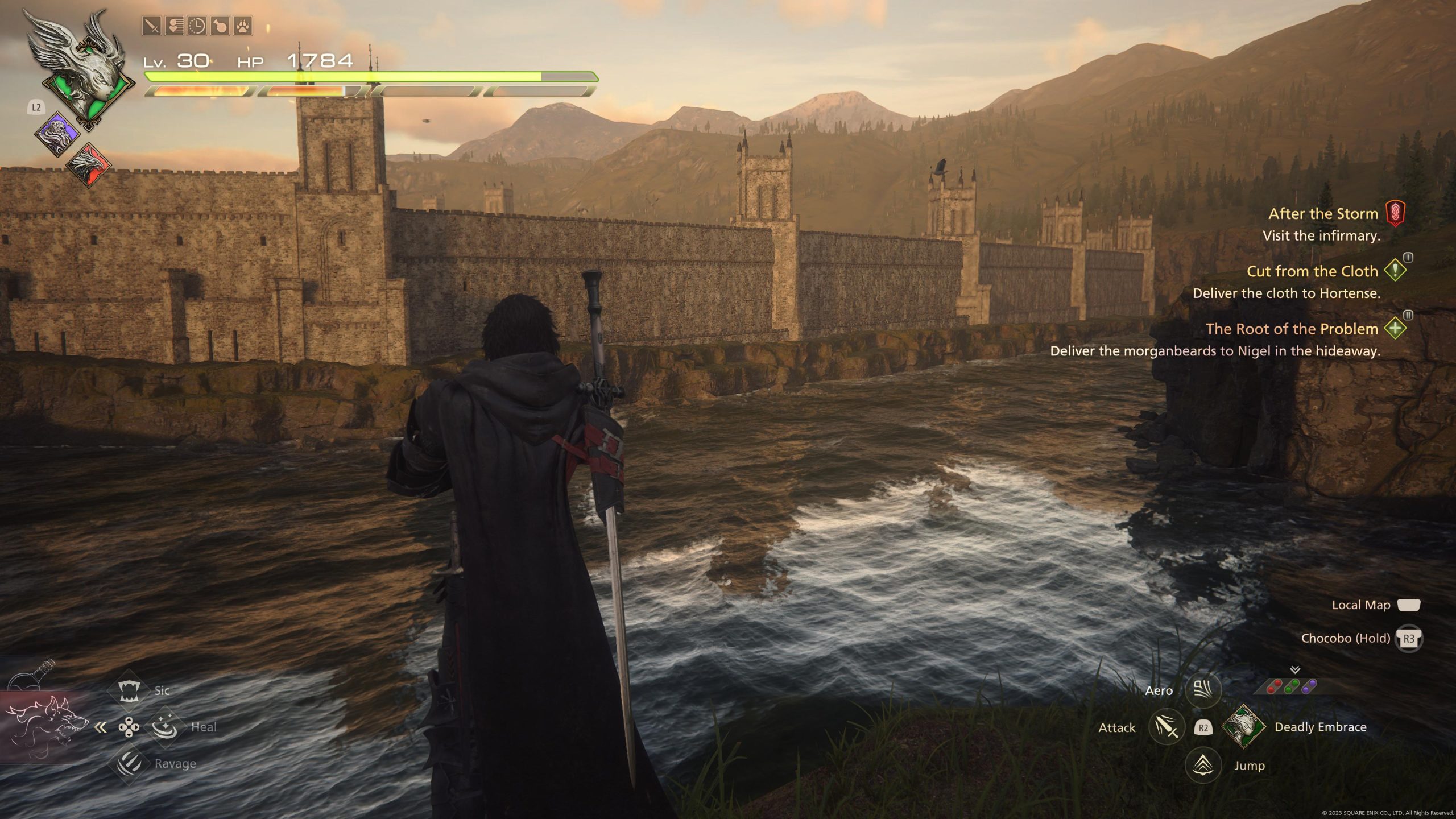
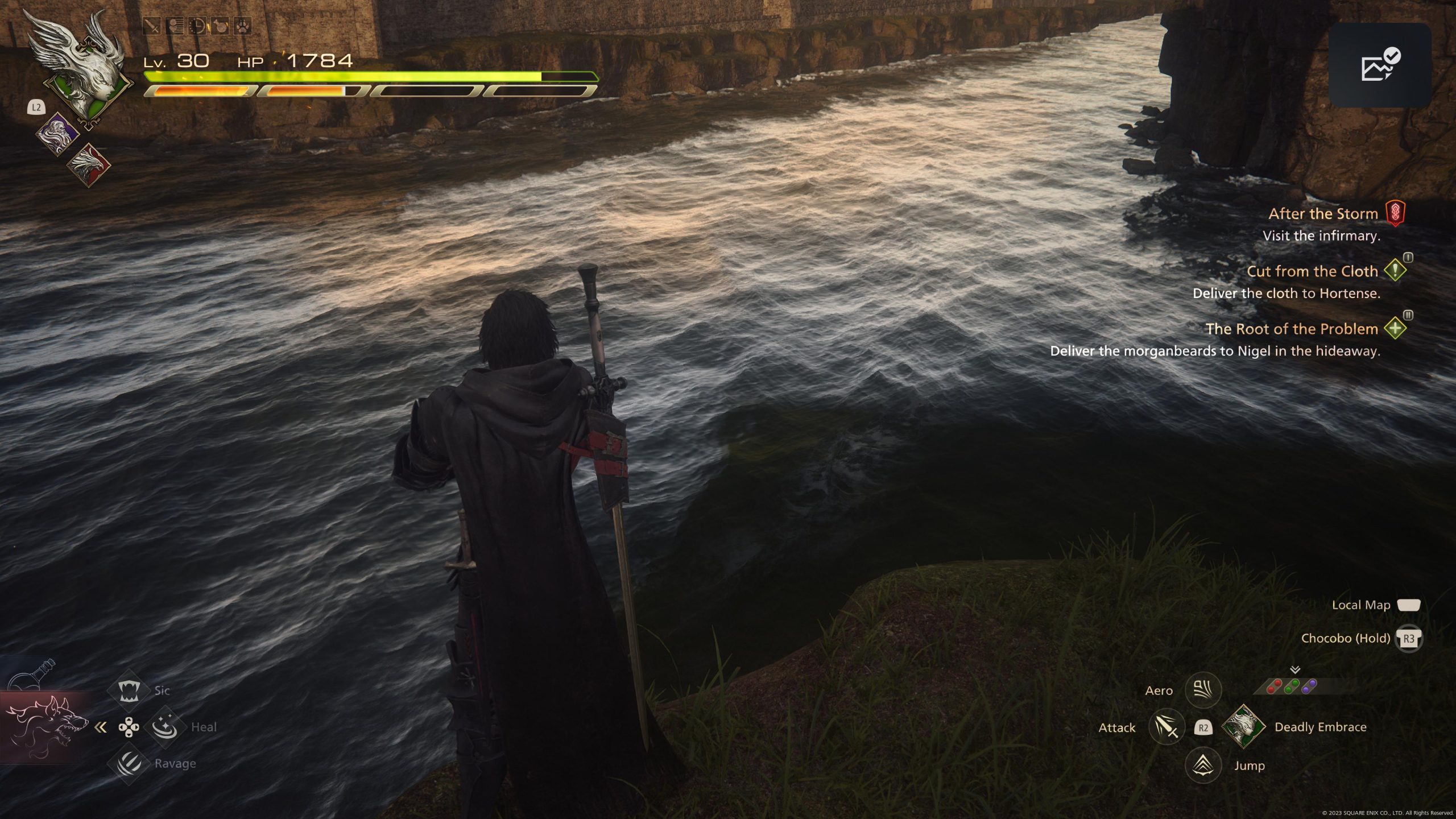
That the PS5 cannot always perform as the developers imagined is also shown elsewhere. For instance, reflections on water only show objects that are visible in the frame. To illustrate:
If we look at a water surface behind which a wall with towers rises, we see the reflection of the towers and walls in the water. If we lower the camera a bit so that the wall is “cut off” and no longer fully visible on the screen, then the reflection on the water also disappears – even though the towers shouldn’t just have “vanished”.
Lack of diversity
For many, this is certainly a minor point, but it stood out negatively to me. Although FF16 has a huge portfolio of characters, the diversity is comparatively low. It is somewhat striking that all important characters have a rather Caucasian-European look.
This wouldn’t be a problem in itself if you didn’t see NPCs – for instance, in desert regions – indicating that there are also quite dark-skinned characters. It becomes “difficult” especially when you learn that one of the Dominants actually comes from precisely that desert tribe with darker skin – yet he appears as the only one rather light-skinned.
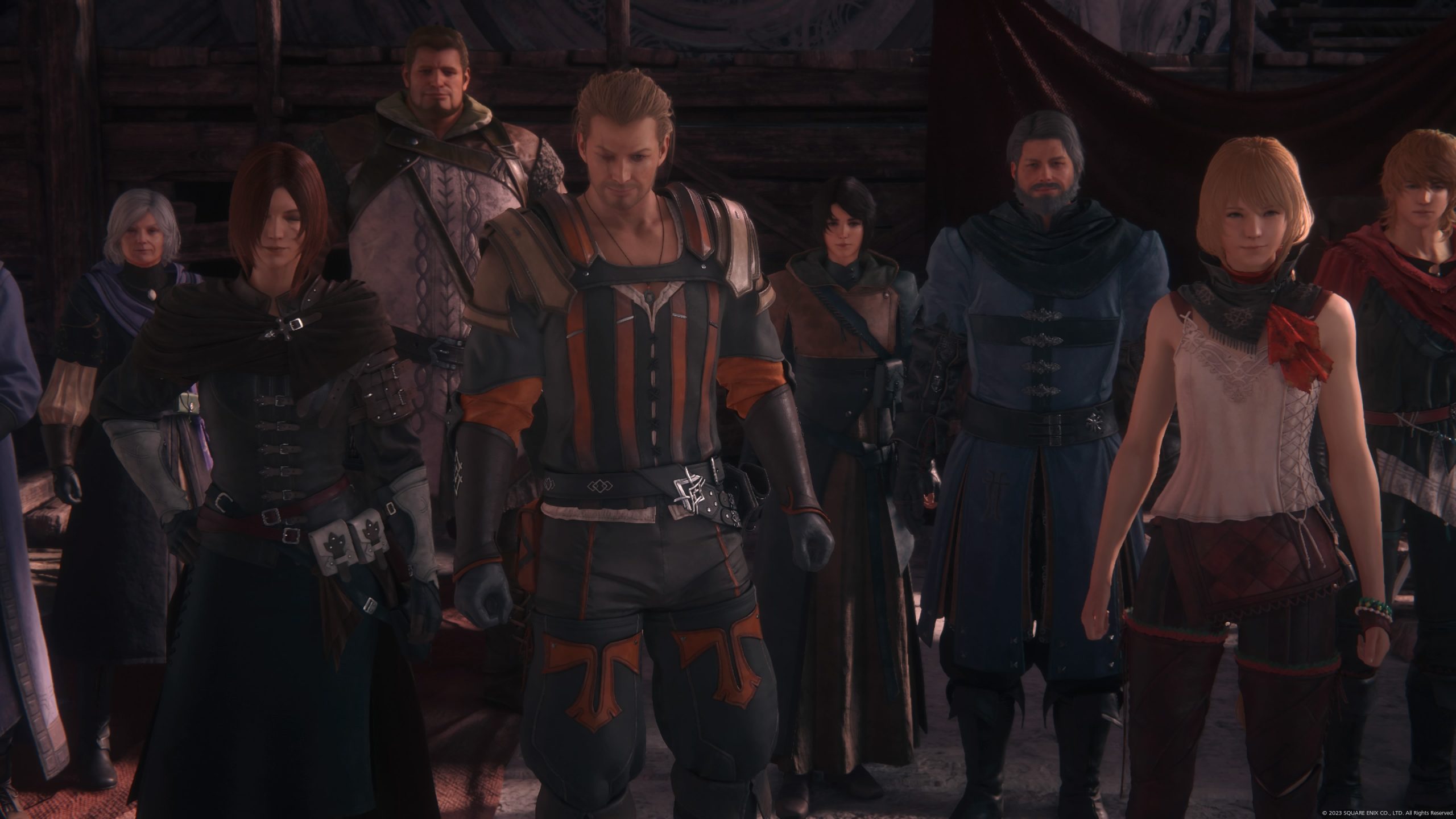
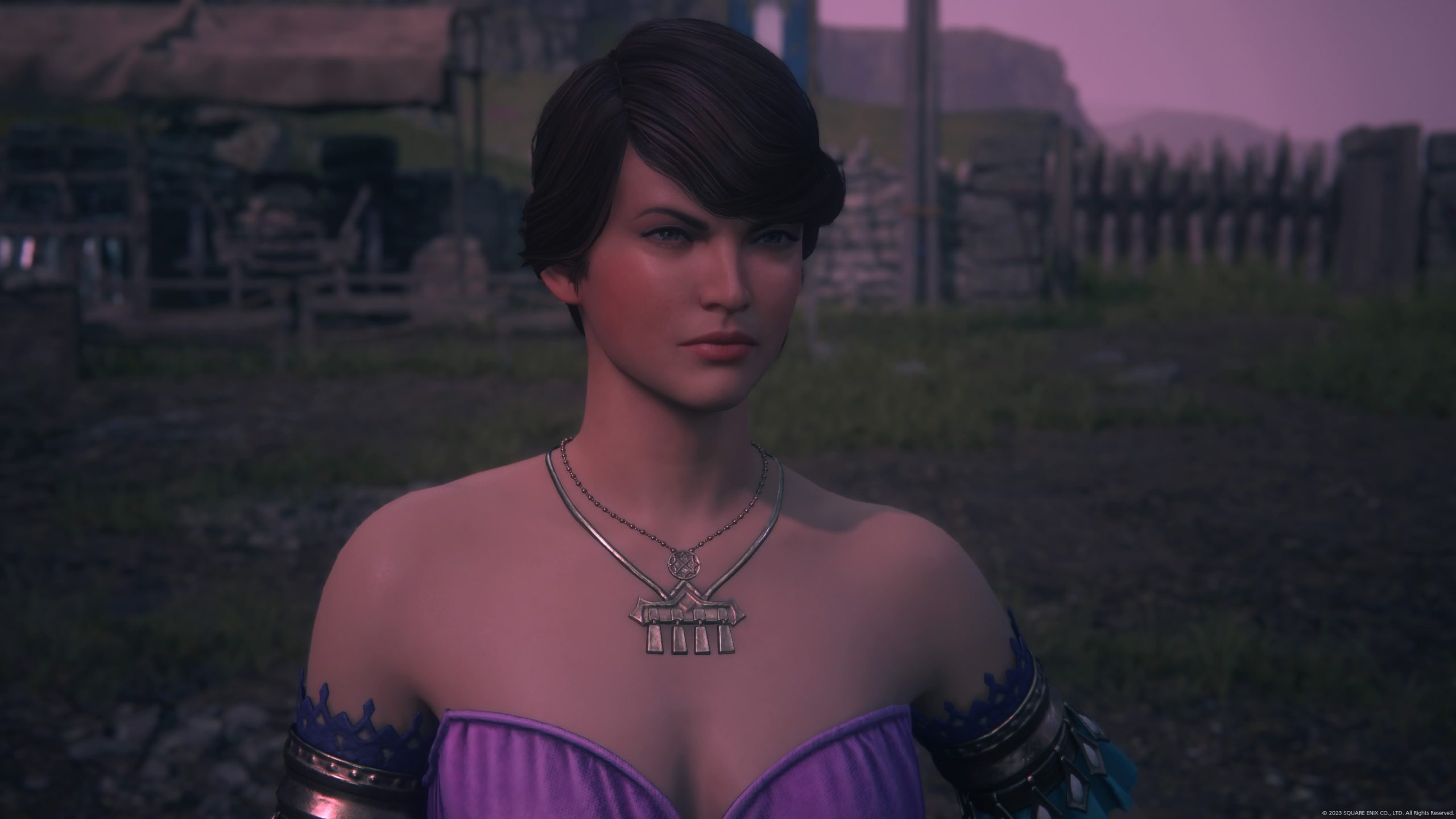
Moreover, female roles, in general, fare poorly. While I absolutely love Jill and find her particularly strong, that’s as far as it goes. This is partly because the other female (main) characters conform to the most extreme clichés we know from fantasy settings:
- There is the hot femme fatale who jumps into bed with every king and strong man to manipulate the fate of the world through seduction.
- On the other hand, there is the cool ruler who wants to achieve her goals through intrigue, lies, and assassination attempts.
- The only truly assertive woman in a city is, of course, the brothel owner who “knows how the Chocobo runs.”
We have seen all this too often to not find it trite.
Fairness be said that this lack of diversity is only noticed when you really take a moment to stop and think about it. During gameplay, you are consistently well entertained and invested – even if some characters align too strongly with archetypal clichés.
You can read another opinion on Final Fantasy from our author Marie Friske:
Conclusion: A Final Fantasy with weaknesses that disappear behind the strengths
Now let’s get to the final point. Is it worth buying Final Fantasy XVI? Can a game with so many weaknesses really be good? Did the developers do enough right to make the game likable?
The answer to this is a clear “yes” three times. All my criticisms, all the little flaws I noticed, weigh little. They prevent Final Fantasy XVI from being labeled as a “perfect” game. But at the same time, all those negative aspects are so minor, so insignificant when considering the overall work.
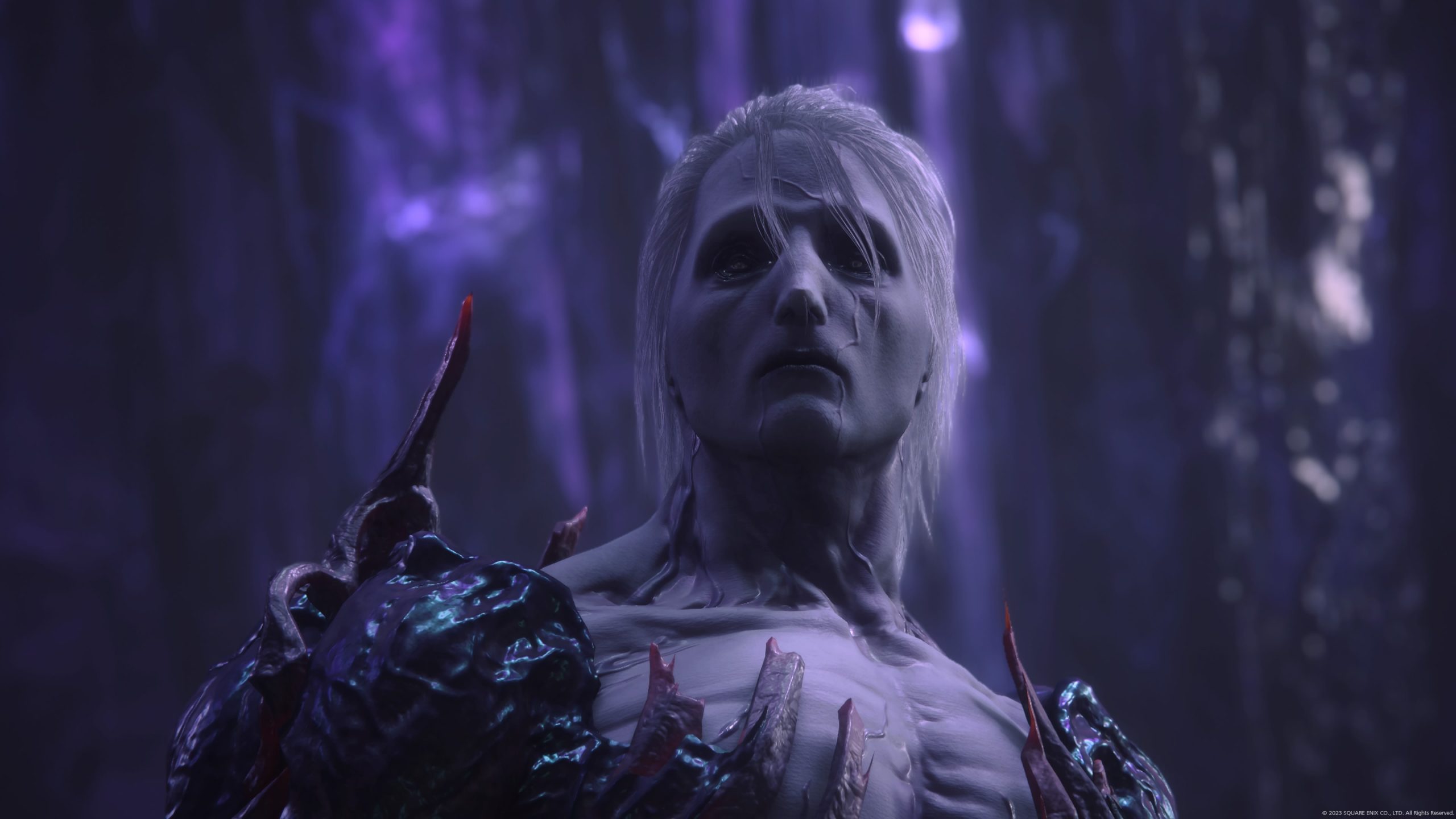
Final Fantasy XVI is a spectacular fantasy epic with hard-hitting, adult themes, lovingly crafted, and mostly multifaceted characters. In my 70 hours of gameplay, I never wanted to stop. I always wanted to know how the story continues. I was always looking for the next battle because the combat system is addictive. If I had bought a PS5 just for Final Fantasy XVI, I wouldn’t have regretted it.
I am not entirely neutral here. I can’t be because I have just experienced a fantastic game. A game where I repeatedly had tears of joy in my eyes because I was glad to have been able to experience it.
Perhaps Final Fantasy 16 is not “your Final Fantasy”.
Perhaps Final Fantasy 16 is “far from what makes a Final Fantasy a Final Fantasy”.
Perhaps Final Fantasy 16 does not reach “all the fans who made the franchise great”.
But Final Fantasy 16 is the best Final Fantasy in over 20 years.