


This formation is suitable for: Players who want to exert a lot of control in midfield and want to attack with many players.

The offensive formation: 4-3-3 (2)
The coach says: This formation is used when you are not getting through as hoped. “I want to put a lot of pressure with this formation,” he explains.
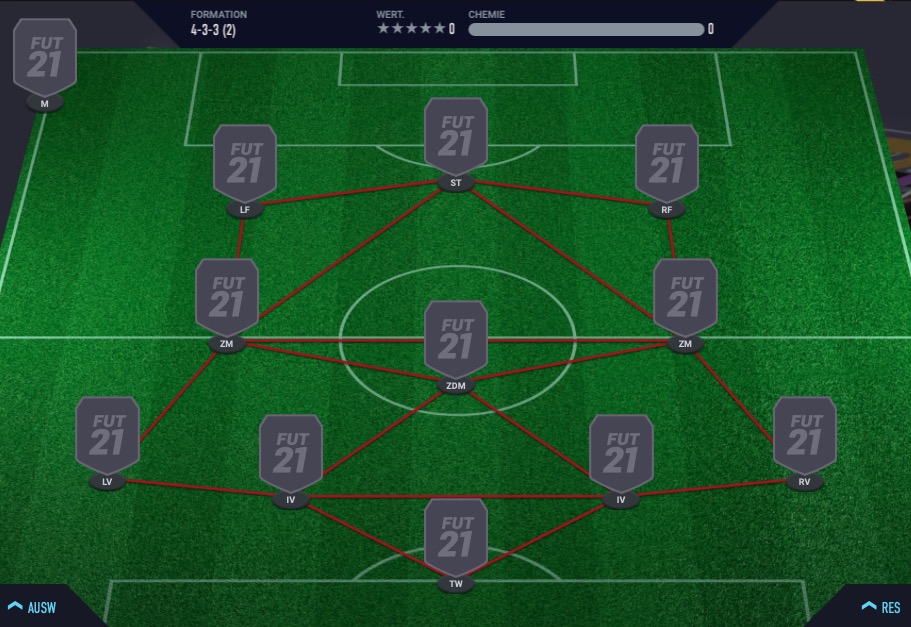
It is somewhat riskier than the 4-5-1, as it controls the midfield less, but switches from defense to offense depending on the situation, much like in basketball – and vice versa. Essentially, all players attack – except for the four defenders. Here, the full-backs are also programmed to “stay back”.
The attacking midfielders orient themselves forward, while the wingers cut into the middle. A fast player you can send helps in the offense. “This is a good formation if you feel comfortable with possession. ”
The tactics:
- Defensive style: Pressing after losing the ball, 5 Width, 5 Depth
- Offensive style: Long ball, 5 Width, 6 Players in the Box
- Set Pieces: Corner Kicks 4 Bars, Free Kicks 4 Bars
This formation is suitable for: Players who need less control in midfield and want to switch quickly between defense and attack.

The defensive formation: 5-3-2
The coach says: “I use this formation when I am leading and notice that it is getting close,” says Arslan: “It looks unconventional, but has a lot of width and can make the midfield run.”
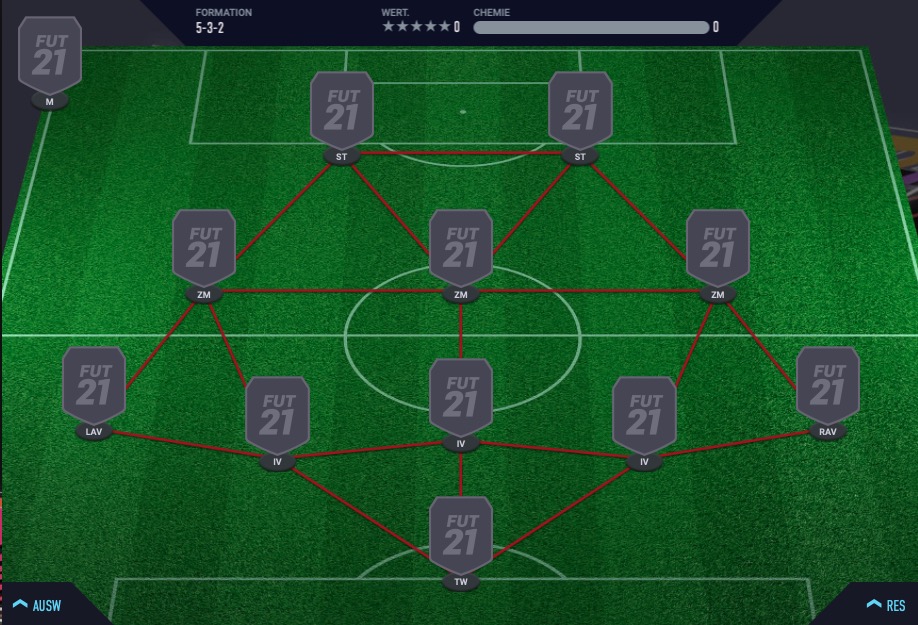
While a strong back five blocks at the back, the wingers continue to pose a threat: “The players on the left and right flanks need to have a lot of pace because we are closing up at the back and only have two midfielders.” The tactic “quick build-up” comes into play to get back into the attacking third quickly after winning the ball: “This is a formation for the last 10 minutes of the game.”
The tactics:
- Defensive style: Drop back, 5 Width, 3 Depth
- Offensive style: Quick build-up, 5 Width, 3 Players in the Box
- Set Pieces: Corner Kicks 1 Bar, Free Kicks 1 Bar
This formation is suitable for: Players who want a nearly impenetrable defense and only want to make occasional quick attacks to score hits.

The hammer: 3-4-2-1
The coach says: “This tactic comes into play when I really don’t know what else to do,” says Arslan. It is simply meant to get the ball forward somehow – and then into the opponent’s net.
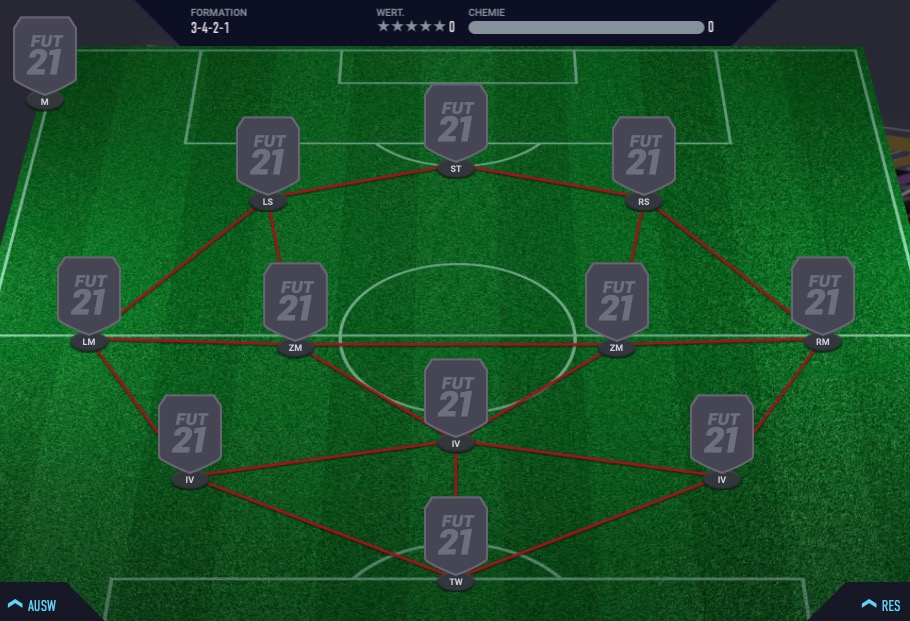
But pushing forward with all your might can also work: “We figured it out in the virtual Bundesliga, and it has sometimes really saved us.” The goal is clear: win the ball from the opponent, get it forward, and score a goal.
The tactics:
- Defensive style: Constant pressure, 5 Width, 7 Depth
- Offensive style: Long ball, 5 Width, 7 Players in the Box
- Set Pieces: 5 Corners, 5 Free Kicks
This formation is suitable for: Players who urgently need to score a goal and somehow need to get the ball forward. The defense stands back here.
In the end, however, it is true that you only find the perfect formation for yourself by experimenting. After all, the preferred playing styles can vary from player to player. A good place to experiment is, by the way, friendly matches – here you can not only try a lot but also reap rewards. Plus, the different friendly matches are just a lot of fun.
This formation is suitable for: Players who urgently need to score a goal and somehow need to get the ball forward. The defense stands back here.
In the end, however, it is true that you only find the perfect formation for yourself by experimenting. After all, the preferred playing styles can vary from player to player. A good place to experiment is, by the way, friendly matches – here you can not only try a lot but also reap rewards. Plus, the different friendly matches are just a lot of fun.
This formation is suitable for: Players who want to exert a lot of control in midfield and want to attack with many players.
The offensive formation: 4-3-3 (2)
The coach says: This formation is used when you are not getting through as hoped. “I want to put a lot of pressure with this formation,” he explains.
It is somewhat riskier than the 4-5-1, as it controls the midfield less, but switches from defense to offense depending on the situation, much like in basketball – and vice versa. Essentially, all players attack – except for the four defenders. Here, the full-backs are also programmed to “stay back”.
The attacking midfielders orient themselves forward, while the wingers cut into the middle. A fast player you can send helps in the offense. “This is a good formation if you feel comfortable with possession. ”
The tactics:
- Defensive style: Pressing after losing the ball, 5 Width, 5 Depth
- Offensive style: Long ball, 5 Width, 6 Players in the Box
- Set Pieces: Corner Kicks 4 Bars, Free Kicks 4 Bars
This formation is suitable for: Players who need less control in midfield and want to switch quickly between defense and attack.
The defensive formation: 5-3-2
The coach says: “I use this formation when I am leading and notice that it is getting close,” says Arslan: “It looks unconventional, but has a lot of width and can make the midfield run.”
While a strong back five blocks at the back, the wingers continue to pose a threat: “The players on the left and right flanks need to have a lot of pace because we are closing up at the back and only have two midfielders.” The tactic “quick build-up” comes into play to get back into the attacking third quickly after winning the ball: “This is a formation for the last 10 minutes of the game.”
The tactics:
- Defensive style: Drop back, 5 Width, 3 Depth
- Offensive style: Quick build-up, 5 Width, 3 Players in the Box
- Set Pieces: Corner Kicks 1 Bar, Free Kicks 1 Bar
This formation is suitable for: Players who want a nearly impenetrable defense and only want to make occasional quick attacks to score hits.
The hammer: 3-4-2-1
The coach says: “This tactic comes into play when I really don’t know what else to do,” says Arslan. It is simply meant to get the ball forward somehow – and then into the opponent’s net.
But pushing forward with all your might can also work: “We figured it out in the virtual Bundesliga, and it has sometimes really saved us.” The goal is clear: win the ball from the opponent, get it forward, and score a goal.
The tactics:
- Defensive style: Constant pressure, 5 Width, 7 Depth
- Offensive style: Long ball, 5 Width, 7 Players in the Box
- Set Pieces: 5 Corners, 5 Free Kicks
This formation is suitable for: Players who urgently need to score a goal and somehow need to get the ball forward. The defense stands back here.
In the end, however, it is true that you only find the perfect formation for yourself by experimenting. After all, the preferred playing styles can vary from player to player. A good place to experiment is, by the way, friendly matches – here you can not only try a lot but also reap rewards. Plus, the different friendly matches are just a lot of fun.
This formation is suitable for: Players who need less control in midfield and want to switch quickly between defense and attack.
The defensive formation: 5-3-2
The coach says: “I use this formation when I am leading and notice that it is getting close,” says Arslan: “It looks unconventional, but has a lot of width and can make the midfield run.”
While a strong back five blocks at the back, the wingers continue to pose a threat: “The players on the left and right flanks need to have a lot of pace because we are closing up at the back and only have two midfielders.” The tactic “quick build-up” comes into play to get back into the attacking third quickly after winning the ball: “This is a formation for the last 10 minutes of the game.”
The tactics:
- Defensive style: Drop back, 5 Width, 3 Depth
- Offensive style: Quick build-up, 5 Width, 3 Players in the Box
- Set Pieces: Corner Kicks 1 Bar, Free Kicks 1 Bar
This formation is suitable for: Players who want a nearly impenetrable defense and only want to make occasional quick attacks to score hits.
The hammer: 3-4-2-1
The coach says: “This tactic comes into play when I really don’t know what else to do,” says Arslan. It is simply meant to get the ball forward somehow – and then into the opponent’s net.
But pushing forward with all your might can also work: “We figured it out in the virtual Bundesliga, and it has sometimes really saved us.” The goal is clear: win the ball from the opponent, get it forward, and score a goal.
The tactics:
- Defensive style: Constant pressure, 5 Width, 7 Depth
- Offensive style: Long ball, 5 Width, 7 Players in the Box
- Set Pieces: 5 Corners, 5 Free Kicks
This formation is suitable for: Players who urgently need to score a goal and somehow need to get the ball forward. The defense stands back here.
In the end, however, it is true that you only find the perfect formation for yourself by experimenting. After all, the preferred playing styles can vary from player to player. A good place to experiment is, by the way, friendly matches – here you can not only try a lot but also reap rewards. Plus, the different friendly matches are just a lot of fun.
This formation is suitable for: Players who want to exert a lot of control in midfield and want to attack with many players.
The offensive formation: 4-3-3 (2)
The coach says: This formation is used when you are not getting through as hoped. “I want to put a lot of pressure with this formation,” he explains.
It is somewhat riskier than the 4-5-1, as it controls the midfield less, but switches from defense to offense depending on the situation, much like in basketball – and vice versa. Essentially, all players attack – except for the four defenders. Here, the full-backs are also programmed to “stay back”.
The attacking midfielders orient themselves forward, while the wingers cut into the middle. A fast player you can send helps in the offense. “This is a good formation if you feel comfortable with possession. ”
The tactics:
- Defensive style: Pressing after losing the ball, 5 Width, 5 Depth
- Offensive style: Long ball, 5 Width, 6 Players in the Box
- Set Pieces: Corner Kicks 4 Bars, Free Kicks 4 Bars
This formation is suitable for: Players who need less control in midfield and want to switch quickly between defense and attack.
The defensive formation: 5-3-2
The coach says: “I use this formation when I am leading and notice that it is getting close,” says Arslan: “It looks unconventional, but has a lot of width and can make the midfield run.”
While a strong back five blocks at the back, the wingers continue to pose a threat: “The players on the left and right flanks need to have a lot of pace because we are closing up at the back and only have two midfielders.” The tactic “quick build-up” comes into play to get back into the attacking third quickly after winning the ball: “This is a formation for the last 10 minutes of the game.”
The tactics:
- Defensive style: Drop back, 5 Width, 3 Depth
- Offensive style: Quick build-up, 5 Width, 3 Players in the Box
- Set Pieces: Corner Kicks 1 Bar, Free Kicks 1 Bar
This formation is suitable for: Players who want a nearly impenetrable defense and only want to make occasional quick attacks to score hits.
The hammer: 3-4-2-1
The coach says: “This tactic comes into play when I really don’t know what else to do,” says Arslan. It is simply meant to get the ball forward somehow – and then into the opponent’s net.
But pushing forward with all your might can also work: “We figured it out in the virtual Bundesliga, and it has sometimes really saved us.” The goal is clear: win the ball from the opponent, get it forward, and score a goal.
The tactics:
- Defensive style: Constant pressure, 5 Width, 7 Depth
- Offensive style: Long ball, 5 Width, 7 Players in the Box
- Set Pieces: 5 Corners, 5 Free Kicks
This formation is suitable for: Players who urgently need to score a goal and somehow need to get the ball forward. The defense stands back here.
In the end, however, it is true that you only find the perfect formation for yourself by experimenting. After all, the preferred playing styles can vary from player to player. A good place to experiment is, by the way, friendly matches – here you can not only try a lot but also reap rewards. Plus, the different friendly matches are just a lot of fun.
This formation is suitable for: Players who urgently need to score a goal and somehow need to get the ball forward. The defense stands back here.
In the end, however, it is true that you only find the perfect formation for yourself by experimenting. After all, the preferred playing styles can vary from player to player. A good place to experiment is, by the way, friendly matches – here you can not only try a lot but also reap rewards. Plus, the different friendly matches are just a lot of fun.
This formation is suitable for: Players who need less control in midfield and want to switch quickly between defense and attack.
The defensive formation: 5-3-2
The coach says: “I use this formation when I am leading and notice that it is getting close,” says Arslan: “It looks unconventional, but has a lot of width and can make the midfield run.”
While a strong back five blocks at the back, the wingers continue to pose a threat: “The players on the left and right flanks need to have a lot of pace because we are closing up at the back and only have two midfielders.” The tactic “quick build-up” comes into play to get back into the attacking third quickly after winning the ball: “This is a formation for the last 10 minutes of the game.”
The tactics:
- Defensive style: Drop back, 5 Width, 3 Depth
- Offensive style: Quick build-up, 5 Width, 3 Players in the Box
- Set Pieces: Corner Kicks 1 Bar, Free Kicks 1 Bar
This formation is suitable for: Players who want a nearly impenetrable defense and only want to make occasional quick attacks to score hits.
The hammer: 3-4-2-1
The coach says: “This tactic comes into play when I really don’t know what else to do,” says Arslan. It is simply meant to get the ball forward somehow – and then into the opponent’s net.
But pushing forward with all your might can also work: “We figured it out in the virtual Bundesliga, and it has sometimes really saved us.” The goal is clear: win the ball from the opponent, get it forward, and score a goal.
The tactics:
- Defensive style: Constant pressure, 5 Width, 7 Depth
- Offensive style: Long ball, 5 Width, 7 Players in the Box
- Set Pieces: 5 Corners, 5 Free Kicks
This formation is suitable for: Players who urgently need to score a goal and somehow need to get the ball forward. The defense stands back here.
In the end, however, it is true that you only find the perfect formation for yourself by experimenting. After all, the preferred playing styles can vary from player to player. A good place to experiment is, by the way, friendly matches – here you can not only try a lot but also reap rewards. Plus, the different friendly matches are just a lot of fun.
This formation is suitable for: Players who want to exert a lot of control in midfield and want to attack with many players.
The offensive formation: 4-3-3 (2)
The coach says: This formation is used when you are not getting through as hoped. “I want to put a lot of pressure with this formation,” he explains.
It is somewhat riskier than the 4-5-1, as it controls the midfield less, but switches from defense to offense depending on the situation, much like in basketball – and vice versa. Essentially, all players attack – except for the four defenders. Here, the full-backs are also programmed to “stay back”.
The attacking midfielders orient themselves forward, while the wingers cut into the middle. A fast player you can send helps in the offense. “This is a good formation if you feel comfortable with possession. ”
The tactics:
- Defensive style: Pressing after losing the ball, 5 Width, 5 Depth
- Offensive style: Long ball, 5 Width, 6 Players in the Box
- Set Pieces: Corner Kicks 4 Bars, Free Kicks 4 Bars
This formation is suitable for: Players who need less control in midfield and want to switch quickly between defense and attack.
The defensive formation: 5-3-2
The coach says: “I use this formation when I am leading and notice that it is getting close,” says Arslan: “It looks unconventional, but has a lot of width and can make the midfield run.”
While a strong back five blocks at the back, the wingers continue to pose a threat: “The players on the left and right flanks need to have a lot of pace because we are closing up at the back and only have two midfielders.” The tactic “quick build-up” comes into play to get back into the attacking third quickly after winning the ball: “This is a formation for the last 10 minutes of the game.”
The tactics:
- Defensive style: Drop back, 5 Width, 3 Depth
- Offensive style: Quick build-up, 5 Width, 3 Players in the Box
- Set Pieces: Corner Kicks 1 Bar, Free Kicks 1 Bar
This formation is suitable for: Players who want a nearly impenetrable defense and only want to make occasional quick attacks to score hits.
The hammer: 3-4-2-1
The coach says: “This tactic comes into play when I really don’t know what else to do,” says Arslan. It is simply meant to get the ball forward somehow – and then into the opponent’s net.
But pushing forward with all your might can also work: “We figured it out in the virtual Bundesliga, and it has sometimes really saved us.” The goal is clear: win the ball from the opponent, get it forward, and score a goal.
The tactics:
- Defensive style: Constant pressure, 5 Width, 7 Depth
- Offensive style: Long ball, 5 Width, 7 Players in the Box
- Set Pieces: 5 Corners, 5 Free Kicks
This formation is suitable for: Players who urgently need to score a goal and somehow need to get the ball forward. The defense stands back here.
In the end, however, it is true that you only find the perfect formation for yourself by experimenting. After all, the preferred playing styles can vary from player to player. A good place to experiment is, by the way, friendly matches – here you can not only try a lot but also reap rewards. Plus, the different friendly matches are just a lot of fun.
This formation is suitable for: Players who need less control in midfield and want to switch quickly between defense and attack.
The defensive formation: 5-3-2
The coach says: “I use this formation when I am leading and notice that it is getting close,” says Arslan: “It looks unconventional, but has a lot of width and can make the midfield run.”
While a strong back five blocks at the back, the wingers continue to pose a threat: “The players on the left and right flanks need to have a lot of pace because we are closing up at the back and only have two midfielders.” The tactic “quick build-up” comes into play to get back into the attacking third quickly after winning the ball: “This is a formation for the last 10 minutes of the game.”
The tactics:
- Defensive style: Drop back, 5 Width, 3 Depth
- Offensive style: Quick build-up, 5 Width, 3 Players in the Box
- Set Pieces: Corner Kicks 1 Bar, Free Kicks 1 Bar
This formation is suitable for: Players who want a nearly impenetrable defense and only want to make occasional quick attacks to score hits.
The hammer: 3-4-2-1
The coach says: “This tactic comes into play when I really don’t know what else to do,” says Arslan. It is simply meant to get the ball forward somehow – and then into the opponent’s net.
But pushing forward with all your might can also work: “We figured it out in the virtual Bundesliga, and it has sometimes really saved us.” The goal is clear: win the ball from the opponent, get it forward, and score a goal.
The tactics:
- Defensive style: Constant pressure, 5 Width, 7 Depth
- Offensive style: Long ball, 5 Width, 7 Players in the Box
- Set Pieces: 5 Corners, 5 Free Kicks
This formation is suitable for: Players who urgently need to score a goal and somehow need to get the ball forward. The defense stands back here.
In the end, however, it is true that you only find the perfect formation for yourself by experimenting. After all, the preferred playing styles can vary from player to player. A good place to experiment is, by the way, friendly matches – here you can not only try a lot but also reap rewards. Plus, the different friendly matches are just a lot of fun.
This formation is suitable for: Players who urgently need to score a goal and somehow need to get the ball forward. The defense stands back here.
In the end, however, it is true that you only find the perfect formation for yourself by experimenting. After all, the preferred playing styles can vary from player to player. A good place to experiment is, by the way, friendly matches – here you can not only try a lot but also reap rewards. Plus, the different friendly matches are just a lot of fun.
This formation is suitable for: Players who need less control in midfield and want to switch quickly between defense and attack.
The defensive formation: 5-3-2
The coach says: “I use this formation when I am leading and notice that it is getting close,” says Arslan: “It looks unconventional, but has a lot of width and can make the midfield run.”
While a strong back five blocks at the back, the wingers continue to pose a threat: “The players on the left and right flanks need to have a lot of pace because we are closing up at the back and only have two midfielders.” The tactic “quick build-up” comes into play to get back into the attacking third quickly after winning the ball: “This is a formation for the last 10 minutes of the game.”
The tactics:
- Defensive style: Drop back, 5 Width, 3 Depth
- Offensive style: Quick build-up, 5 Width, 3 Players in the Box
- Set Pieces: Corner Kicks 1 Bar, Free Kicks 1 Bar
This formation is suitable for: Players who want a nearly impenetrable defense and only want to make occasional quick attacks to score hits.
The hammer: 3-4-2-1
The coach says: “This tactic comes into play when I really don’t know what else to do,” says Arslan. It is simply meant to get the ball forward somehow – and then into the opponent’s net.
But pushing forward with all your might can also work: “We figured it out in the virtual Bundesliga, and it has sometimes really saved us.” The goal is clear: win the ball from the opponent, get it forward, and score a goal.
The tactics:
- Defensive style: Constant pressure, 5 Width, 7 Depth
- Offensive style: Long ball, 5 Width, 7 Players in the Box
- Set Pieces: 5 Corners, 5 Free Kicks
This formation is suitable for: Players who urgently need to score a goal and somehow need to get the ball forward. The defense stands back here.
In the end, however, it is true that you only find the perfect formation for yourself by experimenting. After all, the preferred playing styles can vary from player to player. A good place to experiment is, by the way, friendly matches – here you can not only try a lot but also reap rewards. Plus, the different friendly matches are just a lot of fun.
This formation is suitable for: Players who want to exert a lot of control in midfield and want to attack with many players.
The offensive formation: 4-3-3 (2)
The coach says: This formation is used when you are not getting through as hoped. “I want to put a lot of pressure with this formation,” he explains.
It is somewhat riskier than the 4-5-1, as it controls the midfield less, but switches from defense to offense depending on the situation, much like in basketball – and vice versa. Essentially, all players attack – except for the four defenders. Here, the full-backs are also programmed to “stay back”.
The attacking midfielders orient themselves forward, while the wingers cut into the middle. A fast player you can send helps in the offense. “This is a good formation if you feel comfortable with possession. ”
The tactics:
- Defensive style: Pressing after losing the ball, 5 Width, 5 Depth
- Offensive style: Long ball, 5 Width, 6 Players in the Box
- Set Pieces: Corner Kicks 4 Bars, Free Kicks 4 Bars
This formation is suitable for: Players who need less control in midfield and want to switch quickly between defense and attack.
The defensive formation: 5-3-2
The coach says: “I use this formation when I am leading and notice that it is getting close,” says Arslan: “It looks unconventional, but has a lot of width and can make the midfield run.”
While a strong back five blocks at the back, the wingers continue to pose a threat: “The players on the left and right flanks need to have a lot of pace because we are closing up at the back and only have two midfielders.” The tactic “quick build-up” comes into play to get back into the attacking third quickly after winning the ball: “This is a formation for the last 10 minutes of the game.”
The tactics:
- Defensive style: Drop back, 5 Width, 3 Depth
- Offensive style: Quick build-up, 5 Width, 3 Players in the Box
- Set Pieces: Corner Kicks 1 Bar, Free Kicks 1 Bar
This formation is suitable for: Players who want a nearly impenetrable defense and only want to make occasional quick attacks to score hits.
The hammer: 3-4-2-1
The coach says: “This tactic comes into play when I really don’t know what else to do,” says Arslan. It is simply meant to get the ball forward somehow – and then into the opponent’s net.
But pushing forward with all your might can also work: “We figured it out in the virtual Bundesliga, and it has sometimes really saved us.” The goal is clear: win the ball from the opponent, get it forward, and score a goal.
The tactics:
- Defensive style: Constant pressure, 5 Width, 7 Depth
- Offensive style: Long ball, 5 Width, 7 Players in the Box
- Set Pieces: 5 Corners, 5 Free Kicks
This formation is suitable for: Players who urgently need to score a goal and somehow need to get the ball forward. The defense stands back here.
In the end, however, it is true that you only find the perfect formation for yourself by experimenting. After all, the preferred playing styles can vary from player to player. A good place to experiment is, by the way, friendly matches – here you can not only try a lot but also reap rewards. Plus, the different friendly matches are just a lot of fun.
This formation is suitable for: Players who want to exert a lot of control in midfield and want to attack with many players.
The offensive formation: 4-3-3 (2)
The coach says: This formation is used when you are not getting through as hoped. “I want to put a lot of pressure with this formation,” he explains.
It is somewhat riskier than the 4-5-1, as it controls the midfield less, but switches from defense to offense depending on the situation, much like in basketball – and vice versa. Essentially, all players attack – except for the four defenders. Here, the full-backs are also programmed to “stay back”.
The attacking midfielders orient themselves forward, while the wingers cut into the middle. A fast player you can send helps in the offense. “This is a good formation if you feel comfortable with possession. ”
The tactics:
- Defensive style: Pressing after losing the ball, 5 Width, 5 Depth
- Offensive style: Long ball, 5 Width, 6 Players in the Box
- Set Pieces: Corner Kicks 4 Bars, Free Kicks 4 Bars
This formation is suitable for: Players who need less control in midfield and want to switch quickly between defense and attack.
The defensive formation: 5-3-2
The coach says: “I use this formation when I am leading and notice that it is getting close,” says Arslan: “It looks unconventional, but has a lot of width and can make the midfield run.”
While a strong back five blocks at the back, the wingers continue to pose a threat: “The players on the left and right flanks need to have a lot of pace because we are closing up at the back and only have two midfielders.” The tactic “quick build-up” comes into play to get back into the attacking third quickly after winning the ball: “This is a formation for the last 10 minutes of the game.”
The tactics:
- Defensive style: Drop back, 5 Width, 3 Depth
- Offensive style: Quick build-up, 5 Width, 3 Players in the Box
- Set Pieces: Corner Kicks 1 Bar, Free Kicks 1 Bar
This formation is suitable for: Players who want a nearly impenetrable defense and only want to make occasional quick attacks to score hits.
The hammer: 3-4-2-1
The coach says: “This tactic comes into play when I really don’t know what else to do,” says Arslan. It is simply meant to get the ball forward somehow – and then into the opponent’s net.
But pushing forward with all your might can also work: “We figured it out in the virtual Bundesliga, and it has sometimes really saved us.” The goal is clear: win the ball from the opponent, get it forward, and score a goal.
The tactics:
- Defensive style: Constant pressure, 5 Width, 7 Depth
- Offensive style: Long ball, 5 Width, 7 Players in the Box
- Set Pieces: 5 Corners, 5 Free Kicks
This formation is suitable for: Players who urgently need to score a goal and somehow need to get the ball forward. The defense stands back here.
In the end, however, it is true that you only find the perfect formation for yourself by experimenting. After all, the preferred playing styles can vary from player to player. A good place to experiment is, by the way, friendly matches – here you can not only try a lot but also reap rewards. Plus, the different friendly matches are just a lot of fun.
This formation is suitable for: Players who urgently need to score a goal and somehow need to get the ball forward. The defense stands back here.
In the end, however, it is true that you only find the perfect formation for yourself by experimenting. After all, the preferred playing styles can vary from player to player. A good place to experiment is, by the way, friendly matches – here you can not only try a lot but also reap rewards. Plus, the different friendly matches are just a lot of fun.
This formation is suitable for: Players who need less control in midfield and want to switch quickly between defense and attack.
The defensive formation: 5-3-2
The coach says: “I use this formation when I am leading and notice that it is getting close,” says Arslan: “It looks unconventional, but has a lot of width and can make the midfield run.”
While a strong back five blocks at the back, the wingers continue to pose a threat: “The players on the left and right flanks need to have a lot of pace because we are closing up at the back and only have two midfielders.” The tactic “quick build-up” comes into play to get back into the attacking third quickly after winning the ball: “This is a formation for the last 10 minutes of the game.”
The tactics:
- Defensive style: Drop back, 5 Width, 3 Depth
- Offensive style: Quick build-up, 5 Width, 3 Players in the Box
- Set Pieces: Corner Kicks 1 Bar, Free Kicks 1 Bar
This formation is suitable for: Players who want a nearly impenetrable defense and only want to make occasional quick attacks to score hits.
The hammer: 3-4-2-1
The coach says: “This tactic comes into play when I really don’t know what else to do,” says Arslan. It is simply meant to get the ball forward somehow – and then into the opponent’s net.
But pushing forward with all your might can also work: “We figured it out in the virtual Bundesliga, and it has sometimes really saved us.” The goal is clear: win the ball from the opponent, get it forward, and score a goal.
The tactics:
- Defensive style: Constant pressure, 5 Width, 7 Depth
- Offensive style: Long ball, 5 Width, 7 Players in the Box
- Set Pieces: 5 Corners, 5 Free Kicks
This formation is suitable for: Players who urgently need to score a goal and somehow need to get the ball forward. The defense stands back here.
In the end, however, it is true that you only find the perfect formation for yourself by experimenting. After all, the preferred playing styles can vary from player to player. A good place to experiment is, by the way, friendly matches – here you can not only try a lot but also reap rewards. Plus, the different friendly matches are just a lot of fun.
This formation is suitable for: Players who want to exert a lot of control in midfield and want to attack with many players.
The offensive formation: 4-3-3 (2)
The coach says: This formation is used when you are not getting through as hoped. “I want to put a lot of pressure with this formation,” he explains.
It is somewhat riskier than the 4-5-1, as it controls the midfield less, but switches from defense to offense depending on the situation, much like in basketball – and vice versa. Essentially, all players attack – except for the four defenders. Here, the full-backs are also programmed to “stay back”.
The attacking midfielders orient themselves forward, while the wingers cut into the middle. A fast player you can send helps in the offense. “This is a good formation if you feel comfortable with possession. ”
The tactics:
- Defensive style: Pressing after losing the ball, 5 Width, 5 Depth
- Offensive style: Long ball, 5 Width, 6 Players in the Box
- Set Pieces: Corner Kicks 4 Bars, Free Kicks 4 Bars
This formation is suitable for: Players who need less control in midfield and want to switch quickly between defense and attack.
The defensive formation: 5-3-2
The coach says: “I use this formation when I am leading and notice that it is getting close,” says Arslan: “It looks unconventional, but has a lot of width and can make the midfield run.”
While a strong back five blocks at the back, the wingers continue to pose a threat: “The players on the left and right flanks need to have a lot of pace because we are closing up at the back and only have two midfielders.” The tactic “quick build-up” comes into play to get back into the attacking third quickly after winning the ball: “This is a formation for the last 10 minutes of the game.”
The tactics:
- Defensive style: Drop back, 5 Width, 3 Depth
- Offensive style: Quick build-up, 5 Width, 3 Players in the Box
- Set Pieces: Corner Kicks 1 Bar, Free Kicks 1 Bar
This formation is suitable for: Players who want a nearly impenetrable defense and only want to make occasional quick attacks to score hits.
The hammer: 3-4-2-1
The coach says: “This tactic comes into play when I really don’t know what else to do,” says Arslan. It is simply meant to get the ball forward somehow – and then into the opponent’s net.
But pushing forward with all your might can also work: “We figured it out in the virtual Bundesliga, and it has sometimes really saved us.” The goal is clear: win the ball from the opponent, get it forward, and score a goal.
The tactics:
- Defensive style: Constant pressure, 5 Width, 7 Depth
- Offensive style: Long ball, 5 Width, 7 Players in the Box
- Set Pieces: 5 Corners, 5 Free Kicks
This formation is suitable for: Players who urgently need to score a goal and somehow need to get the ball forward. The defense stands back here.
In the end, however, it is true that you only find the perfect formation for yourself by experimenting. After all, the preferred playing styles can vary from player to player. A good place to experiment is, by the way, friendly matches – here you can not only try a lot but also reap rewards. Plus, the different friendly matches are just a lot of fun.
This formation is suitable for: Players who urgently need to score a goal and somehow need to get the ball forward. The defense stands back here.
In the end, however, it is true that you only find the perfect formation for yourself by experimenting. After all, the preferred playing styles can vary from player to player. A good place to experiment is, by the way, friendly matches – here you can not only try a lot but also reap rewards. Plus, the different friendly matches are just a lot of fun.
This formation is suitable for: Players who want to exert a lot of control in midfield and want to attack with many players.
The offensive formation: 4-3-3 (2)
The coach says: This formation is used when you are not getting through as hoped. “I want to put a lot of pressure with this formation,” he explains.
It is somewhat riskier than the 4-5-1, as it controls the midfield less, but switches from defense to offense depending on the situation, much like in basketball – and vice versa. Essentially, all players attack – except for the four defenders. Here, the full-backs are also programmed to “stay back”.
The attacking midfielders orient themselves forward, while the wingers cut into the middle. A fast player you can send helps in the offense. “This is a good formation if you feel comfortable with possession. ”
The tactics:
- Defensive style: Pressing after losing the ball, 5 Width, 5 Depth
- Offensive style: Long ball, 5 Width, 6 Players in the Box
- Set Pieces: Corner Kicks 4 Bars, Free Kicks 4 Bars
This formation is suitable for: Players who need less control in midfield and want to switch quickly between defense and attack.
The defensive formation: 5-3-2
The coach says: “I use this formation when I am leading and notice that it is getting close,” says Arslan: “It looks unconventional, but has a lot of width and can make the midfield run.”
While a strong back five blocks at the back, the wingers continue to pose a threat: “The players on the left and right flanks need to have a lot of pace because we are closing up at the back and only have two midfielders.” The tactic “quick build-up” comes into play to get back into the attacking third quickly after winning the ball: “This is a formation for the last 10 minutes of the game.”
The tactics:
- Defensive style: Drop back, 5 Width, 3 Depth
- Offensive style: Quick build-up, 5 Width, 3 Players in the Box
- Set Pieces: Corner Kicks 1 Bar, Free Kicks 1 Bar
This formation is suitable for: Players who want a nearly impenetrable defense and only want to make occasional quick attacks to score hits.
The hammer: 3-4-2-1
The coach says: “This tactic comes into play when I really don’t know what else to do,” says Arslan. It is simply meant to get the ball forward somehow – and then into the opponent’s net.
But pushing forward with all your might can also work: “We figured it out in the virtual Bundesliga, and it has sometimes really saved us.” The goal is clear: win the ball from the opponent, get it forward, and score a goal.
The tactics:
- Defensive style: Constant pressure, 5 Width, 7 Depth
- Offensive style: Long ball, 5 Width, 7 Players in the Box
- Set Pieces: 5 Corners, 5 Free Kicks
This formation is suitable for: Players who urgently need to score a goal and somehow need to get the ball forward. The defense stands back here.
In the end, however, it is true that you only find the perfect formation for yourself by experimenting. After all, the preferred playing styles can vary from player to player. A good place to experiment is, by the way, friendly matches – here you can not only try a lot but also reap rewards. Plus, the different friendly matches are just a lot of fun.
This formation is suitable for: Players who urgently need to score a goal and somehow need to get the ball forward. The defense stands back here.
In the end, however, it is true that you only find the perfect formation for yourself by experimenting. After all, the preferred playing styles can vary from player to player. A good place to experiment is, by the way, friendly matches – here you can not only try a lot but also reap rewards. Plus, the different friendly matches are just a lot of fun.
This formation is suitable for: Players who need less control in midfield and want to switch quickly between defense and attack.
The defensive formation: 5-3-2
The coach says: “I use this formation when I am leading and notice that it is getting close,” says Arslan: “It looks unconventional, but has a lot of width and can make the midfield run.”
While a strong back five blocks at the back, the wingers continue to pose a threat: “The players on the left and right flanks need to have a lot of pace because we are closing up at the back and only have two midfielders.” The tactic “quick build-up” comes into play to get back into the attacking third quickly after winning the ball: “This is a formation for the last 10 minutes of the game.”
The tactics:
- Defensive style: Drop back, 5 Width, 3 Depth
- Offensive style: Quick build-up, 5 Width, 3 Players in the Box
- Set Pieces: Corner Kicks 1 Bar, Free Kicks 1 Bar
This formation is suitable for: Players who want a nearly impenetrable defense and only want to make occasional quick attacks to score hits.
The hammer: 3-4-2-1
The coach says: “This tactic comes into play when I really don’t know what else to do,” says Arslan. It is simply meant to get the ball forward somehow – and then into the opponent’s net.
But pushing forward with all your might can also work: “We figured it out in the virtual Bundesliga, and it has sometimes really saved us.” The goal is clear: win the ball from the opponent, get it forward, and score a goal.
The tactics:
- Defensive style: Constant pressure, 5 Width, 7 Depth
- Offensive style: Long ball, 5 Width, 7 Players in the Box
- Set Pieces: 5 Corners, 5 Free Kicks
This formation is suitable for: Players who urgently need to score a goal and somehow need to get the ball forward. The defense stands back here.
In the end, however, it is true that you only find the perfect formation for yourself by experimenting. After all, the preferred playing styles can vary from player to player. A good place to experiment is, by the way, friendly matches – here you can not only try a lot but also reap rewards. Plus, the different friendly matches are just a lot of fun.
This formation is suitable for: Players who want to exert a lot of control in midfield and want to attack with many players.
The offensive formation: 4-3-3 (2)
The coach says: This formation is used when you are not getting through as hoped. “I want to put a lot of pressure with this formation,” he explains.
It is somewhat riskier than the 4-5-1, as it controls the midfield less, but switches from defense to offense depending on the situation, much like in basketball – and vice versa. Essentially, all players attack – except for the four defenders. Here, the full-backs are also programmed to “stay back”.
The attacking midfielders orient themselves forward, while the wingers cut into the middle. A fast player you can send helps in the offense. “This is a good formation if you feel comfortable with possession. ”
The tactics:
- Defensive style: Pressing after losing the ball, 5 Width, 5 Depth
- Offensive style: Long ball, 5 Width, 6 Players in the Box
- Set Pieces: Corner Kicks 4 Bars, Free Kicks 4 Bars
This formation is suitable for: Players who need less control in midfield and want to switch quickly between defense and attack.
The defensive formation: 5-3-2
The coach says: “I use this formation when I am leading and notice that it is getting close,” says Arslan: “It looks unconventional, but has a lot of width and can make the midfield run.”
While a strong back five blocks at the back, the wingers continue to pose a threat: “The players on the left and right flanks need to have a lot of pace because we are closing up at the back and only have two midfielders.” The tactic “quick build-up” comes into play to get back into the attacking third quickly after winning the ball: “This is a formation for the last 10 minutes of the game.”
The tactics:
- Defensive style: Drop back, 5 Width, 3 Depth
- Offensive style: Quick build-up, 5 Width, 3 Players in the Box
- Set Pieces: Corner Kicks 1 Bar, Free Kicks 1 Bar
This formation is suitable for: Players who want a nearly impenetrable defense and only want to make occasional quick attacks to score hits.
The hammer: 3-4-2-1
The coach says: “This tactic comes into play when I really don’t know what else to do,” says Arslan. It is simply meant to get the ball forward somehow – and then into the opponent’s net.
But pushing forward with all your might can also work: “We figured it out in the virtual Bundesliga, and it has sometimes really saved us.” The goal is clear: win the ball from the opponent, get it forward, and score a goal.
The tactics:
- Defensive style: Constant pressure, 5 Width, 7 Depth
- Offensive style: Long ball, 5 Width, 7 Players in the Box
- Set Pieces: 5 Corners, 5 Free Kicks
This formation is suitable for: Players who urgently need to score a goal and somehow need to get the ball forward. The defense stands back here.
In the end, however, it is true that you only find the perfect formation for yourself by experimenting. After all, the preferred playing styles can vary from player to player. A good place to experiment is, by the way, friendly matches – here you can not only try a lot but also reap rewards. Plus, the different friendly matches are just a lot of fun.
This formation is suitable for: Players who need less control in midfield and want to switch quickly between defense and attack.
The defensive formation: 5-3-2
The coach says: “I use this formation when I am leading and notice that it is getting close,” says Arslan: “It looks unconventional, but has a lot of width and can make the midfield run.”
While a strong back five blocks at the back, the wingers continue to pose a threat: “The players on the left and right flanks need to have a lot of pace because we are closing up at the back and only have two midfielders.” The tactic “quick build-up” comes into play to get back into the attacking third quickly after winning the ball: “This is a formation for the last 10 minutes of the game.”
The tactics:
- Defensive style: Drop back, 5 Width, 3 Depth
- Offensive style: Quick build-up, 5 Width, 3 Players in the Box
- Set Pieces: Corner Kicks 1 Bar, Free Kicks 1 Bar
This formation is suitable for: Players who want a nearly impenetrable defense and only want to make occasional quick attacks to score hits.
The hammer: 3-4-2-1
The coach says: “This tactic comes into play when I really don’t know what else to do,” says Arslan. It is simply meant to get the ball forward somehow – and then into the opponent’s net.
But pushing forward with all your might can also work: “We figured it out in the virtual Bundesliga, and it has sometimes really saved us.” The goal is clear: win the ball from the opponent, get it forward, and score a goal.
The tactics:
- Defensive style: Constant pressure, 5 Width, 7 Depth
- Offensive style: Long ball, 5 Width, 7 Players in the Box
- Set Pieces: 5 Corners, 5 Free Kicks
This formation is suitable for: Players who urgently need to score a goal and somehow need to get the ball forward. The defense stands back here.
In the end, however, it is true that you only find the perfect formation for yourself by experimenting. After all, the preferred playing styles can vary from player to player. A good place to experiment is, by the way, friendly matches – here you can not only try a lot but also reap rewards. Plus, the different friendly matches are just a lot of fun.
This formation is suitable for: Players who want to exert a lot of control in midfield and want to attack with many players.
The offensive formation: 4-3-3 (2)
The coach says: This formation is used when you are not getting through as hoped. “I want to put a lot of pressure with this formation,” he explains.
It is somewhat riskier than the 4-5-1, as it controls the midfield less, but switches from defense to offense depending on the situation, much like in basketball – and vice versa. Essentially, all players attack – except for the four defenders. Here, the full-backs are also programmed to “stay back”.
The attacking midfielders orient themselves forward, while the wingers cut into the middle. A fast player you can send helps in the offense. “This is a good formation if you feel comfortable with possession. ”
The tactics:
- Defensive style: Pressing after losing the ball, 5 Width, 5 Depth
- Offensive style: Long ball, 5 Width, 6 Players in the Box
- Set Pieces: Corner Kicks 4 Bars, Free Kicks 4 Bars
This formation is suitable for: Players who need less control in midfield and want to switch quickly between defense and attack.
The defensive formation: 5-3-2
The coach says: “I use this formation when I am leading and notice that it is getting close,” says Arslan: “It looks unconventional, but has a lot of width and can make the midfield run.”
While a strong back five blocks at the back, the wingers continue to pose a threat: “The players on the left and right flanks need to have a lot of pace because we are closing up at the back and only have two midfielders.” The tactic “quick build-up” comes into play to get back into the attacking third quickly after winning the ball: “This is a formation for the last 10 minutes of the game.”
The tactics:
- Defensive style: Drop back, 5 Width, 3 Depth
- Offensive style: Quick build-up, 5 Width, 3 Players in the Box
- Set Pieces: Corner Kicks 1 Bar, Free Kicks 1 Bar
This formation is suitable for: Players who want a nearly impenetrable defense and only want to make occasional quick attacks to score hits.
The hammer: 3-4-2-1
The coach says: “This tactic comes into play when I really don’t know what else to do,” says Arslan. It is simply meant to get the ball forward somehow – and then into the opponent’s net.
But pushing forward with all your might can also work: “We figured it out in the virtual Bundesliga, and it has sometimes really saved us.” The goal is clear: win the ball from the opponent, get it forward, and score a goal.
The tactics:
- Defensive style: Constant pressure, 5 Width, 7 Depth
- Offensive style: Long ball, 5 Width, 7 Players in the Box
- Set Pieces: 5 Corners, 5 Free Kicks
This formation is suitable for: Players who urgently need to score a goal and somehow need to get the ball forward. The defense stands back here.
In the end, however, it is true that you only find the perfect formation for yourself by experimenting. After all, the preferred playing styles can vary from player to player. A good place to experiment is, by the way, friendly matches – here you can not only try a lot but also reap rewards. Plus, the different friendly matches are just a lot of fun.
This formation is suitable for: Players who urgently need to score a goal and somehow need to get the ball forward. The defense stands back here.
In the end, however, it is true that you only find the perfect formation for yourself by experimenting. After all, the preferred playing styles can vary from player to player. A good place to experiment is, by the way, friendly matches – here you can not only try a lot but also reap rewards. Plus, the different friendly matches are just a lot of fun.
This formation is suitable for: Players who need less control in midfield and want to switch quickly between defense and attack.
The defensive formation: 5-3-2
The coach says: “I use this formation when I am leading and notice that it is getting close,” says Arslan: “It looks unconventional, but has a lot of width and can make the midfield run.”
While a strong back five blocks at the back, the wingers continue to pose a threat: “The players on the left and right flanks need to have a lot of pace because we are closing up at the back and only have two midfielders.” The tactic “quick build-up” comes into play to get back into the attacking third quickly after winning the ball: “This is a formation for the last 10 minutes of the game.”
The tactics:
- Defensive style: Drop back, 5 Width, 3 Depth
- Offensive style: Quick build-up, 5 Width, 3 Players in the Box
- Set Pieces: Corner Kicks 1 Bar, Free Kicks 1 Bar
This formation is suitable for: Players who want a nearly impenetrable defense and only want to make occasional quick attacks to score hits.
The hammer: 3-4-2-1
The coach says: “This tactic comes into play when I really don’t know what else to do,” says Arslan. It is simply meant to get the ball forward somehow – and then into the opponent’s net.
But pushing forward with all your might can also work: “We figured it out in the virtual Bundesliga, and it has sometimes really saved us.” The goal is clear: win the ball from the opponent, get it forward, and score a goal.
The tactics:
- Defensive style: Constant pressure, 5 Width, 7 Depth
- Offensive style: Long ball, 5 Width, 7 Players in the Box
- Set Pieces: 5 Corners, 5 Free Kicks
This formation is suitable for: Players who urgently need to score a goal and somehow need to get the ball forward. The defense stands back here.
In the end, however, it is true that you only find the perfect formation for yourself by experimenting. After all, the preferred playing styles can vary from player to player. A good place to experiment is, by the way, friendly matches – here you can not only try a lot but also reap rewards. Plus, the different friendly matches are just a lot of fun.
This formation is suitable for: Players who want to exert a lot of control in midfield and want to attack with many players.
The offensive formation: 4-3-3 (2)
The coach says: This formation is used when you are not getting through as hoped. “I want to put a lot of pressure with this formation,” he explains.
It is somewhat riskier than the 4-5-1, as it controls the midfield less, but switches from defense to offense depending on the situation, much like in basketball – and vice versa. Essentially, all players attack – except for the four defenders. Here, the full-backs are also programmed to “stay back”.
The attacking midfielders orient themselves forward, while the wingers cut into the middle. A fast player you can send helps in the offense. “This is a good formation if you feel comfortable with possession. ”
The tactics:
- Defensive style: Pressing after losing the ball, 5 Width, 5 Depth
- Offensive style: Long ball, 5 Width, 6 Players in the Box
- Set Pieces: Corner Kicks 4 Bars, Free Kicks 4 Bars
This formation is suitable for: Players who need less control in midfield and want to switch quickly between defense and attack.
The defensive formation: 5-3-2
The coach says: “I use this formation when I am leading and notice that it is getting close,” says Arslan: “It looks unconventional, but has a lot of width and can make the midfield run.”
While a strong back five blocks at the back, the wingers continue to pose a threat: “The players on the left and right flanks need to have a lot of pace because we are closing up at the back and only have two midfielders.” The tactic “quick build-up” comes into play to get back into the attacking third quickly after winning the ball: “This is a formation for the last 10 minutes of the game.”
The tactics:
- Defensive style: Drop back, 5 Width, 3 Depth
- Offensive style: Quick build-up, 5 Width, 3 Players in the Box
- Set Pieces: Corner Kicks 1 Bar, Free Kicks 1 Bar
This formation is suitable for: Players who want a nearly impenetrable defense and only want to make occasional quick attacks to score hits.
The hammer: 3-4-2-1
The coach says: “This tactic comes into play when I really don’t know what else to do,” says Arslan. It is simply meant to get the ball forward somehow – and then into the opponent’s net.
But pushing forward with all your might can also work: “We figured it out in the virtual Bundesliga, and it has sometimes really saved us.” The goal is clear: win the ball from the opponent, get it forward, and score a goal.
The tactics:
- Defensive style: Constant pressure, 5 Width, 7 Depth
- Offensive style: Long ball, 5 Width, 7 Players in the Box
- Set Pieces: 5 Corners, 5 Free Kicks
This formation is suitable for: Players who urgently need to score a goal and somehow need to get the ball forward. The defense stands back here.
In the end, however, it is true that you only find the perfect formation for yourself by experimenting. After all, the preferred playing styles can vary from player to player. A good place to experiment is, by the way, friendly matches – here you can not only try a lot but also reap rewards. Plus, the different friendly matches are just a lot of fun.
This formation is suitable for: Players who need less control in midfield and want to switch quickly between defense and attack.
The defensive formation: 5-3-2
The coach says: “I use this formation when I am leading and notice that it is getting close,” says Arslan: “It looks unconventional, but has a lot of width and can make the midfield run.”
While a strong back five blocks at the back, the wingers continue to pose a threat: “The players on the left and right flanks need to have a lot of pace because we are closing up at the back and only have two midfielders.” The tactic “quick build-up” comes into play to get back into the attacking third quickly after winning the ball: “This is a formation for the last 10 minutes of the game.”
The tactics:
- Defensive style: Drop back, 5 Width, 3 Depth
- Offensive style: Quick build-up, 5 Width, 3 Players in the Box
- Set Pieces: Corner Kicks 1 Bar, Free Kicks 1 Bar
This formation is suitable for: Players who want a nearly impenetrable defense and only want to make occasional quick attacks to score hits.
The hammer: 3-4-2-1
The coach says: “This tactic comes into play when I really don’t know what else to do,” says Arslan. It is simply meant to get the ball forward somehow – and then into the opponent’s net.
But pushing forward with all your might can also work: “We figured it out in the virtual Bundesliga, and it has sometimes really saved us.” The goal is clear: win the ball from the opponent, get it forward, and score a goal.
The tactics:
- Defensive style: Constant pressure, 5 Width, 7 Depth
- Offensive style: Long ball, 5 Width, 7 Players in the Box
- Set Pieces: 5 Corners, 5 Free Kicks
This formation is suitable for: Players who urgently need to score a goal and somehow need to get the ball forward. The defense stands back here.
In the end, however, it is true that you only find the perfect formation for yourself by experimenting. After all, the preferred playing styles can vary from player to player. A good place to experiment is, by the way, friendly matches – here you can not only try a lot but also reap rewards. Plus, the different friendly matches are just a lot of fun.
This formation is suitable for: Players who need less control in midfield and want to switch quickly between defense and attack.
The defensive formation: 5-3-2
The coach says: “I use this formation when I am leading and notice that it is getting close,” says Arslan: “It looks unconventional, but has a lot of width and can make the midfield run.”
While a strong back five blocks at the back, the wingers continue to pose a threat: “The players on the left and right flanks need to have a lot of pace because we are closing up at the back and only have two midfielders.” The tactic “quick build-up” comes into play to get back into the attacking third quickly after winning the ball: “This is a formation for the last 10 minutes of the game.”
The tactics:
- Defensive style: Drop back, 5 Width, 3 Depth
- Offensive style: Quick build-up, 5 Width, 3 Players in the Box
- Set Pieces: Corner Kicks 1 Bar, Free Kicks 1 Bar
This formation is suitable for: Players who want a nearly impenetrable defense and only want to make occasional quick attacks to score hits.
The hammer: 3-4-2-1
The coach says: “This tactic comes into play when I really don’t know what else to do,” says Arslan. It is simply meant to get the ball forward somehow – and then into the opponent’s net.
But pushing forward with all your might can also work: “We figured it out in the virtual Bundesliga, and it has sometimes really saved us.” The goal is clear: win the ball from the opponent, get it forward, and score a goal.
The tactics:
- Defensive style: Constant pressure, 5 Width, 7 Depth
- Offensive style: Long ball, 5 Width, 7 Players in the Box
- Set Pieces: 5 Corners, 5 Free Kicks
This formation is suitable for: Players who urgently need to score a goal and somehow need to get the ball forward. The defense stands back here.
In the end, however, it is true that you only find the perfect formation for yourself by experimenting. After all, the preferred playing styles can vary from player to player. A good place to experiment is, by the way, friendly matches – here you can not only try a lot but also reap rewards. Plus, the different friendly matches are just a lot of fun.
This formation is suitable for: Players who want to exert a lot of control in midfield and want to attack with many players.
The offensive formation: 4-3-3 (2)
The coach says: This formation is used when you are not getting through as hoped. “I want to put a lot of pressure with this formation,” he explains.
It is somewhat riskier than the 4-5-1, as it controls the midfield less, but switches from defense to offense depending on the situation, much like in basketball – and vice versa. Essentially, all players attack – except for the four defenders. Here, the full-backs are also programmed to “stay back”.
The attacking midfielders orient themselves forward, while the wingers cut into the middle. A fast player you can send helps in the offense. “This is a good formation if you feel comfortable with possession. ”
The tactics:
- Defensive style: Pressing after losing the ball, 5 Width, 5 Depth
- Offensive style: Long ball, 5 Width, 6 Players in the Box
- Set Pieces: Corner Kicks 4 Bars, Free Kicks 4 Bars
This formation is suitable for: Players who need less control in midfield and want to switch quickly between defense and attack.
The defensive formation: 5-3-2
The coach says: “I use this formation when I am leading and notice that it is getting close,” says Arslan: “It looks unconventional, but has a lot of width and can make the midfield run.”
While a strong back five blocks at the back, the wingers continue to pose a threat: “The players on the left and right flanks need to have a lot of pace because we are closing up at the back and only have two midfielders.” The tactic “quick build-up” comes into play to get back into the attacking third quickly after winning the ball: “This is a formation for the last 10 minutes of the game.”
The tactics:
- Defensive style: Drop back, 5 Width, 3 Depth
- Offensive style: Quick build-up, 5 Width, 3 Players in the Box
- Set Pieces: Corner Kicks 1 Bar, Free Kicks 1 Bar
This formation is suitable for: Players who want a nearly impenetrable defense and only want to make occasional quick attacks to score hits.
The hammer: 3-4-2-1
The coach says: “This tactic comes into play when I really don’t know what else to do,” says Arslan. It is simply meant to get the ball forward somehow – and then into the opponent’s net.
But pushing forward with all your might can also work: “We figured it out in the virtual Bundesliga, and it has sometimes really saved us.” The goal is clear: win the ball from the opponent, get it forward, and score a goal.
The tactics:
- Defensive style: Constant pressure, 5 Width, 7 Depth
- Offensive style: Long ball, 5 Width, 7 Players in the Box
- Set Pieces: 5 Corners, 5 Free Kicks
This formation is suitable for: Players who urgently need to score a goal and somehow need to get the ball forward. The defense stands back here.
In the end, however, it is true that you only find the perfect formation for yourself by experimenting. After all, the preferred playing styles can vary from player to player. A good place to experiment is, by the way, friendly matches – here you can not only try a lot but also reap rewards. Plus, the different friendly matches are just a lot of fun.
This formation is suitable for: Players who urgently need to score a goal and somehow need to get the ball forward. The defense stands back here.
In the end, however, it is true that you only find the perfect formation for yourself by experimenting. After all, the preferred playing styles can vary from player to player. A good place to experiment is, by the way, friendly matches – here you can not only try a lot but also reap rewards. Plus, the different friendly matches are just a lot of fun.
This formation is suitable for: Players who need less control in midfield and want to switch quickly between defense and attack.
The defensive formation: 5-3-2
The coach says: “I use this formation when I am leading and notice that it is getting close,” says Arslan: “It looks unconventional, but has a lot of width and can make the midfield run.”
While a strong back five blocks at the back, the wingers continue to pose a threat: “The players on the left and right flanks need to have a lot of pace because we are closing up at the back and only have two midfielders.” The tactic “quick build-up” comes into play to get back into the attacking third quickly after winning the ball: “This is a formation for the last 10 minutes of the game.”
The tactics:
- Defensive style: Drop back, 5 Width, 3 Depth
- Offensive style: Quick build-up, 5 Width, 3 Players in the Box
- Set Pieces: Corner Kicks 1 Bar, Free Kicks 1 Bar
This formation is suitable for: Players who want a nearly impenetrable defense and only want to make occasional quick attacks to score hits.
The hammer: 3-4-2-1
The coach says: “This tactic comes into play when I really don’t know what else to do,” says Arslan. It is simply meant to get the ball forward somehow – and then into the opponent’s net.
But pushing forward with all your might can also work: “We figured it out in the virtual Bundesliga, and it has sometimes really saved us.” The goal is clear: win the ball from the opponent, get it forward, and score a goal.
The tactics:
- Defensive style: Constant pressure, 5 Width, 7 Depth
- Offensive style: Long ball, 5 Width, 7 Players in the Box
- Set Pieces: 5 Corners, 5 Free Kicks
This formation is suitable for: Players who urgently need to score a goal and somehow need to get the ball forward. The defense stands back here.
In the end, however, it is true that you only find the perfect formation for yourself by experimenting. After all, the preferred playing styles can vary from player to player. A good place to experiment is, by the way, friendly matches – here you can not only try a lot but also reap rewards. Plus, the different friendly matches are just a lot of fun.
This formation is suitable for: Players who want to exert a lot of control in midfield and want to attack with many players.
The offensive formation: 4-3-3 (2)
The coach says: This formation is used when you are not getting through as hoped. “I want to put a lot of pressure with this formation,” he explains.
It is somewhat riskier than the 4-5-1, as it controls the midfield less, but switches from defense to offense depending on the situation, much like in basketball – and vice versa. Essentially, all players attack – except for the four defenders. Here, the full-backs are also programmed to “stay back”.
The attacking midfielders orient themselves forward, while the wingers cut into the middle. A fast player you can send helps in the offense. “This is a good formation if you feel comfortable with possession. ”
The tactics:
- Defensive style: Pressing after losing the ball, 5 Width, 5 Depth
- Offensive style: Long ball, 5 Width, 6 Players in the Box
- Set Pieces: Corner Kicks 4 Bars, Free Kicks 4 Bars
This formation is suitable for: Players who need less control in midfield and want to switch quickly between defense and attack.
The defensive formation: 5-3-2
The coach says: “I use this formation when I am leading and notice that it is getting close,” says Arslan: “It looks unconventional, but has a lot of width and can make the midfield run.”
While a strong back five blocks at the back, the wingers continue to pose a threat: “The players on the left and right flanks need to have a lot of pace because we are closing up at the back and only have two midfielders.” The tactic “quick build-up” comes into play to get back into the attacking third quickly after winning the ball: “This is a formation for the last 10 minutes of the game.”
The tactics:
- Defensive style: Drop back, 5 Width, 3 Depth
- Offensive style: Quick build-up, 5 Width, 3 Players in the Box
- Set Pieces: Corner Kicks 1 Bar, Free Kicks 1 Bar
This formation is suitable for: Players who want a nearly impenetrable defense and only want to make occasional quick attacks to score hits.
The hammer: 3-4-2-1
The coach says: “This tactic comes into play when I really don’t know what else to do,” says Arslan. It is simply meant to get the ball forward somehow – and then into the opponent’s net.
But pushing forward with all your might can also work: “We figured it out in the virtual Bundesliga, and it has sometimes really saved us.” The goal is clear: win the ball from the opponent, get it forward, and score a goal.
The tactics:
- Defensive style: Constant pressure, 5 Width, 7 Depth
- Offensive style: Long ball, 5 Width, 7 Players in the Box
- Set Pieces: 5 Corners, 5 Free Kicks
This formation is suitable for: Players who urgently need to score a goal and somehow need to get the ball forward. The defense stands back here.
In the end, however, it is true that you only find the perfect formation for yourself by experimenting. After all, the preferred playing styles can vary from player to player. A good place to experiment is, by the way, friendly matches – here you can not only try a lot but also reap rewards. Plus, the different friendly matches are just a lot of fun.
This formation is suitable for: Players who want to exert a lot of control in midfield and want to attack with many players.
The offensive formation: 4-3-3 (2)
The coach says: This formation is used when you are not getting through as hoped. “I want to put a lot of pressure with this formation,” he explains.
It is somewhat riskier than the 4-5-1, as it controls the midfield less, but switches from defense to offense depending on the situation, much like in basketball – and vice versa. Essentially, all players attack – except for the four defenders. Here, the full-backs are also programmed to “stay back”.
The attacking midfielders orient themselves forward, while the wingers cut into the middle. A fast player you can send helps in the offense. “This is a good formation if you feel comfortable with possession. ”
The tactics:
- Defensive style: Pressing after losing the ball, 5 Width, 5 Depth
- Offensive style: Long ball, 5 Width, 6 Players in the Box
- Set Pieces: Corner Kicks 4 Bars, Free Kicks 4 Bars
This formation is suitable for: Players who need less control in midfield and want to switch quickly between defense and attack.
The defensive formation: 5-3-2
The coach says: “I use this formation when I am leading and notice that it is getting close,” says Arslan: “It looks unconventional, but has a lot of width and can make the midfield run.”
While a strong back five blocks at the back, the wingers continue to pose a threat: “The players on the left and right flanks need to have a lot of pace because we are closing up at the back and only have two midfielders.” The tactic “quick build-up” comes into play to get back into the attacking third quickly after winning the ball: “This is a formation for the last 10 minutes of the game.”
The tactics:
- Defensive style: Drop back, 5 Width, 3 Depth
- Offensive style: Quick build-up, 5 Width, 3 Players in the Box
- Set Pieces: Corner Kicks 1 Bar, Free Kicks 1 Bar
This formation is suitable for: Players who want a nearly impenetrable defense and only want to make occasional quick attacks to score hits.
The hammer: 3-4-2-1
The coach says: “This tactic comes into play when I really don’t know what else to do,” says Arslan. It is simply meant to get the ball forward somehow – and then into the opponent’s net.
But pushing forward with all your might can also work: “We figured it out in the virtual Bundesliga, and it has sometimes really saved us.” The goal is clear: win the ball from the opponent, get it forward, and score a goal.
The tactics:
- Defensive style: Constant pressure, 5 Width, 7 Depth
- Offensive style: Long ball, 5 Width, 7 Players in the Box
- Set Pieces: 5 Corners, 5 Free Kicks
This formation is suitable for: Players who urgently need to score a goal and somehow need to get the ball forward. The defense stands back here.
In the end, however, it is true that you only find the perfect formation for yourself by experimenting. After all, the preferred playing styles can vary from player to player. A good place to experiment is, by the way, friendly matches – here you can not only try a lot but also reap rewards. Plus, the different friendly matches are just a lot of fun.
This formation is suitable for: Players who need less control in midfield and want to switch quickly between defense and attack.
The defensive formation: 5-3-2
The coach says: “I use this formation when I am leading and notice that it is getting close,” says Arslan: “It looks unconventional, but has a lot of width and can make the midfield run.”
While a strong back five blocks at the back, the wingers continue to pose a threat: “The players on the left and right flanks need to have a lot of pace because we are closing up at the back and only have two midfielders.” The tactic “quick build-up” comes into play to get back into the attacking third quickly after winning the ball: “This is a formation for the last 10 minutes of the game.”
The tactics:
- Defensive style: Drop back, 5 Width, 3 Depth
- Offensive style: Quick build-up, 5 Width, 3 Players in the Box
- Set Pieces: Corner Kicks 1 Bar, Free Kicks 1 Bar
This formation is suitable for: Players who want a nearly impenetrable defense and only want to make occasional quick attacks to score hits.
The hammer: 3-4-2-1
The coach says: “This tactic comes into play when I really don’t know what else to do,” says Arslan. It is simply meant to get the ball forward somehow – and then into the opponent’s net.
But pushing forward with all your might can also work: “We figured it out in the virtual Bundesliga, and it has sometimes really saved us.” The goal is clear: win the ball from the opponent, get it forward, and score a goal.
The tactics:
- Defensive style: Constant pressure, 5 Width, 7 Depth
- Offensive style: Long ball, 5 Width, 7 Players in the Box
- Set Pieces: 5 Corners, 5 Free Kicks
This formation is suitable for: Players who urgently need to score a goal and somehow need to get the ball forward. The defense stands back here.
In the end, however, it is true that you only find the perfect formation for yourself by experimenting. After all, the preferred playing styles can vary from player to player. A good place to experiment is, by the way, friendly matches – here you can not only try a lot but also reap rewards. Plus, the different friendly matches are just a lot of fun.
This formation is suitable for: Players who want to exert a lot of control in midfield and want to attack with many players.
The offensive formation: 4-3-3 (2)
The coach says: This formation is used when you are not getting through as hoped. “I want to put a lot of pressure with this formation,” he explains.
It is somewhat riskier than the 4-5-1, as it controls the midfield less, but switches from defense to offense depending on the situation, much like in basketball – and vice versa. Essentially, all players attack – except for the four defenders. Here, the full-backs are also programmed to “stay back”.
The attacking midfielders orient themselves forward, while the wingers cut into the middle. A fast player you can send helps in the offense. “This is a good formation if you feel comfortable with possession. ”
The tactics:
- Defensive style: Pressing after losing the ball, 5 Width, 5 Depth
- Offensive style: Long ball, 5 Width, 6 Players in the Box
- Set Pieces: Corner Kicks 4 Bars, Free Kicks 4 Bars
This formation is suitable for: Players who need less control in midfield and want to switch quickly between defense and attack.
The defensive formation: 5-3-2
The coach says: “I use this formation when I am leading and notice that it is getting close,” says Arslan: “It looks unconventional, but has a lot of width and can make the midfield run.”
While a strong back five blocks at the back, the wingers continue to pose a threat: “The players on the left and right flanks need to have a lot of pace because we are closing up at the back and only have two midfielders.” The tactic “quick build-up” comes into play to get back into the attacking third quickly after winning the ball: “This is a formation for the last 10 minutes of the game.”
The tactics:
- Defensive style: Drop back, 5 Width, 3 Depth
- Offensive style: Quick build-up, 5 Width, 3 Players in the Box
- Set Pieces: Corner Kicks 1 Bar, Free Kicks 1 Bar
This formation is suitable for: Players who want a nearly impenetrable defense and only want to make occasional quick attacks to score hits.
The hammer: 3-4-2-1
The coach says: “This tactic comes into play when I really don’t know what else to do,” says Arslan. It is simply meant to get the ball forward somehow – and then into the opponent’s net.
But pushing forward with all your might can also work: “We figured it out in the virtual Bundesliga, and it has sometimes really saved us.” The goal is clear: win the ball from the opponent, get it forward, and score a goal.
The tactics:
- Defensive style: Constant pressure, 5 Width, 7 Depth
- Offensive style: Long ball, 5 Width, 7 Players in the Box
- Set Pieces: 5 Corners, 5 Free Kicks
This formation is suitable for: Players who urgently need to score a goal and somehow need to get the ball forward. The defense stands back here.
In the end, however, it is true that you only find the perfect formation for yourself by experimenting. After all, the preferred playing styles can vary from player to player. A good place to experiment is, by the way, friendly matches – here you can not only try a lot but also reap rewards. Plus, the different friendly matches are just a lot of fun.
This formation is suitable for: Players who urgently need to score a goal and somehow need to get the ball forward. The defense stands back here.
In the end, however, it is true that you only find the perfect formation for yourself by experimenting. After all, the preferred playing styles can vary from player to player. A good place to experiment is, by the way, friendly matches – here you can not only try a lot but also reap rewards. Plus, the different friendly matches are just a lot of fun.
This formation is suitable for: Players who need less control in midfield and want to switch quickly between defense and attack.
The defensive formation: 5-3-2
The coach says: “I use this formation when I am leading and notice that it is getting close,” says Arslan: “It looks unconventional, but has a lot of width and can make the midfield run.”
While a strong back five blocks at the back, the wingers continue to pose a threat: “The players on the left and right flanks need to have a lot of pace because we are closing up at the back and only have two midfielders.” The tactic “quick build-up” comes into play to get back into the attacking third quickly after winning the ball: “This is a formation for the last 10 minutes of the game.”
The tactics:
- Defensive style: Drop back, 5 Width, 3 Depth
- Offensive style: Quick build-up, 5 Width, 3 Players in the Box
- Set Pieces: Corner Kicks 1 Bar, Free Kicks 1 Bar
This formation is suitable for: Players who want a nearly impenetrable defense and only want to make occasional quick attacks to score hits.
The hammer: 3-4-2-1
The coach says: “This tactic comes into play when I really don’t know what else to do,” says Arslan. It is simply meant to get the ball forward somehow – and then into the opponent’s net.
But pushing forward with all your might can also work: “We figured it out in the virtual Bundesliga, and it has sometimes really saved us.” The goal is clear: win the ball from the opponent, get it forward, and score a goal.
The tactics:
- Defensive style: Constant pressure, 5 Width, 7 Depth
- Offensive style: Long ball, 5 Width, 7 Players in the Box
- Set Pieces: 5 Corners, 5 Free Kicks
This formation is suitable for: Players who urgently need to score a goal and somehow need to get the ball forward. The defense stands back here.
In the end, however, it is true that you only find the perfect formation for yourself by experimenting. After all, the preferred playing styles can vary from player to player. A good place to experiment is, by the way, friendly matches – here you can not only try a lot but also reap rewards. Plus, the different friendly matches are just a lot of fun.
This formation is suitable for: Players who want to exert a lot of control in midfield and want to attack with many players.
The offensive formation: 4-3-3 (2)
The coach says: This formation is used when you are not getting through as hoped. “I want to put a lot of pressure with this formation,” he explains.
It is somewhat riskier than the 4-5-1, as it controls the midfield less, but switches from defense to offense depending on the situation, much like in basketball – and vice versa. Essentially, all players attack – except for the four defenders. Here, the full-backs are also programmed to “stay back”.
The attacking midfielders orient themselves forward, while the wingers cut into the middle. A fast player you can send helps in the offense. “This is a good formation if you feel comfortable with possession. ”
The tactics:
- Defensive style: Pressing after losing the ball, 5 Width, 5 Depth
- Offensive style: Long ball, 5 Width, 6 Players in the Box
- Set Pieces: Corner Kicks 4 Bars, Free Kicks 4 Bars
This formation is suitable for: Players who need less control in midfield and want to switch quickly between defense and attack.
The defensive formation: 5-3-2
The coach says: “I use this formation when I am leading and notice that it is getting close,” says Arslan: “It looks unconventional, but has a lot of width and can make the midfield run.”
While a strong back five blocks at the back, the wingers continue to pose a threat: “The players on the left and right flanks need to have a lot of pace because we are closing up at the back and only have two midfielders.” The tactic “quick build-up” comes into play to get back into the attacking third quickly after winning the ball: “This is a formation for the last 10 minutes of the game.”
The tactics:
- Defensive style: Drop back, 5 Width, 3 Depth
- Offensive style: Quick build-up, 5 Width, 3 Players in the Box
- Set Pieces: Corner Kicks 1 Bar, Free Kicks 1 Bar
This formation is suitable for: Players who want a nearly impenetrable defense and only want to make occasional quick attacks to score hits.
The hammer: 3-4-2-1
The coach says: “This tactic comes into play when I really don’t know what else to do,” says Arslan. It is simply meant to get the ball forward somehow – and then into the opponent’s net.
But pushing forward with all your might can also work: “We figured it out in the virtual Bundesliga, and it has sometimes really saved us.” The goal is clear: win the ball from the opponent, get it forward, and score a goal.
The tactics:
- Defensive style: Constant pressure, 5 Width, 7 Depth
- Offensive style: Long ball, 5 Width, 7 Players in the Box
- Set Pieces: 5 Corners, 5 Free Kicks
This formation is suitable for: Players who urgently need to score a goal and somehow need to get the ball forward. The defense stands back here.
In the end, however, it is true that you only find the perfect formation for yourself by experimenting. After all, the preferred playing styles can vary from player to player. A good place to experiment is, by the way, friendly matches – here you can not only try a lot but also reap rewards. Plus, the different friendly matches are just a lot of fun.
This formation is suitable for: Players who urgently need to score a goal and somehow need to get the ball forward. The defense stands back here.
In the end, however, it is true that you only find the perfect formation for yourself by experimenting. After all, the preferred playing styles can vary from player to player. A good place to experiment is, by the way, friendly matches – here you can not only try a lot but also reap rewards. Plus, the different friendly matches are just a lot of fun.
This formation is suitable for: Players who want to exert a lot of control in midfield and want to attack with many players.
The offensive formation: 4-3-3 (2)
The coach says: This formation is used when you are not getting through as hoped. “I want to put a lot of pressure with this formation,” he explains.
It is somewhat riskier than the 4-5-1, as it controls the midfield less, but switches from defense to offense depending on the situation, much like in basketball – and vice versa. Essentially, all players attack – except for the four defenders. Here, the full-backs are also programmed to “stay back”.
The attacking midfielders orient themselves forward, while the wingers cut into the middle. A fast player you can send helps in the offense. “This is a good formation if you feel comfortable with possession. ”
The tactics:
- Defensive style: Pressing after losing the ball, 5 Width, 5 Depth
- Offensive style: Long ball, 5 Width, 6 Players in the Box
- Set Pieces: Corner Kicks 4 Bars, Free Kicks 4 Bars
This formation is suitable for: Players who need less control in midfield and want to switch quickly between defense and attack.
The defensive formation: 5-3-2
The coach says: “I use this formation when I am leading and notice that it is getting close,” says Arslan: “It looks unconventional, but has a lot of width and can make the midfield run.”
While a strong back five blocks at the back, the wingers continue to pose a threat: “The players on the left and right flanks need to have a lot of pace because we are closing up at the back and only have two midfielders.” The tactic “quick build-up” comes into play to get back into the attacking third quickly after winning the ball: “This is a formation for the last 10 minutes of the game.”
The tactics:
- Defensive style: Drop back, 5 Width, 3 Depth
- Offensive style: Quick build-up, 5 Width, 3 Players in the Box
- Set Pieces: Corner Kicks 1 Bar, Free Kicks 1 Bar
This formation is suitable for: Players who want a nearly impenetrable defense and only want to make occasional quick attacks to score hits.
The hammer: 3-4-2-1
The coach says: “This tactic comes into play when I really don’t know what else to do,” says Arslan. It is simply meant to get the ball forward somehow – and then into the opponent’s net.
But pushing forward with all your might can also work: “We figured it out in the virtual Bundesliga, and it has sometimes really saved us.” The goal is clear: win the ball from the opponent, get it forward, and score a goal.
The tactics:
- Defensive style: Constant pressure, 5 Width, 7 Depth
- Offensive style: Long ball, 5 Width, 7 Players in the Box
- Set Pieces: 5 Corners, 5 Free Kicks
This formation is suitable for: Players who urgently need to score a goal and somehow need to get the ball forward. The defense stands back here.
In the end, however, it is true that you only find the perfect formation for yourself by experimenting. After all, the preferred playing styles can vary from player to player. A good place to experiment is, by the way, friendly matches – here you can not only try a lot but also reap rewards. Plus, the different friendly matches are just a lot of fun.
This formation is suitable for: Players who need less control in midfield and want to switch quickly between defense and attack.
The defensive formation: 5-3-2
The coach says: “I use this formation when I am leading and notice that it is getting close,” says Arslan: “It looks unconventional, but has a lot of width and can make the midfield run.”
While a strong back five blocks at the back, the wingers continue to pose a threat: “The players on the left and right flanks need to have a lot of pace because we are closing up at the back and only have two midfielders.” The tactic “quick build-up” comes into play to get back into the attacking third quickly after winning the ball: “This is a formation for the last 10 minutes of the game.”
The tactics:
- Defensive style: Drop back, 5 Width, 3 Depth
- Offensive style: Quick build-up, 5 Width, 3 Players in the Box
- Set Pieces: Corner Kicks 1 Bar, Free Kicks 1 Bar
This formation is suitable for: Players who want a nearly impenetrable defense and only want to make occasional quick attacks to score hits.
The hammer: 3-4-2-1
The coach says: “This tactic comes into play when I really don’t know what else to do,” says Arslan. It is simply meant to get the ball forward somehow – and then into the opponent’s net.
But pushing forward with all your might can also work: “We figured it out in the virtual Bundesliga, and it has sometimes really saved us.” The goal is clear: win the ball from the opponent, get it forward, and score a goal.
The tactics:
- Defensive style: Constant pressure, 5 Width, 7 Depth
- Offensive style: Long ball, 5 Width, 7 Players in the Box
- Set Pieces: 5 Corners, 5 Free Kicks
This formation is suitable for: Players who urgently need to score a goal and somehow need to get the ball forward. The defense stands back here.
In the end, however, it is true that you only find the perfect formation for yourself by experimenting. After all, the preferred playing styles can vary from player to player. A good place to experiment is, by the way, friendly matches – here you can not only try a lot but also reap rewards. Plus, the different friendly matches are just a lot of fun.
This formation is suitable for: Players who want to exert a lot of control in midfield and want to attack with many players.
The offensive formation: 4-3-3 (2)
The coach says: This formation is used when you are not getting through as hoped. “I want to put a lot of pressure with this formation,” he explains.
It is somewhat riskier than the 4-5-1, as it controls the midfield less, but switches from defense to offense depending on the situation, much like in basketball – and vice versa. Essentially, all players attack – except for the four defenders. Here, the full-backs are also programmed to “stay back”.
The attacking midfielders orient themselves forward, while the wingers cut into the middle. A fast player you can send helps in the offense. “This is a good formation if you feel comfortable with possession. ”
The tactics:
- Defensive style: Pressing after losing the ball, 5 Width, 5 Depth
- Offensive style: Long ball, 5 Width, 6 Players in the Box
- Set Pieces: Corner Kicks 4 Bars, Free Kicks 4 Bars
This formation is suitable for: Players who need less control in midfield and want to switch quickly between defense and attack.
The defensive formation: 5-3-2
The coach says: “I use this formation when I am leading and notice that it is getting close,” says Arslan: “It looks unconventional, but has a lot of width and can make the midfield run.”
While a strong back five blocks at the back, the wingers continue to pose a threat: “The players on the left and right flanks need to have a lot of pace because we are closing up at the back and only have two midfielders.” The tactic “quick build-up” comes into play to get back into the attacking third quickly after winning the ball: “This is a formation for the last 10 minutes of the game.”
The tactics:
- Defensive style: Drop back, 5 Width, 3 Depth
- Offensive style: Quick build-up, 5 Width, 3 Players in the Box
- Set Pieces: Corner Kicks 1 Bar, Free Kicks 1 Bar
This formation is suitable for: Players who want a nearly impenetrable defense and only want to make occasional quick attacks to score hits.
The hammer: 3-4-2-1
The coach says: “This tactic comes into play when I really don’t know what else to do,” says Arslan. It is simply meant to get the ball forward somehow – and then into the opponent’s net.
But pushing forward with all your might can also work: “We figured it out in the virtual Bundesliga, and it has sometimes really saved us.” The goal is clear: win the ball from the opponent, get it forward, and score a goal.
The tactics:
- Defensive style: Constant pressure, 5 Width, 7 Depth
- Offensive style: Long ball, 5 Width, 7 Players in the Box
- Set Pieces: 5 Corners, 5 Free Kicks
This formation is suitable for: Players who urgently need to score a goal and somehow need to get the ball forward. The defense stands back here.
In the end, however, it is true that you only find the perfect formation for yourself by experimenting. After all, the preferred playing styles can vary from player to player. A good place to experiment is, by the way, friendly matches – here you can not only try a lot but also reap rewards. Plus, the different friendly matches are just a lot of fun.
This formation is suitable for: Players who urgently need to score a goal and somehow need to get the ball forward. The defense stands back here.
In the end, however, it is true that you only find the perfect formation for yourself by experimenting. After all, the preferred playing styles can vary from player to player. A good place to experiment is, by the way, friendly matches – here you can not only try a lot but also reap rewards. Plus, the different friendly matches are just a lot of fun.
This formation is suitable for: Players who need less control in midfield and want to switch quickly between defense and attack.
The defensive formation: 5-3-2
The coach says: “I use this formation when I am leading and notice that it is getting close,” says Arslan: “It looks unconventional, but has a lot of width and can make the midfield run.”
While a strong back five blocks at the back, the wingers continue to pose a threat: “The players on the left and right flanks need to have a lot of pace because we are closing up at the back and only have two midfielders.” The tactic “quick build-up” comes into play to get back into the attacking third quickly after winning the ball: “This is a formation for the last 10 minutes of the game.”
The tactics:
- Defensive style: Drop back, 5 Width, 3 Depth
- Offensive style: Quick build-up, 5 Width, 3 Players in the Box
- Set Pieces: Corner Kicks 1 Bar, Free Kicks 1 Bar
This formation is suitable for: Players who want a nearly impenetrable defense and only want to make occasional quick attacks to score hits.
The hammer: 3-4-2-1
The coach says: “This tactic comes into play when I really don’t know what else to do,” says Arslan. It is simply meant to get the ball forward somehow – and then into the opponent’s net.
But pushing forward with all your might can also work: “We figured it out in the virtual Bundesliga, and it has sometimes really saved us.” The goal is clear: win the ball from the opponent, get it forward, and score a goal.
The tactics:
- Defensive style: Constant pressure, 5 Width, 7 Depth
- Offensive style: Long ball, 5 Width, 7 Players in the Box
- Set Pieces: 5 Corners, 5 Free Kicks
This formation is suitable for: Players who urgently need to score a goal and somehow need to get the ball forward. The defense stands back here.
In the end, however, it is true that you only find the perfect formation for yourself by experimenting. After all, the preferred playing styles can vary from player to player. A good place to experiment is, by the way, friendly matches – here you can not only try a lot but also reap rewards. Plus, the different friendly matches are just a lot of fun.
This formation is suitable for: Players who want to exert a lot of control in midfield and want to attack with many players.
The offensive formation: 4-3-3 (2)
The coach says: This formation is used when you are not getting through as hoped. “I want to put a lot of pressure with this formation,” he explains.
It is somewhat riskier than the 4-5-1, as it controls the midfield less, but switches from defense to offense depending on the situation, much like in basketball – and vice versa. Essentially, all players attack – except for the four defenders. Here, the full-backs are also programmed to “stay back”.
The attacking midfielders orient themselves forward, while the wingers cut into the middle. A fast player you can send helps in the offense. “This is a good formation if you feel comfortable with possession. ”
The tactics:
- Defensive style: Pressing after losing the ball, 5 Width, 5 Depth
- Offensive style: Long ball, 5 Width, 6 Players in the Box
- Set Pieces: Corner Kicks 4 Bars, Free Kicks 4 Bars
This formation is suitable for: Players who need less control in midfield and want to switch quickly between defense and attack.
The defensive formation: 5-3-2
The coach says: “I use this formation when I am leading and notice that it is getting close,” says Arslan: “It looks unconventional, but has a lot of width and can make the midfield run.”
While a strong back five blocks at the back, the wingers continue to pose a threat: “The players on the left and right flanks need to have a lot of pace because we are closing up at the back and only have two midfielders.” The tactic “quick build-up” comes into play to get back into the attacking third quickly after winning the ball: “This is a formation for the last 10 minutes of the game.”
The tactics:
- Defensive style: Drop back, 5 Width, 3 Depth
- Offensive style: Quick build-up, 5 Width, 3 Players in the Box
- Set Pieces: Corner Kicks 1 Bar, Free Kicks 1 Bar
This formation is suitable for: Players who want a nearly impenetrable defense and only want to make occasional quick attacks to score hits.
The hammer: 3-4-2-1
The coach says: “This tactic comes into play when I really don’t know what else to do,” says Arslan. It is simply meant to get the ball forward somehow – and then into the opponent’s net.
But pushing forward with all your might can also work: “We figured it out in the virtual Bundesliga, and it has sometimes really saved us.” The goal is clear: win the ball from the opponent, get it forward, and score a goal.
The tactics:
- Defensive style: Constant pressure, 5 Width, 7 Depth
- Offensive style: Long ball, 5 Width, 7 Players in the Box
- Set Pieces: 5 Corners, 5 Free Kicks
This formation is suitable for: Players who urgently need to score a goal and somehow need to get the ball forward. The defense stands back here.
In the end, however, it is true that you only find the perfect formation for yourself by experimenting. After all, the preferred playing styles can vary from player to player. A good place to experiment is, by the way, friendly matches – here you can not only try a lot but also reap rewards. Plus, the different friendly matches are just a lot of fun.
This formation is suitable for: Players who need less control in midfield and want to switch quickly between defense and attack.
The defensive formation: 5-3-2
The coach says: “I use this formation when I am leading and notice that it is getting close,” says Arslan: “It looks unconventional, but has a lot of width and can make the midfield run.”
While a strong back five blocks at the back, the wingers continue to pose a threat: “The players on the left and right flanks need to have a lot of pace because we are closing up at the back and only have two midfielders.” The tactic “quick build-up” comes into play to get back into the attacking third quickly after winning the ball: “This is a formation for the last 10 minutes of the game.”
The tactics:
- Defensive style: Drop back, 5 Width, 3 Depth
- Offensive style: Quick build-up, 5 Width, 3 Players in the Box
- Set Pieces: Corner Kicks 1 Bar, Free Kicks 1 Bar
This formation is suitable for: Players who want a nearly impenetrable defense and only want to make occasional quick attacks to score hits.
The hammer: 3-4-2-1
The coach says: “This tactic comes into play when I really don’t know what else to do,” says Arslan. It is simply meant to get the ball forward somehow – and then into the opponent’s net.
But pushing forward with all your might can also work: “We figured it out in the virtual Bundesliga, and it has sometimes really saved us.” The goal is clear: win the ball from the opponent, get it forward, and score a goal.
The tactics:
- Defensive style: Constant pressure, 5 Width, 7 Depth
- Offensive style: Long ball, 5 Width, 7 Players in the Box
- Set Pieces: 5 Corners, 5 Free Kicks
This formation is suitable for: Players who urgently need to score a goal and somehow need to get the ball forward. The defense stands back here.
In the end, however, it is true that you only find the perfect formation for yourself by experimenting. After all, the preferred playing styles can vary from player to player. A good place to experiment is, by the way, friendly matches – here you can not only try a lot but also reap rewards. Plus, the different friendly matches are just a lot of fun.
This formation is suitable for: Players who urgently need to score a goal and somehow need to get the ball forward. The defense stands back here.
In the end, however, it is true that you only find the perfect formation for yourself by experimenting. After all, the preferred playing styles can vary from player to player. A good place to experiment is, by the way, friendly matches – here you can not only try a lot but also reap rewards. Plus, the different friendly matches are just a lot of fun.
This formation is suitable for: Players who want to exert a lot of control in midfield and want to attack with many players.
The offensive formation: 4-3-3 (2)
The coach says: This formation is used when you are not getting through as hoped. “I want to put a lot of pressure with this formation,” he explains.
It is somewhat riskier than the 4-5-1, as it controls the midfield less, but switches from defense to offense depending on the situation, much like in basketball – and vice versa. Essentially, all players attack – except for the four defenders. Here, the full-backs are also programmed to “stay back”.
The attacking midfielders orient themselves forward, while the wingers cut into the middle. A fast player you can send helps in the offense. “This is a good formation if you feel comfortable with possession. ”
The tactics:
- Defensive style: Pressing after losing the ball, 5 Width, 5 Depth
- Offensive style: Long ball, 5 Width, 6 Players in the Box
- Set Pieces: Corner Kicks 4 Bars, Free Kicks 4 Bars
This formation is suitable for: Players who need less control in midfield and want to switch quickly between defense and attack.
The defensive formation: 5-3-2
The coach says: “I use this formation when I am leading and notice that it is getting close,” says Arslan: “It looks unconventional, but has a lot of width and can make the midfield run.”
While a strong back five blocks at the back, the wingers continue to pose a threat: “The players on the left and right flanks need to have a lot of pace because we are closing up at the back and only have two midfielders.” The tactic “quick build-up” comes into play to get back into the attacking third quickly after winning the ball: “This is a formation for the last 10 minutes of the game.”
The tactics:
- Defensive style: Drop back, 5 Width, 3 Depth
- Offensive style: Quick build-up, 5 Width, 3 Players in the Box
- Set Pieces: Corner Kicks 1 Bar, Free Kicks 1 Bar
This formation is suitable for: Players who want a nearly impenetrable defense and only want to make occasional quick attacks to score hits.
The hammer: 3-4-2-1
The coach says: “This tactic comes into play when I really don’t know what else to do,” says Arslan. It is simply meant to get the ball forward somehow – and then into the opponent’s net.
But pushing forward with all your might can also work: “We figured it out in the virtual Bundesliga, and it has sometimes really saved us.” The goal is clear: win the ball from the opponent, get it forward, and score a goal.
The tactics:
- Defensive style: Constant pressure, 5 Width, 7 Depth
- Offensive style: Long ball, 5 Width, 7 Players in the Box
- Set Pieces: 5 Corners, 5 Free Kicks
This formation is suitable for: Players who urgently need to score a goal and somehow need to get the ball forward. The defense stands back here.
In the end, however, it is true that you only find the perfect formation for yourself by experimenting. After all, the preferred playing styles can vary from player to player. A good place to experiment is, by the way, friendly matches – here you can not only try a lot but also reap rewards. Plus, the different friendly matches are just a lot of fun.
This formation is suitable for: Players who need less control in midfield and want to switch quickly between defense and attack.
The defensive formation: 5-3-2
The coach says: “I use this formation when I am leading and notice that it is getting close,” says Arslan: “It looks unconventional, but has a lot of width and can make the midfield run.”
While a strong back five blocks at the back, the wingers continue to pose a threat: “The players on the left and right flanks need to have a lot of pace because we are closing up at the back and only have two midfielders.” The tactic “quick build-up” comes into play to get back into the attacking third quickly after winning the ball: “This is a formation for the last 10 minutes of the game.”
The tactics:
- Defensive style: Drop back, 5 Width, 3 Depth
- Offensive style: Quick build-up, 5 Width, 3 Players in the Box
- Set Pieces: Corner Kicks 1 Bar, Free Kicks 1 Bar
This formation is suitable for: Players who want a nearly impenetrable defense and only want to make occasional quick attacks to score hits.
The hammer: 3-4-2-1
The coach says: “This tactic comes into play when I really don’t know what else to do,” says Arslan. It is simply meant to get the ball forward somehow – and then into the opponent’s net.
But pushing forward with all your might can also work: “We figured it out in the virtual Bundesliga, and it has sometimes really saved us.” The goal is clear: win the ball from the opponent, get it forward, and score a goal.
The tactics:
- Defensive style: Constant pressure, 5 Width, 7 Depth
- Offensive style: Long ball, 5 Width, 7 Players in the Box
- Set Pieces: 5 Corners, 5 Free Kicks
This formation is suitable for: Players who urgently need to score a goal and somehow need to get the ball forward. The defense stands back here.
In the end, however, it is true that you only find the perfect formation for yourself by experimenting. After all, the preferred playing styles can vary from player to player. A good place to experiment is, by the way, friendly matches – here you can not only try a lot but also reap rewards. Plus, the different friendly matches are just a lot of fun.
This formation is suitable for: Players who want to exert a lot of control in midfield and want to attack with many players.
The offensive formation: 4-3-3 (2)
The coach says: This formation is used when you are not getting through as hoped. “I want to put a lot of pressure with this formation,” he explains.
It is somewhat riskier than the 4-5-1, as it controls the midfield less, but switches from defense to offense depending on the situation, much like in basketball – and vice versa. Essentially, all players attack – except for the four defenders. Here, the full-backs are also programmed to “stay back”.
The attacking midfielders orient themselves forward, while the wingers cut into the middle. A fast player you can send helps in the offense. “This is a good formation if you feel comfortable with possession. ”
The tactics:
- Defensive style: Pressing after losing the ball, 5 Width, 5 Depth
- Offensive style: Long ball, 5 Width, 6 Players in the Box
- Set Pieces: Corner Kicks 4 Bars, Free Kicks 4 Bars
This formation is suitable for: Players who need less control in midfield and want to switch quickly between defense and attack.
The defensive formation: 5-3-2
The coach says: “I use this formation when I am leading and notice that it is getting close,” says Arslan: “It looks unconventional, but has a lot of width and can make the midfield run.”
While a strong back five blocks at the back, the wingers continue to pose a threat: “The players on the left and right flanks need to have a lot of pace because we are closing up at the back and only have two midfielders.” The tactic “quick build-up” comes into play to get back into the attacking third quickly after winning the ball: “This is a formation for the last 10 minutes of the game.”
The tactics:
- Defensive style: Drop back, 5 Width, 3 Depth
- Offensive style: Quick build-up, 5 Width, 3 Players in the Box
- Set Pieces: Corner Kicks 1 Bar, Free Kicks 1 Bar
This formation is suitable for: Players who want a nearly impenetrable defense and only want to make occasional quick attacks to score hits.
The hammer: 3-4-2-1
The coach says: “This tactic comes into play when I really don’t know what else to do,” says Arslan. It is simply meant to get the ball forward somehow – and then into the opponent’s net.
But pushing forward with all your might can also work: “We figured it out in the virtual Bundesliga, and it has sometimes really saved us.” The goal is clear: win the ball from the opponent, get it forward, and score a goal.
The tactics:
- Defensive style: Constant pressure, 5 Width, 7 Depth
- Offensive style: Long ball, 5 Width, 7 Players in the Box
- Set Pieces: 5 Corners, 5 Free Kicks
This formation is suitable for: Players who urgently need to score a goal and somehow need to get the ball forward. The defense stands back here.
In the end, however, it is true that you only find the perfect formation for yourself by experimenting. After all, the preferred playing styles can vary from player to player. A good place to experiment is, by the way, friendly matches – here you can not only try a lot but also reap rewards. Plus, the different friendly matches are just a lot of fun.
This formation is suitable for: Players who urgently need to score a goal and somehow need to get the ball forward. The defense stands back here.
In the end, however, it is true that you only find the perfect formation for yourself by experimenting. After all, the preferred playing styles can vary from player to player. A good place to experiment is, by the way, friendly matches – here you can not only try a lot but also reap rewards. Plus, the different friendly matches are just a lot of fun.
This formation is suitable for: Players who need less control in midfield and want to switch quickly between defense and attack.
The defensive formation: 5-3-2
The coach says: “I use this formation when I am leading and notice that it is getting close,” says Arslan: “It looks unconventional, but has a lot of width and can make the midfield run.”
While a strong back five blocks at the back, the wingers continue to pose a threat: “The players on the left and right flanks need to have a lot of pace because we are closing up at the back and only have two midfielders.” The tactic “quick build-up” comes into play to get back into the attacking third quickly after winning the ball: “This is a formation for the last 10 minutes of the game.”
The tactics:
- Defensive style: Drop back, 5 Width, 3 Depth
- Offensive style: Quick build-up, 5 Width, 3 Players in the Box
- Set Pieces: Corner Kicks 1 Bar, Free Kicks 1 Bar
This formation is suitable for: Players who want a nearly impenetrable defense and only want to make occasional quick attacks to score hits.
The hammer: 3-4-2-1
The coach says: “This tactic comes into play when I really don’t know what else to do,” says Arslan. It is simply meant to get the ball forward somehow – and then into the opponent’s net.
But pushing forward with all your might can also work: “We figured it out in the virtual Bundesliga, and it has sometimes really saved us.” The goal is clear: win the ball from the opponent, get it forward, and score a goal.
The tactics:
- Defensive style: Constant pressure, 5 Width, 7 Depth
- Offensive style: Long ball, 5 Width, 7 Players in the Box
- Set Pieces: 5 Corners, 5 Free Kicks
This formation is suitable for: Players who urgently need to score a goal and somehow need to get the ball forward. The defense stands back here.
In the end, however, it is true that you only find the perfect formation for yourself by experimenting. After all, the preferred playing styles can vary from player to player. A good place to experiment is, by the way, friendly matches – here you can not only try a lot but also reap rewards. Plus, the different friendly matches are just a lot of fun.
This formation is suitable for: Players who want to exert a lot of control in midfield and want to attack with many players.
The offensive formation: 4-3-3 (2)
The coach says: This formation is used when you are not getting through as hoped. “I want to put a lot of pressure with this formation,” he explains.
It is somewhat riskier than the 4-5-1, as it controls the midfield less, but switches from defense to offense depending on the situation, much like in basketball – and vice versa. Essentially, all players attack – except for the four defenders. Here, the full-backs are also programmed to “stay back”.
The attacking midfielders orient themselves forward, while the wingers cut into the middle. A fast player you can send helps in the offense. “This is a good formation if you feel comfortable with possession. ”
The tactics:
- Defensive style: Pressing after losing the ball, 5 Width, 5 Depth
- Offensive style: Long ball, 5 Width, 6 Players in the Box
- Set Pieces: Corner Kicks 4 Bars, Free Kicks 4 Bars
This formation is suitable for: Players who need less control in midfield and want to switch quickly between defense and attack.
The defensive formation: 5-3-2
The coach says: “I use this formation when I am leading and notice that it is getting close,” says Arslan: “It looks unconventional, but has a lot of width and can make the midfield run.”
While a strong back five blocks at the back, the wingers continue to pose a threat: “The players on the left and right flanks need to have a lot of pace because we are closing up at the back and only have two midfielders.” The tactic “quick build-up” comes into play to get back into the attacking third quickly after winning the ball: “This is a formation for the last 10 minutes of the game.”
The tactics:
- Defensive style: Drop back, 5 Width, 3 Depth
- Offensive style: Quick build-up, 5 Width, 3 Players in the Box
- Set Pieces: Corner Kicks 1 Bar, Free Kicks 1 Bar
This formation is suitable for: Players who want a nearly impenetrable defense and only want to make occasional quick attacks to score hits.
The hammer: 3-4-2-1
The coach says: “This tactic comes into play when I really don’t know what else to do,” says Arslan. It is simply meant to get the ball forward somehow – and then into the opponent’s net.
But pushing forward with all your might can also work: “We figured it out in the virtual Bundesliga, and it has sometimes really saved us.” The goal is clear: win the ball from the opponent, get it forward, and score a goal.
The tactics:
- Defensive style: Constant pressure, 5 Width, 7 Depth
- Offensive style: Long ball, 5 Width, 7 Players in the Box
- Set Pieces: 5 Corners, 5 Free Kicks
This formation is suitable for: Players who urgently need to score a goal and somehow need to get the ball forward. The defense stands back here.
In the end, however, it is true that you only find the perfect formation for yourself by experimenting. After all, the preferred playing styles can vary from player to player. A good place to experiment is, by the way, friendly matches – here you can not only try a lot but also reap rewards. Plus, the different friendly matches are just a lot of fun.
This formation is suitable for: Players who want to exert a lot of control in midfield and want to attack with many players.
The offensive formation: 4-3-3 (2)
The coach says: This formation is used when you are not getting through as hoped. “I want to put a lot of pressure with this formation,” he explains.
It is somewhat riskier than the 4-5-1, as it controls the midfield less, but switches from defense to offense depending on the situation, much like in basketball – and vice versa. Essentially, all players attack – except for the four defenders. Here, the full-backs are also programmed to “stay back”.
The attacking midfielders orient themselves forward, while the wingers cut into the middle. A fast player you can send helps in the offense. “This is a good formation if you feel comfortable with possession. ”
The tactics:
- Defensive style: Pressing after losing the ball, 5 Width, 5 Depth
- Offensive style: Long ball, 5 Width, 6 Players in the Box
- Set Pieces: Corner Kicks 4 Bars, Free Kicks 4 Bars
This formation is suitable for: Players who need less control in midfield and want to switch quickly between defense and attack.
The defensive formation: 5-3-2
The coach says: “I use this formation when I am leading and notice that it is getting close,” says Arslan: “It looks unconventional, but has a lot of width and can make the midfield run.”
While a strong back five blocks at the back, the wingers continue to pose a threat: “The players on the left and right flanks need to have a lot of pace because we are closing up at the back and only have two midfielders.” The tactic “quick build-up” comes into play to get back into the attacking third quickly after winning the ball: “This is a formation for the last 10 minutes of the game.”
The tactics:
- Defensive style: Drop back, 5 Width, 3 Depth
- Offensive style: Quick build-up, 5 Width, 3 Players in the Box
- Set Pieces: Corner Kicks 1 Bar, Free Kicks 1 Bar
This formation is suitable for: Players who want a nearly impenetrable defense and only want to make occasional quick attacks to score hits.
The hammer: 3-4-2-1
The coach says: “This tactic comes into play when I really don’t know what else to do,” says Arslan. It is simply meant to get the ball forward somehow – and then into the opponent’s net.
But pushing forward with all your might can also work: “We figured it out in the virtual Bundesliga, and it has sometimes really saved us.” The goal is clear: win the ball from the opponent, get it forward, and score a goal.
The tactics:
- Defensive style: Constant pressure, 5 Width, 7 Depth
- Offensive style: Long ball, 5 Width, 7 Players in the Box
- Set Pieces: 5 Corners, 5 Free Kicks
This formation is suitable for: Players who urgently need to score a goal and somehow need to get the ball forward. The defense stands back here.
In the end, however, it is true that you only find the perfect formation for yourself by experimenting. After all, the preferred playing styles can vary from player to player. A good place to experiment is, by the way, friendly matches – here you can not only try a lot but also reap rewards. Plus, the different friendly matches are just a lot of fun.
This formation is suitable for: Players who urgently need to score a goal and somehow need to get the ball forward. The defense stands back here.
In the end, however, it is true that you only find the perfect formation for yourself by experimenting. After all, the preferred playing styles can vary from player to player. A good place to experiment is, by the way, friendly matches – here you can not only try a lot but also reap rewards. Plus, the different friendly matches are just a lot of fun.
This formation is suitable for: Players who want to exert a lot of control in midfield and want to attack with many players.
The offensive formation: 4-3-3 (2)
The coach says: This formation is used when you are not getting through as hoped. “I want to put a lot of pressure with this formation,” he explains.
It is somewhat riskier than the 4-5-1, as it controls the midfield less, but switches from defense to offense depending on the situation, much like in basketball – and vice versa. Essentially, all players attack – except for the four defenders. Here, the full-backs are also programmed to “stay back”.
The attacking midfielders orient themselves forward, while the wingers cut into the middle. A fast player you can send helps in the offense. “This is a good formation if you feel comfortable with possession. ”
The tactics:
- Defensive style: Pressing after losing the ball, 5 Width, 5 Depth
- Offensive style: Long ball, 5 Width, 6 Players in the Box
- Set Pieces: Corner Kicks 4 Bars, Free Kicks 4 Bars
This formation is suitable for: Players who need less control in midfield and want to switch quickly between defense and attack.
The defensive formation: 5-3-2
The coach says: “I use this formation when I am leading and notice that it is getting close,” says Arslan: “It looks unconventional, but has a lot of width and can make the midfield run.”
While a strong back five blocks at the back, the wingers continue to pose a threat: “The players on the left and right flanks need to have a lot of pace because we are closing up at the back and only have two midfielders.” The tactic “quick build-up” comes into play to get back into the attacking third quickly after winning the ball: “This is a formation for the last 10 minutes of the game.”
The tactics:
- Defensive style: Drop back, 5 Width, 3 Depth
- Offensive style: Quick build-up, 5 Width, 3 Players in the Box
- Set Pieces: Corner Kicks 1 Bar, Free Kicks 1 Bar
This formation is suitable for: Players who want a nearly impenetrable defense and only want to make occasional quick attacks to score hits.
The hammer: 3-4-2-1
The coach says: “This tactic comes into play when I really don’t know what else to do,” says Arslan. It is simply meant to get the ball forward somehow – and then into the opponent’s net.
But pushing forward with all your might can also work: “We figured it out in the virtual Bundesliga, and it has sometimes really saved us.” The goal is clear: win the ball from the opponent, get it forward, and score a goal.
The tactics:
- Defensive style: Constant pressure, 5 Width, 7 Depth
- Offensive style: Long ball, 5 Width, 7 Players in the Box
- Set Pieces: 5 Corners, 5 Free Kicks
This formation is suitable for: Players who urgently need to score a goal and somehow need to get the ball forward. The defense stands back here.
In the end, however, it is true that you only find the perfect formation for yourself by experimenting. After all, the preferred playing styles can vary from player to player. A good place to experiment is, by the way, friendly matches – here you can not only try a lot but also reap rewards. Plus, the different friendly matches are just a lot of fun.
This formation is suitable for: Players who need less control in midfield and want to switch quickly between defense and attack.
The defensive formation: 5-3-2
The coach says: “I use this formation when I am leading and notice that it is getting close,” says Arslan: “It looks unconventional, but has a lot of width and can make the midfield run.”
While a strong back five blocks at the back, the wingers continue to pose a threat: “The players on the left and right flanks need to have a lot of pace because we are closing up at the back and only have two midfielders.” The tactic “quick build-up” comes into play to get back into the attacking third quickly after winning the ball: “This is a formation for the last 10 minutes of the game.”
The tactics:
- Defensive style: Drop back, 5 Width, 3 Depth
- Offensive style: Quick build-up, 5 Width, 3 Players in the Box
- Set Pieces: Corner Kicks 1 Bar, Free Kicks 1 Bar
This formation is suitable for: Players who want a nearly impenetrable defense and only want to make occasional quick attacks to score hits.
The hammer: 3-4-2-1
The coach says: “This tactic comes into play when I really don’t know what else to do,” says Arslan. It is simply meant to get the ball forward somehow – and then into the opponent’s net.
But pushing forward with all your might can also work: “We figured it out in the virtual Bundesliga, and it has sometimes really saved us.” The goal is clear: win the ball from the opponent, get it forward, and score a goal.
The tactics:
- Defensive style: Constant pressure, 5 Width, 7 Depth
- Offensive style: Long ball, 5 Width, 7 Players in the Box
- Set Pieces: 5 Corners, 5 Free Kicks
This formation is suitable for: Players who urgently need to score a goal and somehow need to get the ball forward. The defense stands back here.
In the end, however, it is true that you only find the perfect formation for yourself by experimenting. After all, the preferred playing styles can vary from player to player. A good place to experiment is, by the way, friendly matches – here you can not only try a lot but also reap rewards. Plus, the different friendly matches are just a lot of fun.
This formation is suitable for: Players who want to exert a lot of control in midfield and want to attack with many players.
The offensive formation: 4-3-3 (2)
The coach says: This formation is used when you are not getting through as hoped. “I want to put a lot of pressure with this formation,” he explains.
It is somewhat riskier than the 4-5-1, as it controls the midfield less, but switches from defense to offense depending on the situation, much like in basketball – and vice versa. Essentially, all players attack – except for the four defenders. Here, the full-backs are also programmed to “stay back”.
The attacking midfielders orient themselves forward, while the wingers cut into the middle. A fast player you can send helps in the offense. “This is a good formation if you feel comfortable with possession. ”
The tactics:
- Defensive style: Pressing after losing the ball, 5 Width, 5 Depth
- Offensive style: Long ball, 5 Width, 6 Players in the Box
- Set Pieces: Corner Kicks 4 Bars, Free Kicks 4 Bars
This formation is suitable for: Players who need less control in midfield and want to switch quickly between defense and attack.
The defensive formation: 5-3-2
The coach says: “I use this formation when I am leading and notice that it is getting close,” says Arslan: “It looks unconventional, but has a lot of width and can make the midfield run.”
While a strong back five blocks at the back, the wingers continue to pose a threat: “The players on the left and right flanks need to have a lot of pace because we are closing up at the back and only have two midfielders.” The tactic “quick build-up” comes into play to get back into the attacking third quickly after winning the ball: “This is a formation for the last 10 minutes of the game.”
The tactics:
- Defensive style: Drop back, 5 Width, 3 Depth
- Offensive style: Quick build-up, 5 Width, 3 Players in the Box
- Set Pieces: Corner Kicks 1 Bar, Free Kicks 1 Bar
This formation is suitable for: Players who want a nearly impenetrable defense and only want to make occasional quick attacks to score hits.
The hammer: 3-4-2-1
The coach says: “This tactic comes into play when I really don’t know what else to do,” says Arslan. It is simply meant to get the ball forward somehow – and then into the opponent’s net.
But pushing forward with all your might can also work: “We figured it out in the virtual Bundesliga, and it has sometimes really saved us.” The goal is clear: win the ball from the opponent, get it forward, and score a goal.
The tactics:
- Defensive style: Constant pressure, 5 Width, 7 Depth
- Offensive style: Long ball, 5 Width, 7 Players in the Box
- Set Pieces: 5 Corners, 5 Free Kicks
This formation is suitable for: Players who urgently need to score a goal and somehow need to get the ball forward. The defense stands back here.
In the end, however, it is true that you only find the perfect formation for yourself by experimenting. After all, the preferred playing styles can vary from player to player. A good place to experiment is, by the way, friendly matches – here you can not only try a lot but also reap rewards. Plus, the different friendly matches are just a lot of fun.
This formation is suitable for: Players who urgently need to score a goal and somehow need to get the ball forward. The defense stands back here.
In the end, however, it is true that you only find the perfect formation for yourself by experimenting. After all, the preferred playing styles can vary from player to player. A good place to experiment is, by the way, friendly matches – here you can not only try a lot but also reap rewards. Plus, the different friendly matches are just a lot of fun.
This formation is suitable for: Players who need less control in midfield and want to switch quickly between defense and attack.
The defensive formation: 5-3-2
The coach says: “I use this formation when I am leading and notice that it is getting close,” says Arslan: “It looks unconventional, but has a lot of width and can make the midfield run.”
While a strong back five blocks at the back, the wingers continue to pose a threat: “The players on the left and right flanks need to have a lot of pace because we are closing up at the back and only have two midfielders.” The tactic “quick build-up” comes into play to get back into the attacking third quickly after winning the ball: “This is a formation for the last 10 minutes of the game.”
The tactics:
- Defensive style: Drop back, 5 Width, 3 Depth
- Offensive style: Quick build-up, 5 Width, 3 Players in the Box
- Set Pieces: Corner Kicks 1 Bar, Free Kicks 1 Bar
This formation is suitable for: Players who want a nearly impenetrable defense and only want to make occasional quick attacks to score hits.
The hammer: 3-4-2-1
The coach says: “This tactic comes into play when I really don’t know what else to do,” says Arslan. It is simply meant to get the ball forward somehow – and then into the opponent’s net.
But pushing forward with all your might can also work: “We figured it out in the virtual Bundesliga, and it has sometimes really saved us.” The goal is clear: win the ball from the opponent, get it forward, and score a goal.
The tactics:
- Defensive style: Constant pressure, 5 Width, 7 Depth
- Offensive style: Long ball, 5 Width, 7 Players in the Box
- Set Pieces: 5 Corners, 5 Free Kicks
This formation is suitable for: Players who urgently need to score a goal and somehow need to get the ball forward. The defense stands back here.
In the end, however, it is true that you only find the perfect formation for yourself by experimenting. After all, the preferred playing styles can vary from player to player. A good place to experiment is, by the way, friendly matches – here you can not only try a lot but also reap rewards. Plus, the different friendly matches are just a lot of fun.
This formation is suitable for: Players who want to exert a lot of control in midfield and want to attack with many players.
The offensive formation: 4-3-3 (2)
The coach says: This formation is used when you are not getting through as hoped. “I want to put a lot of pressure with this formation,” he explains.
It is somewhat riskier than the 4-5-1, as it controls the midfield less, but switches from defense to offense depending on the situation, much like in basketball – and vice versa. Essentially, all players attack – except for the four defenders. Here, the full-backs are also programmed to “stay back”.
The attacking midfielders orient themselves forward, while the wingers cut into the middle. A fast player you can send helps in the offense. “This is a good formation if you feel comfortable with possession. ”
The tactics:
- Defensive style: Pressing after losing the ball, 5 Width, 5 Depth
- Offensive style: Long ball, 5 Width, 6 Players in the Box
- Set Pieces: Corner Kicks 4 Bars, Free Kicks 4 Bars
This formation is suitable for: Players who need less control in midfield and want to switch quickly between defense and attack.
The defensive formation: 5-3-2
The coach says: “I use this formation when I am leading and notice that it is getting close,” says Arslan: “It looks unconventional, but has a lot of width and can make the midfield run.”
While a strong back five blocks at the back, the wingers continue to pose a threat: “The players on the left and right flanks need to have a lot of pace because we are closing up at the back and only have two midfielders.” The tactic “quick build-up” comes into play to get back into the attacking third quickly after winning the ball: “This is a formation for the last 10 minutes of the game.”
The tactics:
- Defensive style: Drop back, 5 Width, 3 Depth
- Offensive style: Quick build-up, 5 Width, 3 Players in the Box
- Set Pieces: Corner Kicks 1 Bar, Free Kicks 1 Bar
This formation is suitable for: Players who want a nearly impenetrable defense and only want to make occasional quick attacks to score hits.
The hammer: 3-4-2-1
The coach says: “This tactic comes into play when I really don’t know what else to do,” says Arslan. It is simply meant to get the ball forward somehow – and then into the opponent’s net.
But pushing forward with all your might can also work: “We figured it out in the virtual Bundesliga, and it has sometimes really saved us.” The goal is clear: win the ball from the opponent, get it forward, and score a goal.
The tactics:
- Defensive style: Constant pressure, 5 Width, 7 Depth
- Offensive style: Long ball, 5 Width, 7 Players in the Box
- Set Pieces: 5 Corners, 5 Free Kicks
This formation is suitable for: Players who urgently need to score a goal and somehow need to get the ball forward. The defense stands back here.
In the end, however, it is true that you only find the perfect formation for yourself by experimenting. After all, the preferred playing styles can vary from player to player. A good place to experiment is, by the way, friendly matches – here you can not only try a lot but also reap rewards. Plus, the different friendly matches are just a lot of fun.
This formation is suitable for: Players who need less control in midfield and want to switch quickly between defense and attack.
The defensive formation: 5-3-2
The coach says: “I use this formation when I am leading and notice that it is getting close,” says Arslan: “It looks unconventional, but has a lot of width and can make the midfield run.”
While a strong back five blocks at the back, the wingers continue to pose a threat: “The players on the left and right flanks need to have a lot of pace because we are closing up at the back and only have two midfielders.” The tactic “quick build-up” comes into play to get back into the attacking third quickly after winning the ball: “This is a formation for the last 10 minutes of the game.”
The tactics:
- Defensive style: Drop back, 5 Width, 3 Depth
- Offensive style: Quick build-up, 5 Width, 3 Players in the Box
- Set Pieces: Corner Kicks 1 Bar, Free Kicks 1 Bar
This formation is suitable for: Players who want a nearly impenetrable defense and only want to make occasional quick attacks to score hits.
The hammer: 3-4-2-1
The coach says: “This tactic comes into play when I really don’t know what else to do,” says Arslan. It is simply meant to get the ball forward somehow – and then into the opponent’s net.
But pushing forward with all your might can also work: “We figured it out in the virtual Bundesliga, and it has sometimes really saved us.” The goal is clear: win the ball from the opponent, get it forward, and score a goal.
The tactics:
- Defensive style: Constant pressure, 5 Width, 7 Depth
- Offensive style: Long ball, 5 Width, 7 Players in the Box
- Set Pieces: 5 Corners, 5 Free Kicks
This formation is suitable for: Players who urgently need to score a goal and somehow need to get the ball forward. The defense stands back here.
In the end, however, it is true that you only find the perfect formation for yourself by experimenting. After all, the preferred playing styles can vary from player to player. A good place to experiment is, by the way, friendly matches – here you can not only try a lot but also reap rewards. Plus, the different friendly matches are just a lot of fun.
This formation is suitable for: Players who want to exert a lot of control in midfield and want to attack with many players.
The offensive formation: 4-3-3 (2)
The coach says: This formation is used when you are not getting through as hoped. “I want to put a lot of pressure with this formation,” he explains.
It is somewhat riskier than the 4-5-1, as it controls the midfield less, but switches from defense to offense depending on the situation, much like in basketball – and vice versa. Essentially, all players attack – except for the four defenders. Here, the full-backs are also programmed to “stay back”.
The attacking midfielders orient themselves forward, while the wingers cut into the middle. A fast player you can send helps in the offense. “This is a good formation if you feel comfortable with possession. ”
The tactics:
- Defensive style: Pressing after losing the ball, 5 Width, 5 Depth
- Offensive style: Long ball, 5 Width, 6 Players in the Box
- Set Pieces: Corner Kicks 4 Bars, Free Kicks 4 Bars
This formation is suitable for: Players who need less control in midfield and want to switch quickly between defense and attack.
The defensive formation: 5-3-2
The coach says: “I use this formation when I am leading and notice that it is getting close,” says Arslan: “It looks unconventional, but has a lot of width and can make the midfield run.”
While a strong back five blocks at the back, the wingers continue to pose a threat: “The players on the left and right flanks need to have a lot of pace because we are closing up at the back and only have two midfielders.” The tactic “quick build-up” comes into play to get back into the attacking third quickly after winning the ball: “This is a formation for the last 10 minutes of the game.”
The tactics:
- Defensive style: Drop back, 5 Width, 3 Depth
- Offensive style: Quick build-up, 5 Width, 3 Players in the Box
- Set Pieces: Corner Kicks 1 Bar, Free Kicks 1 Bar
This formation is suitable for: Players who want a nearly impenetrable defense and only want to make occasional quick attacks to score hits.
The hammer: 3-4-2-1
The coach says: “This tactic comes into play when I really don’t know what else to do,” says Arslan. It is simply meant to get the ball forward somehow – and then into the opponent’s net.
But pushing forward with all your might can also work: “We figured it out in the virtual Bundesliga, and it has sometimes really saved us.” The goal is clear: win the ball from the opponent, get it forward, and score a goal.
The tactics:
- Defensive style: Constant pressure, 5 Width, 7 Depth
- Offensive style: Long ball, 5 Width, 7 Players in the Box
- Set Pieces: 5 Corners, 5 Free Kicks
This formation is suitable for: Players who urgently need to score a goal and somehow need to get the ball forward. The defense stands back here.
In the end, however, it is true that you only find the perfect formation for yourself by experimenting. After all, the preferred playing styles can vary from player to player. A good place to experiment is, by the way, friendly matches – here you can not only try a lot but also reap rewards. Plus, the different friendly matches are just a lot of fun.
This formation is suitable for: Players who urgently need to score a goal and somehow need to get the ball forward. The defense stands back here.
In the end, however, it is true that you only find the perfect formation for yourself by experimenting. After all, the preferred playing styles can vary from player to player. A good place to experiment is, by the way, friendly matches – here you can not only try a lot but also reap rewards. Plus, the different friendly matches are just a lot of fun.
This formation is suitable for: Players who want to exert a lot of control in midfield and want to attack with many players.
The offensive formation: 4-3-3 (2)
The coach says: This formation is used when you are not getting through as hoped. “I want to put a lot of pressure with this formation,” he explains.
It is somewhat riskier than the 4-5-1, as it controls the midfield less, but switches from defense to offense depending on the situation, much like in basketball – and vice versa. Essentially, all players attack – except for the four defenders. Here, the full-backs are also programmed to “stay back”.
The attacking midfielders orient themselves forward, while the wingers cut into the middle. A fast player you can send helps in the offense. “This is a good formation if you feel comfortable with possession. ”
The tactics:
- Defensive style: Pressing after losing the ball, 5 Width, 5 Depth
- Offensive style: Long ball, 5 Width, 6 Players in the Box
- Set Pieces: Corner Kicks 4 Bars, Free Kicks 4 Bars
This formation is suitable for: Players who need less control in midfield and want to switch quickly between defense and attack.
The defensive formation: 5-3-2
The coach says: “I use this formation when I am leading and notice that it is getting close,” says Arslan: “It looks unconventional, but has a lot of width and can make the midfield run.”
While a strong back five blocks at the back, the wingers continue to pose a threat: “The players on the left and right flanks need to have a lot of pace because we are closing up at the back and only have two midfielders.” The tactic “quick build-up” comes into play to get back into the attacking third quickly after winning the ball: “This is a formation for the last 10 minutes of the game.”
The tactics:
- Defensive style: Drop back, 5 Width, 3 Depth
- Offensive style: Quick build-up, 5 Width, 3 Players in the Box
- Set Pieces: Corner Kicks 1 Bar, Free Kicks 1 Bar
This formation is suitable for: Players who want a nearly impenetrable defense and only want to make occasional quick attacks to score hits.
The hammer: 3-4-2-1
The coach says: “This tactic comes into play when I really don’t know what else to do,” says Arslan. It is simply meant to get the ball forward somehow – and then into the opponent’s net.
But pushing forward with all your might can also work: “We figured it out in the virtual Bundesliga, and it has sometimes really saved us.” The goal is clear: win the ball from the opponent, get it forward, and score a goal.
The tactics:
- Defensive style: Constant pressure, 5 Width, 7 Depth
- Offensive style: Long ball, 5 Width, 7 Players in the Box
- Set Pieces: 5 Corners, 5 Free Kicks
This formation is suitable for: Players who urgently need to score a goal and somehow need to get the ball forward. The defense stands back here.
In the end, however, it is true that you only find the perfect formation for yourself by experimenting. After all, the preferred playing styles can vary from player to player. A good place to experiment is, by the way, friendly matches – here you can not only try a lot but also reap rewards. Plus, the different friendly matches are just a lot of fun.
This formation is suitable for: Players who need less control in midfield and want to switch quickly between defense and attack.
The defensive formation: 5-3-2
The coach says: “I use this formation when I am leading and notice that it is getting close,” says Arslan: “It looks unconventional, but has a lot of width and can make the midfield run.”
While a strong back five blocks at the back, the wingers continue to pose a threat: “The players on the left and right flanks need to have a lot of pace because we are closing up at the back and only have two midfielders.” The tactic “quick build-up” comes into play to get back into the attacking third quickly after winning the ball: “This is a formation for the last 10 minutes of the game.”
The tactics:
- Defensive style: Drop back, 5 Width, 3 Depth
- Offensive style: Quick build-up, 5 Width, 3 Players in the Box
- Set Pieces: Corner Kicks 1 Bar, Free Kicks 1 Bar
This formation is suitable for: Players who want a nearly impenetrable defense and only want to make occasional quick attacks to score hits.
The hammer: 3-4-2-1
The coach says: “This tactic comes into play when I really don’t know what else to do,” says Arslan. It is simply meant to get the ball forward somehow – and then into the opponent’s net.
But pushing forward with all your might can also work: “We figured it out in the virtual Bundesliga, and it has sometimes really saved us.” The goal is clear: win the ball from the opponent, get it forward, and score a goal.
The tactics:
- Defensive style: Constant pressure, 5 Width, 7 Depth
- Offensive style: Long ball, 5 Width, 7 Players in the Box
- Set Pieces: 5 Corners, 5 Free Kicks
This formation is suitable for: Players who urgently need to score a goal and somehow need to get the ball forward. The defense stands back here.
In the end, however, it is true that you only find the perfect formation for yourself by experimenting. After all, the preferred playing styles can vary from player to player. A good place to experiment is, by the way, friendly matches – here you can not only try a lot but also reap rewards. Plus, the different friendly matches are just a lot of fun.
This formation is suitable for: Players who want to exert a lot of control in midfield and want to attack with many players.
The offensive formation: 4-3-3 (2)
The coach says: This formation is used when you are not getting through as hoped. “I want to put a lot of pressure with this formation,” he explains.
It is somewhat riskier than the 4-5-1, as it controls the midfield less, but switches from defense to offense depending on the situation, much like in basketball – and vice versa. Essentially, all players attack – except for the four defenders. Here, the full-backs are also programmed to “stay back”.
The attacking midfielders orient themselves forward, while the wingers cut into the middle. A fast player you can send helps in the offense. “This is a good formation if you feel comfortable with possession. ”
The tactics:
- Defensive style: Pressing after losing the ball, 5 Width, 5 Depth
- Offensive style: Long ball, 5 Width, 6 Players in the Box
- Set Pieces: Corner Kicks 4 Bars, Free Kicks 4 Bars
This formation is suitable for: Players who need less control in midfield and want to switch quickly between defense and attack.
The defensive formation: 5-3-2
The coach says: “I use this formation when I am leading and notice that it is getting close,” says Arslan: “It looks unconventional, but has a lot of width and can make the midfield run.”
While a strong back five blocks at the back, the wingers continue to pose a threat: “The players on the left and right flanks need to have a lot of pace because we are closing up at the back and only have two midfielders.” The tactic “quick build-up” comes into play to get back into the attacking third quickly after winning the ball: “This is a formation for the last 10 minutes of the game.”
The tactics:
- Defensive style: Drop back, 5 Width, 3 Depth
- Offensive style: Quick build-up, 5 Width, 3 Players in the Box
- Set Pieces: Corner Kicks 1 Bar, Free Kicks 1 Bar
This formation is suitable for: Players who want a nearly impenetrable defense and only want to make occasional quick attacks to score hits.
The hammer: 3-4-2-1
The coach says: “This tactic comes into play when I really don’t know what else to do,” says Arslan. It is simply meant to get the ball forward somehow – and then into the opponent’s net.
But pushing forward with all your might can also work: “We figured it out in the virtual Bundesliga, and it has sometimes really saved us.” The goal is clear: win the ball from the opponent, get it forward, and score a goal.
The tactics:
- Defensive style: Constant pressure, 5 Width, 7 Depth
- Offensive style: Long ball, 5 Width, 7 Players in the Box
- Set Pieces: 5 Corners, 5 Free Kicks
This formation is suitable for: Players who urgently need to score a goal and somehow need to get the ball forward. The defense stands back here.
In the end, however, it is true that you only find the perfect formation for yourself by experimenting. After all, the preferred playing styles can vary from player to player. A good place to experiment is, by the way, friendly matches – here you can not only try a lot but also reap rewards. Plus, the different friendly matches are just a lot of fun.
This formation is suitable for: Players who urgently need to score a goal and somehow need to get the ball forward. The defense stands back here.
In the end, however, it is true that you only find the perfect formation for yourself by experimenting. After all, the preferred playing styles can vary from player to player. A good place to experiment is, by the way, friendly matches – here you can not only try a lot but also reap rewards. Plus, the different friendly matches are just a lot of fun.
This formation is suitable for: Players who need less control in midfield and want to switch quickly between defense and attack.
The defensive formation: 5-3-2
The coach says: “I use this formation when I am leading and notice that it is getting close,” says Arslan: “It looks unconventional, but has a lot of width and can make the midfield run.”
While a strong back five blocks at the back, the wingers continue to pose a threat: “The players on the left and right flanks need to have a lot of pace because we are closing up at the back and only have two midfielders.” The tactic “quick build-up” comes into play to get back into the attacking third quickly after winning the ball: “This is a formation for the last 10 minutes of the game.”
The tactics:
- Defensive style: Drop back, 5 Width, 3 Depth
- Offensive style: Quick build-up, 5 Width, 3 Players in the Box
- Set Pieces: Corner Kicks 1 Bar, Free Kicks 1 Bar
This formation is suitable for: Players who want a nearly impenetrable defense and only want to make occasional quick attacks to score hits.
The hammer: 3-4-2-1
The coach says: “This tactic comes into play when I really don’t know what else to do,” says Arslan. It is simply meant to get the ball forward somehow – and then into the opponent’s net.
But pushing forward with all your might can also work: “We figured it out in the virtual Bundesliga, and it has sometimes really saved us.” The goal is clear: win the ball from the opponent, get it forward, and score a goal.
The tactics:
- Defensive style: Constant pressure, 5 Width, 7 Depth
- Offensive style: Long ball, 5 Width, 7 Players in the Box
- Set Pieces: 5 Corners, 5 Free Kicks
This formation is suitable for: Players who urgently need to score a goal and somehow need to get the ball forward. The defense stands back here.
In the end, however, it is true that you only find the perfect formation for yourself by experimenting. After all, the preferred playing styles can vary from player to player. A good place to experiment is, by the way, friendly matches – here you can not only try a lot but also reap rewards. Plus, the different friendly matches are just a lot of fun.
This formation is suitable for: Players who want to exert a lot of control in midfield and want to attack with many players.
The offensive formation: 4-3-3 (2)
The coach says: This formation is used when you are not getting through as hoped. “I want to put a lot of pressure with this formation,” he explains.
It is somewhat riskier than the 4-5-1, as it controls the midfield less, but switches from defense to offense depending on the situation, much like in basketball – and vice versa. Essentially, all players attack – except for the four defenders. Here, the full-backs are also programmed to “stay back”.
The attacking midfielders orient themselves forward, while the wingers cut into the middle. A fast player you can send helps in the offense. “This is a good formation if you feel comfortable with possession. ”
The tactics:
- Defensive style: Pressing after losing the ball, 5 Width, 5 Depth
- Offensive style: Long ball, 5 Width, 6 Players in the Box
- Set Pieces: Corner Kicks 4 Bars, Free Kicks 4 Bars
This formation is suitable for: Players who need less control in midfield and want to switch quickly between defense and attack.
The defensive formation: 5-3-2
The coach says: “I use this formation when I am leading and notice that it is getting close,” says Arslan: “It looks unconventional, but has a lot of width and can make the midfield run.”
While a strong back five blocks at the back, the wingers continue to pose a threat: “The players on the left and right flanks need to have a lot of pace because we are closing up at the back and only have two midfielders.” The tactic “quick build-up” comes into play to get back into the attacking third quickly after winning the ball: “This is a formation for the last 10 minutes of the game.”
The tactics:
- Defensive style: Drop back, 5 Width, 3 Depth
- Offensive style: Quick build-up, 5 Width, 3 Players in the Box
- Set Pieces: Corner Kicks 1 Bar, Free Kicks 1 Bar
This formation is suitable for: Players who want a nearly impenetrable defense and only want to make occasional quick attacks to score hits.
The hammer: 3-4-2-1
The coach says: “This tactic comes into play when I really don’t know what else to do,” says Arslan. It is simply meant to get the ball forward somehow – and then into the opponent’s net.
But pushing forward with all your might can also work: “We figured it out in the virtual Bundesliga, and it has sometimes really saved us.” The goal is clear: win the ball from the opponent, get it forward, and score a goal.
The tactics:
- Defensive style: Constant pressure, 5 Width, 7 Depth
- Offensive style: Long ball, 5 Width, 7 Players in the Box
- Set Pieces: 5 Corners, 5 Free Kicks
This formation is suitable for: Players who urgently need to score a goal and somehow need to get the ball forward. The defense stands back here.
In the end, however, it is true that you only find the perfect formation for yourself by experimenting. After all, the preferred playing styles can vary from player to player. A good place to experiment is, by the way, friendly matches – here you can not only try a lot but also reap rewards. Plus, the different friendly matches are just a lot of fun.
What is the best formation in FIFA 21? It always depends on your own playing style. MyMMO asked a FIFA coach for tips.

In FIFA 21, players can choose from a variety of formations. There are various offensive and defensive setups: Some formations rely on fast wingers, while others focus on strength in the center. And then there are those designed simply to prevent goals. The spectrum is wide.
Is there a “best” formation? MyMMO asked FIFA coach Teoman Arslan from the agency L4K eSports which formations he would recommend in FIFA 21. Arslan has already trained several esports players in clubs of the Virtual Bundesliga and coached the multiple German champion Cihan Yasarlar.

He has a clear stance on formations: “In the end, everyone has to find the right formation for themselves,” says Arslan. You should not always rely on tried and tested methods from past games: “You have to experiment.”
It always depends on the player’s personal style. After all, FIFA 21 offers plenty of ways to score goals. “For me, for example, it is important that I dominate the midfield,” says the coach.
Even in the center, everyone needs to defend so that the center-backs can be relieved. Because in FIFA 21, even small collisions can quickly result in a penalty: “If the opponent gets into the box, there is a lot of danger of a penalty.” While the midfield supports defense, fast players should cut in from the wings, according to Arslan: “So I play a counter-attacking style.”
FIFA 21 is still new, so the game is still evolving. “We are trying a lot,” explains Arslan. Nevertheless, some formations have already been identified that can be really worthwhile in FIFA 21.
We present them to you here. Here you will find an evaluation of the formation and the settings for the tactics. You can adjust these in the game under “Edit Strategies”.
The balanced formation: 4-5-1
The coach says: “This is my current favorite formation. Many think it is a defensive formation – I don’t see it that way,” explains Arslan: “To control the midfield, we approach it with five players right away.”
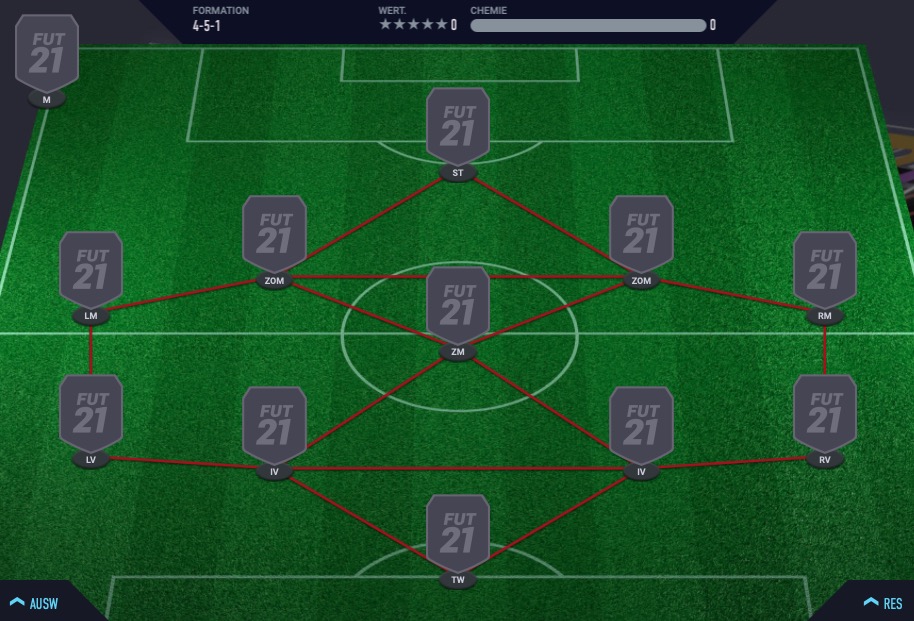
To do this, you need a strong striker and a central midfielder who is mobile enough to help in both attack and defense. The wingers should play with a lot of pace, and the attacking midfielders should join the offense.
“With this formation, you can attack compactly, while the central midfielder acts as a link between defense and midfield.” The central midfielder needs to be very fit. The left-back and right-back stay back to provide defensive security.
The tactics:
- Defensive style: Press the opponent after mistakes, 5 Width, 4 Depth
- Offensive style: Balanced, 5 Width, 5 Players in the Box
- Set Pieces: Corner Kicks 3 Bars, Free Kicks 3 Bars
This formation is suitable for: Players who urgently need to score a goal and somehow need to get the ball forward. The defense stands back here.
In the end, however, it is true that you only find the perfect formation for yourself by experimenting. After all, the preferred playing styles can vary from player to player. A good place to experiment is, by the way, friendly matches – here you can not only try a lot but also reap rewards. Plus, the different friendly matches are just a lot of fun.
This formation is suitable for: Players who urgently need to score a goal and somehow need to get the ball forward. The defense stands back here.
In the end, however, it is true that you only find the perfect formation for yourself by experimenting. After all, the preferred playing styles can vary from player to player. A good place to experiment is, by the way, friendly matches – here you can not only try a lot but also reap rewards. Plus, the different friendly matches are just a lot of fun.
This formation is suitable for: Players who need less control in midfield and want to switch quickly between defense and attack.
The defensive formation: 5-3-2
The coach says: “I use this formation when I am leading and notice that it is getting close,” says Arslan: “It looks unconventional, but has a lot of width and can make the midfield run.”
While a strong back five blocks at the back, the wingers continue to pose a threat: “The players on the left and right flanks need to have a lot of pace because we are closing up at the back and only have two midfielders.” The tactic “quick build-up” comes into play to get back into the attacking third quickly after winning the ball: “This is a formation for the last 10 minutes of the game.”
The tactics:
- Defensive style: Drop back, 5 Width, 3 Depth
- Offensive style: Quick build-up, 5 Width, 3 Players in the Box
- Set Pieces: Corner Kicks 1 Bar, Free Kicks 1 Bar
This formation is suitable for: Players who want a nearly impenetrable defense and only want to make occasional quick attacks to score hits.
The hammer: 3-4-2-1
The coach says: “This tactic comes into play when I really don’t know what else to do,” says Arslan. It is simply meant to get the ball forward somehow – and then into the opponent’s net.
But pushing forward with all your might can also work: “We figured it out in the virtual Bundesliga, and it has sometimes really saved us.” The goal is clear: win the ball from the opponent, get it forward, and score a goal.
The tactics:
- Defensive style: Constant pressure, 5 Width, 7 Depth
- Offensive style: Long ball, 5 Width, 7 Players in the Box
- Set Pieces: 5 Corners, 5 Free Kicks
This formation is suitable for: Players who urgently need to score a goal and somehow need to get the ball forward. The defense stands back here.
In the end, however, it is true that you only find the perfect formation for yourself by experimenting. After all, the preferred playing styles can vary from player to player. A good place to experiment is, by the way, friendly matches – here you can not only try a lot but also reap rewards. Plus, the different friendly matches are just a lot of fun.
This formation is suitable for: Players who want to exert a lot of control in midfield and want to attack with many players.
The offensive formation: 4-3-3 (2)
The coach says: This formation is used when you are not getting through as hoped. “I want to put a lot of pressure with this formation,” he explains.
It is somewhat riskier than the 4-5-1, as it controls the midfield less, but switches from defense to offense depending on the situation, much like in basketball – and vice versa. Essentially, all players attack – except for the four defenders. Here, the full-backs are also programmed to “stay back”.
The attacking midfielders orient themselves forward, while the wingers cut into the middle. A fast player you can send helps in the offense. “This is a good formation if you feel comfortable with possession. ”
The tactics:
- Defensive style: Pressing after losing the ball, 5 Width, 5 Depth
- Offensive style: Long ball, 5 Width, 6 Players in the Box
- Set Pieces: Corner Kicks 4 Bars, Free Kicks 4 Bars
This formation is suitable for: Players who need less control in midfield and want to switch quickly between defense and attack.
The defensive formation: 5-3-2
The coach says: “I use this formation when I am leading and notice that it is getting close,” says Arslan: “It looks unconventional, but has a lot of width and can make the midfield run.”
While a strong back five blocks at the back, the wingers continue to pose a threat: “The players on the left and right flanks need to have a lot of pace because we are closing up at the back and only have two midfielders.” The tactic “quick build-up” comes into play to get back into the attacking third quickly after winning the ball: “This is a formation for the last 10 minutes of the game.”
The tactics:
- Defensive style: Drop back, 5 Width, 3 Depth
- Offensive style: Quick build-up, 5 Width, 3 Players in the Box
- Set Pieces: Corner Kicks 1 Bar, Free Kicks 1 Bar
This formation is suitable for: Players who want a nearly impenetrable defense and only want to make occasional quick attacks to score hits.
The hammer: 3-4-2-1
The coach says: “This tactic comes into play when I really don’t know what else to do,” says Arslan. It is simply meant to get the ball forward somehow – and then into the opponent’s net.
But pushing forward with all your might can also work: “We figured it out in the virtual Bundesliga, and it has sometimes really saved us.” The goal is clear: win the ball from the opponent, get it forward, and score a goal.
The tactics:
- Defensive style: Constant pressure, 5 Width, 7 Depth
- Offensive style: Long ball, 5 Width, 7 Players in the Box
- Set Pieces: 5 Corners, 5 Free Kicks
This formation is suitable for: Players who urgently need to score a goal and somehow need to get the ball forward. The defense stands back here.
In the end, however, it is true that you only find the perfect formation for yourself by experimenting. After all, the preferred playing styles can vary from player to player. A good place to experiment is, by the way, friendly matches – here you can not only try a lot but also reap rewards. Plus, the different friendly matches are just a lot of fun.
This formation is suitable for: Players who urgently need to score a goal and somehow need to get the ball forward. The defense stands back here.
In the end, however, it is true that you only find the perfect formation for yourself by experimenting. After all, the preferred playing styles can vary from player to player. A good place to experiment is, by the way, friendly matches – here you can not only try a lot but also reap rewards. Plus, the different friendly matches are just a lot of fun.
This formation is suitable for: Players who want to exert a lot of control in midfield and want to attack with many players.
The offensive formation: 4-3-3 (2)
The coach says: This formation is used when you are not getting through as hoped. “I want to put a lot of pressure with this formation,” he explains.
It is somewhat riskier than the 4-5-1, as it controls the midfield less, but switches from defense to offense depending on the situation, much like in basketball – and vice versa. Essentially, all players attack – except for the four defenders. Here, the full-backs are also programmed to “stay back”.
The attacking midfielders orient themselves forward, while the wingers cut into the middle. A fast player you can send helps in the offense. “This is a good formation if you feel comfortable with possession. ”
The tactics:
- Defensive style: Pressing after losing the ball, 5 Width, 5 Depth
- Offensive style: Long ball, 5 Width, 6 Players in the Box
- Set Pieces: Corner Kicks 4 Bars, Free Kicks 4 Bars
This formation is suitable for: Players who need less control in midfield and want to switch quickly between defense and attack.
The defensive formation: 5-3-2
The coach says: “I use this formation when I am leading and notice that it is getting close,” says Arslan: “It looks unconventional, but has a lot of width and can make the midfield run.”
While a strong back five blocks at the back, the wingers continue to pose a threat: “The players on the left and right flanks need to have a lot of pace because we are closing up at the back and only have two midfielders.” The tactic “quick build-up” comes into play to get back into the attacking third quickly after winning the ball: “This is a formation for the last 10 minutes of the game.”
The tactics:
- Defensive style: Drop back, 5 Width, 3 Depth
- Offensive style: Quick build-up, 5 Width, 3 Players in the Box
- Set Pieces: Corner Kicks 1 Bar, Free Kicks 1 Bar
This formation is suitable for: Players who want a nearly impenetrable defense and only want to make occasional quick attacks to score hits.
The hammer: 3-4-2-1
The coach says: “This tactic comes into play when I really don’t know what else to do,” says Arslan. It is simply meant to get the ball forward somehow – and then into the opponent’s net.
But pushing forward with all your might can also work: “We figured it out in the virtual Bundesliga, and it has sometimes really saved us.” The goal is clear: win the ball from the opponent, get it forward, and score a goal.
The tactics:
- Defensive style: Constant pressure, 5 Width, 7 Depth
- Offensive style: Long ball, 5 Width, 7 Players in the Box
- Set Pieces: 5 Corners, 5 Free Kicks
This formation is suitable for: Players who urgently need to score a goal and somehow need to get the ball forward. The defense stands back here.
In the end, however, it is true that you only find the perfect formation for yourself by experimenting. After all, the preferred playing styles can vary from player to player. A good place to experiment is, by the way, friendly matches – here you can not only try a lot but also reap rewards. Plus, the different friendly matches are just a lot of fun.
This formation is suitable for: Players who need less control in midfield and want to switch quickly between defense and attack.
The defensive formation: 5-3-2
The coach says: “I use this formation when I am leading and notice that it is getting close,” says Arslan: “It looks unconventional, but has a lot of width and can make the midfield run.”
While a strong back five blocks at the back, the wingers continue to pose a threat: “The players on the left and right flanks need to have a lot of pace because we are closing up at the back and only have two midfielders.” The tactic “quick build-up” comes into play to get back into the attacking third quickly after winning the ball: “This is a formation for the last 10 minutes of the game.”
The tactics:
- Defensive style: Drop back, 5 Width, 3 Depth
- Offensive style: Quick build-up, 5 Width, 3 Players in the Box
- Set Pieces: Corner Kicks 1 Bar, Free Kicks 1 Bar
This formation is suitable for: Players who want a nearly impenetrable defense and only want to make occasional quick attacks to score hits.
The hammer: 3-4-2-1
The coach says: “This tactic comes into play when I really don’t know what else to do,” says Arslan. It is simply meant to get the ball forward somehow – and then into the opponent’s net.
But pushing forward with all your might can also work: “We figured it out in the virtual Bundesliga, and it has sometimes really saved us.” The goal is clear: win the ball from the opponent, get it forward, and score a goal.
The tactics:
- Defensive style: Constant pressure, 5 Width, 7 Depth
- Offensive style: Long ball, 5 Width, 7 Players in the Box
- Set Pieces: 5 Corners, 5 Free Kicks
This formation is suitable for: Players who urgently need to score a goal and somehow need to get the ball forward. The defense stands back here.
In the end, however, it is true that you only find the perfect formation for yourself by experimenting. After all, the preferred playing styles can vary from player to player. A good place to experiment is, by the way, friendly matches – here you can not only try a lot but also reap rewards. Plus, the different friendly matches are just a lot of fun.
This formation is suitable for: Players who want to exert a lot of control in midfield and want to attack with many players.
The offensive formation: 4-3-3 (2)
The coach says: This formation is used when you are not getting through as hoped. “I want to put a lot of pressure with this formation,” he explains.
It is somewhat riskier than the 4-5-1, as it controls the midfield less, but switches from defense to offense depending on the situation, much like in basketball – and vice versa. Essentially, all players attack – except for the four defenders. Here, the full-backs are also programmed to “stay back”.
The attacking midfielders orient themselves forward, while the wingers cut into the middle. A fast player you can send helps in the offense. “This is a good formation if you feel comfortable with possession. ”
The tactics:
- Defensive style: Pressing after losing the ball, 5 Width, 5 Depth
- Offensive style: Long ball, 5 Width, 6 Players in the Box
- Set Pieces: Corner Kicks 4 Bars, Free Kicks 4 Bars
This formation is suitable for: Players who need less control in midfield and want to switch quickly between defense and attack.
The defensive formation: 5-3-2
The coach says: “I use this formation when I am leading and notice that it is getting close,” says Arslan: “It looks unconventional, but has a lot of width and can make the midfield run.”
While a strong back five blocks at the back, the wingers continue to pose a threat: “The players on the left and right flanks need to have a lot of pace because we are closing up at the back and only have two midfielders.” The tactic “quick build-up” comes into play to get back into the attacking third quickly after winning the ball: “This is a formation for the last 10 minutes of the game.”
The tactics:
- Defensive style: Drop back, 5 Width, 3 Depth
- Offensive style: Quick build-up, 5 Width, 3 Players in the Box
- Set Pieces: Corner Kicks 1 Bar, Free Kicks 1 Bar
This formation is suitable for: Players who want a nearly impenetrable defense and only want to make occasional quick attacks to score hits.
The hammer: 3-4-2-1
The coach says: “This tactic comes into play when I really don’t know what else to do,” says Arslan. It is simply meant to get the ball forward somehow – and then into the opponent’s net.
But pushing forward with all your might can also work: “We figured it out in the virtual Bundesliga, and it has sometimes really saved us.” The goal is clear: win the ball from the opponent, get it forward, and score a goal.
The tactics:
- Defensive style: Constant pressure, 5 Width, 7 Depth
- Offensive style: Long ball, 5 Width, 7 Players in the Box
- Set Pieces: 5 Corners, 5 Free Kicks
This formation is suitable for: Players who urgently need to score a goal and somehow need to get the ball forward. The defense stands back here.
In the end, however, it is true that you only find the perfect formation for yourself by experimenting. After all, the preferred playing styles can vary from player to player. A good place to experiment is, by the way, friendly matches – here you can not only try a lot but also reap rewards. Plus, the different friendly matches are just a lot of fun.
This formation is suitable for: Players who urgently need to score a goal and somehow need to get the ball forward. The defense stands back here.
In the end, however, it is true that you only find the perfect formation for yourself by experimenting. After all, the preferred playing styles can vary from player to player. A good place to experiment is, by the way, friendly matches – here you can not only try a lot but also reap rewards. Plus, the different friendly matches are just a lot of fun.
This formation is suitable for: Players who need less control in midfield and want to switch quickly between defense and attack.
The defensive formation: 5-3-2
The coach says: “I use this formation when I am leading and notice that it is getting close,” says Arslan: “It looks unconventional, but has a lot of width and can make the midfield run.”
While a strong back five blocks at the back, the wingers continue to pose a threat: “The players on the left and right flanks need to have a lot of pace because we are closing up at the back and only have two midfielders.” The tactic “quick build-up” comes into play to get back into the attacking third quickly after winning the ball: “This is a formation for the last 10 minutes of the game.”
The tactics:
- Defensive style: Drop back, 5 Width, 3 Depth
- Offensive style: Quick build-up, 5 Width, 3 Players in the Box
- Set Pieces: Corner Kicks 1 Bar, Free Kicks 1 Bar
This formation is suitable for: Players who want a nearly impenetrable defense and only want to make occasional quick attacks to score hits.
The hammer: 3-4-2-1
The coach says: “This tactic comes into play when I really don’t know what else to do,” says Arslan. It is simply meant to get the ball forward somehow – and then into the opponent’s net.
But pushing forward with all your might can also work: “We figured it out in the virtual Bundesliga, and it has sometimes really saved us.” The goal is clear: win the ball from the opponent, get it forward, and score a goal.
The tactics:
- Defensive style: Constant pressure, 5 Width, 7 Depth
- Offensive style: Long ball, 5 Width, 7 Players in the Box
- Set Pieces: 5 Corners, 5 Free Kicks
This formation is suitable for: Players who urgently need to score a goal and somehow need to get the ball forward. The defense stands back here.
In the end, however, it is true that you only find the perfect formation for yourself by experimenting. After all, the preferred playing styles can vary from player to player. A good place to experiment is, by the way, friendly matches – here you can not only try a lot but also reap rewards. Plus, the different friendly matches are just a lot of fun.
This formation is suitable for: Players who want to exert a lot of control in midfield and want to attack with many players.
The offensive formation: 4-3-3 (2)
The coach says: This formation is used when you are not getting through as hoped. “I want to put a lot of pressure with this formation,” he explains.
It is somewhat riskier than the 4-5-1, as it controls the midfield less, but switches from defense to offense depending on the situation, much like in basketball – and vice versa. Essentially, all players attack – except for the four defenders. Here, the full-backs are also programmed to “stay back”.
The attacking midfielders orient themselves forward, while the wingers cut into the middle. A fast player you can send helps in the offense. “This is a good formation if you feel comfortable with possession. ”
The tactics:
- Defensive style: Pressing after losing the ball, 5 Width, 5 Depth
- Offensive style: Long ball, 5 Width, 6 Players in the Box
- Set Pieces: Corner Kicks 4 Bars, Free Kicks 4 Bars
This formation is suitable for: Players who need less control in midfield and want to switch quickly between defense and attack.
The defensive formation: 5-3-2
The coach says: “I use this formation when I am leading and notice that it is getting close,” says Arslan: “It looks unconventional, but has a lot of width and can make the midfield run.”
While a strong back five blocks at the back, the wingers continue to pose a threat: “The players on the left and right flanks need to have a lot of pace because we are closing up at the back and only have two midfielders.” The tactic “quick build-up” comes into play to get back into the attacking third quickly after winning the ball: “This is a formation for the last 10 minutes of the game.”
The tactics:
- Defensive style: Drop back, 5 Width, 3 Depth
- Offensive style: Quick build-up, 5 Width, 3 Players in the Box
- Set Pieces: Corner Kicks 1 Bar, Free Kicks 1 Bar
This formation is suitable for: Players who want a nearly impenetrable defense and only want to make occasional quick attacks to score hits.
The hammer: 3-4-2-1
The coach says: “This tactic comes into play when I really don’t know what else to do,” says Arslan. It is simply meant to get the ball forward somehow – and then into the opponent’s net.
But pushing forward with all your might can also work: “We figured it out in the virtual Bundesliga, and it has sometimes really saved us.” The goal is clear: win the ball from the opponent, get it forward, and score a goal.
The tactics:
- Defensive style: Constant pressure, 5 Width, 7 Depth
- Offensive style: Long ball, 5 Width, 7 Players in the Box
- Set Pieces: 5 Corners, 5 Free Kicks
This formation is suitable for: Players who urgently need to score a goal and somehow need to get the ball forward. The defense stands back here.
In the end, however, it is true that you only find the perfect formation for yourself by experimenting. After all, the preferred playing styles can vary from player to player. A good place to experiment is, by the way, friendly matches – here you can not only try a lot but also reap rewards. Plus, the different friendly matches are just a lot of fun.

Your opinion is important to us!
Do you like the article? Then let us know!