

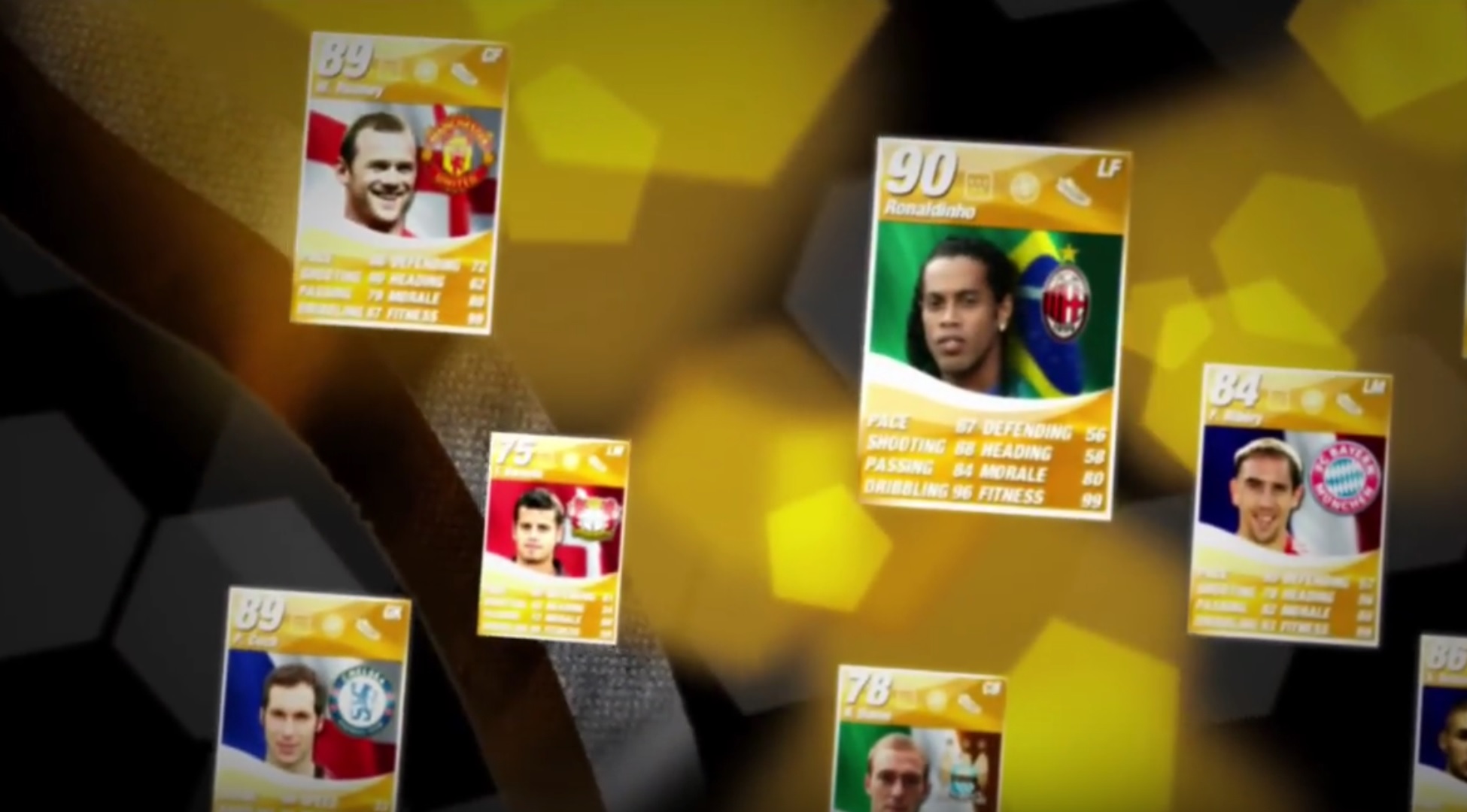
The “Ultimate Team” mode in the FIFA series has been around for 8 years. For its 8th birthday, we look back at the history of FUT.

On March 19, 2009, EA Sports ushered in a new era in the FIFA franchise. On that day, the “FIFA Ultimate Team” mode, commonly referred to as FUT, launched in FIFA 09. This marked the beginning of the most successful, popular, and profitable mode in FIFA’s history.
In 2016, EA’s Ultimate Teams (FIFA, Madden, and NHL) generated a staggering $800 million in revenue. The previous year it was $650 million. This approach is becoming increasingly lucrative for EA, which is why they are even considering possibilities to transfer the FUT system to Battlefield or Battlefront.
An end to the success of Ultimate Team is not in sight. On March 19, 2017, it celebrates its eighth birthday in FUT 17 – which will be celebrated in-game starting March 31. But how has FUT changed over the last eight years? What did the beginnings look like? We take a look at the history of FUT.
FUT 09
FUT was first introduced as a paid DLC in FIFA 09. Those who wanted to try this new mode back then and become a “FUT Founder” had to pay for it.
The mode cost around 10 dollars and convinced about a million players to download it. Considering that FIFA 09 was slowly coming to an end, the number of registrations was remarkable. This led to the servers being overwhelmed and crashing. Some things in FIFA simply never change.
Even in FUT 09, the framework that defines the mode was in place: There was chemistry, player, fitness, training, and contract cards, you could choose a stadium and earn coins. It was also possible to create your Ultimate Team through clever trades on the transfer market or by opening packs. Quality levels like Gold, Silver, and Bronze were already there. Though you couldn’t find tournaments or seasons, you could play offline and online. The basics of FUT that we still know today were already found in FUT 09.
Here is the trailer for FUT 09:
FUT 10
FIFA 10 was released like FIFA 09 without the “Ultimate Team” mode. It wasn’t until December 2009 that the return of FUT was announced, and two months later it was available via DLC. However, it was exclusive to PS3 and Xbox 360. “FUT Founders” from FIFA 09 received two free Gold Packs – a tradition that would continue in subsequent years.
FUT 10 brought several innovations that made the mode more attractive. The price was halved, premium packs with triple the amount of rare cards were introduced, and tournaments were planned to add variety to the mode. You could accumulate an unlimited number of players and other items, and the transfer market received the “watch list” feature.
The biggest innovation in FUT 10 was the “in-form” cards, the IFs. For the first time, TOTWs were released, the Teams of the Week. This made the game more dynamic – FUT brought real football closer to virtual football. This made the mode tremendously more interesting.
An important feature that came with FUT 10 was and still is the FUT Web App. With it, you could manage transfers and your team on the PC, even when you weren’t at the console. The number of transactions increased dramatically due to the Web App.
FUT 11
With FIFA 11 came the breakthrough of FUT, as EA Sports made the smartest decision in the history of FUT – at least for their own wallets: FUT 11 was offered for free as DLC, which allowed many more FIFA fans to engage with this mode. Consequently, there were many more potential buyers for the packs.
Now everyone could chase the unstoppable Messi for their team without a paid DLC. The number of players and revenues from microtransactions increased enormously.
There were innovations such that the TOTW cards turned black and that transfers in real football also reflected in FUT with updated player cards. EA Sports increasingly responded to developments in real football within this mode.
Additionally, you could now play against your friends, and leaderboards showed you who the best FUT players were.
FUT 12
With FIFA 12, the era of “Ultimate Team” DLCs ended. From then on, the mode was integrated directly into the main game, making it even more accessible to players. Additionally, FUT came to the PC.
EA Sports realized that the concept of connecting real football with virtual football resonated well and appealed to players’ passion. Consequently, many new special cards related to real football were introduced in FUT 12. The TOTY cards – blue cards with strong player ratings that highlighted the best players of the year – were introduced, followed by the TOTS, the Teams of the Season, sorted by leagues. Then came the orange MOTM cards – for the Men of the Match.
FUT 12 was the time when Ultimate Team became colorful. Before FIFA 13, the Euro 2012 also took place, bringing iMOTM cards. Ultimate Team became increasingly complex, allowing major FUT sites like FIFAUTeam or FUThead to establish themselves in 2012.
FUT 13
FUT 13 had a catastrophic start. The FUT season began a few days before the release of FIFA 13 with the launch of the Web App, which exhibited a fatal security flaw. Players could collect unlimited coins. Cheaters alerted EA Sports that they needed to improve their security measures.
Nonetheless, FUT 13 became a success. FUT Seasons were introduced, highlighting the competitive aspect of the game. By now, over 11 million fans were playing FUT. There was increasing publicity with professional players holding FUT cards in front of cameras. FUT kept growing – even in public perception.
One of EA Sports’ goals was to make microtransactions simpler and more convenient, which is why they replaced the old payment model with FIFA Points. Furthermore, the Companion App launched on smartphones, allowing you to take FUT anywhere.
Innovations in FUT 13 included TOTW challenges, EAS FC items for FUT, and a modern menu.
FUT 14
In 2013, FIFA 14 was released with a new generation of consoles. At the same time, there was a marketing deal between EA Sports and Microsoft, which allowed Xbox players exclusive access to Legend cards – and they still do today.
Other innovations included chemistry style items, customization options such as jersey numbers or free kick takers, and seasons now had 10 leagues. There were no major innovations, as EA Sports was only working on smaller adjustments, removing player morale and making the mode “clearer.” By then, there were more than 20 million players.
FUT 15
In FUT 15, EA Sports had to fight a war against coin sellers and “autobuyers.” The transfer market was dominated by unscrupulous methods, and throughout the season, the Web App and Companion App were disabled. As a result, EA Sports decided to implement price ranges. However, a new security issue arose. Many players proclaimed the death of FUT. However, FUT was not broken.
In FUT 15, loan players were introduced as a new feature. There were also additional cards: the FUTTIES and hero cards.
From then on, you could play friendly seasons and view the results in a match history system. Furthermore, there were “Dream Teams”, where you could create concept teams with players from the entire catalog. You could then copy, share, and like those teams.
FUT 16
FUT 16 brought more cosmetic changes than new features: card layouts were altered, pack opening animations adjusted, and a few new legends added. New cards in the form of international heroes and a “Champions League Team of the Group Stage” were introduced.
The biggest innovation was FUT Draft, which is also present in FUT 17. In it, you build a team, receiving a selection of 5 players for each position. You must make the right decisions – and have luck – to create a good combination of strong players and high chemistry.
A major topic in FUT 16 was chemistry: A long-standing glitch was discovered, revealing that chemistry styles were no longer just placebos and in many cases the standard cards were better than the IFs. With the biggest glitch in FUT’s history, EA Sports handled the situation “interestingly”: they rolled out a fix, otherwise remained silent about the problem, released FIFA 17, and that was that.
FUT 17
The biggest novelty in FIFA 17 was the story mode “The Journey,” but there were also some innovations in FUT 17. FUT Champions and Squad Building Challenges were introduced. FUT Champions replaced the former tournaments with “knockout tournaments” for the Weekend League, and the SBCs provided new opportunities to profit from player cards.
The SBCs also made it difficult to predict developments in the transfer market, as new challenges can significantly disrupt it.
Additionally, a variety of new cards were introduced into the game: Halloween cards, Movember, Group Stage, POTM, POTY, three variants of MOTM, FUT Champions, and special SBC cards. There is also an “Alex Hunter” card and “Ones to Watch.” Furthermore, winter upgrades were replaced by ratings refresh. You can find all the information about FUT 17 here.
What FUT 17 will bring in the future remains to be seen.
After the ratings refresh – these are the best player cards in FUT 17 sorted by attributes and leagues.

Your opinion is important to us!
Do you like the article? Then let us know!