
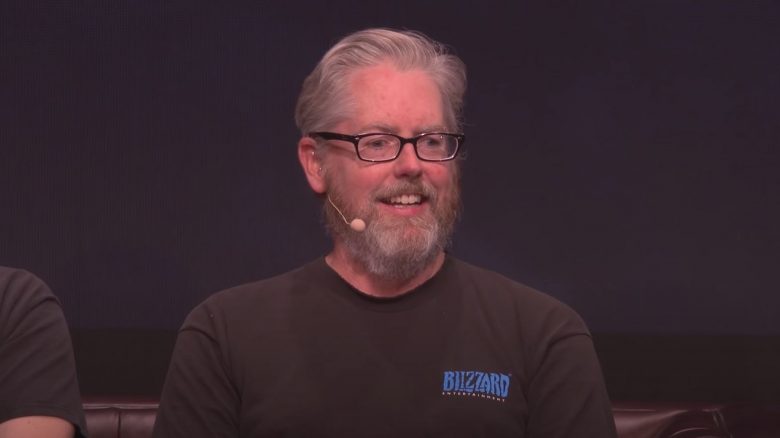
No game franchise represents loot in video games like Diablo. Two of the main designers of Diablo 1 and Diablo 2 now explain how they invented loot with color codes, sound effects, and the addictive effects we know today.
Who is speaking? It is “the fathers” of Diablo:
- David Brevik (53) invented Diablo, founded the game company Condor, which was later acquired by Blizzard and became “Blizzard North,” worked there from 1998 to 2003 on Diablo 1 and Diablo 2. Later he developed “Marvel Heroes” on his own
- Erich Schaefer was, along with his brother Max Schaefer, one of the founders of Condor/Blizzard North, was the Art Director, Senior Designer for Diablo 1, and contributed to the story. He was the Project Lead for Diablo 2.
The two discuss in a podcast with Kotaku what makes loot in Diablo and in video games so special (via kotaku). The original Diablo was released in 1996 – many of the loot systems that were first seen so pronounced there were invented about 25 to 30 years ago by David Brevik and the Schaefer brothers.
The topic is also relevant today because Blizzard wants to bring back the magic of Diablo 2 with Diablo 2 Resurrected.
Getting loot in Diablo was like pulling a lever on a one-armed bandit
This is what loot looked like in Diablo 1: Brevik explains that it was decided early on in the design of Diablo to focus completely on loot:
- The RPGs at the time, like Ultima or Might and Magic, placed great value on story and character development, asking players countless questions, giving players a background, and telling a grand story.
- In Diablo, it was always about loot from the beginning and how to obtain it. Brevik says: The design of Diablo was “Let’s skip all the fluff and get straight to the killing and looting.”
Only after a while did they realize that they had actually built a one-armed bandit with Diablo: Every time you killed a monster, you pulled the lever and either nothing came out, or you got your stake back or actually a win. It was like a mini-jackpot, says Brevik. Every time a strong item dropped from the mob, it felt like you had hit the jackpot.
It was already addictive back then to kill monsters and pull the lever. That was exactly what they wanted to achieve with Diablo and they tried to amplify the effect by giving the player auditory and visual stimuli to enhance the feeling of “I just hit the jackpot.”
This is why items are blue, green, or yellow today
This is how Diablo invented “color-coding”: As Erich Schaefer explains, during that time they also invented the color code for items that still applies today. Schaefer says:
- First, they discovered green text.
- A little later, blue loot was introduced.
- And he believes they retroactively introduced “gray” for poor loot.
Quickly they then arrived at the idea: “Wait a minute, how about we introduce something stronger than blue loot? Maybe golden loot.”
Brevik adds: He believes they started with “blue items” back then because blue stood for mana and magic. Therefore, it made sense that magical items in Diablo had to be blue. Later, they would introduce more colors to mark different item types.
Eventually, they had a system where “green items were the set items,” magical items were blue, rare items were yellow, and golden items were the unique, especially cool items that are called “Uniques.” This was how it was even in Diablo 1.
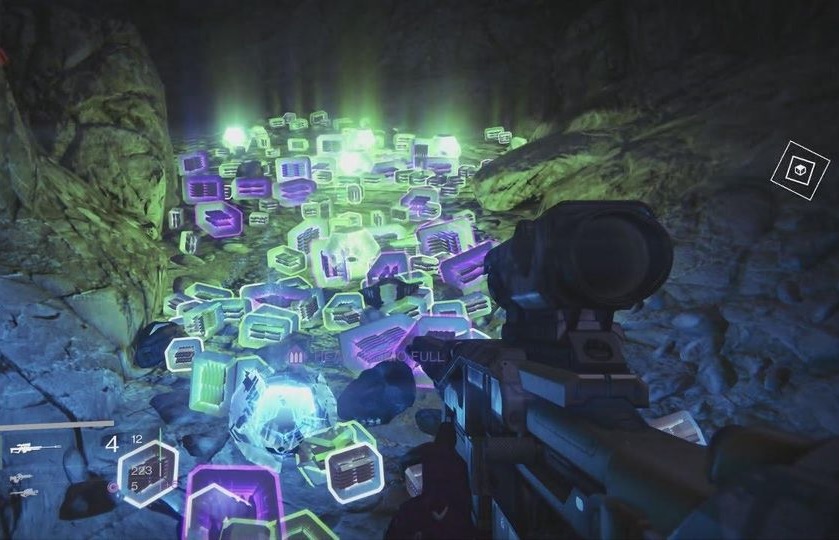
In Diablo 2, they moved away from the idea and made colors a sign of quality: Blue items had one or two affixes, yellow items had three or four – this system from Diablo 2 (2000) was later adopted and further developed by the MMORPG WoW (2004). Ultimately, many games, such as Destiny (2014), adopted this system from WoW, which in turn was based on Diablo 2.
This is how Diablo made loot even more exciting: The more the team experimented with ideas like the color system, the more people enjoyed playing Diablo. The team realized they were on the right track.
They complemented the moment of the loot drop with sound: At first, rings were rare in Diablo. If a ring dropped, it should be marked by a special sound. This sound stood for “Something cool just dropped. I need to check this out.”
“Identity Scrolls” – This idea did not catch on
As a special twist, they introduced “Identity Scrolls” in Diablo: a system where it turned out later whether it was really a main prize or just a secondary prize. Players then knew that they had found an item of a certain type, but did not know exactly what it was.
This was like having to pull the lever on the one-armed bandit twice: once to get the item, and once to see what it was.
Brevik says he saw it as “a gift in a gift.”
Schaefer admits: This system did not catch on. Later games did not adopt it. But back then they were so convinced of the idea that they would have even introduced a “third pull on the machine” if they had known how.
Every system can be abused for evil
Do the fathers feel guilty? In the podcast, the Diablo developers are asked if they feel bad. They themselves made the comparison of loot to slot machines.
Today, there are games in which people spend real money to get cooler loot or loot boxes.

But the developers explain: They have no guilty conscience. Erich Schaefer says he would never implement such systems in his games. Ultimately, any system can be twisted for good or evil.
He does not believe that “loot should never have been unleashed on the world.”
Brevik feels the same way: He wanted to create the “addictive feeling” of wanting to kill one more monster, get one more item. That was the goal. It was not about raking in as much money as possible.
However, this is clearly the intention of some people today. However, Brevik says this is only done because it works. If people did not buy these games that offer loot for money, they would not exist. That is sad. But these games would not exist if they were not so effective.
The developers of Diablo 1 and 2 view their former employer Blizzard critically now:
Original developers of Diablo say: Blizzard has completely changed